
Best Time to Visit Orvieto: Seasons, Crowds and Quiet Hours
Plan Orvieto around spring or mid-autumn for calmer streets, and learn how day-tripper flows from Rome shape the quietest hours near the Duomo.
On this page
Choosing when to visit Orvieto is really two choices stacked on top of each other. The first is seasonal: whether you want the mild bloom of late spring, the warm light of October, or the short, damp days of winter. The second is hourly, because the town's historic core fills and empties with the tide of day visitors arriving from Rome and Florence.
The cliff-top setting shapes everything. The centre sits above the surrounding plain, reached by funicular and on foot through steep, layered lanes, so heat and crowds both cost more energy than they would in a flat city. A sensible plan treats season as the frame and time of day as the variable you can still adjust once you have booked.
Quick Answer: Which Season and Which Hours
For most travellers, late spring (April to June) and mid-autumn (October) are the most comfortable windows for walking the town and lingering at viewpoints. One long-established guide notes that spring and autumn avoid the heaviest summer crowds while still offering good weather, and that late spring in particular is when the surrounding countryside is in bloom.
Within any day, the hours closest to opening and the late afternoon tend to feel calmer around Piazza del Duomo than the middle of the day, when organised groups and day-trippers are most concentrated. That is a pattern to plan around, not a guarantee: festival days, cruise-style coach arrivals and special events can fill the square at any hour.
Match the season to your purpose. Photographers often prefer the low light of spring and autumn; walkers appreciate cooler temperatures on the climb between the funicular and the centre; anyone sensitive to heat should treat high summer as a short-mornings destination rather than an all-day one.
Why the Cliff-Top Setting Makes Timing Matter
Orvieto's centre sits on a plateau of soft volcanic tuff, ringed by cliffs, with the station and lower town below. Getting up means the funicular or a bus connection, and once you are up, the streets rise and fall constantly. A visit is therefore a series of short walks with climbs built in, which is worth remembering when you schedule the hottest part of the day.
The same geography explains the light. The tuff face and the cathedral facade catch early and late sun particularly well, and many of the town's best long views look out over the countryside from the edge of the plateau. If you only have one afternoon, spending it indoors in the middle of the day and saving the edges for later usually works better.
The city itself publishes a rolling calendar of events and notices, which is the fastest way to spot a civic occasion that will change footfall in the centre. Checking the official events list before you fix your dates costs a few minutes and can spare you an unexpected crush.
Spring (April to June): Mild Walking Weather and Bloom
Spring is the season most often recommended for Umbria, and Orvieto is no exception. Temperatures are generally pleasant for walking, the countryside around the cliffs is green, and the town has not yet reached its summer volume of visitors. That combination makes late spring a strong default for a first trip, especially if you plan to spend hours on foot.
One spring fixture is the flower festival linked to Pentecost, known locally as Orvieto in Fiore, which the same guide describes as a whole-town celebration with scenes made from petals. The date moves with the church calendar, so treat it as a moving target to confirm rather than a fixed appointment in your diary.
Spring also brings changeable weather. Rather than packing for a forecast, plan for a day that can shift from sun to shower: a light waterproof, a layer you can remove, and shoes with grip for the sloping lanes will serve you better than an optimistic outfit.
Summer (July to Early September): Heat and the Heaviest Day-Tripper Pressure
High summer concentrates both the heat and the crowds. The same guide that praises spring advises avoiding the peak July to early September stretch, when visitor numbers swell, and describes the Italian summer as hot even in the shoulder weeks around it. In Orvieto the effect is amplified by the town's compact core, where everyone funnels through the same few streets.
If summer is your only option, work with the day rather than against it. Aim for early arrival, take the Duomo and the underground spaces during the hottest hours, and save the open viewpoints and the walk along the edge of the plateau for the evening. An overnight stay changes the calculation considerably, because the centre thins out once the day visitors head for the trains.
Book the elements you care about rather than assuming you can decide on the day. A private cave tour such as Pozzo della Cava, and the better-known underground itineraries that can be arranged through the tourist office on Piazza del Duomo, are the kind of small-capacity visits that fill quickly in peak weeks.
Mid-Autumn (October): The Second Calm Window
October is the mirror image of spring: milder temperatures, softer light on the tuff cliffs, and space to move. The same long-established guide singles out mid-autumn alongside spring as one of the two ideal windows for an Italian trip, and Orvieto benefits from that logic directly. It is a particularly good month for photography and for slow wandering without a fixed schedule.
Autumn is also when the town's event calendar picks up, from food markets in the piazzas to theatre at the Teatro Mancinelli. The city publishes these listings centrally, so a quick check of the events pages will tell you whether your chosen weekend coincides with something busy or quiet.
Later in October the weather becomes less reliable, and November is typically wetter. Build in one indoor anchor per day, whether that is the cathedral interior, a cave visit or a long lunch, so a rainy morning does not derail the whole plan.
Winter and Late Autumn: Short Days and a Slower Town
Winter in Orvieto is quiet in the way that hill towns are quiet out of season: shorter daylight, more rain, and fewer people in the streets. That suits travellers who want the town to themselves and do not mind cold hands on a viewpoint. It suits less well anyone whose plan depends on long days outdoors or on everything being open.
The practical answer to winter uncertainty is verification rather than guesswork. Individual sights, cave tours and the theatre run their own calendars, and the city's tourism pages are the place to confirm what is operating during your dates. Do not assume a summer timetable carries over into January.
What winter does offer is atmosphere after dark. With fewer visitors, the illuminated facade and the empty lanes around Corso Cavour are easier to enjoy slowly, and restaurants have more room for the people who do turn up.
The Day-Tripper Rhythm from Rome
Orvieto's visitor flow is largely dictated by the railways. It sits on the line between Rome and Florence, and the same guide that recommends the town describes it as an easy day trip from Rome of just over an hour by train, with the funicular connecting the station to the upper town. The result is a predictable wave: arrivals through the morning, a peak in the middle of the day, and a thinning out towards late afternoon.
That wave is the single most useful thing to know when timing your hours. If you are staying in Orvieto, do your cathedral visit early, retreat for lunch, and go back out when the day-trippers are heading down the hill. If you are day-tripping yourself, arriving on one of the earliest trains and leaving late buys you the two quietest ends of the day.
Remember that the funicular and the buses between the station and the centre are shared by everyone making that same journey. Queues form at arrival times, so a few minutes spent checking the current operating pattern and any planned works on the operator's or city's pages is more useful than relying on an old timetable.
Timing the Duomo and Piazza del Duomo
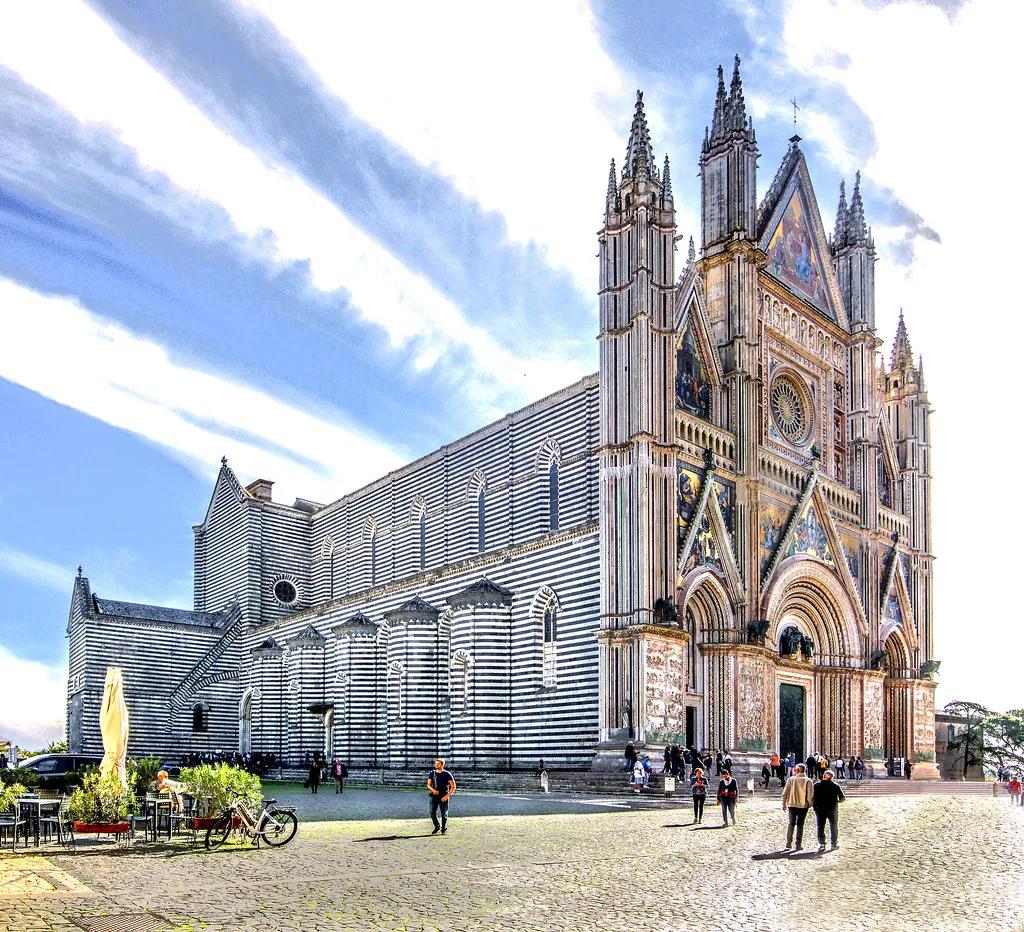
The cathedral is the reason many people come, and the square in front of it is the town's natural meeting point, which makes it the first place to feel crowded. The facade, with its mosaics and carved reliefs, is free to admire from the piazza at any hour, while the interior is a separate visit with its own arrangements. Treating the two as different stops lets you enjoy the exterior in the calmest light.
A practical rhythm is to see the facade early or late, when the light rakes across it and the square is emptier, and to go inside when the day is at its busiest anyway. Inside, the frescoed chapels reward unhurried attention, and one long-established guide suggests that a good guidebook can substitute for a paid tour if you prefer to move at your own pace.
For a wider view, the Torre del Moro clock tower is the classic high point, and it is understandably popular when the centre is busy. Save it for a quieter hour and check the current arrangements for climbing it before you build your day around it.
Staying Overnight Versus Day-Tripping
Staying overnight is a timing strategy as much as a lodging choice. The town empties noticeably once the last day visitors leave, and the evening and early morning hours belong to whoever is still there. Several writers who have visited on a day trip recommend staying at least a night specifically to experience the atmosphere after the crowds go.
The trade-off is cost and logistics: hotels inside the historic centre command a premium, and staying up on the plateau means you are not dependent on the funicular or buses for early and late outings. A room in the lower town can be cheaper, but you will spend part of each day on the connection.
If you do stay, use the quiet hours deliberately. An early walk along the edge of the cliffs before the first trains arrive, and a late pass through the lanes around the cathedral after they have gone, will show you a different town from the one you see at midday.
A Suggested Duration for a First Visit
As a suggestion rather than an official recommendation, allow one full day and one night for a first visit. That gives you time for the cathedral, one underground or well visit, a walk along the viewpoints and a proper meal, without rushing the climbs between them.
Two nights suits anyone who wants a half-day outside the walls, a slower pace in the wine bars, or a buffer for bad weather. A pure day trip works if you accept that you will see the cathedral and the main streets and not much else, and if you time your arrival and departure around the middle-of-the-day peak.
Add a third night only if Orvieto is your base for exploring the wider area. The town is small enough that extra days are about depth and rest rather than more sights, so plan them around markets, seasonal events or simply the pleasure of the evening streets.
Practical Planning: Layers, Footwear and Flexibility
Orvieto's lanes are steep, cobbled and uneven, and even a short walk between the funicular and the cathedral involves an incline. Shoes with grip and a sole that can handle stone are worth more than style, particularly in wet weather when the tuff and paving get slippery.
Pack for the season rather than a specific forecast: breathable layers and sun protection in summer, a waterproof shell and something warm for evenings in spring and autumn, and a proper coat in winter. A refillable bottle and a small day bag will cover most days in the centre, where everything is walkable.
Keep your schedule loose enough to move the outdoor parts of the day. If the morning turns grey, swap the viewpoints for the cathedral and the caves and save the cliffs for the clearer afternoon, which is often how the weather behaves across the seasons here.
Where the Quiet Corners Fit In
Timing gets you calm streets, but choosing the right corners helps too. Beyond the cathedral square and the main shopping street, Orvieto has smaller churches, terraces and lanes that see far fewer people, and they are at their best outside the day-trip peak. Our guide to the hidden gems in Orvieto pairs well with an early or late start.
The same logic applies to the underground sights. St Patrick's Well and the cave itineraries are enclosed, weather-proof and popular, so booking or arriving early makes a bigger difference than the month you choose. Check current access arrangements with each site before you rely on a walk-up visit.
Plan Your Visit
The best time to visit Orvieto is late spring or mid-autumn if you want comfortable walking weather and a calmer centre, with summer reserved for early starts and evenings and winter for travellers who value emptiness over long days out. The second decision matters just as much: arrange your cathedral visit, tower climb and cave tours around the middle-of-the-day peak rather than through it.
Confirm the moving parts before you commit: event dates on the city's official pages, access and booking arrangements for the individual sights, and the current operation of the funicular and buses between the station and the upper town. With those checked, the season and the hour become choices you can make deliberately rather than surprises you have to absorb.
Frequently Asked Questions
What is the best month to visit Orvieto?
Late spring and October are the most comfortable months for walking the town, with milder temperatures and fewer visitors than high summer. Spring brings green countryside and a moving flower festival tied to Pentecost, while October offers soft light on the cliffs and a lively event calendar. Check the city's own listings for your dates before booking.
Is Orvieto crowded in summer?
Summer is the busiest stretch, especially from July into early September, when heat and day-tripper numbers combine in a compact historic centre. You can still enjoy the town by arriving early, using the middle of the day for indoor visits such as the cathedral or the caves, and saving the viewpoints for the evening. Staying overnight makes the biggest difference.
What is the best time of day to see the Duomo in Orvieto?
The facade is free to see from Piazza del Duomo and is at its most photogenic early or late, when the light is low and the square is emptier. The interior is a separate visit with its own arrangements, so confirm current access before you plan around it. Midday is generally the busiest time in the square.
Is Orvieto worth visiting as a day trip from Rome?
Yes, if you accept a focused visit. Orvieto sits on the Rome to Florence rail line and is easily reached for a day, but the middle of the day is when most day visitors arrive, so choose an early train and a late return to get the quieter hours. Staying a night gives a noticeably different experience.
How many days do you need in Orvieto?
As a suggestion, one full day and one night covers the cathedral, one underground or well visit, the main viewpoints and a good meal without rushing. Two nights allow a slower pace or a half-day outside the walls. Additional days are about depth and rest rather than more sights.
Is September a good time to visit Orvieto?
Early September still carries summer heat and visitor volume, but conditions ease as the month goes on and autumn light arrives. It can be a good compromise if you want warmth without the absolute peak. Check the city's event calendar for your dates, since local festivals change the rhythm of the centre.
Should I stay overnight in Orvieto or visit on a day trip?
Staying overnight lets you experience the town after the day visitors leave and before they arrive, which is when the lanes and viewpoints are calmest. The trade-off is higher lodging costs inside the historic centre. A day trip is workable if you time your arrival and departure around the midday peak.
Sources
Continue exploring
More guides you'll find useful





