Lucca Three-Day Itinerary: Walls, Towers and a Day Trip
Plan a relaxed three-day Lucca itinerary with the tree-lined walls, climbable towers, Duomo, Palazzo Pfanner and a Pisa or Cinque Terre day trip.
On this page
Lucca rewards a slower pace than most Tuscan cities. The historic centre is compact and largely car-free, and travel writers who know it well describe it as noticeably calmer than Florence, especially in the evening once day-trippers leave. Three days lets you treat the city as a place to walk rather than a checklist to clear.
This itinerary is a suggestion rather than an official plan. It front-loads the free orientation walk on arrival day, saves the paid tower climbs for day two when you are rested, and holds day three open for either a day trip or a local excursion. Treat any prices mentioned as visitor-reported figures from travel blogs, not confirmed current rates, and verify them with each site before you commit.
Why Three Days Suits Lucca
The main sights of Lucca sit within a small radius, so you can see the essentials in a few hours. That is exactly why three days works better: it turns a rushed half-day into unhurried mornings, long lunches and evenings in the old town. Bloggers who have stayed multiple nights note that the city becomes especially charming after dark, when the crowds thin and the piazzas settle down.
If you only have a weekend, tighten the plan rather than cutting the walls. A two-day itinerary can cover the wall circuit, one tower and the Duomo, but it usually has to drop either the day trip or the slower food stops.
Before You Go: Arrival, Base and Daily Rhythm
Most visitors arrive by train or car. Cars are effectively barred from the old town, so if you drive, plan to park outside the walls or use a hotel's parking arrangement. Sommertage reports that many old-town stays offer parking for roughly 30 euros per night, a figure from their own trip that you should confirm directly with the property.
A comfortable rhythm is one anchor sight each morning, a long lunch, one lighter activity in the afternoon and a piazza in the evening. That leaves slack for heat, queues or a spontaneous detour. Checking local conditions before you travel helps you time the towers and the walls around the busiest periods.
Day 1 – First Orientation on the Walls
Start with the city walls, the most distinctive feature of Lucca. The Renaissance-era circuit runs about four kilometres around the historic centre and carries a tree-lined path on top, so it functions as an elevated park rather than a defensive rampart. It is free to walk, and locals use it for jogging and evening strolls.
You can join the wall at numerous access points around the centre, which makes it easy to start near your accommodation and step down whenever a side street looks interesting. If you want to cover more ground with less effort, a bicycle is the classic Lucca way to circle the walls.
After the circuit, head inside on foot along Via Fillungo, the main shopping street, which the sources describe as the city's most famous and pleasant for browsing. It leads you naturally toward Piazza Napoleone, the large central square flanked by the ducal palace and lively with cafes and occasional live music.
Day 1 Evening: Aperitivo on Piazza dell'Anfiteatro
Finish the day at Piazza dell'Anfiteatro, whose oval shape survives from the Roman amphitheatre that once stood here. Buildings were later raised around the original elliptical footprint, and the result is one of the most distinctive squares in Tuscany. It is a good place to sit with a drink and let the shape of the square do the sightseeing.
The cafes lining the square are openly tourist-oriented, and the Sommertage writers say they would look elsewhere for a full meal while still enjoying an evening aperitivo there. Treat it as a setting rather than a dining destination, and book your real dinner somewhere off the main piazza.
If you want to go deeper into the city's overlooked corners, this guide covers the quieter spots worth adding around the centre.
Day 2 – The Cultural Core: Duomo and San Michele
Begin at the Duomo di San Martino, also simply called il Duomo, whose asymmetrical facade and tall bell tower make it the city's principal church. Inside you will find major works including Ilaria del Carretto's tomb by Jacopo della Quercia and the Volto Santo, the wooden crucifix that has long served as a symbol of Lucca.
Then walk to San Michele in Foro, which several writers consider even more striking from the outside than the cathedral, thanks to its richly decorated white facade on the site of the old Roman forum. Entry to the church is free according to Sommertage, though they found the interior simpler than the exterior.
The cathedral is a different matter. Sommertage reports an entry charge of 3 euros for the cathedral and 3 euros to climb its bell tower, but this is a visitor-reported figure that may have changed. Check the cathedral's own published information before you rely on it, and treat the bell tower climb as a separate ticket from the church visit.
Day 2 – Choosing Your Tower
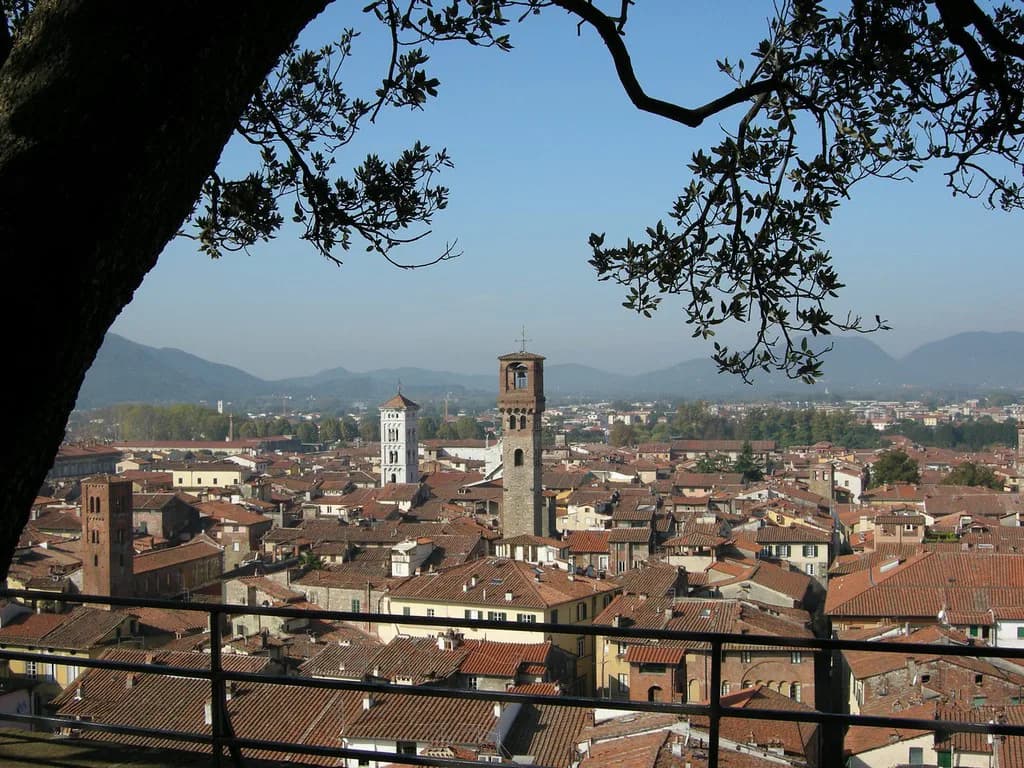
Lucca once had around 250 medieval towers, of which only a handful survive. The two you can climb are Torre Guinigi, topped with a cluster of holm oaks, and Torre delle Ore, the clock tower. Both give panoramic views over the terracotta rooftops, and doing just one is a perfectly reasonable choice.
Torre Guinigi is the icon: 45 metres high, reached by roughly 230 steps, with a small garden of oak trees at the top. Because space is limited, visitor numbers are capped, so Northabroad suggests going early in the day to avoid queues. Torre delle Ore is slightly taller at about 50 metres and considerably less busy, with narrow wooden stairs of around 200 steps.
Both towers were reported at 8 euros for an adult ticket, with reduced rates for children, students and seniors, but those figures come from blog pages and are not confirmed current prices. Opening hours and seasonal closures also vary, so check the official tower information before building your day around a climb.
If you climb only one, choose Torre Guinigi for the trees and the classic view, and accept that you may share the platform. Choose Torre delle Ore if you would rather have space at the top and a view that includes its tree-topped rival.
Day 2 – Optional Add-Ons: Palazzo Pfanner and San Frediano
Palazzo Pfanner, north of the centre, is a less well known stop with a baroque garden of statues, lemon trees and a central fountain. Sommertage reports a combined palace-and-garden ticket at 6.50 euros, or 4.50 euros for either part alone, but confirm the current scope and price at the entrance rather than assuming one ticket covers everything.
Nearby, the Basilica di San Frediano is worth a short detour for its large golden mosaic facade and its lively piazza. Northabroad rates it below the city's headline sights but considers the square and the mosaic reason enough to pass by.
Spend the rest of the afternoon doing nothing in particular. Climbing a tower and visiting two churches is already a full day, and the pleasure of Lucca lies in the wandering between them.
Day 3 – Day Trip Choice: Pisa or Cinque Terre
Pick one day trip rather than two. Pisa is the simpler option, a short drive or train ride away according to the blogs, and centres on Piazza dei Miracoli with its leaning tower, cathedral and baptistery. The square is extremely busy in high summer, so an early start pays off, and a walk along the Arno rounds out the visit.
Cinque Terre is the more ambitious day. The usual approach is to drive or travel to La Spezia and use the frequent trains between the five villages, which are only minutes apart. The villages are small but heavily visited, so expect company rather than solitude in Manarola, Vernazza and the rest.
Journey times quoted by travel blogs are approximations and not reliable schedules, so check current timetables before deciding. Fewer stops and an earlier departure will make either trip more enjoyable.
Day 3 Alternative – Stay Local and Go Slow
If a full day trip feels like too much, stay in Lucca. The Acquedotto Nottolini, about a 15-20 minute walk behind the main station, runs over three kilometres through the countryside on a long arcade of arches and is a fine route for walking or cycling. It suits a morning when you want space and shade rather than crowds.
Alternatively, spend the afternoon on wine. The countryside around Lucca has numerous wineries offering tastings, often paired with a vineyard and cellar visit, and the experience can be tailored from a short tasting to a longer tour. Opera lovers can round off the evening with a Puccini performance in the church of Santi Giovanni e Reparata in the historic centre.
Food and Local Rituals
Eat pizza by the slice at Pizzeria da Felice if you want a quick, local-style lunch, or book ahead at Pizzeria Sud for wood-fired Neapolitan pizza in the northern part of the old town. The Sommertage writers recommend reserving for the latter, though availability is never guaranteed.
Try buccellato, the semi-sweet raisin bread that is one of Lucca's signature products, and make gelato a small daily habit rather than a single outing. Discover Tuscany also mentions the Christmas ice rink on Piazza Napoleone, a seasonal detail worth checking for the year you travel.
Practical Trade-Offs
Decide in advance how much you want to pay for views. The towers, the cathedral interior and bell tower, and Palazzo Pfanner each carry their own charges, and none of those tickets should be assumed to cover anything else. Budget loosely, check current prices, and keep one paid climb as a splurge rather than trying to do everything.
Cars are effectively excluded from the historic centre, and driving into a restricted zone risks a fine, so park outside the walls or arrive by train. A bicycle is the most practical way to move quickly through the narrow streets, and rentals are widely available around the centre.
Where to Stay
Inside the walls, a small boutique hotel keeps everything walkable, and Sommertage singles out Il Pozzo di Santa Zita near Piazza dell'Anfiteatro as central yet quiet, with careful decor. Expect old-town parking to cost extra where it is offered.
Outside the walls, an agriturismo such as Al Podere Di Rosa, a short drive from the centre, suits travellers planning day trips by car. The trade-off is character and hospitality versus soundproofing, which the same writers note can be limited in historic buildings.
Plan Your Visit
Three days in Lucca is enough to walk the walls, climb a tower, see the two great churches and take one proper day trip, without turning the trip into a schedule. Keep one paid climb, one slow afternoon and one flexible day, and the city will do the rest.
Before you go, confirm opening hours, closures and current ticket prices with each site, since the figures quoted by travel blogs are snapshots rather than guarantees. Then let the old town set the pace.
Frequently Asked Questions
How many days do you need in Lucca?
Two days covers the walls, the Duomo and one tower comfortably. Three days adds a day trip to Pisa or the Cinque Terre, or a slower local day at the Nottolini aqueduct or a winery, and gives you evenings in the piazzas rather than a rushed departure.
Is it worth climbing both Torre Guinigi and Torre delle Ore?
If you enjoy viewpoints and photography, yes. Torre Guinigi offers the rooftop garden and the classic view; Torre delle Ore is slightly higher and usually less crowded. If you only want one panorama, pick Torre Guinigi for the trees or Torre delle Ore for more space at the top.
Should you day trip to Pisa or Cinque Terre from Lucca?
Choose one. Pisa is the easier half-day, built around Piazza dei Miracoli and a river walk. Cinque Terre takes more planning, typically via La Spezia and the trains linking the five villages, and the villages are busy. Check current timetables before deciding.
Is Lucca doable as a day trip from Florence?
Yes, and many people see the main sights in a few hours. Staying overnight or for two nights lets you experience the quieter evening atmosphere, which is when the old town is at its most enjoyable.
What is free to visit in Lucca?
The four-kilometre wall circuit is free to walk, and San Michele in Foro has free entry according to visitor reports. Towers, the cathedral interior and bell tower, and Palazzo Pfanner carry separate charges, so check each site's own information before you go.
Can you walk or bike the walls of Lucca?
Yes. The tree-lined path on top of the walls runs the full circuit of roughly four kilometres and is used by walkers, runners and cyclists. Bicycles can be rented around the centre, and access points let you join or leave the wall at many spots.
Sources
Continue exploring
More guides you'll find useful