Lucca Rainy Day Guide: Indoor Things to Do Inside the Walls
Plan a wet day in Lucca with ticketed interiors like Palazzo Pfanner's museum and garden, free squares and church exteriors, plus a wall walk when rain eases.
On this page
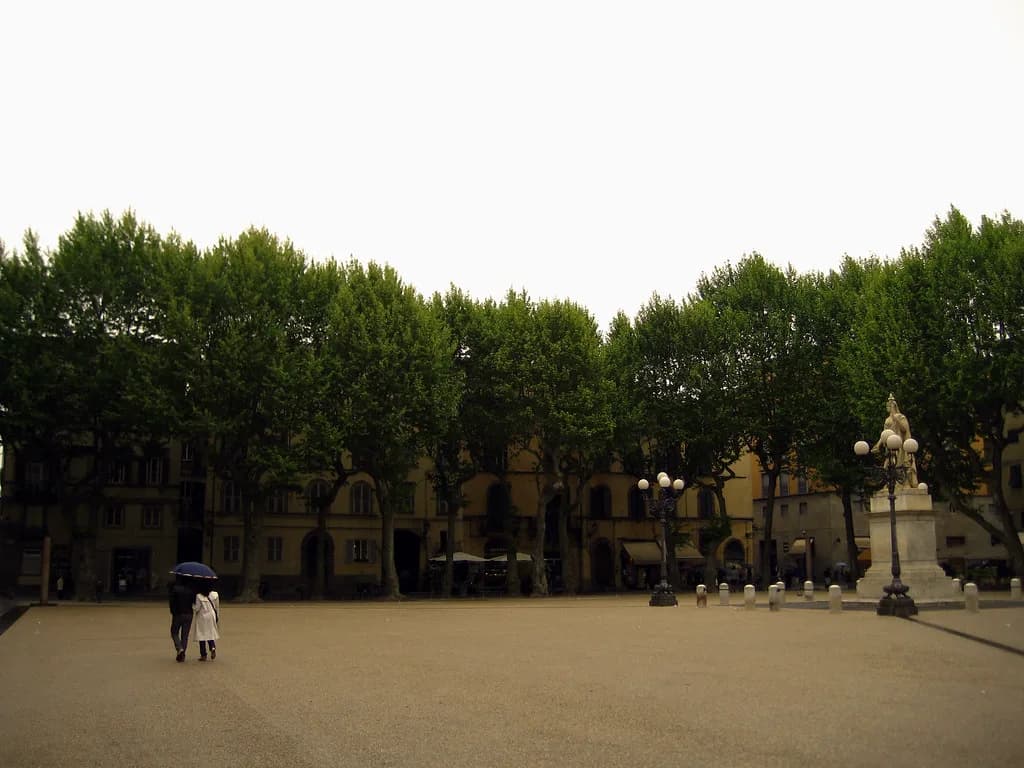
Lucca's historic centre is compact enough that rain changes the order of your day rather than cancelling it. The old town sits inside a ring of Renaissance fortifications roughly four kilometres long, so a wrong turn costs minutes, not a bus ride. That density is the whole strategy: pick one ticketed interior, line up a free square and a church exterior nearby, and keep the wall promenade as a bonus for the first dry half hour.
Before setting out, decide between two categories of sight. Ticketed interiors such as Palazzo Pfanner's museum rooms are built for wet weather, and the fee covers a defined visit; check the operator's own page for current opening days, last entry and prices, because those details change by season and secondhand blogs go stale. Free squares and church exteriors cost nothing but shelter you less, so treat them as short hops between interiors.
A practical rainy-day kit for Lucca is small: one umbrella per two people, shoes with grip for polished stone, and a shortlist of three indoor stops so you are never deciding in a doorway. The plans below run from a two-hour dash to a half day, and each one assumes you will spend some time standing under arcades and cafe awnings.
Quick answer: why Lucca works in the rain
Almost all of Lucca's notable sights sit within the walled centre, which makes a wet day a series of short outdoor bursts rather than a transport problem. You can pair a paid interior with a free square on foot and retreat to a cafe when the rain hardens. The only genuinely compromised option is the wall circuit itself, a promenade above the streets with little cover.
The practical split is between places that reward a ticket and places that only ask you to step inside. Ticketed stops give you a reason to stay put for an hour while your shoes dry; churches and squares work as ten-minute waypoints. If you want a wider list of low-cost stops before committing, our guide to free things to do in Lucca pairs well with a wet forecast. For wider planning, see Free Things to Do in Lucca.
Ticketed interiors worth the shelter
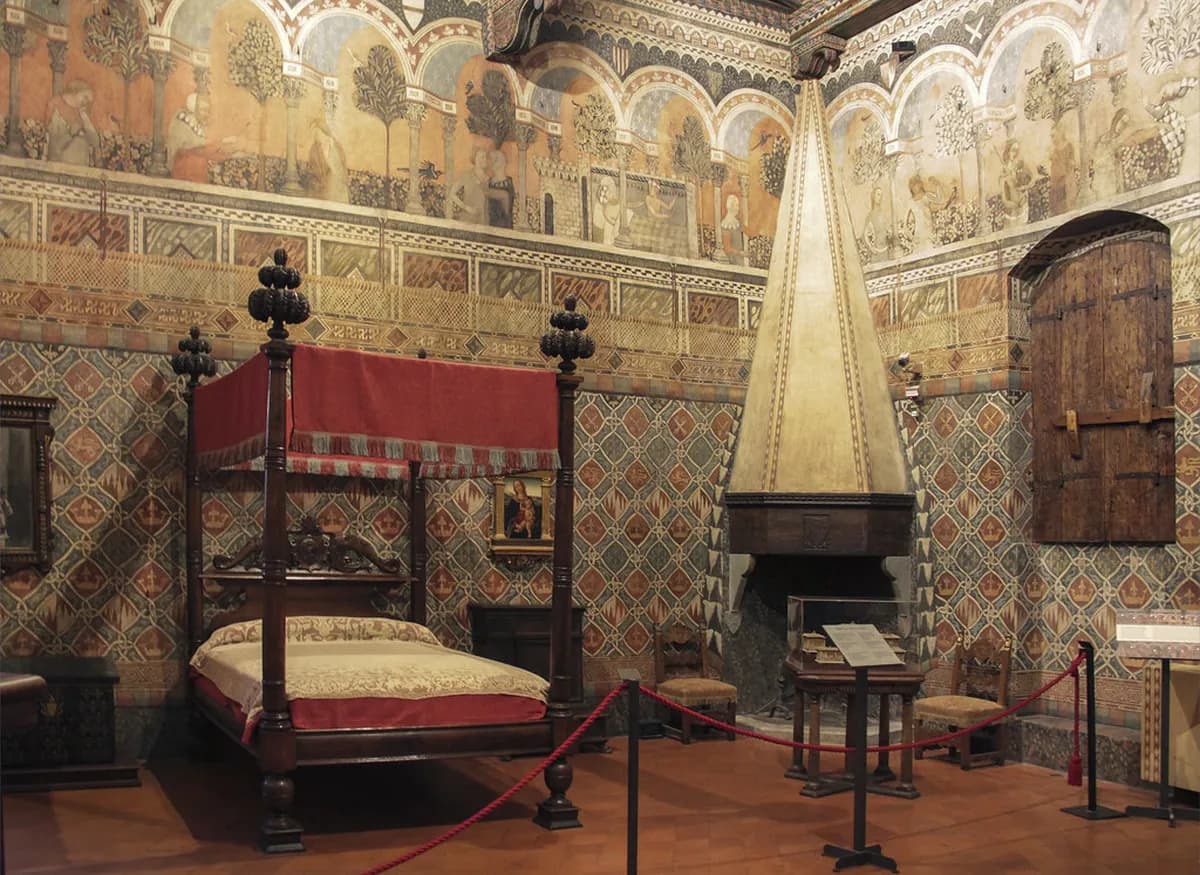
Palazzo Pfanner is the most useful rainy-day anchor in the city because one visit covers two different experiences: a baroque garden attributed to Filippo Juvarra and a museum inside the palazzo with frescoed rooms, period furnishings and the medical instruments of Dr Pietro Pfanner. The official site states that the garden opens from 15 March to 31 December, subject to extraordinary openings and closures, so check the operator page before you build a day around it. The garden is outdoor space, so save it for a lull and tour the museum rooms while it pours.
Treat the Palazzo Pfanner ticket as covering that one property only. The palazzo's own ticket page is the place to confirm what the garden-and-museum entry currently includes and what it costs, since visitor reviews quoting figures can be out of date. The interior museum is the part that genuinely works in heavy rain, and the frescoed rooms and medical collection give you a focused hour rather than a quick dash through a doorway.
The Orto Botanico di Lucca is a different proposition, and honesty helps here. It was founded in 1820 and holds living plant collections arranged as a route through colours, sounds and scents, with glasshouses, a lake and a wooded mound among its sections. Most of that route is outdoors, so it suits drizzle or a break in the weather rather than a downpour. The garden publishes daily opening information on its own site, which is the only reliable source for hours on the day you visit.
Lucca's towers are the clearest trap on a wet day. The Torre Guinigi is famous for the holm oaks growing on its roof, but reaching them means a stepped climb and an open rooftop, so it belongs in the gap-in-the-rain column rather than the shelter column. If the sky looks set for the afternoon, swap the climb for a museum and come back to the tower on a drier morning. Our hidden gems in Lucca guide covers the tower and other elevated viewpoints worth saving for clear weather.
Free squares and church exteriors
Piazza dell'Anfiteatro is the best free stop when the weather turns, because it is an enclosed elliptical space ringed by buildings on the footprint of a Roman amphitheatre that once held around 10,000 spectators. The shape cuts the wind, and the cafes around the edge give you a dry seat with a view of the square. Walk it in five minutes, then sit under an awning and let the shower pass.
Santa Maria Foris Portam rewards a short detour for reasons that have nothing to do with the forecast. Its name means outside the gate, a reminder that it stood beyond the original Roman walls before the city expanded around it in the twelfth century, and the interior holds two seventeenth-century paintings by Guercino. Inside the church there is also a camera obscura sundial whose beam of light marked local solar midday and, historically, regulated the city's clocks. Entry to a working church like this is normally free, but confirm current visiting possibilities locally rather than assuming the doors are open.
Lucca is often described as a city of a hundred churches, and the big three inside the walls are the Duomo di San Martino, San Michele in Foro and the Basilica di San Frediano with its mosaic facade. Churches give you a dry ten or twenty minutes and cost nothing to step into, but their towers, museums and archaeological areas are separate paid visits with their own tickets. Do not assume one purchase opens the whole complex.
A Puccini hour for the wettest stretch
When the rain settles in for a long spell, the composer trail is a sensible indoor anchor. Giacomo Puccini was born in Lucca in 1858, and his birthplace is now a museum where the family's rooms and furnishings are preserved, including a piano associated with his compositions. It gives a rainy hour a story rather than just a dry room, and it sits in the historic centre.
The museum publishes its own visitor information, including where to buy tickets, so check that page on the morning of your visit rather than relying on older trip reports. If you would rather not commit to a ticket, the Puccini statue in the square near the museum and the composer's connection to the Teatro del Giglio give you a free, short walk instead. Our one-day itinerary slots the museum into a fuller route when the weather is kind.
Covered browsing and cafe time
Via Fillungo is Lucca's main shopping street and runs through the old town past boutiques, workshops and the clock tower, which makes it a low-commitment way to spend a wet hour without buying a ticket. Shops give you doorways to duck into, and the narrow street cuts the wind. Set a meeting point before you split up, since phone signal between thick stone walls is not guaranteed.
Cafes are part of the plan in Lucca rather than a failure of it. Sitting out a shower with a coffee and a slice of buccellato, the local anise and raisin sweet bread, costs less than a museum ticket and gets you dry. Expect higher prices on the big squares, where you are paying for the view, and cheaper options a street or two away.
When the rain eases: the walls and the gardens
The Renaissance walls are the one Lucca sight that genuinely needs dry weather. The circuit runs over four kilometres around the centre on a tree-lined promenade, roughly twelve metres high, and it is exposed in almost every direction. Save it for a clearing sky, and treat a partial loop as a proper walk rather than trying to complete the ring in a drizzle.
If the sun comes out, the wall promenade and the botanical garden become the best-value part of the day, since both are essentially outdoor experiences. The garden's own site notes that each season offers a different route through its collections, so a post-rain visit in spring looks nothing like one in autumn. Wear shoes that cope with wet gravel and steps, and check the garden's opening note before walking over.
Two sample plans for a wet day
For a two-hour dash, start at Palazzo Pfanner and give the museum rooms most of your time, then walk to Piazza dell'Anfiteatro for a covered cafe stop and a look at the elliptical square. If the rain thins, add Santa Maria Foris Portam on the way. Skip the tower and the walls entirely, and check the palazzo's opening days before you set off.
For a half day, reverse the order: a church or the Puccini birthplace in the morning, lunch under cover, then Palazzo Pfanner in the afternoon with a garden visit only if the sky clears. Keep the Torre Guinigi and the wall promenade as a swap for the next morning. A two-day itinerary gives you room to reshuffle without losing anything.
Practical tips for a wet day in Lucca
Confirm opening days before you leave your accommodation, and confirm them again if the forecast shifts, because seasonal hours and extraordinary closures are normal in Italy. Each operator's own site is the place to check; review sites go stale quickly on prices and hours. Carry a card for tickets, since small ticket desks do not always handle large notes well, and keep small change for cafes.
Keep your ticket scope straight. A Palazzo Pfanner entry covers that property, a church visit does not include its tower or museum, and the tower climb is a separate purchase again. Knowing this stops you from overpaying twice in one afternoon and helps you choose one paid interior rather than three rushed ones.
Plan Your Rainy Day in Lucca
Rain in Lucca is a scheduling problem, not a reason to stay in. Choose one ticketed interior such as Palazzo Pfanner, add a free square and a church, and keep the tower and the walls for a dry gap. That structure gives you a full day without a single soaked mile.
Before you go, verify the details that change: opening days, ticket scope and garden hours, all from operator pages. For the rest of your trip planning, the wider Lucca Attractions hub collects the individual sight guides in one place.
Frequently Asked Questions
Is Lucca worth visiting on a rainy day?
Yes. Nearly all the historic sights sit inside the walled centre, so you can move between a palace museum, a church interior and a covered cafe table in short hops. You will likely postpone the tower climb and the wall promenade, but the day still works.
What indoor things can you do in Lucca when it rains?
Palazzo Pfanner's museum rooms, the Puccini birthplace museum and the interiors of the Duomo, San Michele in Foro and San Frediano are the most reliable dry stops. Cafes and shops along Via Fillungo fill the gaps. Check each operator's page for current opening days before setting out.
Which Lucca attractions are free to enter?
Piazza dell'Anfiteatro, Piazza Napoleone and the exteriors of the main churches cost nothing to walk through or stand in. Paid elements such as towers, museums and archaeological areas are separate tickets, so do not assume one purchase covers a whole complex.
How long do you need for a rainy afternoon in Lucca?
A suggested two-hour plan covers one ticketed interior plus a covered cafe stop on a nearby square. A half day allows two interiors, a church and a proper lunch, with the garden or the walls added only if the rain eases.
Can you walk Lucca's walls in the rain?
The wall promenade is exposed and around four kilometres long, so it is a poor choice in steady rain. Treat it as a gap-in-the-rain walk and accept a partial loop rather than the full circuit.
Sources
- Orto Botanico di Lucca, Il giardino più prezioso di Lucca, fondato nel 1820
- Palazzo Pfanner - Lucca
- Tourist Attractions - Palazzo Pfanner - Via degli Asili, 33, LUCCA, ,
- Squares - Piazza Anfiteatro (Amphitheatre Square in Lucca) - Piazza dell'Anfiteatro, Lucca, ,
- Santa Maria Foris Portam: A Lucca Landmark - Lucca, Italy | Ciceru - Travel Stories & Adventure Guides
- The Guinigi Tower Lucca Travel Guide - Discover Tuscany | Our Journal
- Lucca - Information and travel guide about visiting Lucca
- Giacomo Puccini: Historical Sites in Lucca, Italy - Traveling with MJ
Continue exploring
More guides you'll find useful