Free Things to Do in Livorno: What Costs Nothing and What Doesn't
Sort genuinely free Livorno experiences, from canal walks to fortress park grounds, and separate them from paid meals, ticketed interiors and train trips.
On this page
Many visitors reach Livorno by cruise ship or ferry and immediately leave for Florence, Pisa or Lucca, treating the city as a transfer point. That is a reasonable choice, but it also means plenty of people never see the canal quarter, the fortress-turned-park or the market. If you have a partial day in port, staying put is the cheapest option available to you.
The useful distinction for a budget day is between public space and everything else. Streets, canals and park grounds cost nothing to enter, while food, museum interiors and train tickets do not. Knowing which is which stops you from budgeting for the wrong things.
The Quick Free-vs-Paid Snapshot
On the free side sit outdoor wandering, the La Venezia canal district and the public park grounds of La Fortezza Nuova. On the paid side sit food stops, any ticketed interior or museum, and train trips out of town. Treat this as a planning split rather than a promise about individual sites, because opening arrangements change.
The single most volatile item is transport out of the city. Fares and timetables on the Pisa, Florence and Lucca routes should be checked with the train operator before you commit to a day trip, since quoting figures from memory or old blog posts is a reliable way to get caught out at the ticket machine.
For anything inside a building, including museums and temporary exhibitions, the city's own event calendar is the place to confirm what is on and when. The official Città di Livorno site carries a dated events listing and news notices, which is more dependable than a guidebook printed months earlier.
Free: The La Venezia Canal Quarter
Livorno's canal neighbourhood, known as La Venezia, was laid out during the Medici period and pairs pastel waterfront buildings with quiet waterways. It is not Venice, and that is part of the appeal: you can walk it slowly without queueing or paying an entrance fee.
One traveller's account describes the canal area as tranquil, with only the occasional small waterside bar and few people strolling through. That makes it a good low-cost stop for slow travel rather than a sight to tick off. Go expecting atmosphere, not attractions.
Because there is nothing to buy at the entrance, the canal quarter is where a tight budget stretches furthest. Bring water and treat the walk itself as the activity. If you want more structure, a route that links the canals with the old harbour keeps you moving without spending.
Free: La Fortezza Nuova as a Public Park
La Fortezza Nuova is a pentagonal fortress in the middle of the canal district that the city turned into a public park. The grounds are the free part, and the canal views from the walls are the reason to go.
That same account notes music festivals and events are sometimes held inside the fortress, and that a small coffee and cocktail spot operates within the walls. Events and venue openings are exactly the sort of detail to confirm on the city's events page before you build a day around them.
Do not assume a single ticket covers everything in the complex, and do not assume the interior is open simply because the park is. Treat the grounds as the reliable free element and verify any paid or guided access separately.
Cheap but Not Free: Browsing the Market and Eating Cacciucco
Walking through Livorno's central market costs nothing; buying food there does. It is a useful distinction because market visits are often filed under free activities when the real spend happens at the counter. Set a limit before you go in.
Seafood dominates the port city's food culture, and cacciucco, a hearty fish stew traditionally made from unsold catch at the end of the market day, is the classic local dish to look for. Menus and prices vary by restaurant and season, so check the board outside rather than relying on a figure from an old guide.
If you want one paid treat, make it a sit-down local dish rather than a string of snacks. One proper meal usually costs less than several impulse purchases and gives you a better sense of the city.
Paid Day Trips by Train to Pisa, Florence and Lucca
Pisa, Florence and Lucca are all reachable by train from Livorno, and doing it yourself is generally cheaper than an organised excursion sold at the port. The trade-off is that you handle connections and timings, which matters most on a fixed cruise schedule.
The Lucca route requires a change at Pisa, which makes it the most demanding of the three for anyone watching the clock. Pisa is the shortest hop, so it suits a half-day; Florence asks more of your time. Treat these as shapes of trip rather than fixed durations and confirm schedules with the operator on the day.
Cruise passengers can compare organised options through tour platforms, but read what is included before paying for convenience. A ship excursion buys certainty on timing; a train ticket buys flexibility and a lower outlay. Decide which of those you actually need.
Getting Around Without Overspending
The port area sits away from the historic centre, and the practical approach is to use the shuttle provided for cruise passengers, then continue on foot. Walking is free and the centre is compact enough that many visitors cover the canals and fortress on foot in one stretch.
Livorno Centrale station is roughly a thirty-minute walk from the centre, with local buses covering the same distance if you would rather save your legs for the destination. Bus fares and taxi prices change, so check locally instead of budgeting from an old figure.
A sensible split for a single day is free wandering in the morning, a paid lunch, and then either more free walking or one short train trip, not both. That keeps the cost predictable without turning the day into a spreadsheet.
Where Free Ends: Interiors, Museums and the Cultural Calendar
Outdoor space is reliably free, but interiors are not. The Museo della Città, churches and temporary exhibitions each set their own access arrangements, and a ticket for one does not imply entry to another. Confirm before you travel rather than after you arrive at a closed door.
The city publishes a dated events calendar that lists exhibitions, concerts and theatre performances, which is the right place to find out what is running during your stay. It also flags civic notices that can affect a day out, such as weather alerts.
If you want a structured overview of what is worth paying for, start with the attraction guides and then decide which interiors justify the spend. A short list of paid sights is more useful than a long one when the budget is tight.
Building a Low-Cost Day Without Assuming Prices
The workable method is to fix the free skeleton first: a canal walk, the fortress grounds, a market browse and a seafront stroll. Add paid elements only where they genuinely interest you, and leave slack in the plan for opening hours you have verified.
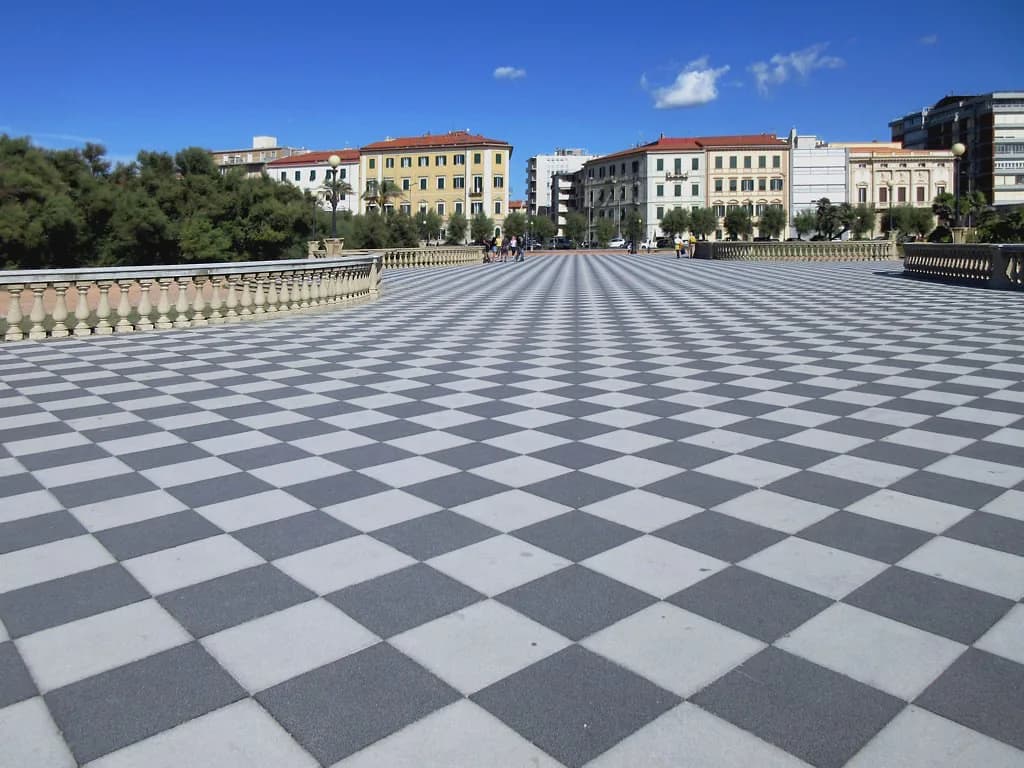
For the seafront, the checkerboard terrace is a public promenade rather than a ticketed attraction, which makes it an easy free addition to an afternoon. Check current access and any seasonal restrictions before making it the centrepiece of your day. For wider planning, see Terrazza Mascagni in Livorno.
If you would rather look than walk, elevated spots over the port and coast cost nothing and give the city context. Combine one with the canal district and you have a free half-day with variety rather than repetition.
Plan Your Visit
Livorno is inexpensive precisely where it is least advertised: the canals, the fortress park and the streets between them. Spend your money on one good meal and, if time allows, one train trip, and verify fares and opening times with the operator or the city before you go.
For a fuller picture of the city's quieter corners, the hidden gems guide covers places that reward a slower pace. Pair it with confirmed event listings and you have enough to plan without guessing at prices.
Frequently Asked Questions
What can you do for free in Livorno?
Walking the La Venezia canal quarter, strolling the public park grounds of La Fortezza Nuova, browsing the central market without buying, and wandering the seafront promenade all cost nothing to enter. Interiors, museums, food and train trips involve spending, so confirm arrangements with the city or the operator before you rely on them.
Is La Fortezza Nuova free to visit?
The fortress was converted into a public park, so the grounds are the free element and the canal views are the draw. Do not assume that the same access covers every interior, guided visit or event held inside the walls; check with the city before planning around any of those.
Can you walk from the cruise ship into Livorno?
The port lies away from the historic centre, and cruise passengers typically use the provided shuttle before continuing on foot. Livorno Centrale station is roughly a thirty-minute walk from the centre, with local buses covering the same route if you prefer to save energy.
Is it cheaper to take the train to Pisa than a ship tour?
Taking the train yourself is generally the cheaper approach, but it puts connections and timing in your hands, which matters on a fixed cruise schedule. A ship excursion buys certainty about returning on time. Check current fares and timetables with the train operator before deciding.
How much time do you need to see Livorno's free sights?
Half a day covers the canal quarter, the fortress grounds and a market browse at an unhurried pace, with time left for the seafront. If you also want a train trip to Pisa, pick one or the other rather than trying to fit both into a short port call.
Sources
Continue exploring
More guides you'll find useful