Hidden Gems in Como: Overlooked Corners of the City
Look beyond Como's lakefront crowds with a guide to quieter city corners, from Romanesque gates and villa grounds to historic shops and nearby lake towns.
On this page
Como is often treated as a gateway rather than a destination, a place to catch a ferry or a train and move on toward Bellagio or Varenna. That habit leaves the city's own lanes, villa grounds and smaller collections noticeably less congested than the waterfront in high season. Treating Como as the base and the subject of a slow day or two lets you see the overlooked layer that day-trippers skip.
The most useful way to sort these lesser-known places is by what they cost and how much time they demand. Public promenades, viewpoints and villa grounds reward a wander, while museums and interiors are separate stops that should be chosen by interest. This guide keeps each place distinct, tells you what to verify before going, and sends you to detailed guides for the stops you decide to keep.
What Counts as a Hidden Gem in Como
It is tempting to label anything off the waterfront as secret, but most of Como's quieter corners are simply ordinary city places that visitors overlook. The medieval old town, the Romanesque military gate towers and the lakeside promenade are all part of the city's daily fabric rather than hidden finds. A better test is whether a place rewards a slower visit and sits away from the main lakefront crowds. For a wider inventory of the city's sights, the Como Attractions hub keeps each place as its own guide.
Where a source supports the claim, this guide calls a place quieter or overlooked rather than secret. Brienno, the gorge at Bellano and Vezio Castle above Varenna are described this way in a Lake Como photography guide. Those three sit outside Como city and appear here only as day-trip options, not as city-core stops.
Start With a View: Brunate Funicular and the Volta Lighthouse
The funicular up to Brunate is the quickest way to trade the lakefront for a wide view of the lake and mountains. The village sits hundreds of metres above the city, and a train has run to the slope since the late 19th century. Expect queues to build in summer, so going early or late in the day is the practical trade-off.
At the top, the Faro Voltiano lighthouse gives you a purposeful walk and another angle on the lake. The current operating schedule, frequency and ticket terms are not published here, so check the operator's own information before you set out. It is an uphill detour best done on a clear day rather than squeezed into a short layover.
The Lakeside Promenade and Tempio Voltiano
The lakeside walk was given a formal romantic promenade in the late 1950s, and it is one of the city's easiest free pleasures. Heading west from the main harbour lets you pass monuments, several villas and the Tempio Voltiano without any booking. The neoclassical temple to Alessandro Volta is a monument on the outside, while the museum interior is a separate paid visit to check with the city before going.
The walk works best at a slow pace rather than as a route to tick off. Carry the expectation that some interiors will be closed or have seasonal hours and confirm them locally. That way the promenade is the reliable part of the plan and the museum becomes an optional bonus.
Old Town Lanes and the Romanesque Gate Towers
Como's old town sits within walls dating from the 12th century, and three Romanesque military gate towers survive. A Lake Como guide sums it up: the winding lanes, the Duomo and the Broletto next door are the anchors, while the older churches reward a short detour. The Basilicas of San Fedele and Sant'Abbondio, with its twin bell towers, are part of this quieter layer of the city.
Mornings are kindest for walking the lanes before the waterfront fills, and you can combine the gates with the lake walk without any transport. Check church opening times at each entrance rather than assuming they match, as churches on the same street often keep different hours. For other cities with a similar overlooked layer, our hidden gems in Venice and hidden gems in Florence guides follow the same slow approach.
Villa-Hunting Without a Boat
You can visit several villas close to the city without hiring a boat, and they should not be lumped together as one experience. Villa Saporiti was built for a marchioness between 1790 and 1793, Villa Gallia was built as an abbot's summer house in 1615, and Villa Olmo is a neoclassical villa with gardens. Villa del Grumello has restored greenhouses and stables, while Villa Sucota is tied to the Antonio Ratti Foundation.
A second, wider Lake Como guide also singles out Villa Olmo as a grand neoclassical building dating to the 18th century and notes that its grounds are not as dramatic as the northern villas. That makes it a sensible shortcut if you want a villa garden close to the city rather than a full day of villa-hopping.
Not every villa interior shares one ticket, and several of these buildings are working institutions. Find out which interiors you can enter and whether one or more entrances requires its own ticket before you plan. Where access is unclear, you can still enjoy the visible facades and grounds as part of the walk.
Ticketed Collections: Pick by Interest, Not by Checklist
The city's ticketed collections are separate stops, and a hit list of all four will crowd out a short stay. The Museo Archeologico Giovio in Palazzo Giovio covers prehistoric, Roman and medieval finds, and the Museo Storico Giuseppe Garibaldi has multimedia displays. The Pinacoteca Civica holds Renaissance and later art, and the Museo della Seta explains Como's silk production with demonstrations alongside the exhibits.
Originals show that silk-weaving workshops have been offered at times, but the present form is not something to promise yourself in advance. Treat any demonstration as a bonus that depends on the day rather than a guaranteed feature. Prices, opening hours and whether an entry is paid have not been established here, so check each museum's own notices before you go.
Modern Como: Life Electric and the War Memorial
Today's Como has a modern layer that is easy to walk past. Life Electric is a tall metal monument to Alessandro Volta on the harbour breakwater, and the Monumento ai Caduti is a stone tower memorial to the victims of the First World War. Fontana di Camerlata, the rowing club with its diving platform and the Sinigaglia stadium round out the modern structures worth spotting.
This is mostly outdoor sightseeing, so it fits neatly around a lakefront walk and does not depend on any opening hours. Build it into a late-afternoon stroll when the waterfront thins out rather than as a separate trip.
Everyday Local Texture: Historic Shops and Markets
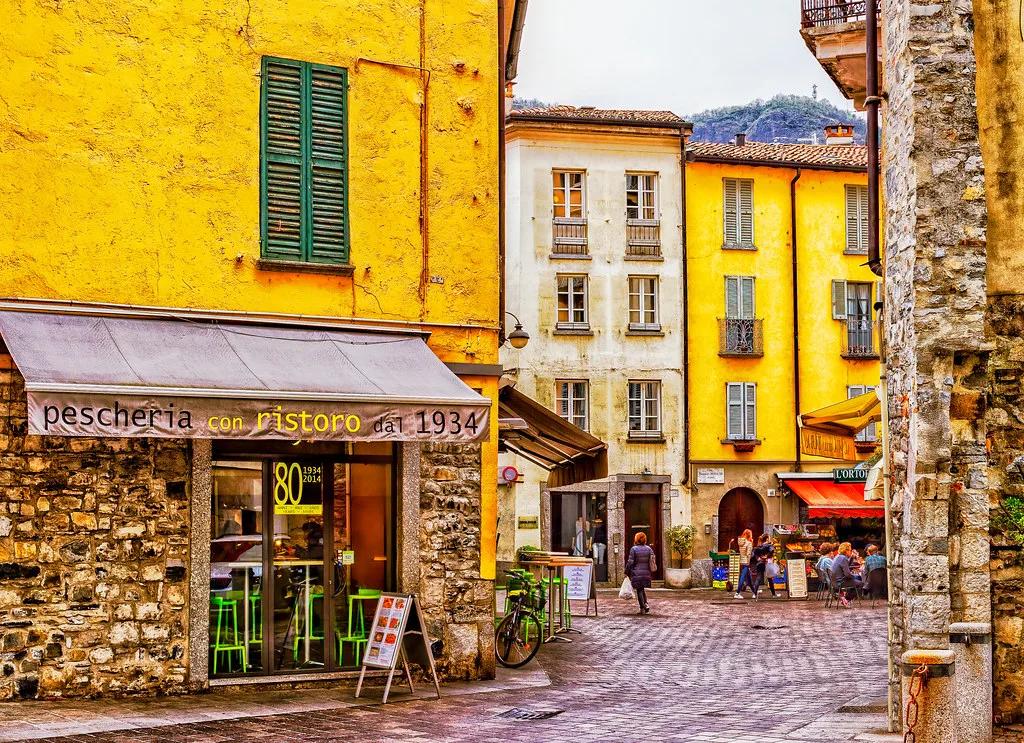
The botteghe storiche, or historical shops, are the kind of everyday texture that visitors miss while heading for the ferry. The city's historic businesses carry local crafts, textiles, food and wine, and a guide recommends Via Armando Diaz for smaller boutique shops. A more thorough Lake Como guide adds that Como is the largest settlement on the lake, with the widest choice of lodging, food and shopping.
Como has a market tradition too, and sources describe morning markets near the old walls and periodic antique markets. Days and times change, so confirm them locally or with the city's tourist office before you build a morning around one. That caveat matters more than any single schedule, because a missed market day leaves you with a lot of walking.
Green Escapes Inside the City
Parco Spina Verde on the west side is the city's largest green area, covering around 1,000 hectares, with trails, hilltop views and Castel Baradello. For something shorter, the Giardini del Tempio Voltiano sits by the lake with monuments and an old locomotive, and the Chilometro della Conoscenza connects three historic villas. The one-kilometre name is a label, not a claim about a longer route.
These parks suit an unhurried afternoon rather than a checklist stop. Check trail conditions and garden access at the entrance or the city's own information service, since seasonal arrangements for grounds are not fixed here.
Day Trips Beyond Como for Quieter Lake Scenery
Some of the quietest corners of the lake are outside Como and work best as day trips. Brienno is described as a slow village of cobbled streets and old buildings on the western shore. The Orrido di Bellano is a gorge carved by the Pioverna River, and you can check current access rules and any entry requirements locally.
Vezio Castle above Varenna offers panoramic views and olive groves, and a Lake Como towns roundup lists Varenna among the lake's most appealing villages. These are separate destinations, not part of Como city. Pick one for a day rather than trying to combine them, and confirm ferries or transport on the day.
Practical Notes: What to Verify Before You Go
Exact prices, opening hours, market days and transport schedules are the things most likely to trip up a plan, and none of them are fixed here. Check the operator or city notices for the funicular, museums and villas rather than relying on older posts. Carrying some cash for smaller purchases is sensible, as the currency is the euro.
Any price quoted in older travel posts may be out of date, so use the operator's own notices instead. A short stay of two or three days is usually enough for the city's highlights, while a longer stay lets you add nearby lake towns at a calmer pace. Confirm ferry and rail details on the day.
Plan Your Visit
Como rewards the traveller who treats the city as the destination rather than the transit point. Build your day around free things first, like the promenade, old-town lanes and villa grounds, then add one or two ticketed collections by interest. Keep the funicular as an early or late detour, and leave a lake-town day trip for the day you do not mind a ferry ride.
Before departure, verify opening hours, ticket terms, and market or ferry schedules with official sources, since these details change. For more on the city's named sights, see the Como Attractions hub. For related planning, see Como With Kids: Funicular, Boat Rides and Easy Walks.
Frequently Asked Questions
What are the best hidden gems in Como, Italy?
Start with the quieter layers of the city: the Romanesque gate towers in the old town, the lakeside promenade, the public grounds and facades of villas like Olmo, Saporiti and Gallia, and the modern structures along the harbour. Treat museums and villa interiors as separate stops to check individually rather than all-in-one experiences.
Is Como worth exploring beyond the lakefront?
Yes, especially if you want a slower day away from the busiest stretches. The old-town lanes, historic shops, parks and lesser-known collections reward a wander, and the city is easy to explore on foot.
How many days do you need in Como and Lake Como?
Two to three days cover Como's main highlights and a slow walk around the city. Allow more time if you want to add nearby lake towns as day trips and include museum or villa interiors.
Is Como a walkable city?
Much of central Como is easy to explore on foot, including the old town, waterfront and some villa grounds. The funicular and any lake-town day trip involve other transport, so check details before setting out.
Which Lake Como towns are less crowded?
Some quieter lake spots sit outside Como, such as Brienno and the Orrido di Bellano, and are best visited as day trips. Vezio Castle above Varenna is a scenic stop rather than part of Como city.
Sources
Continue exploring
More guides you'll find useful