Self-Guided Walk in Bergamo Città Alta: DIY Route & Tips
Plan a self-guided walk through Bergamo's Città Alta: funicular start, Via Gombito, Piazza Vecchia, the Venetian Walls and a descent to Città Bassa, with route tips.
On this page
Bergamo's Città Alta is compact enough to explore without a guide, but its cobbled lanes, steep steps and layered ticket rules reward a little planning. You can set your own pace, pause where the view demands it and skip the interiors that don't interest you. The upper city sits on a hill, so the order of your stops matters more than the total distance.
One official guide estimates a six-hour itinerary for a broad city route that includes the funicular, Piazza Vecchia, the walls and Città Bassa. That is a useful anchor for how much there is to see, not a rule for your day. The loop below is deliberately shorter and flexible: roughly two to three hours for the core Città Alta circuit, a suggestion rather than an official duration, extendable if you want to add museums or a longer wall walk.
Why Walk Città Alta on Your Own
The upper city is a dense knot of medieval streets, piazzas and churches where the reward is often the walk between stops rather than the stops themselves. On a self-guided route you can linger in Piazza Vecchia at the quiet end of the day or cut a church visit short if the group is flagging. The main constraint is not admission but stamina, because the high ground means gradual climbs and uneven paving.
A sensible way to plan is to treat the outdoor highlights as one continuous walk and the interiors as optional add-ons you decide on the spot. That keeps your day from becoming a checklist and lets you adapt to weather, crowds and energy. For a broader look at which corners of the city repay extra time, the guide to hidden gems in Bergamo pairs well with this route.
Suggested Shape of the Day
The natural shape is to ride the funicular up, wander through the historic centre, drift out to the walls and then descend on foot into Città Bassa. That direction means the climbing is mostly handled by the funicular and your descent is gradual, which suits most walkers. Allow about two to three hours for the core loop, excluding any museum interiors and serious café stops.
If you want a longer day, add one or two ticketed interiors or extend the wall promenade. The official six-hour city itinerary shows how much more can fit in when you include Città Bassa and dedicated stops. Our version is intentionally lighter so you can still have an evening in the lower city without feeling rushed.
Before You Start: Practical Preparation
Wear shoes with real grip. Città Alta's lanes are cobbled, polished by foot traffic and steep in places, so trainers with tread are a better choice than thin-soled city shoes. Carry a refillable water bottle too; public fountains and refill points exist around the city, and you will welcome one on a warm climb.
Download an offline map or screenshot your planned route before leaving, because the tangle of lanes can defeat even a good sense of direction. A phone with data is useful for checking whether a specific church or tower is open when you arrive. Treat any fixed opening information as something to verify that morning rather than a promise.
Leg 1: Funicular Up to Piazza Mercato delle Scarpe
Start below and let the funicular do the work. It climbs to Piazza Mercato delle Scarpe, one of the oldest squares in the upper city, where the upper station occupies a building with stone arches. The square sits at the junction of old roads and makes a natural gateway into the historic centre.
Before you walk on, look back over the lower city from the station area. It is a quick orientation moment and helps you understand how the two halves of Bergamo relate. Check the return service before you commit, since funicular timetables and any temporary service changes are not fixed facts you should assume.
Leg 2: Via Gombito to Piazza Vecchia
From the square, follow Via Gombito, the long pedestrian lane that leads toward the heart of the upper city. It has been part of the street plan since Roman times and is lined with shops, cafés and old buildings. Roughly halfway along you pass a sixteenth-century fountain beside the small Church of San Pancrazio, an easy stop to miss if you are looking only at the shopfronts.
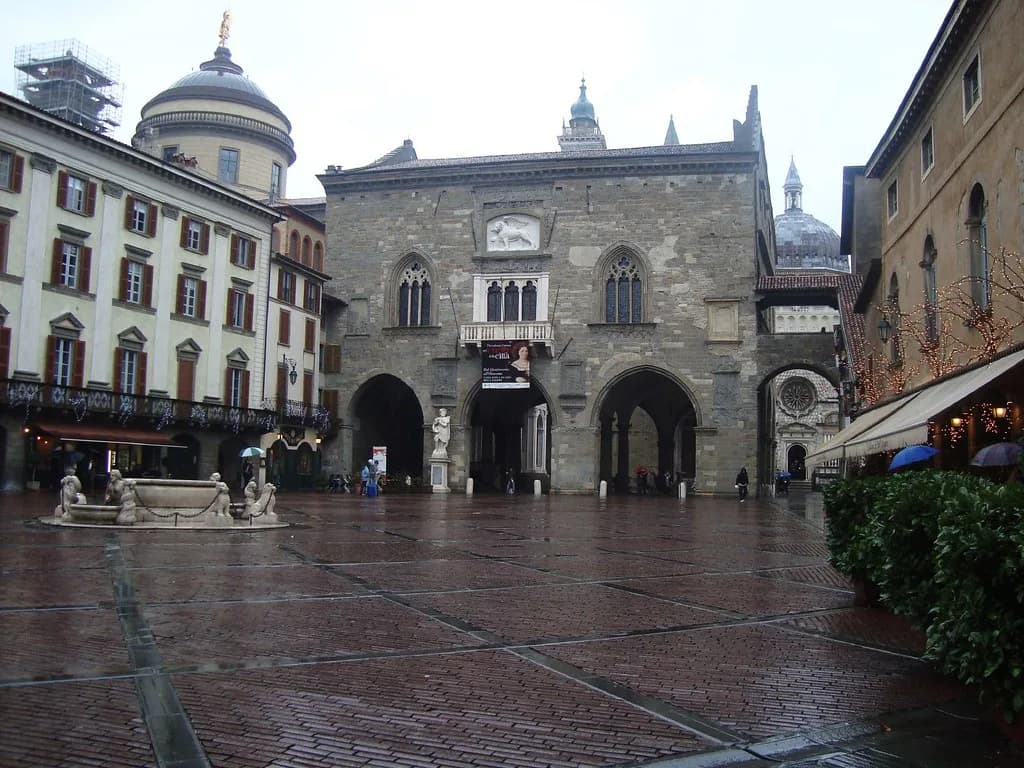
The lane ends at Piazza Vecchia, the city's old political and administrative centre. Stand in the middle for a moment: the Contarini Fountain, the Palazzo della Ragione and the tall civic tower all frame the square. This is the moment to decide whether you want to climb anything or simply enjoy the space.
Leg 3: Piazza Vecchia and Piazza Duomo
The Campanone, the tall civic tower over the square, is the city's best-known viewpoint. Access to the top is ticketed, and opening arrangements can vary, so check locally before planning your day around a climb. Even without going up, the tower and the adjacent Palazzo della Ragione give the square its shape.
A few steps away, Piazza Duomo packs several religious buildings into a small space. The Colleoni Chapel, the Basilica of Santa Maria Maggiore and the cathedral stand almost shoulder to shoulder. Entry rules differ from one building to the next, and some interiors may require a ticket while others do not, so treat each as a separate decision rather than assuming one ticket covers the group.
Leg 4: Corsarola, Colle Aperto and the Venetian Walls
Leave the piazzas along Via Bartolomeo Colleoni, known locally as the Corsarola, the lively pedestrian street that continues from Via Gombito. It carries you past shops and cafés to Colle Aperto, where the historic quarter gives way to the edge of the hill. From here the route turns onto the walls.
The promenade along the Venetian Walls is the most panoramic part of the walk, with the plain stretching away below. Continue to Porta Sant'Agostino, one of the monumental gates in the UNESCO-listed fortifications. The gate itself is free to see, and it frames your exit from the upper city.
Leg 5: Descending into Città Bassa
Pass through Porta Sant'Agostino and follow Via San Tomaso down into the lower city. Along the way you cross from the medieval world into the modern one, with the Carrara Academy and the GAMeC contemporary art gallery sitting almost opposite each other. Keep going until you reach Porta Nuova and the neoclassical centre beyond it.
Finish on the Sentierone or Via XX Settembre, where the lower city's cafés and shops make a natural end point. From here you can catch transport onward or simply sit down after the descent. If you still have energy, the Bergamo Attractions hub helps you pick a single museum or sight for the rest of the day.
Free Versus Ticketed Stops
The piazzas, the wall promenade and the streets themselves cost nothing to walk. Some churches are free to enter, though lighting systems, chapels or separate collections may involve a small charge. Ticketed sights such as the Campanone climb, the Rocca museum and the Walls of Bergamo Museum are separate from each other, so do not plan around a single combined ticket.
The practical rule is simple: decide before you arrive which one or two interiors you actually want, and treat everything else as optional. That way an unexpected closure or a long queue does not derail the whole day. Check current entry arrangements at the door or on the official tourism site rather than relying on older blog posts.
Route Decisions and Common Mistakes
Going up by funicular and down on foot is the sensible default. Walking up first leaves you tired before the best part, and returning the same way wastes the chance to see the walls and the lower city on your descent. If the funicular is not running, you can still walk up, but budget extra time and water.
Know your bail-out points. Piazza Mercato delle Scarpe lets you turn back early, Piazza Vecchia is a natural pause, and Colle Aperto is where you can shorten the route by taking transport down instead of continuing along the walls. Midday heat and weekend crowds are the two things most likely to slow you down, so start earlier in summer and keep the wall promenade for the cooler part of the day.
Practical Notes for the Day
Confirm the funicular is running before you rely on it, and check the entry arrangements for any tower or museum you want to visit. Neither the funicular schedule nor individual site opening hours are stable enough to quote here. The safest approach is to look at the official Visit Bergamo pages on the morning of your walk.
Allow more time than you think for the wall promenade and the descent. The walk is not long, but the views, the photo stops and the uneven footing add up. If you are travelling with children or older walkers, the funicular-up, walk-down plan keeps the hardest climbing off their feet.
Plan Your Visit
A self-guided walk through Città Alta works best when you treat it as a flexible half-day rather than a rigid tour. Ride up, follow Via Gombito to Piazza Vecchia, choose one interior if it appeals, then take the Corsarola out to the walls and descend through Porta Sant'Agostino. The route is short enough to walk twice at different times of day, and open-ended enough to skip what does not interest you.
For the wider picture of what else Bergamo offers beyond this loop, explore the city's hidden corners and separate attraction guides before you decide how to spend a second day. For related planning, see Bergamo One Day Itinerary: Città Alta to Città Bassa.
Frequently Asked Questions
How long does a self-guided walk in Bergamo Città Alta take?
For the core loop described here, plan roughly two to three hours at an easy pace, excluding museum interiors and long café stops. That is a suggestion, not an official figure. The official tourism site publishes a separate six-hour city itinerary that covers more ground, so use it as a reference if you want a longer day.
Do I need a ticket to walk around Città Alta?
No ticket is needed to walk the streets, piazzas and wall promenade. Individual sights such as the Campanone climb, the Rocca museum and the Walls of Bergamo Museum are separate paid attractions, and church interiors may have their own rules. Check at each site or on the official tourism site on the day.
Is it better to take the funicular up or walk up?
Taking the funicular up and walking down is the most comfortable option for most visitors. It saves your energy for the historic centre and lets you descend through the walls and into Città Bassa without retracing the same route. Confirm the funicular is running before you rely on it.
Which stops in Città Alta are free to enter?
The piazzas, the street lanes and the Venetian Walls promenade are free to walk. Some churches are free to enter, though lighting or separate chapels may involve a small charge. Ticketed sights such as the tower climb and civic museums are separate from each other, so do not assume one ticket covers a whole complex.
Can I shorten the route if I'm short on time?
Yes. Piazza Mercato delle Scarpe is an early turnaround point, Piazza Vecchia is a natural pause, and Colle Aperto lets you leave the route and head down by transport instead of continuing along the walls. Skipping the wall promenade cuts a meaningful chunk of time and distance.
Is the walk suitable for children or older visitors?
The funicular-up, walk-down version is manageable for most ages because the hardest climbing is avoided. Cobblestones and uneven steps are the main challenge, so sturdy shoes and a slower pace help. Use the bail-out points if energy runs low.
Sources
Continue exploring
More guides you'll find useful