Free Things to Do in Bergamo: Città Alta, Walls and Views
Plan a free day in Bergamo around Piazza Vecchia, the Venetian Walls, San Vigilio and free churches, with clear notes on what still costs money to enter.
On this page
Bergamo divides neatly into two towns: the modern Città Bassa on the plain and the walled Città Alta on the hill above it. Almost everything that makes the upper town memorable, from its squares and lanes to the long wall circuit and the castle grounds at San Vigilio, costs nothing to walk through. The catch is that the same hilltop concentrates most of the city's paid interiors, so an inexpensive day depends on knowing where free ends and a ticket begins. Related guide: Orto Botanico di Bergamo Guide: Colle Aperto Garden Visit.
This is a self-guided plan rather than an official itinerary, and you can stretch or shorten it to suit your pace. One comfortable option is a suggested half day for the historic core and a full day if you add the walls and San Vigilio. What you will not find here are invented prices or hours: for anything variable, check the organiser or city page on the day.
Why Bergamo Rewards a Free Day
The two-level layout is the reason Bergamo works so well on a small budget. The Città Alta is compact and walkable, its sights clustered within a few minutes of each other, while the Città Bassa below handles shopping, transport and museums. That concentration means you can cover the strongest free ground on foot without paying for transport between stops.
On arrival, resist the instinct to treat the ride up as sightseeing to be repeated. The funicular and city buses are paid, so plan one ascent and do the rest on foot, saving your ticket for the return leg when your legs are tired. The climb itself, through the stone lanes and stairways that connect the two towns, is free and gives a far better sense of how the city is layered.
Once inside the walls, the old town's main streets funnel visitors towards Piazza Vecchia and Piazza Duomo, where the densest cluster of sights sits. Treat these as your base and build outward. If you are hunting for quieter corners on a longer stay, the wider collection of hidden gems in Bergamo is worth browsing before you set a route.
Start at Piazza Vecchia and Piazza Duomo
Piazza Vecchia is the natural first stop and the heart of the upper town. Around it stand the Palazzo della Ragione, the medieval town hall, the Palazzo Nuovo with the Angelo Mai library behind it, and the Contarini Fountain at the centre. Siting yourself here with a coffee is optional but the square itself, its arcades and its architecture cost nothing to see.
Pass under the arches of the Palazzo della Ragione and you reach the smaller Piazza Duomo, where three religious buildings sit within metres of each other. This is where Bergamo's free-visiting rules get most confusing for newcomers, because a shared square does not mean a shared ticket, and interiors differ. Read the notice at each door rather than assuming one entry policy covers the group.
The Free Church Cluster at Piazza Duomo
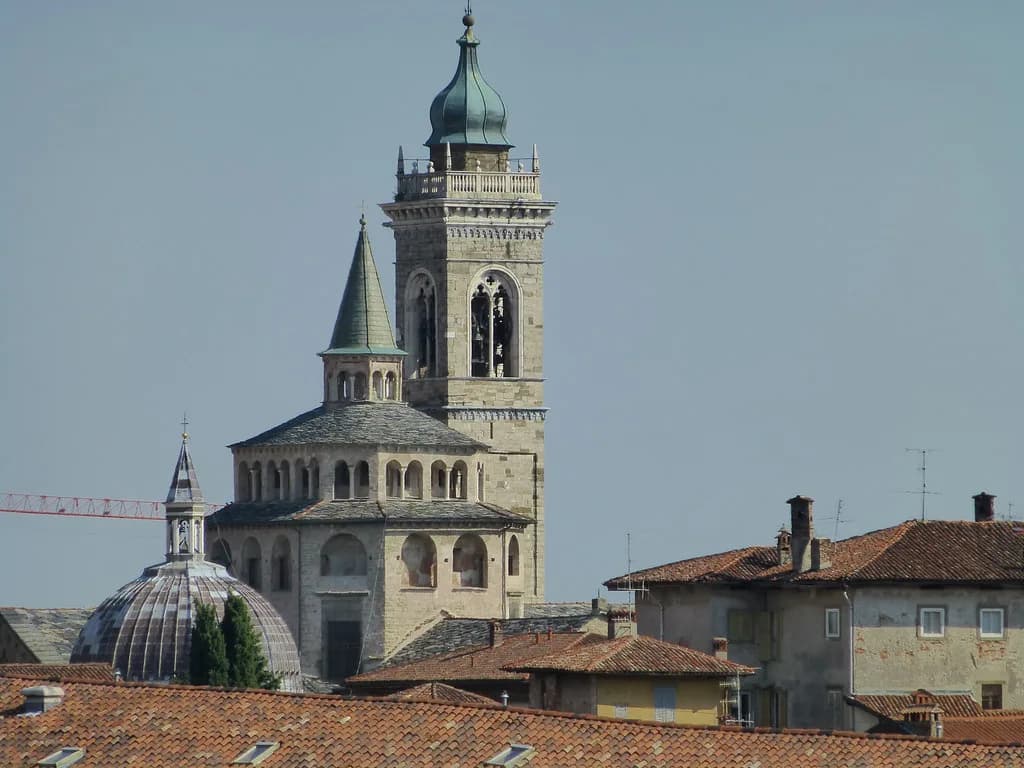
The Colleoni Chapel is described in several visitor accounts as free to enter, and it is the single most eye-catching building in the old town, with a facade of coloured marble built as a mausoleum for the condottiero Bartolomeo Colleoni. Photography inside is restricted, so plan to look rather than snap. Opening is not guaranteed, so if the doors are shut simply move on to the next building rather than waiting around.
The Basilica di Santa Maria Maggiore is the exception to any assumption that churches here are free. Visit Bergamo, the city's tourism board, publishes an admission charge for visitors who are not residents of Bergamo or its province, with a reduced rate for certain age groups and exemptions for children and residents, plus free access during religious services. It is worth reading the basilica's official page before you go, because the ticket covers that church and its treasure rather than the chapel or cathedral next door.
The same page publishes the basilica's opening times by day, including a separate Sunday pattern, and notes a short break in the middle of weekdays. Use them to time your visit properly and to understand why the building may be closed when you arrive. The cathedral, by contrast, is widely described in visitor accounts as free to enter, though it is a plainer, quieter space than the basilica and easy to skip in a hurry.
Walk the Venetian Walls
The Venetian Walls are the backbone of a free day in Bergamo. The Renaissance fortifications built for the Republic of Venice in the sixteenth century were added to the UNESCO World Heritage List in 2017, and the circuit runs roughly six kilometres around the upper town with bastions and monumental gates along the way. Walking them costs nothing, and the views over the lower town and the plain are the reason to do it.
Porta San Giacomo is the most photographed gate, built in white marble and facing the plain, and it makes a sensible place to join the walls. From there the path along the ramparts passes bastions and grassy stretches with benches. Allow yourself time for a partial walk if a full loop does not appeal; even a section between two gates delivers the panorama without committing to the whole circuit.
San Vigilio and the Rocca: Free Viewpoints
San Vigilio hill, reached from Colle Aperto either on foot or by a second funicular, holds the remains of a castle and gardens that are open to the public. From the top you look back over both halves of Bergamo and, on a clear day, out towards the Alps. The castle grounds are a free stop, and the walk up via the steep lanes is the zero-cost alternative to the paid funicular.
Closer to Piazza Vecchia, the Rocca of Bergamo sits on the Sant'Eufemia hill with a museum inside and a public park around it. The Remembrance Park and the panoramic bastions outside are free to enter, which makes the walk up worthwhile even if you skip the collection. Treat the fortress, the park and the museum as separate things with separate rules.
Free Green Space: Astino Valley and the Hills
The Astino Valley, a short walk from the upper town, keeps its rural character and forms part of the Parco dei Colli. The Benedictine monastery there has been restored and hosts cultural events and a botanical garden, and the valley's paths are a peaceful counterpoint to the busy squares. It is a good choice when you want a break from stone and crowds without paying for a museum.
The Sentiero dei Vasi, an easy trail through woods and small hamlets within the same park, offers views over the valleys and the Prealps and passes remains of the city's old aqueduct. Sturdy shoes are a sensible choice for either walk. Both suit travellers who would rather spend an afternoon outdoors than queue for an interior.
Wander the Backstreets and the Old Washhouse
The lanes radiating from Piazza Vecchia are an activity in themselves. Via Colleoni and Via Gombito carry most of the foot traffic, with shopfronts, bakeries and courtyards on either side, and the side alleys off them empty out quickly. The Lavatoio di via Lupo, a preserved nineteenth-century washhouse, is a quiet corner that costs nothing and rewards a short detour.
Wandering is also how you find the smaller churches and courtyards that rarely appear on a top-ten list. Pop into any church whose doors are open, but check notices for photography rules and for any charge before you go further than the entrance. A slow loop through the backstreets is the cheapest hour you will spend in Bergamo.
What Is Not Free on a Free Day
Several of the upper town's headline interiors charge admission. The Campanone bell tower in Piazza Vecchia is a ticketed climb, the Rocca's museum and the Accademia Carrara art gallery likewise, and the Santa Maria Maggiore admission described above applies to that basilica alone. Budget for the one or two you most want and let the rest go.
The city's own tourism site lists guided walks, wine tastings, e-bike tours and similar experiences with published starting rates, which is useful for understanding that the free sights and the paid experiences are separate products. If you want a guided introduction rather than a self-guided one, compare what is listed there before booking, and confirm the current price at the point of sale.
A Self-Guided Walking Plan
For a half day, start early at Piazza Vecchia, look into the Palazzo della Ragione arcade and the Contarini Fountain, then cross to Piazza Duomo for the Colleoni Chapel exterior and the cathedral. Add Santa Maria Maggiore only if you are happy to pay, then walk out through Porta San Giacomo for a short stretch of the walls. Finish with a slow wander down Via Colleoni.
For a full day, add the San Vigilio hill for the afternoon view and the Rocca gardens and Remembrance Park on the way back. If you still have energy, the Astino Valley walk fills a late afternoon nicely. Walking the full wall circuit takes time and some moderately sloped sections, so decide early whether you want the complete loop or just the best viewpoints.
Practical Free Tips
Start early. Visitor accounts consistently note that Città Alta is quietest before the day-trippers arrive, and the squares and lanes feel entirely different in the morning light. Late afternoon into sunset is the other good window, especially along the walls.
Many shops and smaller restaurants close for the midday pause, so carry water and plan your walking for that stretch rather than hunting for an open table. Around Ferragosto in mid-August some family-run places shut for a week or more, and public holidays can bring reduced museum hours.
If you drive, note that the Città Alta and Colli area operates a restricted traffic zone with published time windows, and that parking in the upper town is limited. ATB, the local transport operator, publishes the zone rules and permits. Park in the lower town and walk or take a single paid ride up rather than circling the hill.
If you use public transport, validate your ticket on boarding and keep it for the duration of its validity. Funiculars, buses and the airport line all fall under the same paid system even though the ride feels like sightseeing. Check ATB for current fares and rules rather than relying on older trip reports.
The city council publishes a running calendar of free and low-cost events, from guided visits to lectures, which can slot neatly into an otherwise free day. Check the Comune di Bergamo site for what falls during your dates.
Plan Your Free Day in Bergamo
Bergamo is unusually generous to travellers watching their spending: the squares, the walls, the castle grounds and a good share of the churches ask nothing but your time. The trick is to treat paid interiors as choices rather than obligations, and to verify the specifics that change, especially basilica admission and opening times, on the official pages before you travel.
Build your day around one ascent, a slow circuit of the upper town and a sunset view from the walls or San Vigilio. That combination delivers the city's best moments at almost no cost, and leaves the paid sights for the visit when you have more time and budget.
Frequently Asked Questions
What can you see for free in Bergamo's Città Alta?
The squares, the streets and the wall circuit are free to walk, as are the castle grounds at San Vigilio and the public park around the Rocca. The Colleoni Chapel is generally free to enter and the cathedral is described as free by visitors, while the Basilica di Santa Maria Maggiore charges admission for non-residents. Check each door for current notices, since opening and policies vary by building.
Is the Basilica di Santa Maria Maggiore free?
Not for most visitors. The city's tourism board lists an admission charge for people who are not residents of Bergamo or its province, with a reduced rate for certain ages and exemptions for children and residents, and free access during religious services. That ticket covers the basilica, not the chapel or cathedral beside it. Check the official page for current times before you go.
Is the Colleoni Chapel free to enter?
Several visitor accounts describe the Colleoni Chapel as free to enter, and its marble facade can be admired from Piazza Duomo regardless. Photography inside is restricted, and opening is not guaranteed, so treat a visit as a bonus rather than a certainty. If the doors are closed, the cathedral and basilica are a few steps away.
Can you walk the Venetian Walls for free?
Yes. The walls form a public route of roughly six kilometres around the upper town, with bastions, gates and benches along the way, and walking them costs nothing. Porta San Giacomo is the easiest place to join, and even a short section between two gates gives you the panorama. Some stretches are sloped, so wear comfortable shoes.
Is San Vigilio free to visit?
The castle remains and gardens on San Vigilio hill are open to the public at no charge, and the views over both parts of Bergamo are the reward. The funicular up is a paid service, so walking from Colle Aperto via the steep lanes is the free alternative. Allow extra time for the climb.
What costs money even on a free day in Bergamo?
The Campanone bell tower, the Rocca museum, the Accademia Carrara and the Basilica di Santa Maria Maggiore all charge admission. Funiculars, city buses and the airport line are paid transport, and the upper town's restricted traffic zone affects drivers. Guided tours, tastings and similar experiences are separate paid products listed by the tourism board.
How do you spend a day in Bergamo without spending much?
Start early at Piazza Vecchia, cross to Piazza Duomo for the chapel and cathedral, then walk out through Porta San Giacomo for a stretch of the walls. Add the Rocca park and San Vigilio hill in the afternoon and finish with a slow wander down Via Colleoni. Walk up the hill once rather than paying for repeated rides.
Sources
Continue exploring
More guides you'll find useful