Bergamo Three-Day Itinerary: Città Alta, Food and a Day Trip
Plan three days in Bergamo with a Città Alta deep dive, a walk on the Venetian Walls, a local-food day and one flexible excursion into the valleys or lakes.
On this page
Bergamo is often reduced to a budget arrival point, but the city splits into two distinct layers that reward a longer stay. Città Bassa, the lower town, has the modern streets, shops and transport links. Città Alta, the fortified historic centre, sits inside the Venetian Walls on the hills above. The plan below is an editorial sequence rather than an official route, built so each day has a clear focus. If you only have 24 hours, most of this will not fit.
Three days let you see Città Alta properly, spend time on its museums and viewpoints, and add one excursion without racing. The trade-off is real: squeeze the valleys and the lakes into the same day and you will spend more time travelling than looking. Choose one direction and let the rest wait. Official listings and tour suggestions for the province sit on the Bergamo tourism site, which is the best starting point for checking what is currently on.
Orientation: Città Alta versus Città Bassa
Bergamo's two halves behave very differently. Città Bassa is flat, modern and connected, with the train station and the airport buses feeding into the centre. Città Alta is the historic core within the walls, reached on foot, by bus or in a few minutes by the vintage funicular that has linked the two levels since 1887. For three nights, where you sleep changes the rhythm of every evening. Staying in Città Alta means waking inside the walls and walking dark medieval lanes after dinner. Staying in Città Bassa means quicker access to shops and departure points, with the climb up treated as a deliberate outing.
The funicular takes only a few minutes and drops you near Piazza Mercato delle Scarpe, at the edge of the historic centre. A second cable car climbs from Città Alta to San Vigilio hill, where the castle ruins and the city views are the payoff. Most of the time you will simply be walking, because the upper town is compact and steep. Check current fares and ticket validity on the operator or tourism board pages before buying, as the figures quoted in older blog posts are not reliable today.
Day 1 morning: Venetian Walls and the walk into Città Alta
Start with the Venetian Walls, commissioned in the sixteenth century and now a UNESCO World Heritage site. The walls run for kilometres around the upper town, and a stroll along Viale delle Mura delivers the best introduction to the city's shape. The most striking gate is Porta San Giacomo, built in local white marble and once the entrance for travellers coming from Milan. Walking down the stone path towards the lower town is one of the great simple pleasures here, and it hands you back to the city at the foot of the funicular.
The walls, the gates and the piazzas are public ground and free to walk. That distinction matters when you budget, because the paid interiors in Città Alta - the tower, some churches' separate exhibits, and museum collections - are usually ticketed individually rather than covered by a single city-wide ticket. Check each site's own published terms rather than assuming one pass covers everything.
Day 1 afternoon: Piazza Vecchia and Piazza Duomo
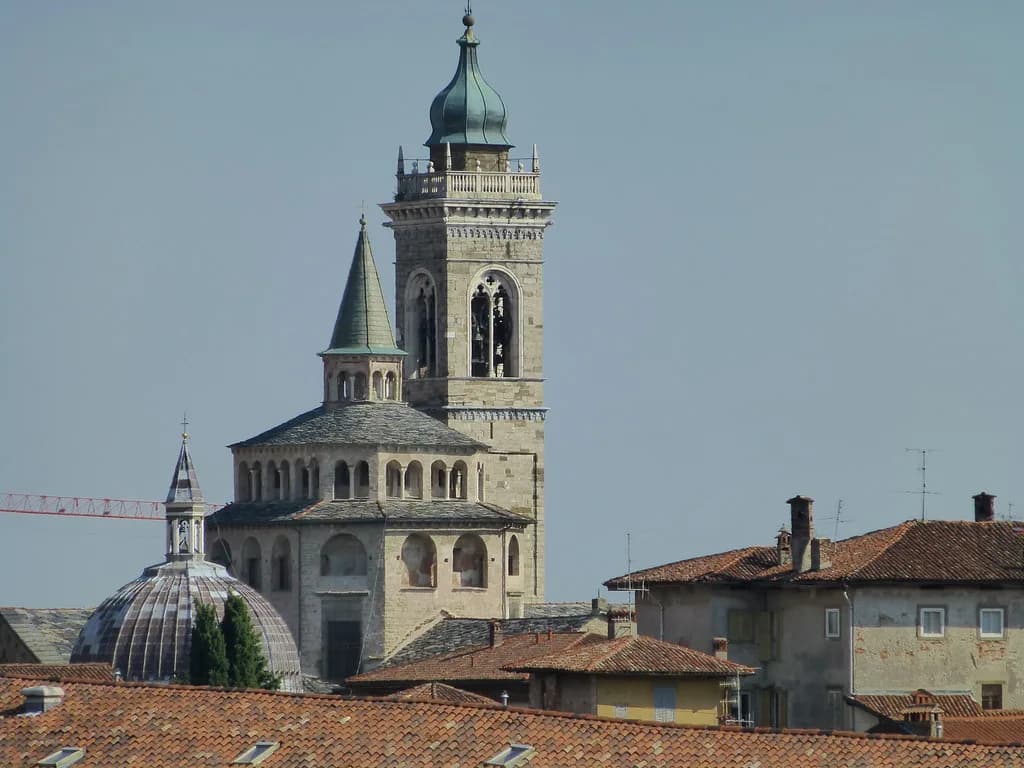
Piazza Vecchia is the heart of the upper town. The fountain sits in the middle, the cafés line the edges, and the Palazzo del Podestà and the Campanone tower dominate the square. The Campanone tower has a lift to the top, which makes the panoramic view accessible without a stair marathon. Across the square, the all-white Palazzo Nuovo frames the scene. Take your time here. The compound of Piazza Duomo - the cathedral, the Basilica di Santa Maria Maggiore, the Cappella Colleoni in red and white marble and the octagonal baptistery - is next door.
That cluster of buildings rewards closer attention than a single sweep. The Cappella Colleoni is widely admired for its Renaissance facade, and the basilica is the locals' devotional favourite. Inside, there may be separate ticketed areas, and the basilica's opening pattern is not the same as a standard parish church. Look up the visitor information for each site before you plan the day around it. Treat the church interiors as separate stops rather than assuming one entry charge unlocks everything.
Day 1 evening: aperitivo and the piazza after dark
Aperitivo is a northern Italian ritual rather than a tourist invention, and Città Alta does it well. In the early evening, head for one of the bars around Piazza Vecchia or along Via Corsarola, where the café tables spill out into the streets. After that, simply walk the lanes. The upper town is at its best when the day-trippers have gone and the stone is lit from below.
The Campanone bell is part of Città Alta's atmosphere. Travel accounts report that the bell has rung a hundred times in the evening to mark the old closing of the gates. Whether and how it still rings is something to confirm locally or with the tourism board rather than promise. Even without the bell, the piazza after dark is the reason to spend the night inside the walls.
Day 2 morning: La Rocca and San Vigilio
The second day is for the views. La Rocca di Bergamo sits on Sant'Eufemia hill, and the site combines green parkland, historic buildings and a panorama over the plain. It is a gentle walk from the upper town and a good place to start before the heat or the crowds. From there, take the small San Vigilio funicular up to the castle ruins. The hilltop restaurants have the view, and the prices to match. A sunset visit is the classic move, but a morning visit is quieter and leaves your afternoon free.
Do not treat the funiculars as a one-line solution. They are short rides rather than a transport network, and they can queue at peak times. Both funiculars have their own operating details, so check the current timetable before you count on a late return. Walking is the fallback, and the walk up from the lower town to Città Alta is steep but part of the experience.
Day 2 afternoon: darker alleys and Città Bassa
Via Gombito and the Gombito Tower are the emblem of the upper town's narrow, shadowed lanes. The tall buildings mean the streets are often in shade, which gives Città Alta its slightly mysterious mood and makes it pleasant on a hot afternoon. Wander without a fixed route. Then descend to Città Bassa for the contrast: modern streets, shops, and the everyday city that most visitors miss.
Città Bassa is where you see how the city really works. It is flat, easy to walk and has the station at its edge. Use the afternoon for whichever museum fits your interests, and remember that the lower town is also the practical base for your third-day excursion. Check the official tourism pages for what is currently open and any booking requirements.
Day 2 evening: a Bergamasque dinner
Bergamo's food is heartier than the Italian coastal clichés. Polenta e osei is the local signature, and it appears in both a savoury version and a sweet cake version with almond paste and chocolate birds. Casoncelli, the stuffed pasta, and the cheeses of the Orobie valleys are other names to look for. For dessert, the stracciatella story is told at La Marianna just outside the old citadel, where blogs say the flavour was created in the 1960s. Treat that as a story rather than a fact, and check the shop's current hours before you go.
For dinner, pick a trattoria in Città Alta and go early, because the better-known places fill up. Reserve ahead if you have a particular restaurant in mind. Prices and menus change, so check the restaurant's own current listing rather than trusting a blog post from an earlier year.
Day 3, option A: a valley and its villages
The third day is where three days in Bergamo really pays off. The province sprawls into valleys and lake country, and the official tourism site lists organised experiences across the area, from wine tours and cheese-making to e-bike rides and walking itineraries. Pick one valley and stay in it. The Brembana and Seriana valleys, the villages around Clusone and the Presolana, and the walled towns on the plain all offer a different day out. Racing between several is the main mistake.
If you prefer to go independently, use the tourism board's excursion and public-transport pages to check connections rather than relying on a blog itinerary. Organised tours solve the logistics but lock in a schedule. A self-guided day is cheaper on paper but demands more planning. Either way, confirm current availability before you build the day around it, because seasonal offerings change.
Day 3, option B: Lake Iseo and Franciacorta
The lake option heads west to Lake Iseo, with Monte Isola in the middle and the Franciacorta wine country on the southern shore. The tourism site lists lake and wine experiences from Bergamo, including day tours that combine the two. This is a different kind of day from the valleys: more water, more vineyards, and more time on the road. Pick it if you want scenery and wine rather than mountain villages and cheese.
The trade-off is the same. Trying to do the lake and Franciacorta in one day is possible on an organised tour but tight independently. If you are driving, check parking and ferry arrangements for Monte Isola in advance. If you are relying on trains and buses, check the timetable before you commit. The official tourism site is the place to start.
Day 3 wind-down: stracciatella and a slow final wander
Wherever you go on day three, come back for a final slow evening in the upper town. The gelato stop at La Marianna is the classic ending, and the walk back into Città Alta after dark is the reward. If the weather turns, the lanes and the piazzas are still atmospheric. Keep the last evening loose rather than booking a fixed dinner time.
Before you leave, check the tourism site one more time for anything that has opened or closed since you planned. That is the whole point of three days: you have time to adjust. The compactness of the city means a change of plan costs you an hour, not a day.
Practical decisions: pacing, tickets and overfilling day three
Two tickets matter most: the funicular and the Campanone. Both have their own current prices and conditions, and neither is worth guessing from an old blog post. Check the operator or tourism pages before you travel. The same applies to airport transfers and any organised tour. Blog-reported fares from earlier years are not current.
The biggest pacing mistake is treating day three as a bonus rather than a separate plan. Choose one excursion and one backup. If the weather is poor, keep the museums and the covered piazzas for that day. If the weather is good, go out. Book tours only once you have checked the operator's current listing, and keep a printable or offline copy of the details.
Where to stay for three nights
Città Alta is the atmospheric choice. You wake inside the walls, and the evening piazzas are on your doorstep. The cost is steeper access and fewer everyday shops. Città Bassa is the practical choice, with transport, shops and easier walking, especially if you plan an early departure on day three. The right answer depends on whether you value the evening mood or the morning convenience.
For a three-night stay, the upper town is usually worth it if you plan to eat dinner in Città Alta at least twice. Otherwise, the lower town saves time on the climb. Hotels and prices change, so book only after checking current reviews and rates on the property's own pages. The tourism site lists accommodation categories, but it is not a live price list.
Plan Your Visit
Three days in Bergamo works because the city has three distinct layers: the walls and piazzas, the museums and viewpoints, and the wider province. Each gets its own day, and each can be adjusted without wrecking the others. That is the luxury of a longer stay in a compact city.
Check current opening times, ticket terms and tour availability on the official tourism site and the operator pages before you book. Treat the sequence here as a suggestion, not an official route. Build in one loose afternoon for the weather, and leave the last evening free for the piazzas. For related planning, see Bergamo Two Day Itinerary: Città Alta and Lower Town.
Frequently Asked Questions
Is three days enough for Bergamo?
Three days is enough to see the upper town properly, spend time on the museums and viewpoints, and add one excursion. If you only have 24 hours, you will barely scratch Città Alta. Treat the three-day plan as a suggested pace rather than a rule, because the city is compact and easy to adjust.
Should I use my third day for the valleys or a lake?
Pick one. The valleys offer mountain villages, cheese and walking, while the lake side offers Monte Isola and Franciacorta wine country. Trying to do both in one day usually means more travel than sightseeing. Choose based on whether you prefer hillside wandering or water and vineyards, and check current transport and tour availability before you commit.
What can I see in Bergamo for free?
The Venetian Walls, the gates, Piazza Vecchia and Piazza Duomo, and the parkland around La Rocca are public spaces and generally free to walk. Paid interiors such as the towers, church exhibits and museum collections are usually ticketed separately. Check each site's own published terms rather than assuming a single city pass covers everything.
Do I need tickets for the Campanone and the churches?
They are usually separate. The Campanone tower has its own admission, and the churches may have separate ticketed areas or varying opening arrangements. The tourism site and each site's own visitor information are the places to check current terms before you go. Do not rely on prices quoted in older travel blogs.
Where should I stay for a three-day Bergamo trip?
Città Alta is best if you want evening atmosphere and to be inside the walls. Città Bassa is better for transport, shops and an early start on day three. For three nights, the upper town is worth it if you will dine there more than once. Check current rates on the property's own pages, because tourism listings are not live price lists.
What local food should I try in Bergamo?
Look for polenta e osei, both the savoury dish and the sweet cake version, and casoncelli, the local stuffed pasta. The cheeses of the Orobie valleys appear on many menus. For dessert, the stracciatella story is told around La Marianna. Treat it as a story, and check the shop's current hours before you visit.
Sources
Continue exploring
More guides you'll find useful