Bellagio Lake Food Guide: What to Eat and Where
Plan meals in Bellagio on Lake Como with a practical look at lake fish, polenta and risotto, plus trattorias, enotecas and casual spots worth your time.
On this page
Bellagio rewards a little food planning more than most Lake Como towns. The village sits on the tip of the promontory where the lake splits into its Como and Lecco branches, so almost everything worth eating is within a short walk, but the same geography funnels every day-tripper into the same few stepped alleys. Deciding what kind of meal you want before you arrive saves you from defaulting to the first waterfront table you see.
As a rough editorial suggestion rather than an official timing, allow at least 2–3 hours to explore the historic centre at an unhurried pace. Lake fish, polenta and risotto are the backbone of Lombard cooking around the lake, and how a kitchen presents them tells you a lot about whether you are in a simple trattoria or a more polished dining room. Use the dish descriptions here to read a menu confidently, then check the specific venue directly for what it is serving now.
What Lake Como Food Actually Means
The cuisine around Bellagio is Lombard mountain-and-lake cooking rather than a coastal Italian menu. Freshwater fish from the lake, slow-cooked polenta, rice dishes from the Po plain and cured meats from the surrounding valleys all appear together, often on the same short menu. That combination is what makes eating here distinctive.
Because Bellagio is small, the food identity of the town is closely tied to its hamlets and its history as a fishing and floriculture village. Pescallo and San Giovanni are described as ancient fishing hamlets where those traditions are still perceptible. If you want context for the walk between meals, the hidden gems in Bellagio cover these quieter corners away from Piazza Giuseppe Mazzini.
Menus are seasonal and change with what the kitchens can source, so treat any dish name here as a category to look for rather than a guarantee. The Bellagio tourist portal publishes dining listings and seasonal pages that are a sensible first check before you build a meal around one restaurant, and the town's official site is the place to confirm anything time-sensitive.
Lake Fish Decoded: Missoltino and Lavarello
Missoltino is the one preparation worth understanding before you order. Small lake fish are salted and air-dried, then typically grilled or pan-finished and served with polenta or potatoes; the result is intense, salty and far from a delicate fillet. It is a traditional preservation food, so expect a strong flavour rather than a neutral one.
Lavarello is the gentler entry point: a freshwater white fish usually served simply, often fried, grilled or prepared with a light sauce so the flesh stays clean-tasting. If you are unsure about cured fish, start with a white fish dish and treat missoltino as the more adventurous second order at the table.
Lake fish is also the dish most likely to be priced as a premium item, because supply is limited and preparation is labour-intensive. Rather than guessing at cost, check the menu board or ask before ordering, and remember that a fish main at lunch is often the most expensive way to eat it well.
Polenta and Risotto: Comfort Dishes for Cool Days
Polenta is the quiet workhorse of Lombard menus and appears in several guises: soft and creamy alongside braised meat or mushrooms, or cooled, sliced and grilled under cheese. On a damp autumn afternoon it is the most satisfying thing you can order, and it is usually one of the more affordable plates in a sit-down restaurant.
Risotto around the lake tends to follow the Milanese and Lombard pattern, built on rice from the plains and finished with butter or cheese, sometimes with lake fish or vegetables folded through. Because it is made to order, it can slow a quick lunch down; order it when you have time rather than when you are racing a ferry.
Both dishes are strong choices if you are travelling with someone who does not eat fish, since they anchor the non-fish half of a Lombard menu. Pair them with a shared antipasto of local salumi or cheese and you have a simple, regionally honest meal without chasing a signature dish.
Trattoria, Enoteca or Casual Counter: Choosing Your Meal Type
The most useful decision in Bellagio is not which restaurant but what kind of meal you want. A trattoria gives you a sit-down, multi-course lunch with table service and a slower pace; an enoteca leans towards wine by the glass with cheese, salumi and small plates; a casual counter or bakery handles a fast sandwich, slice of pizza or pastry between ferries. None of these is better than another; matching the format to your energy and timetable is what separates a good food day from a stressful one.
For a day-trip rhythm, the casual counter is often the smartest lunch: it keeps your time free for the lakefront promenade and the gardens, and it leaves budget for a proper dinner. Sit-down trattorias suit an evening when the day-trippers have gone and the town empties out, which is also when dining rooms feel less rushed.
A wine bar is the flexible middle option, useful when one person wants a plate and the other only wants a glass and a view. It also suits the first evening of a stay, when you want to test the town before committing to a long sitting.
Eating Inside the Borgo: Stepped Alleys and Small Rooms
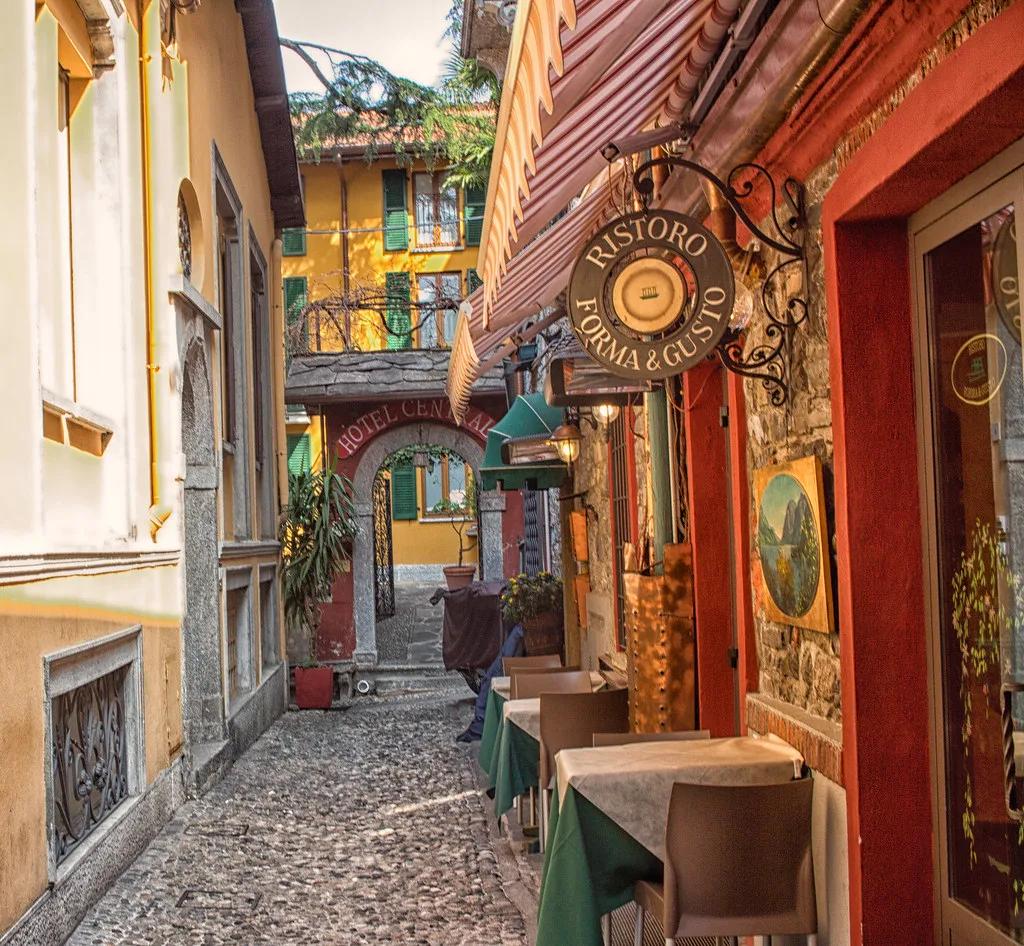
The historic centre, known locally as il Borgo, is a maze of cobbled, stepped lanes where Salita Serbelloni is the best-known climb. The town's own guide describes the centre as full of narrow stepped streets and arcades, and the wider promontory guide notes that stepped alleys limit access in the centre. Dining rooms tucked into these lanes are often small, so a walk-in at peak lunch can mean a real wait or a polite no.
Eating in the borgo has real advantages: you are close to the Basilica di San Giacomo and the main square, and the atmosphere in the evening is calmer than the waterfront at midday. The trade-off is that many tables have no lake view at all, so you are paying for the cooking and the setting rather than the panorama.
Steps are the practical constraint here. If stairs are difficult, favour the flatter waterfront and promenade and confirm step-free access with the venue directly rather than assuming it.
Eating by the Water: Setting Versus Menu Depth
A lakefront table buys you the view across to Varenna and the mountains, and it is worth doing once. The trade-off is that the waterfront is where the day-trip crowd concentrates, so service and kitchens are under the most pressure at conventional lunch hours and the menu may be broader but shallower than a small kitchen's.
Timing is the main lever. Arriving early for lunch or sitting down for dinner after the last ferries have taken the crowds away changes the experience more than any restaurant choice, and it also gives you a better chance of a table without a long wait.
The same principle applies to aperitivo: a lakeside drink before dinner is a fine use of a waterfront perch, and it costs less than committing to a full view-premium meal there. Then walk into the borgo or a hamlet for the food itself.
Pescallo and San Giovanni: Hamlet Alternatives
Pescallo, a short walk around the shore from the centre, retains the feel of an old fishing village with a picturesque lakeside square, stone houses and a small harbour. It is the natural alternative when the main square feels crowded, and the walk there runs down narrow streets and steep steps rather than a flat promenade.
San Giovanni, on the opposite side of the promontory, has its own small port and the Church of San Giovanni, and the town guide notes that fishing and floriculture traditions are still felt there. Both hamlets give you a chance to eat away from the main square without leaving Bellagio, though you should expect fewer options and shorter service windows than in the centre.
The Punta Spartivento park at the tip of the peninsula is about a ten-to-fifteen-minute walk from the main ferry dock and makes a good before-or-after-meal stop, with views where the lake branches meet. A small restaurant bar sits at the point, but one traveller account notes it fills quickly on summer afternoons.
Pricing Reality: Keeping a Food Day Sane
Bellagio is described in one traveller cost breakdown as one of the more popular and more expensive towns on the lake, and lake fish and waterfront tables are where that shows most. That same breakdown puts daily food spending in a wide band depending on whether you eat casually or sit down properly, which is a useful reminder that the town supports both ends of the scale. Treat such figures as a rough planning aid rather than current prices.
A workable pattern is to spend on one good sit-down meal and keep everything else simple: a bakery breakfast, a sandwich or slice of pizza at lunch, an aperitivo instead of a second restaurant dinner. That structure protects your budget without turning the day into a hunt for the cheapest plate.
Hotel-run experiences sit at the other end of the scale. The Grand Hotel Villa Serbelloni advertises guided Discovery Walks, including a Nordic walk and a gentler scenic walk that includes the Villa Melzi gardens and a gelato stop, and its own page lists a per-person price for each; these are paid hotel activities, not free public strolls, and the gardens themselves are a separate ticketed visit.
Timing Meals Around Ferries and Crowds
Bellagio's food day has a clear rhythm. Mid-morning and early afternoon bring the heaviest foot traffic as day-trippers arrive, the lakefront fills and lunch queues build; by late afternoon the town thins out and evening dining rooms relax. Planning your main meal for the evening is the simplest way to eat well without competing for a table.
If you are visiting for the day, work backwards from your departure. A quick counter lunch frees the middle of the day for the gardens and the promenade, and an early aperitivo lets you sample the lakeside setting before you leave. Save the long trattoria lunch for a day when you are staying overnight.
Ferry timetables and ticket rules are the one thing you should verify with the operator rather than any guide, so check the official Lake Como events and navigation information before you commit to a late dinner. Neither crossing times nor fares are fixed enough to plan around second-hand figures.
A Simple Food Day, Clearly Labelled as a Suggestion
Start with breakfast at a pasticceria or café in the borgo rather than the waterfront, where a pastry and coffee will be quicker and cheaper. Then walk the stepped lanes and the Basilica di San Giacomo before the crowds peak. This ordering is a suggestion, not an official itinerary, and it works because the centre is compact.
Take a casual lunch, then spend the afternoon on the promenade towards Villa Melzi or the walk to Punta Spartivento. Note that the villa interior is not open to visitors and the gardens are a separate paid visit, while the Villa Serbelloni park is normally visited only on a guided tour booked in advance, so check access arrangements at the entrance or with the operator before you go.
Finish with an aperitivo by the water and a sit-down dinner in the borgo or a hamlet, ordering lake fish if you want the local speciality or polenta and risotto if you want comfort. The Rockefeller Foundation's Bellagio Center, housed on the promontory, is a residency and convening facility and not a public restaurant, so do not plan a meal there.
Dietary and Practical Notes
Menus lean fish-forward, but Lombard cooking gives vegetarians plenty to work with: polenta with cheese or mushrooms, risotto, vegetable antipasti, pastas and pizza. Cheese and salumi boards at an enoteca are another reliable fallback, though you should confirm ingredients directly with the kitchen if you avoid animal rennet or cured meats.
Accessibility deserves an honest mention. Bellagio's centre is characterised by stepped alleys, and some streets linking the hamlets lack pavements, so diners with limited mobility should favour the flatter waterfront and promenade and confirm step-free access with a venue directly rather than assuming it.
Reservations are the question most travellers ask and the one that cannot be answered generically. Policies differ by venue and season, so contact the restaurant through its own channels or the tourist office on Piazza della Chiesa before relying on a walk-in for a special dinner.
Plan Your Visit
Eating well in Bellagio comes down to matching your meal type to your time and budget rather than hunting for a definitive best restaurant. Order lake fish once, lean on polenta and risotto for comfort, and let a casual lunch buy you the afternoon.
Before you go, confirm the details that change: which venues are open, what they are serving and whether you need a table. The town's tourist portal and the operator sites are the right places to check, and they will always beat a guide written months earlier.
Frequently Asked Questions
What dish should I try first in Bellagio?
Start with a simply prepared freshwater white fish such as lavarello, which is the gentler introduction to Lake Como cooking. If you enjoy strong, savoury flavours, order missoltino, the salted and dried lake fish usually served with polenta. Treat both as regional categories and check the day's menu for how each is prepared.
Is Bellagio expensive for restaurants?
Bellagio is described as one of the more expensive towns on Lake Como, and lake fish plus a waterfront table are the two things that push a bill up fastest. You can keep costs down by eating your main meal in the borgo or a hamlet, using a bakery or casual counter at lunch and enjoying an aperitivo instead of a second full dinner. Compare menus before sitting down.
Can I eat well in Bellagio without a reservation?
Sometimes, but policies vary by venue and season, so no general rule applies. Walk-ins are more realistic at off-peak hours and in the smaller hamlets than at prime lakefront lunch. Contact the restaurant directly, or ask at the tourist office on Piazza della Chiesa, if a particular dinner matters to your trip.
Where can I eat away from the main square?
Pescallo and San Giovanni are the two hamlet alternatives, both a walk from the centre and both quieter than Piazza Giuseppe Mazzini. Expect fewer options and shorter service windows. The walk to Pescallo involves narrow streets and steep steps, so plan accordingly if stairs are difficult.
Is Bellagio walkable for someone who finds steps difficult?
The historic centre is built around stepped alleys, which limits access for anyone with mobility difficulties, and some connecting streets between hamlets have no pavements. The waterfront promenade and the walk to Punta Spartivento are easier. Confirm step-free access with individual venues rather than assuming it.
What should I order if I do not eat fish?
Polenta with cheese or mushrooms, risotto, vegetable antipasti and pizza are reliable non-fish choices on Lombard menus. An enoteca cheese and salumi board works well for a lighter meal. Ask the kitchen about ingredients if you avoid certain cheeses or cured meats, since recipes vary between venues.
Sources
- Official event website
- Official event website
- Punta Spartivento, Bellagio: The Best Lake Como Viewpoint
- Bellagio, Lake Como: 12 Things to Do & Is It Worth It? (2026)
- What to do and see in Bellagio - myLakeComo.co
- Bellagio tourist portal - The Pearl of Lake Como | Bellagio Lake Como... the Pearl of Lake Como
- Bellagio, Italy: Things to Do & What to See | Lake Como Travel
- Grand Hotel Villa Serbelloni Special Offers and Packages
- Bellagio Center, Italy | The Rockefeller Foundation
- Bellagio - San Giacomo Church | Bellagio Lake Como... the Pearl of Lake Como
Continue exploring
More guides you'll find useful