Free Things to Do in Bari: A Low-Cost Day in the Old Town
Plan a low-cost day in Bari with free churches, old-town alleys, orecchiette street and the lungomare, plus how to check museum and castle free days.
On this page
Bari is one of Puglia's easier cities to visit cheaply, because most of what makes it memorable is public: the tangle of lanes in the old town, the working harbour, the seaside promenade and the street life that spills out of doorways. Ticketed sights exist, but a satisfying day does not depend on them.
As a working starting point, allow a suggested half day for the old-town lanes, orecchiette street, the basilica walls and the lungomare; the timing is ours, not an official schedule. This guide separates what is free to enter from what merely looks free from outside, and explains where repeated free-admission claims need checking rather than trusting.
Start in Bari Vecchia, where the walking is the attraction
The old town, Bari Vecchia, is a knot of narrow streets, small squares and stone courtyards between the waterfront and the modern grid. Travellers consistently describe wandering it as the highlight rather than any single monument, and it costs nothing beyond your time. Go without a fixed route: the pleasure is turning into whichever alley looks interesting and finding a tiny piazza with washing strung overhead.
Two squares anchor the area. Piazza Mercantile has long been the commercial heart of the old town, with cafes and bars around its edge, while Piazza del Ferrarese sits at the boundary between the old town and the newer streets near the port. Both are free to cross and sit in; a coffee on the terrace is the optional spend.
Smaller corners reward slow walking. Largo Albicocca, nicknamed the square of lovers, is a compact piazza that takes a minute to see but is pleasant in the evening when the lights come on. Residents live here year-round, so keep voices low in the early morning and do not photograph people's doorways without a reason.
Strada Arco Basso: orecchiette street in the morning
Strada Arco Basso, usually called orecchiette street, is where women sit outside their homes shaping fresh pasta by hand and drying it on trays. Watching is free. It is also a working street rather than a performance, so the polite sequence is simple: watch, ask before photographing, and buy a bag if you want to support the households whose doorsteps you are standing on.
Timing matters more than anything else. One traveller's account puts the busiest pasta-making window in the morning, between 9 AM and noon, and notes that more women are out earlier in the day, so this belongs at the start of your route rather than the end. There are at least two parallel stretches described as orecchiette streets, and the most famous one has become the most photographed; the lanes nearer the castle feel less staged.
Basilica di San Nicola: the free interior worth planning around
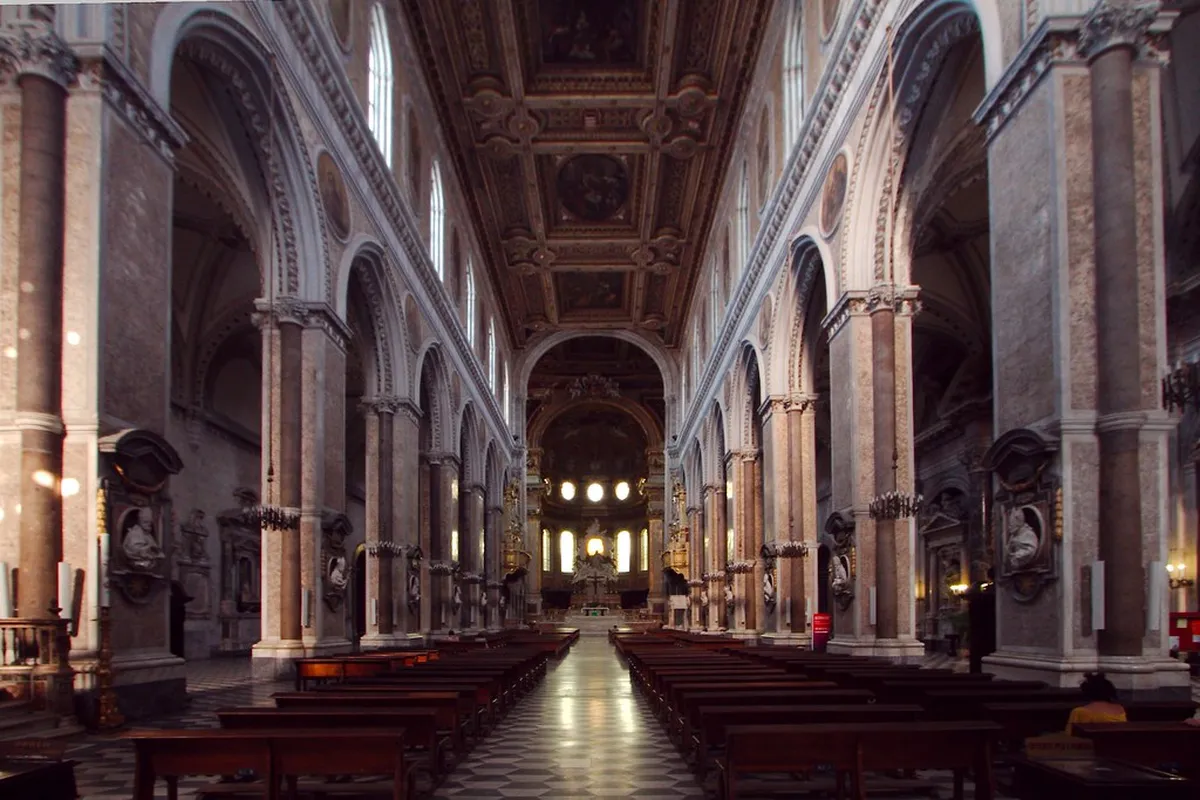
The Basilica di San Nicola is the city's great Romanesque church and the reason many pilgrims come at all: the relics of Saint Nicholas are kept in the crypt below the main floor. The nave, with its gold ceiling and stone floor, is the centrepiece, and the crypt, which contains a Greek Orthodox chapel beneath a Catholic church, can be visited as part of a church stop.
Several independent visitor accounts describe entry to the basilica as free, and one gives published hours running from 7 AM to 8.30 PM. Treat both as a report rather than a rule, because church hours shift with services and feast days, and check locally or with the basilica itself on the day. If you want a detailed plan for the interior, our Basilica di San Nicola Bari visitor guide covers what to look for.
Just past the church, a staircase leads up onto the old city walls, and the walk along them gives the best free sea view in the centre. Continue a little and you reach terraces above the marina where you can sit without ordering anything, or order a drink if you want the table.
Bari Cathedral and the separate underground museum
The Cattedrale di San Sabino, usually just called Bari Cathedral, is a short walk from the basilica and is the city's episcopal seat. Its pale Romanesque exterior and mosaic-filled interior are the draw, and the church itself is free to step into; check the door times when you arrive rather than relying on a printed schedule.
Beneath the cathedral, however, is a separate archaeological museum showing the foundations of an earlier church and Roman remains, and it is ticketed. One account gives a 3 EUR admission and hours of 9:30 AM to 12:30 PM, but these details change and should be confirmed at the entrance, not assumed. Do not expect a cathedral visit to include the crypt museum.
Castello Svevo: free outside, ticketed inside
The Castello Normanno-Svevo, also called Castello Svevo, sits at the north-western edge of the old town behind a wide moat. Walking the perimeter, crossing the bridge and looking up at the towers costs nothing and takes perhaps twenty minutes. The castle interior is used for exhibitions rather than furnished rooms, so travellers who skip the inside miss less than they might expect.
Interior admission is a separate matter, and published figures vary between sources and dates: one blog gives 5 EUR, another 8 EUR with reductions and free entry under 18. Treat any number you read as a snapshot rather than current. The same source reports free entry on the first Sunday of each month; that is a third-party visitor report, not a confirmed city policy, and it is worth checking with the castle or the city before you build a day around it.
The lungomare and the rocks instead of a beach
Bari's seafront promenade, the lungomare, runs along the Adriatic with palm trees, old lampposts and benches facing the water. It is completely free and best in the late afternoon, when the light softens and locals come out to walk. Allow an unhurried hour rather than treating it as a corridor between sights.
There is no sandy city beach right in the centre, but outside the old-town gates there are flat rocks where people sit and swim. Bring a towel and treat it as a place to cool off, not a serviced lido. If you want sand, Pane e Pomodoro beach is the popular local choice and is reachable on foot from the centre.
Porto Vecchio and the fish market: free to watch, easy to overspend
The old port, Porto Vecchio, is where the small blue fishing boats come in and where the fish market sits behind the Margherita theatre. Watching costs nothing and is one of the most direct views of how the city works. Come earlier in the day for the fullest scene, and expect the vendors to speak dialect rather than textbook Italian.
This is the easiest place to spend money without noticing, since street snacks and raw seafood are sold right at the water. Set a cash limit before you arrive and treat anything you buy as an optional extra rather than part of the free day. Note that the old port is not the ferry or cruise terminal, which is a separate area.
Museums that may be free, and how to check
Two museums are described by travellers as free or very cheap. The Museo Archeologico di Santa Scolastica, housed in an old monastery and bastion near the waterfront, holds finds from prehistoric Puglia through the medieval period; one blog reports free admission with limited weekly opening. The Museo Civico is reported at a low ticket price rather than free. Neither claim should be treated as a current published policy.
The reliable method is to check the city's own site and the museum's own page in the week you travel, then confirm at the desk. For everything else in the city, from churches to castles, see our Bari Attractions hub, which links visitor guides to individual sights.
Two theatres worth seeing from outside
Teatro Margherita stands on the waterfront, an early twentieth-century building originally raised on stilts over the sea and now used as a contemporary art venue. It was built between 1912 and 1914 and later surrounded by land reclamation, which is why it no longer appears to float. The exterior and its position over the water are free to admire, and the evening reflection is the best reason to come.
Teatro Petruzzelli is the city's opera house, an early 1900s building destroyed by fire in 1991 and rebuilt in its original style. Guided tours and performances are ticketed, but the facade on the edge of the Murat district is worth a look as you walk between the old town and the newer streets.
A pay-what-you-want walking tour as an orientation
A free walking tour is the cheapest way to get your bearings on day one, and Bari has an established operator running licensed guides on a pay-what-you-want model. Routes typically start near the old town and finish in the modern centre, so plan for extra walking at the end rather than ending where you began. Book ahead online, since places are limited by day and language.
Budget for a cash tip even though the tour is free to join; guides earn from what the group chooses to give. One traveller's review notes there are no toilets at the starting point, so use facilities beforehand. If you prefer to move at your own pace, our self-guided walking route through Bari covers the same core ground without a guide.
Where to base yourself for a free-heavy day
Staying in or beside Bari Vecchia keeps the free sights within walking distance, which is the main budget lever: no taxis, no parking, no bus fares. The trade-off is that old-town rooms can be compact and stairs are common, so light luggage helps.
The Murat district across the railway is more modern, with the main shopping street, Via Sparano, running between the station and the old town. It is a sensible base if you want easier access to trains for day trips, and everything in the centre is still walkable. Our Murat neighbourhood Bari guide explains the difference in atmosphere.
Choosing your season and your cheap meals
Spring and early autumn are the most comfortable times for a walking day, while July and August bring heat and heavy cruise-ship arrivals that make the centre crowded and slow going. If you travel in high summer, do the pasta street and the port early and rest during the afternoon.
Focaccia barese, a thick tomato-topped bread, and panzerotti, fried folded dough with a savoury filling, are the budget staples and are sold by the slice or piece from bakeries and street counters. Prices vary across the city and are not worth quoting, so look at the counter displays and pay cash where you can.
Suggested Plans: Half a Day and a Full Day
For a half day, start at orecchiette street before noon, walk through the lanes to Piazza Mercantile and the basilica, climb to the old walls for the sea view, then finish on the lungomare. That is a completely free route apart from whatever pasta or coffee you choose to buy.
With a full day, add the cathedral and the port in the morning, the castle exterior and a pay-what-you-want walking tour midday, and the promenade at sunset. Keep museum and castle interiors flexible: confirm hours and any free-admission day on the day itself, and you will never lose a morning to a closed door.
Frequently Asked Questions
What can you do for free in Bari?
The old town's lanes and squares, the working harbour, the lungomare promenade and the rock platforms below the walls cost nothing. Visitor accounts describe the nave of the Basilica di San Nicola as free to enter, and cathedral naves in Italy are generally free. Museums, crypt museums and castle interiors are ticketed. Public space alone fills a day.
Are Bari's churches free to enter?
Visitor reports describe entry to the Basilica di San Nicola as free. Hours vary with services and seasons, so check at the door on the day. Underground museums attached to churches, such as the archaeological museum beneath Bari Cathedral, are separate, ticketed spaces.
Is the archaeological museum in Bari free?
Some travellers report free admission to the Museo Archeologico di Santa Scolastica, but this is a third-party report rather than a published operator policy. Check the museum's own page or the city website before travelling, and confirm at the desk when you arrive.
Do you need to pay to see orecchiette street?
No. Strada Arco Basso is a public lane where women make and sell pasta outside their homes; watching is free. Buying a bag of fresh orecchiette is an optional way to support the households, and photographers should ask before taking pictures.
How many days is enough in Bari?
A day covers the main sights on foot, but two or three days let you eat properly, walk the promenade at dusk and take a day trip. Bari is a transport hub for Puglia, which makes it an efficient base even when the city itself needs little time.
Can you visit the Castello Svevo for free?
The moat, bridge and exterior walls are free to walk around, and that is the part most people photograph. Interior admission is separate and ticketed, and the claim about free first-Sunday entry comes from a travel blog rather than the castle. Confirm with the castle directly before relying on it.
Is Bari expensive compared with other Puglia cities?
Bari is broadly in line with the rest of Puglia and noticeably cheaper than Italy's headline destinations for food and everyday costs. The main way to overspend is by taking taxis and eating beside the harbour rather than walking and buying bakery food. Exact prices change, so budget from what you see locally.
Is Bari or Lecce nicer?
They offer different things. Bari is a working port city with grittier energy, a free old town and a great walking day; Lecce is more uniformly elegant and Baroque. If your priority is a low-cost day of alleys, harbour and sea views, Bari suits that well.
Sources
- Things to do in Bari: Perfect Trip in Puglia, Italy
- A Local’s Guide to Bari, Italy — Go Ask A Local
- Home | Free Walking Tour Bari
- Official event website
- 17 Unexpected Things To Do In Bari, Italy - The Globetrotting Teacher
- 17 Fun Things to do in Bari, Italy - Adventurous Kate
- Piazza Mercantile, Bari: address and opening hours | ZonzoFox
- Museo archeologico di Santa Scolastica (Bari)
- Teatro Margherita: Bari's Theatre Built Over the Sea - Bari, Italy | Ciceru - Travel Stories & Adventure Guides
Continue exploring
More guides you'll find useful