What to Eat in Arezzo: Local Dishes and Where to Try Them
Discover what to eat in Arezzo, from ribollita and pici to Chianina beef, pecorino and cantucci with Vin Santo, plus named places to try each dish.
On this page
One practical detail shapes a food-focused visit: in the Arezzo Antiques Fair period vendors set up through the upper city, from the Basilica of San Francesco past the Duomo, and the market runs over the weekend that includes the first Sunday of each month. That makes a slow lunch near Piazza Grande an easy pairing with a morning of browsing. The city is compact enough to walk between meals, so the main decision is where to spend your one long sitting.
The cooking follows the seasons rather than a fixed menu, and it rests on a handful of humble ingredients: unsalted bread, beans, olive oil, pecorino and locally reared beef. This guide walks through those building blocks, the dishes to order with them and the named places in the city where they appear. Suggestions here are editorial, not official claims. For the streets between meals, see the hidden gems in Arezzo guide.
The Building Blocks: Bread, Beans, Oil and Cheese
Tuscan bread is baked without salt and known as pane sciocco; the practical reason is that it keeps for days, and the unsalted crumb soaks up olive oil, tomato and bean liquid without going sour. That single choice explains why so much local cooking is bread-based. Bread carried by shepherds and woodcutters appears in crostini, panzanella and soups such as ribollita and pappa al pomodoro.
Beans are the other foundation. Tuscans are nicknamed mangiafagioli, bean eaters, and fagioli all'uccelletto, white beans in tomato sauce, is a natural plant-based order. Pair them with a peppery local olive oil; a slight tickle at the back of the throat is a sign of a fresh, herbaceous oil. Pecorino Toscano is the everyday sheep cheese, good for grating and for pairing with beans and salads more than as a standalone dessert.
A tagliere Toscano is the quickest lesson in regional vocabulary: thinly sliced pecorino alongside finocchiona (fennel-seed salami) and lardo di Colonnata, back fat cured in marble basins near Carrara, sometimes with spreadable soppressata. Treat it as a shared starter rather than a meal. Ask what is currently on the board and keep it light if pasta follows.
Soups, Salads and the Bread Kitchen
Ribollita is the winter choice: a thick soup of stale bread, cavolo nero and white beans, literally reboiled, so it tastes better after a day or two. In summer, order panzanella, a cold bread salad of tomato, red onion, olive oil and a splash of vinegar, which changes day to day with what the market offers. Familiar local dishes like these suit a lunch that keeps the afternoon free for walking. Further visitor details appear in Authentic Tuscany food guide: Must-try dishes & where to eat them | The Vespa Trip.
Pappa al pomodoro is the tomato-and-bread alternative to ribollita and works better in warm weather. Vegetarians are well served by this older bread tradition: ribollita, panzanella and the bean dishes are naturally plant-based. Tell staff if you want to avoid meat stock in a soup, since traditional versions can vary.
Pici and the Sauces That Stick to It
Pici is the hand-rolled pasta associated with Siena and, across the wider region, eaten in southern Tuscany; its thick, rough edges grip sauce that would slide off a smooth noodle. In Siena it is classic all'aglione, with a garlicky tomato sauce, or simply with breadcrumbs. Elsewhere look for pappardelle with hare ragù, a slow-cooked game sauce that suits cool months. Further visitor details appear in The complete foodie guide to Tuscany - Great Italian Chefs.
Arezzo's table also takes in regional staples beyond pasta. Pici with Chianina meat is a well-known Tuscan dish worth trying, as are crostini neri, a chicken liver pâté spread on bread that starts many meals. The simplest rule is to eat fewer, better courses: one good pasta with a glass of local red often beats a long multi-course lunch you will not finish.
If you want a short walk between courses, stay near Piazza Grande and the Corso, where restaurants sit close together. A two-day stay gives you room to repeat a favourite lunch spot. The two days in Arezzo itinerary is a separate plan for the rest of your time in the city.
Meat, Cheese and the Shared Steak
Bistecca alla Fiorentina is cut from Chianina beef reared in the Val di Chiana, grilled briefly over charcoal and served deliberately rare in the middle. It is a steak for sharing, so travelling alone usually means choosing a tagliata or a ragù instead. Ask the restaurant how it is served and priced before committing, rather than relying on an old menu or a blog figure.
Beyond steak, Arezzo's local larder includes olive oil, beans, cheeses and honey, plus salumi such as finocchiona and capocollo. If you want a lower-commitment meat course, look for rustic roasted and grilled dishes on the daily board. For a cheese-led lunch, ask for a tagliere of pecorino Toscano and let the kitchen choose the rest.
Sweet Finish and Local Wine
Cantucci are the almond biscuits traditionally softened in Vin Santo, and the pairing is the standard local way to end a meal rather than a novelty. Ricciarelli are the softer almond sweets from Siena that turn up in Tuscan pastry shops. Buy a small bag to take away if you prefer not to order a full dessert.
With dinner, look for Colli Aretini, the local wine designation noted for the Arezzo area, as the everyday pour. Chianti, Brunello and Vino Nobile come from better-known neighbours and are worth trying, but they are not the default local pairing. Ask what the restaurant is currently opening by the glass.
Named Places to Eat in Arezzo
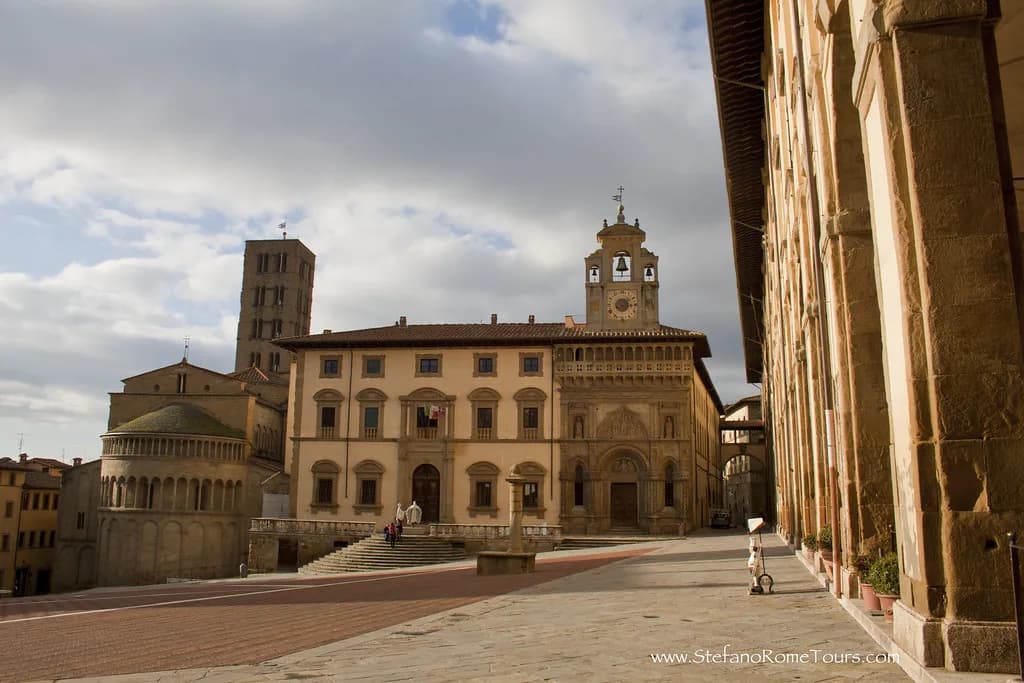
Logge Vasari sits under the Vasari Loggia on Piazza Grande, its tables facing the sloping square under the arched ceiling. One lunch account describes fresh pasta being made under the loggia, house-made breads and pasta, and cooking that is refined rather than cheap. Choose it for a leisurely sit-down lunch; check current hours and the menu with the restaurant directly before you walk over.
Antica Osteria l'Agania, on Via Giuseppe Mazzini, is the simpler, family-run option a short walk from Piazza Grande, often lively with local diners and offering typical food at a reasonable price. One traveller's account describes it as a popular place that does not take reservations; treat that as a report rather than a published policy and confirm directly if a table matters. A named alternative nearby, Antica Vineria dell'Agania, appears in the same street.
La Lancia d'Oro faces Piazza Grande and is listed as a recommended special-occasion choice in the city; check current details on its own page before relying on older listings. For a market-day lunch, the antiques fair and markets guide explains how the stalls spread around the centre so you can plan a table nearby. That keeps a Saturday or Sunday browsing session from ending in a long hunt for food.
Snacks and Market Timing
Bar Stefano, a few steps from the Pieve on Corso Italia, is known for hot bomboloni, fried doughnuts rolled in sugar and filled with pastry cream or chocolate, served as a midday merenda at about four in the afternoon. Treat them as a snack rather than a dessert after dinner. The same shop also sells cakes and pastries to take away. For wider planning, see Santa Maria della Pieve Arezzo visitor guide.
The Arezzo antiques market, the Fiera Antiquaria, is described as one of the largest in Italy and runs on the first Sunday of the month and the preceding Saturday, with over five hundred dealers in good weather. Stalls extend from the Basilica of San Francesco towards the Duomo, and the market dates back to 1968, started through the efforts of collector Ivan Bruschi. Arrive early, then take a long lunch when the crowds peak. For wider planning, see Arezzo Antiques Fair and Markets. Further visitor details appear in Arezzo tourist information.
Because stall layouts and dates should be confirmed with the organiser, do not build a whole day around a single month-old listing. Use the market's own materials or the city's tourism pages to check the current weekend. That check protects a Saturday you have been planning around.
Timing, Sharing and Checking Ahead
Italian lunch usually runs from about half past twelve to two thirty, and dinner rarely starts before half past seven, so an early-evening arrival may find kitchens closed. Plan the biggest meal at lunch if you want an afternoon of walking. A one day in Arezzo itinerary can hold the sightseeing around those sitting times.
Hours, closing days and reservation policies change without notice, so check the venue's own website or call before any meal that matters, particularly on Sundays and holidays. For a different Italian city to compare, the Bologna local food guide follows the same approach. If you are extending your trip, the day trips from Arezzo guide covers the valleys around the city.
Plan Your Eating Day in Arezzo
A working strategy for Arezzo is one bread-based dish, one pasta, one shared plate of meat or cheese and, if there is room, cantucci with Vin Santo. Build the day around lunch and keep the evening flexible. That way a single day here feels generous rather than rushed.
Confirm hours and menus directly with the places named here, and verify market weekends with the organiser rather than an old listing. With those checks done, Arezzo is an easy city in which to eat well slowly, with the wider Arezzo Attractions guides on hand for the hours between meals. For related planning, see One Day in Arezzo.
Frequently Asked Questions
What food is Arezzo known for?
Arezzo's table is built on Tuscan staples cooked plainly: pane sciocco, ribollita and pappa al pomodoro, hand-rolled pici with garlicky or game sauces, Chianina beef from the Val di Chiana, pecorino Toscano, finocchiona and cantucci with Vin Santo. Seasonal soups and salads matter as much as the meat dishes.
Do I need to share bistecca alla Fiorentina?
Yes, it is generally a thick T-bone served by weight for two or more people. If you are eating alone, consider a tagliata or a ragù instead. Ask the restaurant how it is served and priced before committing.
Where can I try local dishes near Piazza Grande?
Logge Vasari sits under the Vasari Loggia on the square, Antica Osteria l'Agania is a short walk away on Via Giuseppe Mazzini, and La Lancia d'Oro faces the square. They differ in setting and price level, so check current hours and menus directly before you go.
Is Tuscan food suitable for vegetarians?
More than the steak reputation suggests: ribollita, panzanella, fagioli all'uccelletto and many vegetable and pasta dishes are naturally plant-based. Tell staff if you want to avoid meat stock or lard, since traditional versions of some dishes can vary.
When does the Arezzo antiques market take place?
The Fiera Antiquaria is described as running on the first Sunday of each month and the preceding Saturday, with stalls extending through the upper city. Since dates and layouts are best confirmed with the organiser, check before building a day around a market weekend.
Sources
- FONDAZIONE AREZZO INTOUR - AREZZO DMO TUSCANY » Fondazione Arezzo Intour - DMO Arezzo ( Tuscany )
- 2026 Recommended Food in Province of Arezzo (Updated October)| Trip Moments
- Authentic Tuscany food guide: Must-try dishes & where to eat them | The Vespa Trip
- A Lunch in Arezzo — Two Parts Italy
- The complete foodie guide to Tuscany - Great Italian Chefs
- Arezzo in two days: things to do and visit
- Uncover Arezzo: Your Ultimate Insider's Guide to Tuscany's Hidden Gem
- Arezzo tourist information
Continue exploring
More guides you'll find useful