
Porto Antico Waterfront Walk: A Genoa Walking Guide
Plan a slow walk along Genoa's Porto Antico, from the marina promenade to the Galata Museo del Mare, and learn how to pair it with the aquarium nearby.
On this page
Porto Antico works best when you treat it as a place to walk rather than a list of attractions to tick off. The promenade runs between leisure and commercial spaces on one side and the marina water on the other, so the route itself is the point, with the harbour and the old town pressing in from either edge. Give it a half-day of unhurried strolling and let the separate museums and the aquarium be optional stops rather than obligations, but treat that half-day as our suggestion, not an official figure.
Where Porto Antico Sits and Why It Looks This Way
Porto Antico occupies the strip where the historic centre meets the water, making it Genoa's natural threshold between the city and the sea. That position is why a walk here doubles as an orientation exercise: from the quays you can read how close the old town sits to the harbour and how the port still frames daily life. It is also why the area feels like a hinge rather than a destination bolted onto the city.
The mixture of buildings is deliberate. Freight terminals and shipyards were transformed into a cultural and leisure area that combines modern design with coastal scenery, which is why the architecture around you mixes rather than matches. Knowing this changes how you look at the place: the contrasts are the renovation speaking, not a planning accident.
Treat the waterfront itself as open public ground that you stroll without a ticket, while the individual museums and the aquarium are separate paid venues with their own entry arrangements. If you want a wider menu of city sights to slot around this walk, browse the Genoa Attractions hub before you set out.
What the Walk Actually Is
The core route is simple: you follow the waterfront promenade, with commercial and leisure frontage on one side and the marina on the other, and you keep the water in view as you go. There is no fixed circuit to complete, so you can walk as far as the harbour holds your attention and turn back whenever you like. That flexibility is what makes the port a good slow-morning rather than a timed sightseeing slot.
The surface is easy walking along the quays, and the layout rewards stopping rather than striding. Plan two or three pauses, at the marina edge, near the exhibition venues, and at the western end by the maritime museum, to look rather than to buy anything. A reusable water bottle and comfortable shoes matter more here than a schedule.
Landmarks You See From the Quays
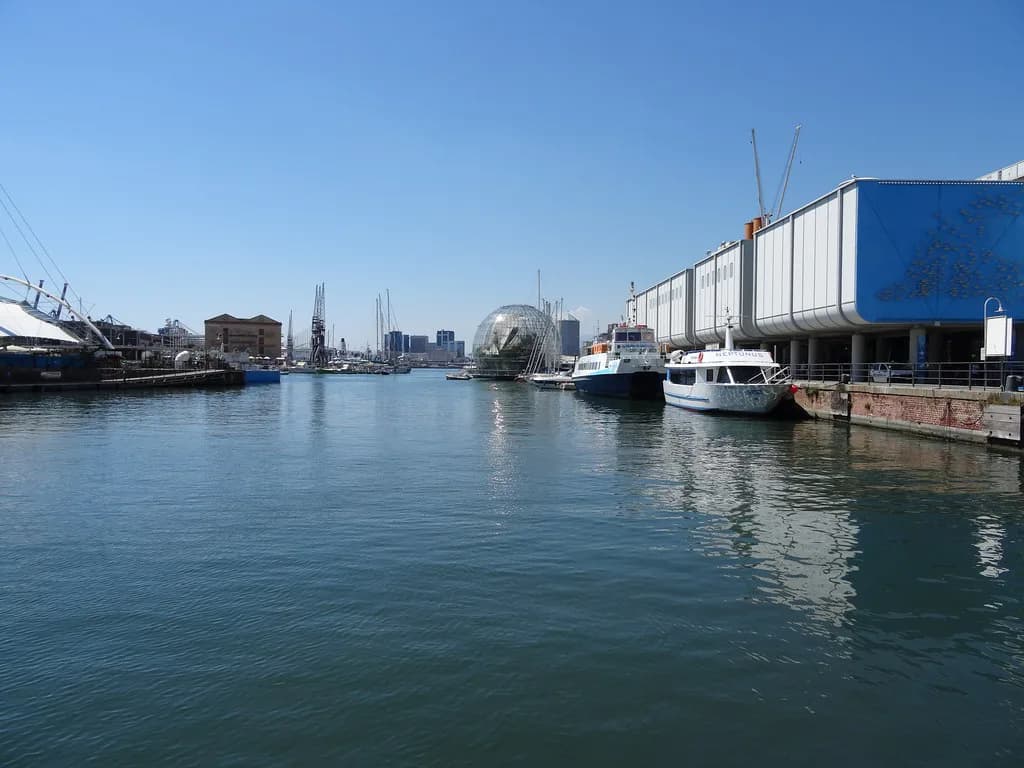
From the promenade you pass the panoramic elevator area and a cluster of exhibition venues, which give the port its post-industrial skyline. You do not need to ride the lift or enter the venues to enjoy them: they read well as vertical accents framing the water and the moored craft. Check current access and any charges on the operator's own site before planning to go up or in.
The quays themselves are the best vantage point for the boats and the working harbour, so bring a camera and let the sightlines do the work. Views change as you move along the waterfront, which is a good reason to walk the stretch in both directions rather than retracing a single leg. Early on a clear morning, the water and the low light along the old port are worth arriving for, though that is a suggestion about atmosphere rather than a claim about crowds.
If you are travelling as a family and need to break the walk with something more structured, the dedicated Genoa with kids guide is a useful planning companion for slotting short, child-friendly stops around the harbour. For wider planning, see Genoa with Kids.
The Western Shipyard End: Galata, the Submarine and the Galleon
Head towards the western shipyard and the Galata Museo del Mare anchors the far end of the walk, recounting the seafaring history that shaped the city. Moored beside it, the old submarine Nazario Sauro has been converted into a museum, and the Neptune galleon replica built for a film floats on the water nearby. Together they form the densest cluster of maritime interest on the waterfront.
Treat all three primarily as exterior context on this walk unless you decide to buy separate admission, because the museum and the submarine are distinct ticketed venues rather than part of the promenade. Viewing the galleon from the quay costs nothing and takes only minutes, so it is easy to include even on a short stroll. For admission details, look to the museums' own published information rather than assuming the port has a single combined arrangement.
Combining the Walk With the Acquario di Genova
The aquarium sits within the same port area, so the practical question is sequencing rather than transport. A sensible pattern is to walk first, using the promenade to absorb the harbour and the exteriors, then enter the aquarium when you are ready to be indoors for a stretch, or the reverse if you want to start fresh inside. Either way the two activities share the same ground and need no journey between them.
Do not assume the waterfront walk gives you any kind of access to the aquarium; its tickets, booking and entry rules are a separate matter and change over time. Check the aquarium's current procedures on its own channels before you go, and keep the tour of the exhibits distinct in your mind from the free public quays around it. The Acquario di Genova visitor guide covers the inside planning in more detail than a harbour walk can.
If the weather turns, the aquarium is the obvious indoor fallback, since it is already within the port you came to see. On settled days, do the walk first and leave the indoor venue for the afternoon, when the light on the water has changed.
Extending the Walk Into the Historic Centre and the Rolli Palaces
Porto Antico borders the historic centre, so the walk can flow naturally into the old town's alleys without any transit in between. The city's own visitor authority organises the old town around museums, monuments, churches, historic traditions and guided tours, which gives you a sensible basis for deciding what to see once you leave the harbour. Use its listings to check what is open before heading inland.
For a natural second half, climb from the port towards Via Garibaldi and the Palazzi dei Rolli, the Renaissance and Baroque residences inscribed on the UNESCO World Heritage List. Seeing their exteriors and the street itself is the simple version; the interiors and guided visits are a separate matter to verify on the official visitor site. This is the route that turns a harbour stroll into a compact city walk.
If the palaces pull you towards the city's quirkier corners, the hidden gems in Genoa guide is worth reading before you commit, covering less prominent sights such as the Cimitero Monumentale di Staglieno that sit outside the obvious port circuit.
Practical Pacing: How Much Waterfront to Cover
The right length depends on what you plan to do inside the port. If you are only strolling and looking, a couple of hours covers the promenade and the exterior highlights comfortably; add time if you intend to enter the aquarium or the maritime museum, and treat those figures as suggestions to scale to your own pace. A short version covers the eastern quays and the marina, while a longer one reaches the western shipyard and the Galata.
If time is short, prioritise the waterfront promenade itself and the open views over the marina, and skip the interiors. The walk's value is in the harbour setting, not in collecting venues, so a quick pass still delivers the main experience. Walk one direction, then use the old town as your return leg rather than retracing the whole quay.
For food, the port and the adjacent old town are packed with options, but the area's cafés and restaurants change, so check current opening hours before deciding to eat on the waterfront rather than inland. Booking is rarely needed for a daytime snack, though it pays to walk a few streets into the centre if the quayside places are full.
Early Morning or Daytime: Choosing Your Moment
If you want the harbour to yourself, arrive early; a dawn visit lets you see the port before the day begins and the light on the water is at its best. That is a suggestion about atmosphere, not a promise of empty quays, so keep your expectations realistic and check the weather in advance. Morning also leaves the rest of the day free for the aquarium or the historic centre.
A daytime visit gives you the full range of cafés, shops and museums, which is the better choice if you plan to combine the walk with a museum interior or a guided tour. The trade-off is straightforward: early for light and space, daytime for convenience. Either way, build in unhurried pauses along the water rather than treating the quays as a corridor to hurry through.
Plan Your Visit
Porto Antico rewards a slow walk: start at the promenade, follow the marina, take in the elevator area and exhibition venues, then finish at the western end by the Galata, the submarine and the galleon. Leave the aquarium, the museums and the Rolli palaces as separate decisions to check against current information. That way the waterfront stays a place to walk, and everything else becomes a bonus.
Frequently Asked Questions
Can you walk into Genoa from the cruise port?
Porto Antico sits directly against the edge of the historic centre, so the transition from waterfront to old town is a walk rather than a journey. Cruise terminal procedures, shuttle arrangements and port access rules are set by the terminal operator and the authorities, so confirm those details with your cruise line and the port's own information before you go ashore. The harbour promenade itself is public ground, separate from the ticketed venues along it.
How much time do I need in Genoa?
A half-day is enough to walk the Porto Antico promenade and see the waterfront highlights, with extra time needed if you want to enter the aquarium or the maritime museum. Add a further block for the historic centre and the UNESCO-listed Rolli palaces along Via Garibaldi. Treat these as suggested blocks to scale to your own pace rather than fixed timings.
What are the best beaches around Genoa?
Genoa's coastal neighbourhoods and nearby Ligurian resorts offer beaches, but this guide does not specify particular beaches or distances because those details are best checked against the city's own visitor listings and local transport information. Confirm which beaches are reachable and how before planning a beach day. The Porto Antico walk is a harbour experience rather than a beach one.
Where to avoid in Genova?
Genoa's historic centre, like any large city's, deserves ordinary urban awareness: keep valuables out of sight, stay alert in busy transport areas, and use well-lit streets after dark. The Porto Antico promenade is open public ground within the renovated port. For specific local safety guidance, consult official city and police information rather than unverified travel forum claims.
How long is the Porto Antico waterfront walk?
There is no fixed circuit; you follow the promenade between the marina and the leisure frontage and can walk as far as you like. A comfortable version covers the waterfront from the eastern quays to the western shipyard around the Galata Museo del Mare. Time depends on which venues you enter, so plan around your own interests rather than a set distance.
Do you need tickets to walk around Porto Antico?
The waterfront promenade is public ground you can walk without a ticket. The aquarium, the Galata Museo del Mare and the submarine museum are separately managed venues with their own entry arrangements, so check each one's official information before visiting. Do not assume one ticket covers the whole port.
Sources
Continue exploring
More guides you'll find useful





