Papyrus Museum Syracuse: A Visitor Guide to the Museo del Papiro
A grounded guide to Syracuse's Papyrus Museum Corrado Basile: what the collection covers, why Sicily's papyrus matters, and how to confirm the address and hours.
On this page
Sicily's papyrus story is unusual enough to have its own museum, and Syracuse has one: the Museo del Papiro Corrado Basile. It is a single-subject collection rather than a general archaeology museum, so it asks for a different kind of attention than the Greek Theatre or the cathedral. One travel listing suggests allowing two to three hours, which is a planning cue from that listing rather than an official visit duration.
Two things deserve checking before you set out. The museum's address appears in different forms across sources, and opening information is not consistently published, so confirm the entrance and the day's hours rather than assuming a fixed weekly pattern. Once those points are settled, the visit itself is simple: a small, focused collection tied to a plant that grows naturally in this corner of Sicily. Further visitor details appear in Official event website.
Quick Answer: What the Museo del Papiro Is
This is a specialist museum about papyrus, both the plant and the writing material made from it, in a city where papyrus grows naturally. That single focus sets it apart from Syracuse's larger archaeological collections, which range across centuries and multiple sites. If you want a compact, topic-driven stop between bigger sights, it fits; if you want scale and monumental ruins, spend your hours elsewhere.
The museum is named for Corrado Basile, and its formal name is Museo del Papiro Corrado Basile. Published descriptions refer to ancient papyri in the collection, so the visit leans on close looking and reading rather than on reconstructed rooms or theatrical displays. Plan to slow down rather than rush through, because the appeal lies in the detail.
Where the Museum Is and How to Approach It
The museum sits in Syracuse, and one listing places it roughly 362 metres from Ortigia, which puts the island's edge within a short walk if you are already exploring the old town. Treat that figure as listing data rather than a guaranteed route: entrances and passages around Ortigia vary, so use a map on the day and allow a little slack.
Address data conflicts, and this matters more than it sounds. One listing gives Via Nizza 14 in Siracusa, while a Sicily museums round-up gives Viale Teocrito 66, an address also associated with the Paolo Orsi archaeological museum. Do not assume these are the same building or interchangeable. Check the official site or telephone before travelling, especially if you are walking from the far side of the city.
Holiday-rental listings place several properties within a few hundred metres of the museum, which supports the general point that it sits in a walkable, central part of Syracuse rather than an outlying district. That is useful for planning: you can pair it with a wander toward Ortigia instead of scheduling a separate trip. Use a map to fix the exact entrance on the day rather than relying on distance alone.
Why Papyrus Grows in Sicily
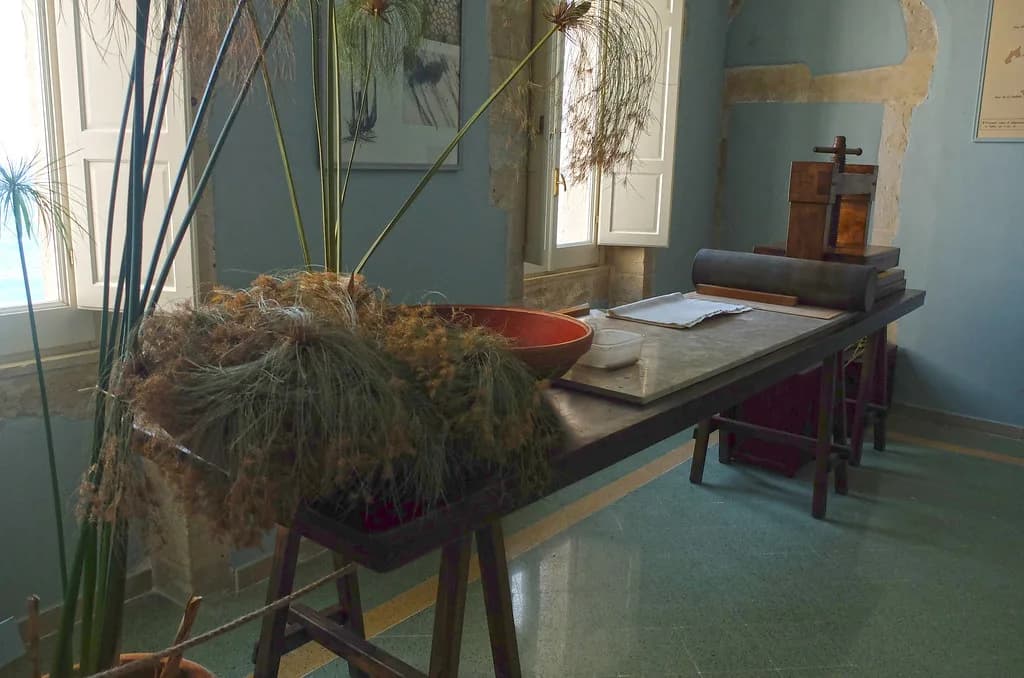
The Syracuse area is the only part of Italy where papyrus grows naturally, which is the reason a museum devoted to the plant exists here at all. That fact reframes papyrus as a local natural curiosity rather than only an import associated with ancient Egypt. For a traveller, it turns a small museum into a piece of Sicilian environmental history as much as a display of writing materials.
Knowing that context changes how you read the exhibits: the interest is in a plant that thrived in these wetlands and in what people made from it. If you have time afterwards, the springs and waterways around Syracuse, including the Fountain of Arethusa in Ortigia, give that natural story a physical setting.
Inside the Collection: What to Expect
Published descriptions note that the museum holds ancient papyri, and one Sicily museums guide dates some of them as far back as the fifteenth century BCE. Treat that dating as an attributed claim rather than something you can verify from the doorway; ask at the entrance or check the official site for what is currently on display. Exact objects change, and no reliable inventory is published in the sources available.
Because the museum is single-subject, expect a visit built around close examination and contextual explanation. Visitors who want dramatic architecture or large-scale reconstructions may find it dry, while those curious about materials, plants and ancient writing will get more from it. Decide based on which of those two travellers you are.
Suggested Time Budget
One travel listing recommends a visit of two to three hours. That is a listing suggestion, not an official duration, and it is on the generous side for a small museum unless you read every panel carefully. A reasonable approach is to plan a shorter stop and extend it if the collection holds your attention.
Time budgeting matters most when you are fitting the museum around Syracuse's larger sites. Neapolis Archaeological Park covers twenty-four hectares and includes the Greek Theatre, Roman Amphitheatre and the Ear of Dionysius, so it can absorb half a day on its own. Keep the papyrus museum as a separate, shorter slot rather than squeezing it into the same block.
Before You Go: Confirming Hours
Opening information is the weakest part of the planning picture. One listing shows a morning window ending at 14:00, but that is listing data rather than a confirmed weekly schedule, and it should not be treated as settled. Check the museum's own site and, if needed, telephone before you build a day around it.
No source confirms closure days, seasonal changes or holiday exceptions, so do not rely on assumptions carried over from other Sicilian museums. A quick call or a look at the official site is the only responsible way to confirm. If you cannot reach anyone, plan the museum as an optional stop with a fallback nearby rather than the fixed centre of your day.
Tickets and Money: What to Ask
Admission details for the papyrus museum are not reliably published in the available sources, so this guide does not quote a price. Ask directly whether your ticket covers the whole collection and whether any reduced category applies to you. That avoids arriving with the wrong expectation.
For contrast, Syracuse's larger ticketed sites do publish prices, and those figures are separate. Neapolis Archaeological Park, for example, publishes a standard adult ticket of 13.50 euros with a reduced rate of 6.75 euros for EU citizens aged 18 to 25, and notes a higher combined rate during an exhibition period that ran to 31 October 2025. Those figures apply to that park, not to the papyrus museum, and hours there should be confirmed on the operator's site.
Papyrus Museum or Neapolis Park: A Simple Decision
If you have one free day in Syracuse and want the classic experience, the archaeological park delivers the Greek Theatre, the quarries and the Ear of Dionysius in one place. The cave's unusual acoustics and its association with the tyrant Dionysius make it the most theatrical stop in the city, and its name is credited to Caravaggio, who saw the ear-like shape in 1608. That is a different order of spectacle from a papyrus collection.
Choose the papyrus museum instead when you want a narrower subject, a smaller space and something specific to Sicily's natural environment. It also suits a return visit, when the headline sights are already covered. Neither choice is wrong; they answer different questions.
Pairing the Museum with Ortigia
Ortigia rewards slow walking, and the museum's position within a few hundred metres of the island makes a combined half day practical. Piazza Duomo is the natural anchor, with its baroque palaces and a cathedral built around the columns of an ancient temple to Athena. Allow time simply to sit in the square rather than treating it as a photo stop.
If you prefer to start early, a morning museum visit followed by slower wandering works well in warmer months. Syracuse's archaeological sites are exposed, and the same heat applies to walking between the museum and the waterfront. Carry water and keep the afternoon flexible; our Syracuse attractions hub collects the city's guide pages by sight.
At the southern tip of the island, Castello Maniace gives the walk a destination, and the seafront route past the Fountain of Arethusa is the obvious approach. The fortress is a thirteenth-century Swabian build, and its walls are worth the walk even if you do not go inside. One source gives hours and prices for the castle that may change, so confirm before planning around it.
Honest Trade-Offs
A small single-topic museum is a gamble on your own interests. If papyrus, ancient writing or Mediterranean plants intrigue you, the specificity is the reward; if not, an hour can feel long. Be honest with yourself before allocating part of a short Syracuse stay.
There is also a practical risk: with hours and even the address unclear across sources, a visit can end at a closed door. Reduce that risk by confirming by phone or on the official site the day before, and keep a nearby alternative such as Ortigia's squares or the waterfront in reserve.
Nearby Museum Context: Paolo Orsi and Others
Syracuse has a major regional archaeology museum, the Museo Archeologico Regionale Paolo Orsi, a separate ticketed site on Viale Teocrito that should not be confused with the papyrus collection or assumed to share its ticket. Before relying on its schedule, confirm current hours on the operator's own site.
Other Syracuse attractions sit in their own ticketing worlds too: the cathedral, the Neapolis park and the castle each have separate arrangements and separate buildings. Do not assume any combined ticket covers the papyrus museum. Treat each stop as its own small decision and check admission where it matters.
Plan Your Visit
The Museo del Papiro Corrado Basile rewards preparation more than most Syracuse stops. Confirm the entrance address and the day's opening window before you go, since sources disagree on the address and publication of hours is patchy. Once those two points are settled, the visit is simple: a small, focused collection tied to a plant that grows naturally in this corner of Sicily.
Build the rest of the day around Ortigia, and keep the museum as a deliberate stop rather than a filler between the Greek Theatre and the cathedral. If you are travelling with children or shaping a longer Sicilian itinerary, use our other Syracuse guides to plan the wider schedule. For wider planning, see Hidden Gems in Syracuse, Sicily.
Frequently Asked Questions
Where exactly is the Papyrus Museum in Syracuse?
Sources conflict. One listing gives Via Nizza 14 in Siracusa, while a Sicily museums guide gives Viale Teocrito 66, an address also associated with the Paolo Orsi museum. Do not assume these are the same place. Check the museum's official site or telephone before travelling, and use a map on the day to find the entrance.
How long should I spend at the Museo del Papiro?
One travel listing suggests two to three hours, but that is a listing recommendation rather than an official duration. For a single-subject museum, a shorter visit is often enough unless you read the panels closely. Plan a modest slot and extend it if the collection holds your interest.
What are the Papyrus Museum's opening hours?
No reliable weekly schedule is published in the available sources, and one listing's morning window should not be treated as confirmed. Check the official site or telephone before you go, and avoid building a day around the museum without verifying first. Keep a nearby alternative in reserve.
Do I need to book Papyrus Museum tickets in advance?
Booking requirements are not documented in the available sources, so this guide cannot confirm whether advance tickets are needed or offered. Ask when you call to check hours, and confirm what the admission covers. Do not assume a combined ticket with other Syracuse sites.
Is the Papyrus Museum worth visiting on a first trip to Syracuse?
It depends on your interests. First-time visitors often prioritise the Neapolis Archaeological Park, the cathedral and Ortigia, which offer more spectacle. The papyrus museum suits travellers curious about plants, ancient writing or Sicily's natural history, and works well on a return visit or as a half-day stop.
Can I combine the Papyrus Museum with Ortigia and the Neapolis park in one day?
It is possible but tight. Listing data places the museum within a few hundred metres of Ortigia, while Neapolis Park covers twenty-four hectares and can absorb half a day. Treat the museum as a separate short stop and confirm both sites' current hours before committing to a packed schedule.
Is the papyrus museum the same as the Paolo Orsi archaeological museum?
No. The Museo Archeologico Regionale Paolo Orsi is a separate museum on Viale Teocrito with its own ticketing and schedule. The papyrus collection is a distinct, single-subject museum. Do not assume one ticket covers both, and check each site's arrangements separately.
Sources
- Papyrus Museum "Corrado Basile" Biletleri [2026] - Promosyonlar, Fiyatlar, Yorumlar ve Çalışma Saatleri | Trip.com
- Bókaðu sumarhús nálægt Papyrus Museum Museo del Papiro í Villa Bosco, Ítalía | Booking.com
- Siracusa's Museums - Love Sicily
- Papyrus Museum "Corrado Basile" Tickets [2026] - Promos, Prices, Reviews & Opening Hours | Trip.com
- Official event website
- The Ear of Dionysus, in Syracuse: between legends and nature
- Maniace Castle in Syracuse: Discover the Majestic Bastion on the Sea
- Duomo Square - Syracuse (Siracusa), Sicily - Italy - ItalyGuides.it
- Piazza Duomo, a beauty by day or by night
- Tickets for Neapolis Archeological Park with Audioguide | musement
- Museo Archeologico Regionale P. Orsi Tickets [2026] - Promos, Prices, Reviews & Opening Hours | Trip.com
Continue exploring
More guides you'll find useful