Chiesa di San Carlo Noto: A Guide to the Baroque Church
Plan a visit to the Chiesa di San Carlo in Noto: its concave Baroque facade, free interior, and an optional rooftop climb along Corso Vittorio Emanuele.
On this page
The Chiesa di San Carlo al Corso sits at the far eastern end of Corso Vittorio Emanuele, the straight spine that carries almost every visitor through Noto's rebuilt centre. It is often the last church reached on a west-to-east stroll, which makes it a useful final stop before the street releases you towards Piazza Immacolata. A short visit here costs nothing on the ground floor, but it rewards a few minutes of looking rather than a quick photograph from the doorway. For wider planning, see Cattedrale di San Nicolò in Noto.
Noto's historic centre was laid out after the 1693 earthquake destroyed the older settlement, and the grid of pale limestone churches and palaces has been recognised by UNESCO as part of the late Baroque towns of the Val di Noto since 2002. That rebuilding campaign is why the streets feel unusually regular for a Sicilian town, with the Corso as the ceremonial axis and church facades designed to be read in sequence as you approach them.
Where the Church Sits on the Corso
San Carlo stands on the eastern stretch of Corso Vittorio Emanuele, close to where the street meets the area around Piazza Immacolata and the staircase up to the Chiesa di San Francesco. If you begin at the Villa Comunale or the Porta Reale and walk east, you pass San Francesco, Santa Chiara, the cathedral and the Salvatore complex before reaching it, so pace yourself if you plan to enter several.
The local diocese publishes parish and Mass information for its churches across the Noto vicariate, which is the sensible place to confirm whether the building is open on the day you are in town. The town council's events calendar is useful for spotting processions or civic ceremonies that might occupy the Corso, though it does not list church opening times.
Reading the Concave Facade
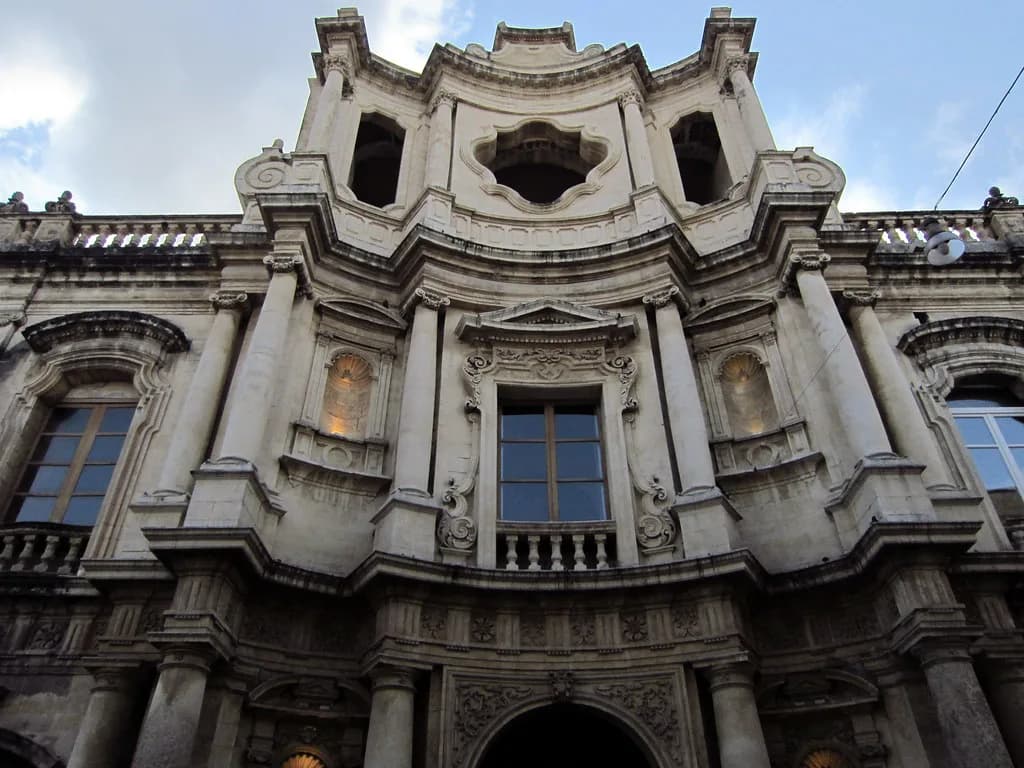
The first thing to notice is the curve: the front of San Carlo bows inward rather than projecting outward like many of the churches further west. That concavity makes the facade feel like a shallow embrace of the piazza in front of it, and it changes how the building looks as you walk past instead of facing it head-on. Step off the Corso and move a few paces to either side to see the sweep of the wall.
Above the entrance, the design stacks three column orders on top of one another: Doric at the lowest level, Ionic in the middle and Corinthian above. Each order carries its own capital and proportions, so the facade reads as three distinct storeys rather than one continuous front. Once you know the sequence, the same device becomes easier to spot on neighbouring churches along the Corso.
Design credit for the church is usually attached to Rosario Gagliardi, the architect whose work dominates Baroque Noto, but the attribution is described as probable rather than documented. Treat Gagliardi as a useful context for the style rather than a settled fact you should repeat with confidence. The church is also known as the Collegiata because of the adjacent Jesuit seminary and monastery.
Inside the Free Church
Walking in costs nothing, which makes San Carlo an easy addition to a day when you are already on the Corso. The interior continues the Baroque treatment with a nave ordered by columns and a decorative scheme that rewards slower looking than the exterior's first impression suggests. Keep your visit short if a service is in progress and let worshippers have the benches.
This is an active place of worship, not a museum, so cover shoulders and knees and keep voices low, as you would in any church in the Val di Noto. Photography is usually tolerated outside service times, but watch for signs at the entrance and follow whatever the parish asks on the day. If you want the interior in quiet light, early morning or late afternoon is more comfortable than the middle of a summer day.
The Spiral Staircase and Rooftop View
A spiral staircase leads from the church up to a roof-level viewpoint over the old town and the surrounding hills. Unlike the church itself, the climb is a paid extra, and it is worth deciding before you enter whether you want it, because the entrance and the stair are separate parts of the visit. The fee is not published on the diocesan or municipal sites, so ask at the church or a nearby tourist office on the day rather than relying on an older figure from a travel blog.
The climb rewards people who want a high view of Noto's rooftops without committing to a longer excursion, and the tight spiral is part of the experience rather than an inconvenience to rush. If narrow stairs, confined turns or heights unsettle you, skip it without regret; the facade and interior already justify the stop. Allow a little time at the top rather than turning straight around, since the point is the view.
Light matters here more than at most stops in town. Noto's limestone glows warm in late afternoon, and the rooftops catch that colour best when the sun is low, so a climb scheduled towards the end of the day tends to be more rewarding than one at midday in summer.
San Carlo Beside the Cathedral and Santa Chiara
The cathedral, the Cattedrale di San Nicolò, sits higher up the Corso behind a broad flight of steps and a double-towered facade, and it is the natural anchor of any walk through the centre. San Carlo is a smaller, more intimate stop, and treating the two as separate visits avoids the temptation to rush one to reach the other. If you only have time for one interior, choose the cathedral for scale and San Carlo for the quieter, curved front and the roof.
Santa Chiara, a short way west, is known for its elaborate stucco interior and the bell tower attached to the former Benedictine monastery, which now houses the town's civic museum. San Carlo offers a different pleasure: the concave facade and the stacked orders outside, plus the optional roof. Visiting all three in one walk is easy on foot, but spread them across a morning and a late afternoon so each gets proper attention.
Practical Notes for a 2026 Visit
Opening hours for San Carlo are not published in a form you can rely on from outside Noto, and the pattern can shift with the liturgical calendar and volunteer availability. Check the diocesan site or ask at the parish before making the church the centrepiece of your day, and keep a fallback plan such as the cathedral or the Civic Museum if the doors are shut.
Wear shoes that cope with cobblestones and the worn steps of Noto's staircases, and carry water in summer, when the Corso becomes a sun trap between roughly late morning and mid afternoon. The walk between the main churches is short but almost entirely exposed, so a hat and a refillable bottle make more difference than an umbrella.
A self-guided route along the Corso works well because the churches, palaces and staircases follow one another without long detours. If you want a structured sequence, follow a Baroque self-guided walk that covers the main axis, then break off at San Carlo for the roof.
What to Pair with the Visit
Just west of San Carlo, Piazza Immacolata and the staircase up to San Francesco make a natural pause, and the view back down the Corso from the top of those steps is one of the town's best free compositions. Palazzo Nicolaci di Villadorata, with its carved balconies of lions and cherubs, is a few minutes further on and worth a detour even if you do not go inside.
Coffee and granita on the Corso are part of the rhythm of a Noto morning, and a seat in the shade is a better use of a hot hour than pushing on to another church interior. If you are building a slower day, the hidden gems in Noto guide covers corners of the centre that sit off the main axis.
Plan Your Visit
San Carlo works best as a short, deliberate stop on a Corso Vittorio Emanuele walk rather than a destination in its own right. Look at the concave facade from an angle, step inside if the doors are open, and decide on the spiral staircase only after you have seen how busy the day is and how comfortable you are with narrow climbs.
Confirm current opening arrangements and the rooftop fee locally before you set out, since neither is reliably published for 2026. With the church's position fixed at the eastern end of the Corso, it is easy to fold into a morning with the cathedral, Santa Chiara and a coffee, and easy to leave for another visit if time runs short.
Frequently Asked Questions
Is entry to the Chiesa di San Carlo in Noto free?
The church interior is free to enter, as is typical for Noto's parish churches. The spiral staircase to the rooftop is a separate paid extra, so do not assume one covers the other. Ask at the church for the current arrangement on the day you visit, since the town's official sites do not publish a fee.
How much does the rooftop climb at San Carlo cost?
No current fee is published on the diocesan or municipal websites, and older figures in travel blogs may be out of date. Ask at the church entrance or at a local tourist information point when you arrive rather than budgeting from an old guidebook.
How long should I allow for a visit to the Chiesa di San Carlo?
Fifteen to twenty minutes covers the facade, the interior and a look at the staircase. Add another fifteen to thirty minutes if you decide to make the rooftop climb and want time at the top. This is a suggested duration, not an official one.
Is the spiral staircase climb worth it?
It depends on what you want from the stop. The climb gives a high view over Noto's rooftops and the surrounding hills, which is a good use of a late-afternoon slot. If narrow, winding stairs or heights bother you, the free interior and the unusual concave facade already justify the visit.
Where exactly is the church on Corso Vittorio Emanuele?
It stands on the eastern stretch of the Corso, near Piazza Immacolata and the steps up to the Chiesa di San Francesco. If you start at the Porta Reale and walk east, you reach it after San Francesco, Santa Chiara, the cathedral and the Salvatore complex.
What should I wear when visiting churches in Noto?
Cover shoulders and knees, as you would in any active place of worship in Sicily, and choose shoes that handle cobblestones and worn steps. In summer, a hat and a refillable water bottle help on the exposed walk between churches along the Corso.
Can I combine San Carlo with the cathedral and Santa Chiara in one walk?
Yes, all three sit along or just off Corso Vittorio Emanuele and are comfortably walkable in a single day. Spreading them between morning and late afternoon gives each interior proper attention and puts the rooftop climb in better light. Note that each church has its own opening arrangements, so check before you go.
What time of day is best to see the facade?
Late afternoon is the most rewarding, when low sun warms the limestone and the concave front shows its curve most clearly. Midday in summer is hot and flat, and the Corso offers little shade, so plan the church for the cooler end of the day if you can.
Sources
Continue exploring
More guides you'll find useful