Amsterdam Hofjes: Hidden Courtyards Walk & Visiting Rules
Find Amsterdam's hofjes: which courtyards you can see, how to visit respectfully, and a Jordaan walking route with time and access trade-offs.
On this page
Amsterdam Hofjes: A Walking Guide to the Hidden Courtyards
Last updated September 2026. Amsterdam hofjes are historic almshouse courtyards (a hofje is a small ring of homes around a shared garden), and most are private homes today. Some gates stand open and some stay locked, and the Jordaan holds the densest cluster. This guide gives you an exterior-first route, plain access rules and time trade-offs, and it sits alongside our roundup of quiet corners of Amsterdam.
What Is a Hofje? (and Which Ones You Can Actually See)
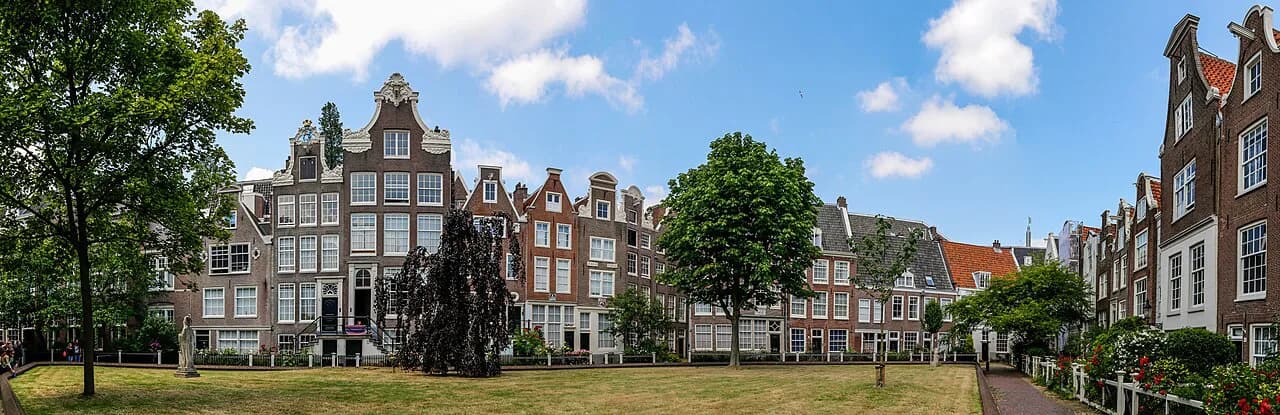
A hofje (plural hofjes) began as charitable housing. Wealthy founders paid for small homes around a courtyard, often for older, unmarried or widowed women. From the street, many entrances look like an ordinary doorway between two houses. Behind it, the homes usually form a U or L around a garden.
Roughly 47 in Amsterdam represent centuries of housing history, from Sint-Andrieshof (around 1614–1617) through later examples like the 1877 Hamer- en Bouwershofje, spanning multiple architectural types and eras.
How many survive? Sources cited for this guide say roughly 47 in Amsterdam, and one Dutch source says more than half of them stand in the Jordaan. Another source says 51 were founded and 7 are lost. Counts vary because later care homes and rebuilt complexes blur the definition, so treat any single number as approximate.
Three types matter for your route. The Begijnhof is a beguinage, a community of lay women, which is a different type from a charity hofje. Sint-Andrieshof is a charity hofje. Karthuizerhof is a large civic complex run by the city, not a private foundation. Knowing the difference explains why some stops feel like a garden and others feel like a housing block.

Can You Visit Amsterdam's Hofjes? Access and Etiquette
Some hofjes can be seen quietly in daytime, but access is never guaranteed. One Dutch source says hofjes are in principle accessible, yet more of them are locked than before. Gates may close at set times, and rules can change. Check on the day, and confirm current guidance with the City of Amsterdam or I amsterdam before you go.
Use one rule everywhere. An open gate means you may look quietly from the entrance. A closed gate means the courtyard is closed. Never follow a resident through a door or push a gate.
These are homes, not museum sets. Keep your voice low and your group small. Do not photograph residents or point a lens into windows. Treat every hofje as an exterior-first stop, and count any glimpse inside as a bonus.
- Open gate: pause at the threshold and look.
- Closed gate: admire the façade and gable stone, then move on.
- Residents present: step aside and stay quiet.
- Unsure: skip it. Another courtyard is a few streets away.
Hofjes Worth Seeking Out
These five names come from the sources behind this guide. Hours and access for each are unverified, so mark them "check before you go". Start with the Jordaan stops and finish with the one central courtyard.
| Hofje | Area | Type | Visible from street or gate? | Best fit | Verification needed |
|---|---|---|---|---|---|
| Begijnhof | Central Amsterdam | Beguinage | Often; verify | First-timers wanting an easier stop | Hours and access: verify |
| Sint-Andrieshof | Jordaan, Egelantiersgracht | Charity hofje | Sometimes; check on the day | Architecture and history fans | Hours and access: verify |
| Karthuizerhof | Jordaan | Large civic complex | Sometimes; check on the day | Scale and history seekers | Hours, access, manager: verify |
| Claes Claesz. Hofje | Jordaan | Reconstructed hofje | Gable stone and entrance; verify | Conservation-minded walkers | Hours and access: verify |
| Hamer- en Bouwershofje | Marnixstraat | Former hofje, now staff housing | Exterior only | Repeat visitors | Current use: verify |
- Sint-Andrieshof, Egelantiersgracht: described by a city source, as relayed by one guide, as the oldest surviving true hofje. Sources date its founding to around 1614–1617. Look for the narrow passage from the canal into a quiet garden.
- Karthuizerhof: built in 1650 to a design attributed to city architect Daniël Stalpaert. Four wings surround a large courtyard. It stands on the site of an older Carthusian monastery, and one Dutch source cites the housing company Ymere as manager. Verify that before you rely on it.
- Claes Claesz. Hofje: not untouched 17th-century fabric. One source says it was reconstructed in a restoration from 1968 to 1973. Look at it as a conservation story.
- Begijnhof: central, older than the charity hofjes, and a beguinage rather than a hofje. It is the most reliable choice for readers who want an easier courtyard visit. Check current visiting rules first.
- Hamer- en Bouwershofje, Marnixstraat 281: founded in 1877 for 24 widows or unmarried women over 50. A Dutch directory page says it has no courtyard and now houses hotel staff. Only a gable stone recalls its past, so it shows what disappears.
A Half-Day Hofjes Walk Through the Jordaan
Plan about three to four hours if you add a café stop and a market. One guide gives that range, and it is a walking estimate, not a fixed rule. You can cross the Jordaan far faster. Slowing down is what lets you spot the gateways.
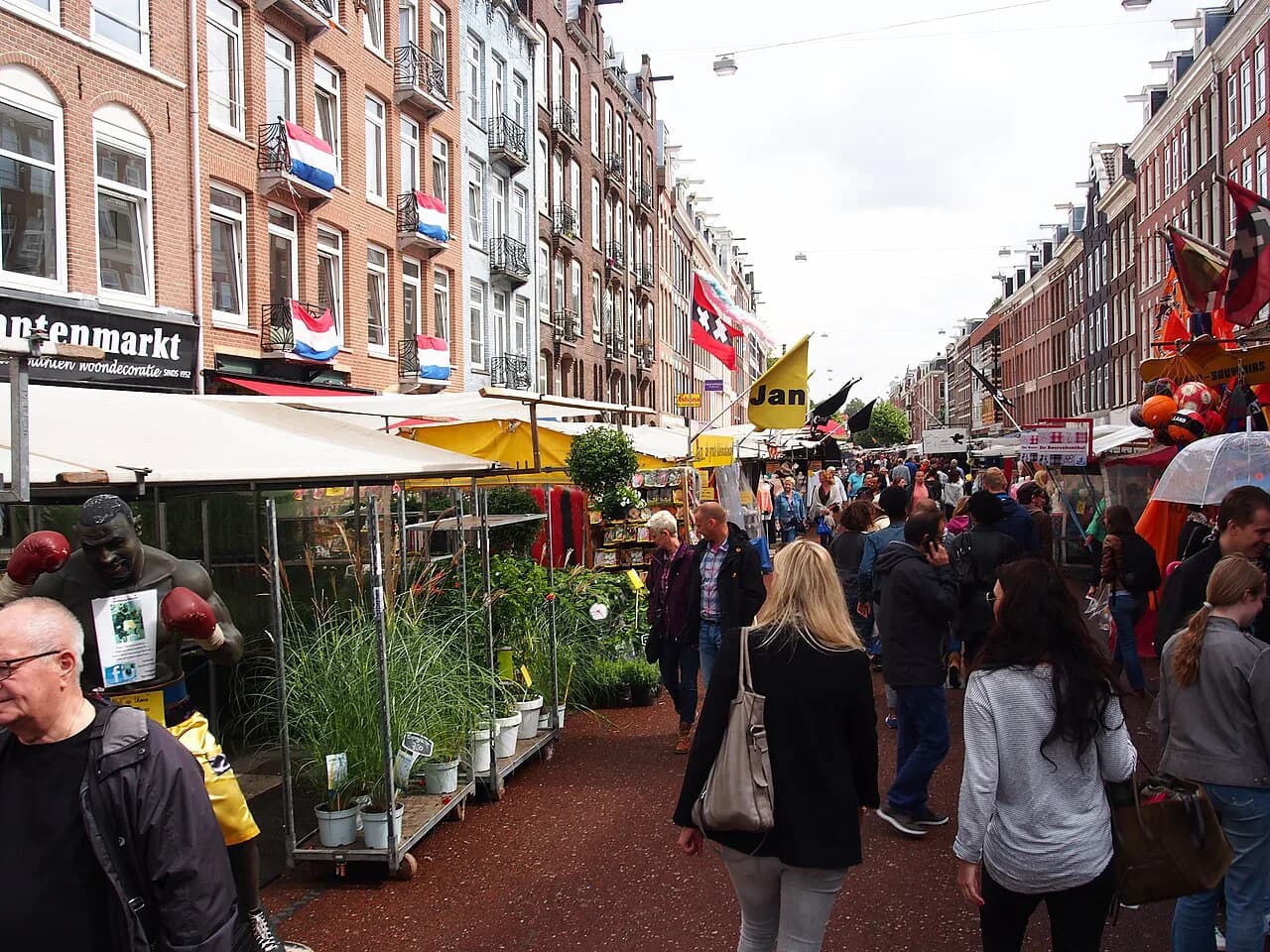
Three to four hours works best on weekdays from late morning into the afternoon, since Saturday mornings draw crowds to Noordermarkt where this walk begins, disrupting the sought-after quiet.
- Start around Brouwersgracht and Noordermarkt at the northern end.
- Walk Karthuizersstraat toward Karthuizerhof and look at the entrance and scale.
- Turn south to Egelantiersgracht and find Sint-Andrieshof.
- Find Claes Claesz. Hofje and check its gable stone.
- Pause at Café ’t Papeneiland, in a building dated 1642, or at Café Chris on Bloemstraat.
- Finish along Bloemgracht or Elandsgracht for a quiet canal walk.
Time Trade-Offs and Café Pauses
For a 60-minute quick look, pick two or three courtyards on Egelantiersgracht and nearby streets. For a half day, follow the route above. For a full day, add a canal-ring extension and the central Begijnhof, which pairs well with central Amsterdam sights. These are approximate walking estimates.
Treat café age claims with care. Café ’t Papeneiland's building dates to 1642, but its own history records a taproom operating on the ground floor from 1896. Café Chris is credited with a 1624 beer-house story, yet one cited study finds documentary evidence of alcohol served there from 1882. Enjoy the coffee, and hold the dates loosely. For more food stops, see our Amsterdam food guide.
When to Go and How to Get There
Go on a weekday from late morning into the afternoon. Streets are calmer then, and shops are beginning to open. Saturday morning brings crowds around Noordermarkt. One guide cites I amsterdam hours of 09:00–13:00 on Monday and 09:00–16:00 on Saturday, so verify the market hours before you plan around them.
Reach the Jordaan on foot from Dam or Centraal, or use GVB trams and buses. Check current lines and journey times on GVB or 9292, because this guide does not confirm them. Expect cobbles, narrow gateways and steps. Accessibility at each courtyard is unknown, so check before you go.
Visiting open courtyards costs nothing, and our free Amsterdam activities guide covers more no-cost options. If you want guided depth, the Vrije Academie lists a hofjes course of 2 sessions of 2 hours at €70, online or on location. That price comes from the provider's listing, so verify it. Stay in the Jordaan for a short walk to the courtyards, or in the Canal Ring or near Centraal for wider access.
Mistakes to Avoid
Most problems come from treating hofjes like attractions.
- Entering a closed gate or following a resident in.
- Photographing residents or windows.
- Arriving in a large group.
- Visiting at odd hours.
- Expecting a museum with tickets and opening times.
- Assuming every hofje is open, or that every listed hofje still has a courtyard.
- Skipping a backup plan. If gates are shut, try one of the Amsterdam museums instead.
Is the Jordaan Worth It If You've Seen the Canals?
Yes, if you like small-scale detail. The Canal Ring is about merchant façades. The Jordaan developed in the early 17th century as a dense district of craftspeople and working families. Its hofjes, side streets and gable stones show how ordinary residents lived beside those grand canals.
This walk suits architecture and history lovers, repeat visitors and quiet-seekers. Skip it if you need ticketed, indoor attractions. Elegant Bloemgracht sits only a street or two from much narrower lanes, which is the contrast worth walking for.
For trip-planning details, see Noord | I amsterdam and Paradiso.
For related deep-dives, see our Amsterdam Noord Walking Route: What to See, Skip, and Know Before You Go and De Pijp Amsterdam: Walking Guide, Food & Where to Stay guides.
Frequently Asked Questions
Can you go inside Amsterdam's hofjes?
Sometimes you can look in quietly from an open gate. Many are private homes, and gates may be locked. Treat a closed gate as closed, and check on the day.
How many hofjes are there in Amsterdam?
Cited sources say roughly 47. Counts vary by definition, and one source says 51 were founded and 7 are lost. Treat the figure as approximate.
What is the oldest hofje in Amsterdam?
A city source, relayed by one guide, calls Sint-Andrieshof the oldest surviving true hofje, dated around 1614–1617. The Begijnhof is older but is a different type. Verify dates with the City of Amsterdam.
What is the best time to visit Amsterdam's hofjes?
Weekday late morning into the afternoon is calmer than Saturday. Avoid odd hours. Check access on the day.
Are Amsterdam's hofjes free to visit?
Looking from open gates costs nothing. A paid alternative is a hofjes course listed at €70 by the Vrije Academie. Verify that price with the provider.
Continue exploring
More guides you'll find useful