Free Things to Do in Treviso: Squares, Canals and Walls
Free things to do in Treviso, from Piazza dei Signori and the canals to the medieval walls and gates, plus honest notes on what still costs money.
On this page
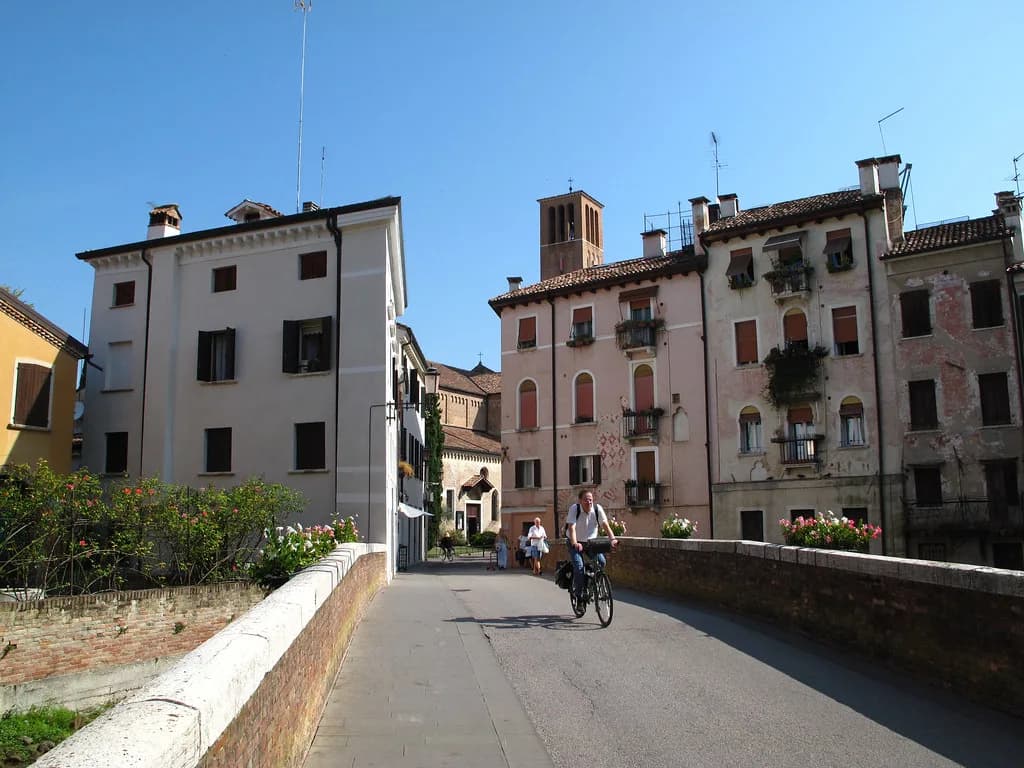
Treviso works well as a low-cost day because its best-known sights are, for the most part, outdoors. The historic centre is compact enough to explore on foot, and much of what makes the city memorable is public space: squares, canals, embankments and the old defensive circuit. Start at Piazza dei Signori, the main square, where historic buildings frame a scene that costs nothing to enjoy.
The useful distinction is between free public ground and paid interiors or organised experiences. Walking a square or a canal path is free; guided tours, cooking classes and wine tastings are not. Where a specific entry fee or opening time matters, this guide points you to the organiser rather than stating a figure that may have changed.
How to Think About Free in Treviso
Public squares, canal-side lanes, city walls and gates are open-air spaces you can enjoy without buying a ticket. Paid options tend to be structured experiences: guided city tours, cooking classes at a local home, Prosecco tours, or ticketed museum collections. Sorting your plan this way means you can build a full day around free stops and choose carefully where to spend.
It also helps to treat any single traveller report as a lead rather than a rule. One blog notes that St. Peter's Cathedral had no entrance fee at the time of visiting, but that is not an official confirmation and conditions can change. Check the cathedral's own information when you arrive, and separate free access to the nave from any paid areas such as a museum or tower.
Piazza dei Signori and Its Historic Buildings
Piazza dei Signori is the natural first stop. The square is surrounded by significant buildings, including Palazzo dei Trecento, which houses the municipal council, and Palazzo del Podestà, once the seat of the local lord. You can read the facades and the changing life of the square from the outside without paying anything.
Nearby, the thirteenth-century Loggia dei Cavalieri was used as a public meeting place and still draws people to its surroundings. Walking the lanes north of the square brings you to more historic frontage, including the Chiesa di Santa Lucia and the neo-Romanesque Palazzo San Vito. These are free to look at from the street, though stepping inside a church may follow its own rules.
Canals and Waterside Wandering
Treviso's canals give the city its nickname, Little Venice, and they are free to explore on foot. The largest, Cagnan Grande, runs roughly north to south through the eastern half of the centre. Smaller waterways such as the Canale dei Buranelli, lined with weeping willows, and the Cagnan della Roggia in the western old town reward slow walking. These are some of the quietest, most atmospheric corners of the city and feature in our guide to the hidden gems in Treviso.
Walking the towpaths and bridges is the simplest free activity in Treviso, and it suits anyone who prefers to set their own pace. Pick a loop that links the main canal to the smaller waterways, then stop wherever a view opens up. If you want a sit-down coffee or a meal with a canal view, that is the point where the day stops being free.
Isolotto della Pescheria: Market Mornings and Quiet Afternoons
The Isolotto della Pescheria is Treviso's historic fish market, set on a small island in the Cagnan Grande. The market was moved here from Piazza dei Signori in the nineteenth century, when three islets were merged and covered halls were built for the stalls. Visiting costs nothing, but the experience depends heavily on timing.
One traveller reports that the market is active in the morning and that afternoons are quieter, though with a lingering fish smell. Treat that as a personal observation rather than an official schedule. If you want to see the market in use, go early; if you want a calm spot by the water, an afternoon stop may suit you better, as long as you accept the trade-off.
Medieval Walls and Gates
Sections of Treviso's medieval walls still stand, and a moat surrounds parts of them, making for a free and pleasant walk. The circuit was designed in 1509 by the engineer Giovanni Monsignori, known as Fra' Giocondo, as protection against attack. You can walk stretches of the walls and see surviving bastions without buying anything.
Several gates survive, including the sixteenth-century Porta San Tomaso in the north and Porta Altinia near the train station in the south. Porta San Tomaso is topped with a statue of St. Paul and is closed to motor traffic, which makes it easier to photograph. Walking between gates takes time and covers real distance, so plan the walls as a half-day activity rather than a quick add-on.
Fontana delle Tette: A Free Curiosity
The Fontana delle Tette is one of Treviso's most unusual free sights. Built in the sixteenth century during the Venetian Republic, it is said to have once flowed with red and white wine for three days during the autumn festival. The fountain sits in a small courtyard off Calmaggiore Street, and the version you see today is a 1980s reconstruction.
If you want to see the original statue, one report says its remains are displayed in a glass case near Piazza dei Signori, though this is worth checking on site. The fountain is a quick stop rather than a destination in itself. Pair it with a wander along Via Calmaggiore and the surrounding lanes to make the detour worthwhile.
Churches and Cathedral: Free Entry Versus Paid Areas
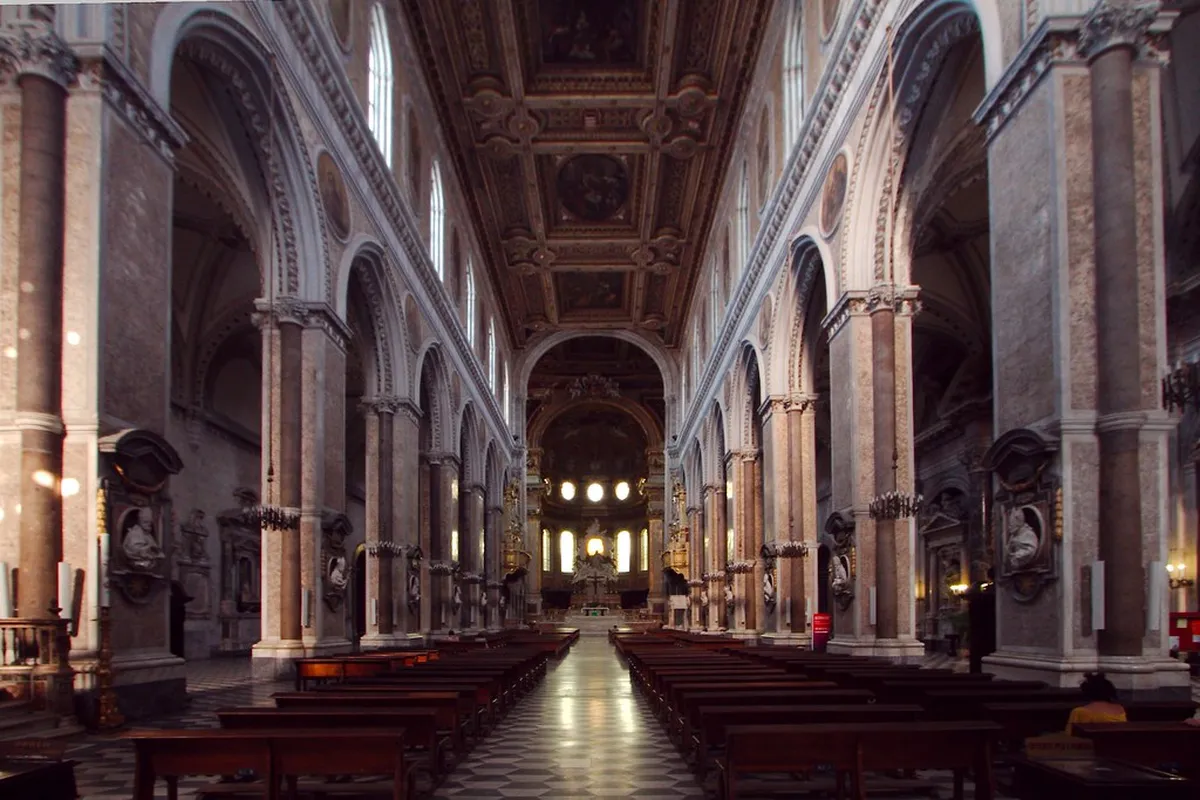
Treviso has several churches worth a look, including the Church of St. Nicolò, the largest in the city, which holds frescoes by Tomaso da Modena. Entering a church is often free, but that does not mean every part of a complex is open or free. Treat the nave, crypt, museum and tower as separate questions and look for notices when you arrive.
St. Peter's Cathedral, with its neoclassical entrance, has paintings by Titian and Pordenone inside, and one traveller found no entrance fee and enjoyed the crypt. That does not confirm current policy. Before you go, check the cathedral's own information or ask at the entrance, and be ready for a small charge for certain areas or a donation request.
Beyond the Centre: The Boat Cemetery near Casier
The Cimitero dei burci, a boat cemetery in the Sile River Natural Park, is a genuinely unusual free sight. Wooden boats were sunk here in the 1970s and 1980s and have been left to decay, gradually being reclaimed by nature. It is roughly four kilometres southeast of Treviso, near the town of Casier.
Getting there is the trade-off. One traveller suggests taking a bus towards Silea and crossing to the southern bank, but routes and timetables change and that advice should not be relied on blindly. If you have a car, the trip is straightforward; without one, budget extra time and confirm local transport before setting out. The reward is a quiet, slightly melancholy landscape rather than a manicured attraction.
What Is Not Free
Organised experiences in and around Treviso carry a cost. Guided city tours, cooking classes in a local home and Prosecco tours to Valdobbiadene are all paid activities, and their prices vary by operator and season. Check the provider directly for current rates rather than relying on older blog posts.
Museums and any ticketed collections also charge admission. The city's event portal, Trevisoinfo, lists exhibitions and cultural events across Treviso and the province, which is useful if you want to check what is on during your visit. Remember that special exhibitions usually have their own ticket separate from general entry, so check each venue's page.
A Suggested Half-Day Free Route
This is a suggestion, not an official itinerary, and it assumes a relaxed pace of about three to four hours. Start at Piazza dei Signori, look at the palaces and the Loggia dei Cavalieri, then follow Via Calmaggiore to the Fontana delle Tette. Continue to the Isolotto della Pescheria and walk a stretch of the canals before finishing at Porta San Tomaso and the northern walls.
If you have more time, add the southern gate and a longer wall walk, or take a bus or drive out to the boat cemetery. Keep the plan flexible: market activity, church opening and your own energy will shape the day more than any fixed schedule. The point is to enjoy what is free without treating the city as a checklist.
Plan Your Visit
Treviso rewards travellers who accept its pace. The squares, canals, walls and gates are free, and they are also the places where the city feels most itself. Pay for a guided tour or a tasting only if that experience matters to you; otherwise, let the public spaces do the work.
Before you go, confirm any details that could change, such as church access, market times and transport to outlying sites. Use the city's own information for events and the venue's own page for opening times. With a little checking, a low-cost day in Treviso is easy to plan and hard to forget.
Frequently Asked Questions
Is Treviso worth visiting?
Yes, especially if you enjoy walking and historic streets. The compact centre has a strong main square, a network of canals and a ring of medieval walls that you can explore without spending money. It also works well as a slower alternative to busier Veneto cities.
What are some unusual free things to do in Treviso?
The Fontana delle Tette, a sixteenth-century fountain with a curious history, is free to see in its courtyard setting. The Isolotto della Pescheria, a fish market on a small island, is also free and changes character between morning and afternoon. Outside the centre, the boat cemetery near Casier is an unusual free sight, though reaching it takes planning.
What is Treviso famous for?
Treviso is known for its canals, which earn it the nickname Little Venice, and for its well-preserved historic centre with squares, churches and walls. It is also associated with local food and wine, including radicchio and Prosecco from the surrounding region.
Can you see Treviso's main sights without spending money?
Many of the city's best-known sights are public spaces you can enjoy for free, including Piazza dei Signori, the canals and the medieval walls. Churches are often free to enter, but individual interiors, museums and guided tours may charge. Check each site's own information before you go.
Is the fish market island free to visit?
Yes, the Isolotto della Pescheria is a public space and free to walk around. The market is busiest in the morning, while afternoons are quieter according to one traveller's report. Treat that as a personal observation rather than an official timetable.
Do you need a car to reach the boat cemetery near Treviso?
A car makes the trip simpler, but it is not the only option. One traveller suggests a bus towards Silea and a walk to the southern bank, though routes and timetables change. Confirm local transport before you set out, and allow extra time if you are relying on public transport.
Sources
Continue exploring
More guides you'll find useful