Sorrento Three Day Itinerary: A Balanced Plan
Plan three days in Sorrento with a walkable historic centre, Marina Grande, Villa Comunale sunsets and one big day trip, plus honest trade-offs on time and energy.
On this page
Sorrento rewards a looser plan than most Italian towns. The historic centre is small enough to cross on foot in minutes, and there is no single blockbuster monument that swallows a whole day, so a three-day stay works best when you treat the town as a base and let atmosphere, food and the sea carry the schedule.
The trade-off is that the surrounding region is tempting enough to wreck your pacing. Capri, Pompeii and the Amalfi Coast all sit within reach, and trying to tick off all three in three days leaves no time for the lemon-scented streets you came for. This itinerary gives the town two days and saves one full day for a single excursion you actually want.
Why Three Days Fits Sorrento's Shape
Sorrento's centre is unusually compact, which changes how you should budget time. Walking Via San Cesareo and its side lanes, dropping into churches and stopping for coffee fills a pleasant half-day rather than a full one, and the same smallness that makes it easy also means the town runs out of must-see sights quickly.
That is why three days, or two nights as one long-standing guide suggests as a minimum, feels right for most visitors. It gives you one slow day in town, one day split between the water and the clifftop, and one day out. Shorter trips tend to become a transit exercise, while much longer stays start relying on day trips anyway.
Treat every timing suggestion here as a recommendation rather than an official schedule. Opening days and seasonal closures vary by site, so confirm the museum or church you care about before you build a day around it. The town's official pages are the place to start when you need current civic information.
Day 1: The Historic Centre on Foot
Start at Piazza Tasso, the square where the main roads meet and the natural orientation point for the old town. Café tables here buy atmosphere rather than value, so a single coffee or spritz is enough before you move on; the food and drink are more expensive and generally not the best in town. From the square it is a short walk into the lanes.
Via San Cesareo, which becomes Via Fuoro, is the liveliest and busiest lane, packed with restaurants, leather shops, ceramics and limoncello sellers. Walk it once, then deliberately branch onto quieter parallel streets such as Largo Padre Reginaldo Giuliani, where you get easier photos and better-value places to eat. That detour is the single most useful habit for day one.
For a shorter version of this day, the Sorrento one day itinerary compresses the same ground into a single loop. On a three-day trip you can afford to slow it down: visit Sorrento Cathedral, step into the Basilica di Sant'Antonino with its famous crypt and whale-rib relics, and rest in the Chiostro di San Francesco, a 14th-century cloister that is easy to walk past and pleasantly peaceful inside. Visitor details: Chiostro di San Francesco: History and Beauty in the Heart of Sorrento.
Round off the afternoon with the Vallone dei Mulini, a deep gorge and disused mill just south of Piazza Tasso on Viale Enrico Caruso. It is a five-minute detour and a good photograph rather than a destination in itself. Then find a limoncello producer offering a taste before you buy, so you are not guessing from the bottle.
Day 1 Evening: Sunset at Villa Comunale
Villa Comunale, the clifftop public park a few minutes from Piazza Tasso, is the town's established sunset spot and the best free finale to day one. Its terraces look across the Bay of Naples toward Vesuvius, and there is a lift connecting the park area down toward Marina Piccola. Visitor details: Visit Villa Comunale in Sorrento - Scenic Views and Peaceful Gardens.
Timing matters more than most guides admit. Sorrento faces a stretch of coast running roughly northwest to northeast, so in summer, when the sun sets further northwest, you have a real chance of watching it sink on the horizon; in winter it drops further southwest and the effect is weaker. Arrive early in high season, because the viewing area fills.
Afterwards, eat back in the old town rather than at the viewpoint bars, where you pay a premium for the view. Gnocchi alla Sorrentina is the local benchmark dish, and our Sorrento local food guide what to eat covers the rest of the repertoire, from spaghetti alle vongole to lemon desserts.
Day 2 Morning: Marina Grande, Not Marina Piccola
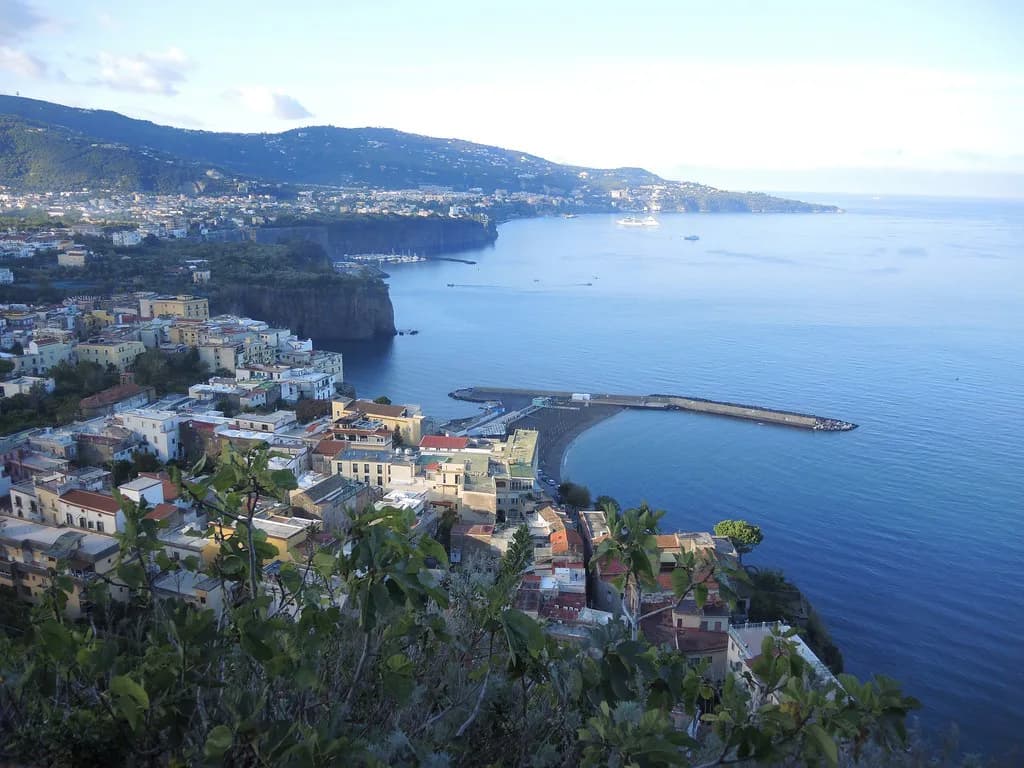
Head down to Marina Grande, the fishing village on the far side of town, first thing. It is a steep ten-minute walk from the centre via stone steps, or a short bus ride from Piazza Tasso, and the pastel houses, wooden gozzi boats and working harbour give you the most photogenic hour of the trip. The lift from Villa Comunale serves Marina Piccola instead, so do not confuse the two.
This distinction matters for the rest of your day. Ferries to Capri, Naples and the Amalfi Coast, and most boat tours, leave from Marina Piccola, the busier port, while Marina Grande is where you come to eat, stroll and swim. Turning up at the fishing village with a ferry ticket in hand wastes a morning.
Marina Grande has one of the few sandy beaches near Sorrento, reached through a tunnel cut into the rock, plus roped-off swimming away from the fishing traffic. Beaches elsewhere in town are mostly pebbles or platforms on piers. If you want a free option, the small public beach sits between the two marinas near the paid clubs and gets busy in summer.
Day 2 Afternoon: Pick One Way to Meet the Sea
You have three realistic choices, and trying all of them is how a good day turns frantic. The first is a paid beach club: Leonelli's, Peter's, and Bagni Salvatore all charge an entry and lounger fee, and the restaurants on site cost more than town. Expect to pay for the convenience, and book ahead in peak season rather than assume a walk-up spot.
The second is the hike to Bagni Regina Giovanna at Capo di Sorrento, about three kilometres each way and roughly 45 minutes in one direction. It brings you to Roman villa ruins, coastal views and a sheltered swimming cove with an arch out to sea. Be warned that part of the route follows a road with no sidewalk, which is worth knowing before you set out in flip-flops.
The third is simply to stay put with a lounger and a long lunch at Marina Grande. It is the right call if you are travelling with children, in the middle of a heatwave, or still recovering from the journey. Whichever you choose, keep the afternoon loose and let the evening start slowly.
Day 2 Evening: Aperitivo on the Waterfront
Marina Grande is at its best in the two hours before sunset, when the day-trippers thin out and the waterfront restaurants fill with a livelier local crowd. Sit outside with an Aperol spritz or a limoncello spritz, order seafood, and watch the light change on the cliffs behind the village.
The walk back up to town is steep, and there is no lift to Marina Grande, so either take the bus from the harbour or accept the climb at a slow pace. Save the shopping for Corso Italia on the way home, where the long straight street has cafés and bars that stay open later than the old-town lanes.
Day 3: Choose One Day Trip and Commit
Capri is the easiest win if you want scenery without much planning: ferries run from Marina Piccola, the funicular climbs to the town, and the Gardens of Augustus and the chairlift to Monte Solaro fill a full day. The trade-off is cost and crowds. On windy days crossings can be rough or cancelled, so keep a flexible plan B in town.
Pompeii is the history pick, reached by the Circumvesuviana train toward Pompei Scavi. Buy tickets in advance, because daily capacity sells out and queues eat into your time on site. Allow most of a day; the site is vast and exposed, so take water and go early. Pairing it with Vesuvius is possible but makes for a long, hot day.
The Amalfi Coast is the third option, either by boat to Positano and Amalfi or by a bus tour that adds Ravello. A boat gives you the coast from the water and avoids the cliff road, but sea conditions can spoil it; a bus is more reliable and more crowded. Guided multi-day trips are only worth it if you want someone else handling the logistics.
If none of these appeals, stay local and treat day three as a slow day. That is a legitimate use of three days in Sorrento, not a failure of planning, and it often produces the trip you remember.
The Stay-Local Alternative: Museums and Slow Shopping
Museo Correale di Terranova is the strongest wet-weather or slow-day choice: an 18th-century villa with 24 rooms of painting, porcelain, inlay and archaeology, plus a citrus garden and a terrace over the gulf. Check its own site before you go, because it opens Tuesday to Sunday and closes Mondays, and it also has a seasonal winter closure.
The Museo Bottega della Tarsia Lignea covers Sorrento's inlaid wood tradition and suits anyone interested in craft, while the Sorrento Experience Museum tells the town's story in multimedia form. Admission is charged at each; confirm current prices and hours at the door or on official pages rather than relying on older figures.
Shopping itself is a genuine activity here. Look for intarsio woodwork, painted ceramics, linen clothing and limoncello, and buy from shops where you can see the work or taste the product. For a structured version of the same ground, a Sorrento walking tour self-guided gives you a route through the lanes without repeating day one.
Pacing, Heat and Cobblestones
Build your days around the heat rather than against it. Mornings for walking and viewpoints, early afternoons for a long lunch or a swim, late afternoon and evening for churches, shops and sunsets. Sorrento's peak season runs roughly April to October, with July and August the busiest and hottest, so shoulder months make the same itinerary noticeably easier.
Footwear is not a minor detail. The centre is cobbled, with steps down to the marinas and steep climbs back up, and the old town is pedestrianised, so comfortable shoes and a refillable water bottle do more for your day than any app. Driving into the restricted zone risks a fine arriving months later, so leave the car outside and walk.
Book ferries and major sites ahead where you can, but keep one day unbooked so weather or tiredness can reshape it. That single buffer is what separates a three-day itinerary that works from one that collapses on day two.
When Three Days Is Not Enough
Add a fourth night if you want two excursions rather than one, or if you are travelling with people who move slowly in the heat. A fourth day also lets you split the Amalfi Coast properly, perhaps Positano by boat one day and Pompeii by train the next, instead of squeezing both into a single rushed outing.
Conversely, do not add days just to fill them with more town sights. Sorrento's appeal is its position and its atmosphere, and past three or four days you are effectively paying for a base rather than a destination. Browse the Sorrento Attractions guides to see which single sights genuinely earn a slot in your plan.
Plan Your Visit
Three days in Sorrento works because the town asks little of you and the region asks a lot. Give the centre and Marina Grande a full day each, protect one sunset at Villa Comunale, and spend the third day on exactly one trip, chosen for the kind of traveller you are rather than for a list.
Before you go, confirm the details that change: museum opening days and seasonal closures, ferry timetables and sea conditions, and current admission charges. Then pack walking shoes, leave room in your suitcase for a bottle of limoncello, and let the plan bend when the weather or your energy says so.
Frequently Asked Questions
Is three days enough in Sorrento?
For most visitors, yes. The historic centre is compact and can be covered in a relaxed day, Marina Grande and the clifftop terraces fill another, and the third day is best spent on one excursion such as Capri, Pompeii or the Amalfi Coast. If you want two excursions, add a fourth night rather than cramming.
Should I do Capri or Pompeii as my one day trip from Sorrento?
Choose Capri for scenery, swimming and a slower pace, accepting higher costs and the risk of rough seas. Choose Pompeii for history, accepting heat, walking and the need to book entry in advance. If you have children or limited mobility, Capri is generally gentler; if you love archaeology, Pompeii wins.
Can I swim in Sorrento during a three-day trip?
Yes, but manage expectations. There is a small sandy beach at Marina Grande with a roped-off swimming area, paid beach clubs on piers and platforms elsewhere, and the cove at Bagni Regina Giovanna reached by a walk with an exposed road section. Pack a towel and check sea conditions before committing to a boat-based plan.
Where should I watch the sunset in Sorrento?
Villa Comunale is the established spot, a clifftop park a few minutes from Piazza Tasso with views toward Vesuvius. In summer the sun is more likely to set visibly on the horizon; in winter the angle shifts. Arrive early in peak season, and eat dinner back in the old town where value is better.
Is the Museo Correale open every day?
No. The museum's own site states it opens Tuesday to Sunday and closes on Mondays, and it also has a seasonal winter closure. Check the official site before planning a day around it, particularly in the colder months, and confirm current admission charges at the same time.
Do I need to worry about driving in Sorrento?
If you have a car, keep it out of the pedestrianised old town and restricted zones; fines for entering them can arrive by post months later. Walking is the practical way to see the centre, and buses, trains and ferries cover the day trips. Parking near the centre exists but is not worth the hassle for a short stay.
Sources
- Exactly What To Do In Sorrento (For First Time Visitors)
- Official event website
- The best Sorrento Multi-day trips - 2026 (Verified Reviews)
- Museo Correale di Terranova - A House of Art in Sorrento
- Sant'Antonino, Sorrento
- Marina Grande, Sorrento: a guide
- 10+ unique things to do in Sorrento for first-time visitors 2025 - Travel Meets Style
- The Ultimate Sorrento Guide: Best Things to Do & One Day Itinerary
- 19 unique hidden gems on the Amalfi Coast, Italy
- Visit Villa Comunale in Sorrento - Scenic Views and Peaceful Gardens
- Chiostro di San Francesco: History and Beauty in the Heart of Sorrento
Continue exploring
More guides you'll find useful