
Museo Correale di Terranova: A Practical Sorrento Visitor Guide
Plan a visit to the Museo Correale di Terranova in Sorrento: where it is, when it opens, which collections to prioritise and how to read the villa and garden.
On this page
The Museo Correale di Terranova occupies an 18th-century villa a short walk from the centre of Sorrento, and it has been open to the public since 1924. Inside, 24 exhibition rooms are spread across four floors, with a garden and belvedere attached. That combination makes it one of the few places in town where you can see a historic residence, a serious art collection and a view of the Gulf of Naples in a single stop.
Expect a house-museum rhythm rather than a national gallery march. The Correale family's former summer residence, known as Villa alla Rota, holds archaeological finds, Sorrento inlay, paintings from the Posillipo School and Neapolitan traditions, Flemish works, furniture, clocks and porcelain, plus an 18th-century nativity scene. Deciding in advance which of those strands matters most to you is the single most useful planning step.
Where the Museum Sits in a Sorrento Day
The address is Via Correale 50, in the centre of Sorrento. The official site lists the location and provides directions, so treat the street address as your fixed anchor and use the site's directions for the final approach rather than relying on memory of side streets.
Orientation is straightforward: the museum is close to the heart of town, so it slots naturally between a morning wander and an afternoon on the water. A self-guided walking tour of Sorrento's historic center can absorb the streets around Piazza Tasso before or after your museum slot, which keeps you from doubling back across town. For wider planning, see A Self-Guided Walking Tour of Sorrento's Historic Center.
Think of the museum as an indoor counterweight to Sorrento's outdoor draws. On a hot or wet day it earns its place early in the itinerary; on a clear day, save the garden and belvedere for the softer light and pair the visit with a longer walk. Either way, check the day's opening pattern first, since a Monday attempt wastes the trip.
Opening Pattern and the Closure Notice to Re-Check
The museum publishes a simple weekly pattern: open Tuesday to Sunday, closed on Mondays. It does not publish fixed daily opening and closing times in the material available, so confirm the day's hours on the official site before setting out rather than assuming a standard morning-to-evening window.
There is also a seasonal closure notice stating that the museum is closed to the public from January 6th to April 2nd. Read that as a notice published by the museum, not as an eternal annual rule, and re-check it against your travel dates before booking anything non-refundable. Winter and early-spring visitors are the ones most exposed to this.
The practical consequence is a two-step check: the weekly pattern for your day of the week, then the seasonal notice for your month. If both clear, you can build the rest of the day around the museum with confidence. If either is ambiguous, plan the museum as a flexible slot and keep an outdoor alternative ready.
The Villa Itself: Four Floors, One Family Home
The building began as the Correale family's summer residence, and the museum's own description frames a visit as a journey through centuries rather than a chronology of one artist. The villa and its garden, Villa alla Rota, are presented as a single ensemble, which is why the grounds deserve time rather than a glance on the way out.
Across the four floors you get 24 exhibition rooms, a scale that rewards a little strategy. Rather than trying to absorb everything evenly, pick two or three collections you care about and let the rest be a bonus. The staircase geography means you will pass through decorative arts and painting on the way up, so a loose order helps.
The collection spans roughly the 15th to the 19th century, with strengths in Neapolitan figurative art and the decorative traditions that grew around it. For context on how this fits a wider Sorrento itinerary, the Sorrento Attractions hub groups the town's main sights so you can judge what else competes for your time.
Ground Floor Priorities: Archaeology and the Founders' Room
Start low and start contextual. The archaeological section and the Sala dei Fondatori give you the deep background of the site and the family whose gift created the museum, which makes the paintings upstairs read as a collection with a purpose rather than a random hang.
The archaeology collection is one of the museum's named strengths, alongside the picture gallery and the decorative arts. If you are travelling with companions who tire in picture rooms, the ground floor is a sensible first stop because it changes register quickly and sets up the rest of the visit.
Allow the founders' room to explain the 1924 opening and the family's role before you climb. Understanding that history makes the villa's later rooms feel inhabited, and it gives you a mental map for the four floors above.
Upstairs: The Picture Gallery and the Posillipo School
The picture gallery is the museum's headline for many visitors, and the Posillipo School is the thread to follow if you want to understand Naples and its coast in paint. The collection also includes Neapolitan painting of the 17th and 18th centuries and Flemish works, so the upstairs rooms cover more ground than a single regional school.
Specific works are named by the museum, including Artemisia Gentileschi's La Maddalena and canvases by Giacinto Gigante, which gives you a few anchors to hunt down if time is tight. Works are sometimes lent for external exhibitions, so if a specific painting is your reason for visiting, check the museum's news page before you go.
If you enjoy the painted views, the walking tour of the historic centre pairs well with the gallery: you see the town's streets first, then the 19th-century images of the region upstairs. That order tends to make the Posillipo landscapes land harder than seeing them cold.
Craft and Decorative Arts: Inlay, Clocks and Porcelain
Sorrento inlay, or intarsio sorrentino, is the local craft the museum treats as art, and it sits alongside furnishings from the 18th and 19th centuries, clocks and decorative arts. European and Oriental porcelain rounds out the decorative floors, giving the collection a domestic texture that paintings alone cannot provide.
This is the part of the museum most likely to surprise visitors who came only for paintings. If you have limited stamina, choose between the picture gallery and the decorative arts rather than rushing both; the inlay and furniture rooms reward slow looking more than a quick pass.
Visitors writing on Tripadvisor describe seeing works of art, paintings, furniture, ceramics, archaeological finds and a nativity scene, which suggests the decorative rooms are not filler. Set aside a deliberate block for them if craft and interiors interest you.
The Nativity Scene and Flemish Painting
Two collections deserve their own slot: the 18th-century Neapolitan nativity scene and the Flemish paintings. The presepe tradition is a Neapolitan speciality, and the museum lists its 18th-century nativity scene as a distinct collection rather than a seasonal decoration, so give it real time even outside the Christmas period.
The Flemish holdings broaden the collection beyond Italy and connect the Sorrento villa to wider European collecting habits. If you are visiting with someone who prefers northern European art, this is the room to promise them before they commit to the whole house.
Practical advice: these two rooms are easy to skip when energy dips near the top of the building. Decide before you start whether they are must-sees, and if so, go there before fatigue sets in rather than saving them for the exit.
The Garden, the Park and the Belvedere
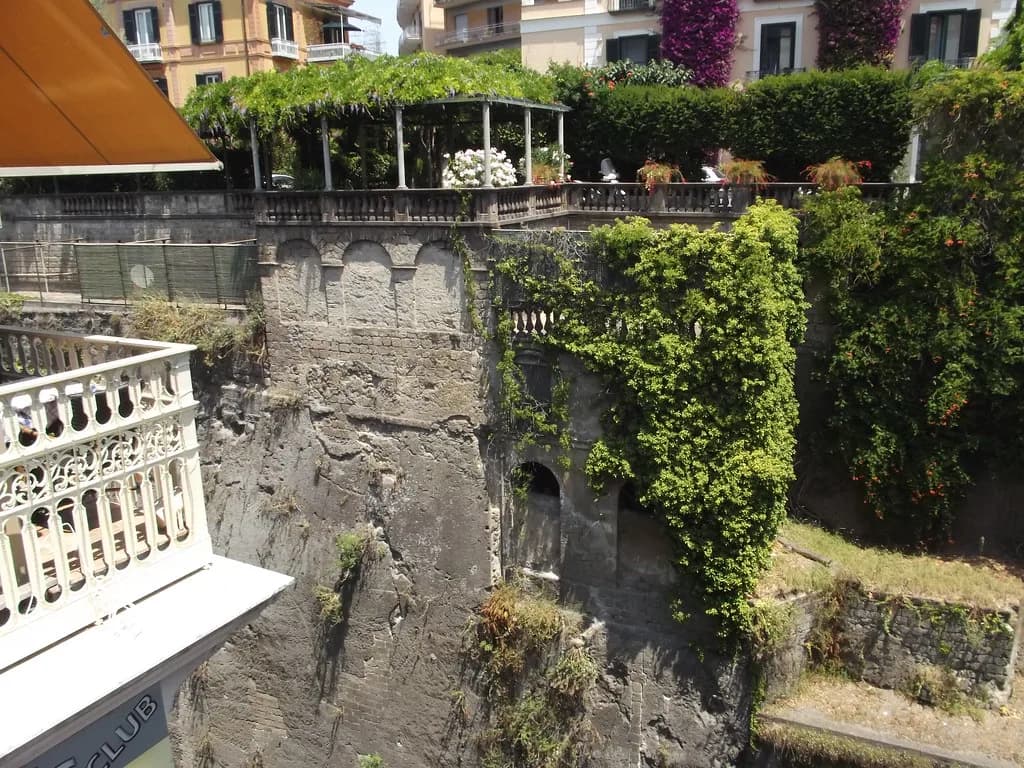
The garden is not an afterthought. The museum presents Villa alla Rota and its grounds as part of the visit, and the park includes a belvedere terrace with views over the Gulf of Naples, a combination that makes the site worth visiting even if you only skim the interiors.
An independent venue description notes the park's central avenue, plane trees and citrus groves, and the pergola technique used locally to protect fruit from wind and rain. That detail is worth knowing because it turns a pleasant garden into a small lesson in Sorrento's agricultural landscape.
Treat interiors and grounds as two experiences that share an address, not one ticket-shaped blur. If you only have time for a short stop, the garden and belvedere are a legitimate reason to come; if you are doing the full house, save the terrace for the end so the view is the reward. For other low-key corners of town, the guide to hidden gems in Sorrento is a useful companion.
How Long to Allow
As a suggestion rather than an official duration, allow around an hour for a focused pass on the picture gallery and one decorative collection, and two to three hours if you want the archaeology, the full painting sequence, the nativity scene and the garden. The 24 rooms across four floors make a ten-minute dash feel rushed.
Your pace depends heavily on whether you read labels and linger. If you are travelling with children or in a group with mixed appetites, the shorter version plus the belvedere is usually the better trade than a forced march through every room.
Build in buffer for the garden, which sits outside the room count, and for the possibility that a special exhibition or a lent work changes what is on show. Checking the museum's news page in advance prevents disappointment over a specific painting.
Tickets and What to Confirm Before Booking
Tickets can be bought online through the museum as well as at the museum itself, which is useful for planning but does not tell you the rate. Admission prices are not published in the material reviewed here, so check the official ticket page for current rates and any reductions rather than trusting older figures from other sources.
Do not assume combined tickets with other Sorrento sites, audio guides or guided tours: those are not confirmed by the museum's own pages. If any of them matter to your visit, ask when you arrive or contact the museum directly using the details on its contact page.
Booking online is worth considering in high season, when a guaranteed slot removes uncertainty. It does not, however, override the Monday closure or the seasonal notice, so confirm both before you pay for anything.
Practical Trade-Offs: Weather, Mondays and Evenings
The Monday closure is the most common planning trap, and the January-to-April closure notice is the second. Anyone visiting in winter or early spring should treat the museum as provisional until the official site confirms it is open for their dates.
Evening programming at the venue is run by a third-party opera operator rather than the museum itself. That operator describes concerts in the museum's Hall of Mirrors and gives its own schedule details, so verify dates, times and tickets with the operator directly and treat any listing as separate from museum admission.
If your trip hinges on a concert evening, plan the museum visit on a different day so a schedule change does not take out both. Weather is the other variable: an indoor-first plan works on wet days, while a garden-first plan suits clear ones.
What to Pair With the Museo Correale
Because the museum sits in the centre, it pairs easily with the town's churches and cloisters. The Basilica di Sant'Antonino in Sorrento is a central stop worth adding if you want a shorter companion visit, and the Chiostro di San Francesco is another quiet central corner covered in the hidden-gems guide.
For a half-day contrast, the Bagni della Regina Giovanna in Sorrento offers a coastal change of scene away from the villa's interiors, best added on a separate outing rather than crammed into the same morning.
Who should skip it? Travelers with no interest in decorative arts or 19th-century painting, or those with only a few hours in Sorrento and a strong preference for coastline, may find a shorter garden stop enough. Everyone else gets a compact, genuinely varied collection under one roof.
Plan Your Visit
The Museo Correale di Terranova rewards a planned visit more than a spontaneous one. Confirm the Tuesday-to-Sunday pattern and the seasonal closure notice on the official site, check current admission rates on the ticket page, then choose your two or three priorities among archaeology, painting, inlay and porcelain.
Leave room for the garden and belvedere, which turn a house visit into a proper pause in the middle of Sorrento. If an evening performance interests you, confirm it with the opera operator separately, since that programme is not run by the museum and does not follow museum admission.
Frequently Asked Questions
Is the Museo Correale di Terranova open on Mondays?
No. The museum publishes a pattern of opening Tuesday to Sunday with Mondays closed. It does not publish fixed daily opening and closing times in the material reviewed, so check the official site for the day you plan to visit, and also check the seasonal closure notice if you are travelling in winter or early spring.
What can you see in the Museo Correale's art collection?
The collection spans roughly the 15th to 19th centuries and includes archaeology, the picture gallery with the Posillipo School and Neapolitan painting, Flemish painting, Sorrento inlay, furniture, clocks, European and Oriental porcelain and an 18th-century Neapolitan nativity scene. Specific works named by the museum include Artemisia Gentileschi's La Maddalena and paintings by Giacinto Gigante.
Is the garden of the Museo Correale worth visiting on its own?
It can be, especially if you are short on time or the weather is good. The grounds include a park with plane trees and citrus groves and a belvedere terrace overlooking the Gulf of Naples. Interiors and garden are different experiences on the same site, so decide which you want before you arrive.
How much does entry to the Museo Correale cost?
Admission rates are not published in the material reviewed here, so check the official ticket page for current prices and any reductions. Tickets can also be bought online through the museum. Confirm the Monday closure and the seasonal closure notice before paying for anything.
How long does a visit to the Museo Correale take?
As a suggestion rather than an official duration, about an hour covers a focused look at the picture gallery and one decorative collection, while two to three hours allows archaeology, painting, the nativity scene and the garden. The museum has 24 rooms across four floors, so a rushed pass feels hurried.
Is the museum closed in winter?
The museum publishes a notice stating that it is closed to the public from January 6th to April 2nd. Treat that as a notice to verify against your own dates rather than a guaranteed annual rule, and check the official site before booking travel or tickets for winter and early spring.
Can you attend a concert at the Museo Correale?
Performances at the venue are organised by a third-party opera operator, not by the museum. The operator publishes its own programme and ticket information for concerts held in the museum's Hall of Mirrors, so confirm dates, times and prices with that operator directly and treat them as separate from museum admission.
What else is near the Museo Correale?
The museum sits in central Sorrento, so it pairs easily with a walk through the historic centre, the Basilica di Sant'Antonino and the Chiostro di San Francesco. For a coastal contrast on another day, the Bagni della Regina Giovanna is a separate outing rather than an add-on to the same morning.
Sources
Continue exploring
More guides you'll find useful





