
Ravenna Self-Guided Mosaic Walk: Route, Tickets and Rest Stops
Plan your own mosaic walk in Ravenna: a route linking the five UNESCO monuments, how the coordinated ticket works, and where to pause and rest.
On this page
Ravenna's five diocesan mosaic monuments sit within a short walk of one another in the historic centre, which makes a self-guided walk unusually efficient: you can move between the Mausoleo di Galla Placidia, Basilica di San Vitale, Battistero Neoniano, Basilica di Sant'Apollinare Nuovo and the Cappella di Sant'Andrea with the Museo Arcivescovile on foot. The Opera di Religione della Diocesi di Ravenna coordinates visits to these five UNESCO sites, so the practical questions are scope, order and pacing rather than transport.
A sensible plan is to treat the morning or afternoon as one continuous walk rather than five separate outings, with a pause between the San Vitale cluster and the Sant'Apollinare Nuovo end of the route. That suggested half-day shape is ours, not an official schedule. Before fixing anything, check the operator's current opening and ticket pages, because those details change by season and are not fixed here.
Why Ravenna's five UNESCO mosaic monuments sit within a short walk of the historic centre
The operator's own introduction describes the five sites as a short stroll apart in the centro storico, presented as one spiritual and artistic circuit rather than a scattered list. That compactness is the reason a self-guided walk works at all: you spend your time looking at mosaics, not navigating buses. It also means you can split the circuit across two visits if one day feels too full.
The five monuments are the Mausoleo di Galla Placidia, the Basilica di San Vitale, the Basilica di Sant'Apollinare Nuovo, the Battistero Neoniano, and the Cappella di Sant'Andrea with the Museo Arcivescovile. Treat them as the core of the walk and add other sights only if you have energy left. For the wider picture beyond mosaics, our guide to the hidden gems in Ravenna covers quieter corners of the same centre.
What the coordinated mosaic ticket covers, and how to check scope before you pay
Because one body manages the diocesan monuments, visitors often assume a single pass opens every mosaic interior. The operator publishes dedicated ticket and booking sections, but the safe approach is to read the scope of the specific ticket you intend to buy and confirm which of the five monuments it admits and on what day. Do not extrapolate from a headline price or from a third-party listing.
Note also that independent operators sell mosaic-themed tours with their own pricing and inclusions, which are not the same product as the official monument tickets. A commercial mosaics tour is a guided experience with guide fees built in, so comparing its price against an official ticket is misleading. Check each source separately and decide which kind of visit you actually want.
Church exteriors and public streets are part of the city and can be walked freely, while the mosaic interiors are the ticketed element. Keep that distinction clear when budgeting time: the walk itself is free, the interiors are not. If a page does not spell out coverage, call or email the operator's information office rather than assuming.
Before you set off: the booking office, printed maps and knowing your own pace
The operator maintains an information, booking and visits office with published contact details, including a telephone number and email address, and staffed weekday hours listed on its site. Use that office to confirm current opening times, ticket scope and any notices affecting a specific monument on your date. Those details are exactly the sort that should never be taken from an older article.
The site also offers map and panel resources for orienting yourself, which are useful for a self-guided route. Print or download what you need before leaving, since juggling a phone between dim interiors is awkward. Set a realistic pace: most people underestimate how long they linger in front of the Galla Placidia dome or the San Vitale apse.
Finally, decide your group size before you plan. Large groups move slowly through small interiors, and the operator's booking channels exist precisely to manage that. If you are more than a handful of people, ask the office how to organise the visit rather than improvising at the door.
Leg 1: Mausoleo di Galla Placidia and its cobalt dome of golden stars
Start small and dark: the Mausoleo di Galla Placidia is the intimate counterpoint to the grand basilicas, with deep blue tesserae and a dome of golden stars that the operator describes as one of the circuit's emotional highlights. Because it is compact, it rewards an unhurried first stop before your eyes adjust to bigger spaces. Go early in your walk if you want the quietest possible viewing window, though the operator's own pages, not assumptions, should confirm current access.
Read the mosaic slowly from the centre outward: the starry vault, then the figures, then the small details at eye level that most visitors miss on the way in. If you are travelling with children, this is often the monument that holds their attention longest, so don't rush it.
Leg 2: Basilica di San Vitale, Justinian and Theodora in the gold
San Vitale is the centrepiece for most visitors, with the panels of Justinian and Theodora set in gold on either side of the apse. The operator frames it as the majestic gold that greets you on arrival, and it is worth budgeting the largest share of your looking time here. Take a seat if benches are available and let the panels reveal themselves from a distance before moving close.
The basilica also contains details such as the labyrinth noted in the operator's blog, which is a good reminder that the floor and side chapels repay attention as much as the apse. Walk the perimeter before leaving. If you use a guidebook or audio aid, save it for this stop where the narrative density is highest.
Leg 3: Battistero Neoniano and the Apostles circling the baptism
The Battistero Neoniano compresses the whole theology of the circuit into a single dome, with Apostles processing around the baptism of Christ in a movement the operator likens to a joyful dance. It is a short visit on paper but a dense one in practice, so resist the urge to treat it as a tick-box stop. Check the operator's notices before you go, because celebrations or services can affect access at short notice.
Position yourself directly under the dome and rotate slowly rather than trying to see it all from the entrance. The stucco work noted on the operator's blog is part of the experience too, so look between the mosaic panels, not only at them.
Leg 4: Basilica di Sant'Apollinare Nuovo, the long processions of virgins and martyrs
Sant'Apollinare Nuovo changes the register entirely: long processions of virgins and martyrs run the length of the nave, and the operator invites you to accompany them on their way. This is the stop where a slow walk down the central aisle matters more than standing still, because the procession itself is designed to be followed. It sits a little apart from the San Vitale cluster, so treat the transfer as a natural pause.
The basilica also hosts cultural events and exhibitions from time to time, as the operator's news section shows, which can affect how much of the interior is accessible on a given day. Check the notices page before you set out. If the nave is busy, wait a few minutes near the entrance and let a group move through.
Leg 5: Cappella di Sant'Andrea and the Museo Arcivescovile, including the Maximian ivory chair
Finish with the Cappella di Sant'Andrea and the Museo Arcivescovile, where the light reflecting in the gold is matched by the carved ivory of the Cattedra di Massimiano. The operator presents the chapel and museum as gems within the Archiepiscopal complex, and the chair is the object most visitors remember. Allow time for the museum's other holdings rather than heading straight for the throne.
As the last stop of the day, this is the one most vulnerable to fatigue. If you are flagging, leave it for a second visit rather than rushing it, since the ivory rewards close looking. Confirm current entry arrangements through the operator's tickets page before relying on it as a finale.
Linking the legs: how to order the walk to suit your energy and daylight
There is no official prescribed order, so use your own constraints. The San Vitale and Galla Placidia pair and the Battistero Neoniano and Museo Arcivescovile pair are both tightly grouped, which makes a two-cluster day logical. Sant'Apollinare Nuovo can be placed at either end depending on whether you prefer to save its processions for last.
Daylight matters more than distance: the interiors are lit but the streets between them are not, so start with the monuments that matter most to you if you are walking late. If you have only a short window, pick two or three stops rather than racing through all five. Consult the operator's opening-hours page to build the sequence around real times.
Rest stops: cafes, squares and the practical pause points along the way
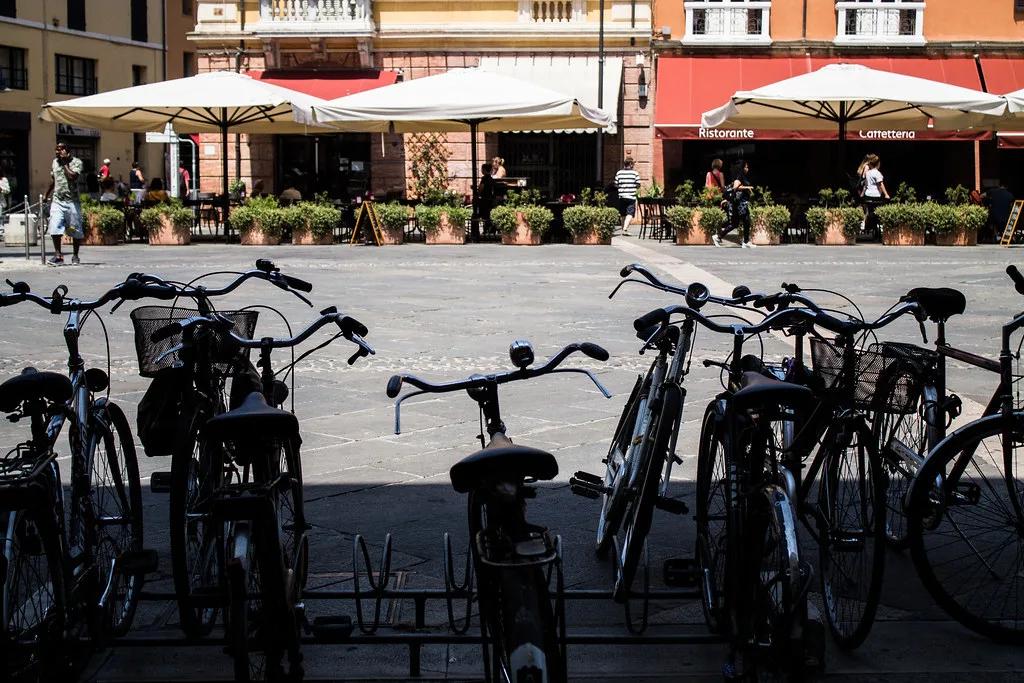
Piazza del Popolo is the obvious breathing space in the centre, described by Ravenna Greeters as the city square filled with cafes and life, which makes it a natural midpoint or end-of-walk pause. Sitting down between the San Vitale cluster and the Sant'Apollinare Nuovo leg is the single most useful pacing decision on this route.
The operator also runs a refreshment room tied to its monument complex, so you can break without leaving the circuit entirely. Availability can vary by day, so ask at the information office when you confirm your visit. Between stops, use the shaded side streets rather than main roads, and carry water in summer.
For a different kind of pause, the Darsena district offers an open-air walk among former industrial buildings and street art, as described by Free Walking Tour Italia. It is not on the mosaic circuit, but it makes a good late-afternoon change of scene if you finish early. Related guide: Ravenna Evening Guide: Aperitivo, Dinner and Slow Nights.
When a guided tour beats self-guiding, and what a free city walk adds
A paid mosaics tour can be worth it if you want the iconography explained as you go. Free Walking Tour Italia lists a Ravenna Mosaics Tour among its options, with its own duration and pricing separate from the official monument tickets, so read the inclusions before booking. Those figures belong to the tour company, not to the monuments.
For a cheaper orientation, Ravenna Greeters is a volunteer service offering a personalised walk with a local, free of charge and with no tipping expected, in small groups of up to six. It is not a standardised tour and does not replace monument entry, but it can give useful context before your self-guided day.
Self-guiding remains the better choice if you dislike fixed schedules and want to linger at San Vitale or skip a stop when tired. Guided options are better if you value interpretation over flexibility. Neither approach changes the tickets you need for the interiors.
Common planning mistakes: assuming one ticket, one direction or one open door
The most frequent error is assuming that one ticket opens every mosaic interior on any day. Ticket scope and availability should be checked on the operator's site for your exact date. A second is assuming a fixed walking direction; the circuit can be walked in either order, and starting at the far end can help if you want to finish near the centre.
A third is treating a temporary notice as permanent. The operator publishes service notices, such as the change to baptism celebrations at the Battistero Neoniano from October 2026 that suspends visits during a set Saturday window. Those notices exist because access does change, so read them in the week of your visit rather than months ahead.
Finally, don't assume you can do all five in one unbroken push without a break. The mosaics are dense, and fatigue flattens the experience. Build in a square or a cafe and the walk will feel like a day out rather than a checklist.
Practical wrap-up and a printable checklist for the day
Before you go, confirm current opening times, ticket scope and any notices for the five monuments on the operator's site or by contacting its information office, and note that the mosaics tour listed by Free Walking Tour Italia is a separate paid product. Pack water, wear comfortable shoes, and print a simple map so you are not relying on a phone inside dark interiors.
Your checklist: the five monument names, your chosen order, one confirmed rest stop, the office phone number, and a note to check notices on the morning of the visit. If you have time left, our Ravenna Attractions hub covers the wider set of sights around the same centre.
Frequently Asked Questions
Can you see Ravenna's mosaics without a guide?
Yes. The five diocesan monuments are set up for independent visits, with published information, maps and ticket pages managed by the Opera di Religione della Diocesi di Ravenna. A guide adds interpretation, but the walk itself does not require one.
Do you need one ticket for all of Ravenna's mosaic monuments?
Not necessarily. The operator manages the monuments and publishes ticket options, but you should check the scope of the specific ticket you intend to buy before paying, because coverage can differ. Confirm on the official site rather than assuming one pass opens every interior.
How long does a self-guided mosaic walk in Ravenna take?
There is no official duration. As a suggestion, allow a half day with a rest stop, and longer if you like to read slowly or visit the museum collections in detail. Pick two or three stops if your time is short rather than rushing all five.
Which order should you visit Ravenna's UNESCO monuments in?
There is no fixed order. A common approach is to pair the Mausoleo di Galla Placidia with San Vitale, then the Battistero Neoniano with the Cappella di Sant'Andrea and Museo Arcivescovile, placing Sant'Apollinare Nuovo at whichever end suits your energy and daylight.
Is a free walking tour in Ravenna actually free?
Ravenna Greeters is a volunteer service that operates free of charge with no tipping expected, in small groups of up to six people. It is a personalised walk with a local and is separate from paid commercial tours and from monument entry tickets.
Where can you rest between mosaic stops in Ravenna?
Piazza del Popolo, with its cafes, is the most central pause, and the operator also runs a refreshment room at its monument complex. Check availability on the day, and plan at least one seated break between the San Vitale cluster and Sant'Apollinare Nuovo.
Sources
Continue exploring
More guides you'll find useful





