
Ravenna Rainy Day Guide: Indoor Mosaics and Museums
Plan a rainy day in Ravenna around indoor UNESCO mosaics, the Archiepiscopal Museum and short centre crossings, with practical checks before you set out.
On this page
Ravenna's mosaics are mostly an indoor pleasure. The five diocesan UNESCO monuments run by the Opera di Religione della Diocesi di Ravenna sit within a few steps of each other in the historic centre, so a wet day becomes a series of short outdoor hops between long, dry stretches of looking.
That changes how you plan. Treating the city as a walking tour with mosaic stops falls apart in steady rain; the better rhythm is two or three interiors per half-day and a crossing of a piazza rather than a slow facade survey. As an editorial suggestion rather than an official timing, half a day is enough for the core pair of San Vitale and Galla Placidia, while a full day lets you add a museum and a proper lunch.
The Indoor Core: San Vitale and Galla Placidia
Start with the pair that gives the biggest return for the least walking. The Basilica di San Vitale and the Mausoleo di Galla Placidia stand next to each other and both appear on the Opera di Religione's list of five central monuments. Inside San Vitale, the mosaics of Emperor Justinian and Empress Theodora face each other in the apse, their robes and jewels built from tiny tiles set at slightly different angles to create depth.
The Mausoleo di Galla Placidia is small enough that a crowd changes the experience, which is exactly why a rainy day rewards patience. Its cobalt-blue ceiling studded with golden stars is the image most visitors carry away, and the tight interior means you should expect to move slowly and look up rather than rush through. Give this pair a generous block of time rather than treating them as a photo stop.
One caution: San Vitale is described as Ravenna's most visited site, so indoor sightseeing can also mean the busiest rooms. Arriving earlier in the day is a sensible hedge, though you should confirm actual opening times on the operator's current information pages rather than relying on any general advice.
The Second Cluster: Baptistery, Sant'Apollinare Nuovo and the Archiepiscopal Museum
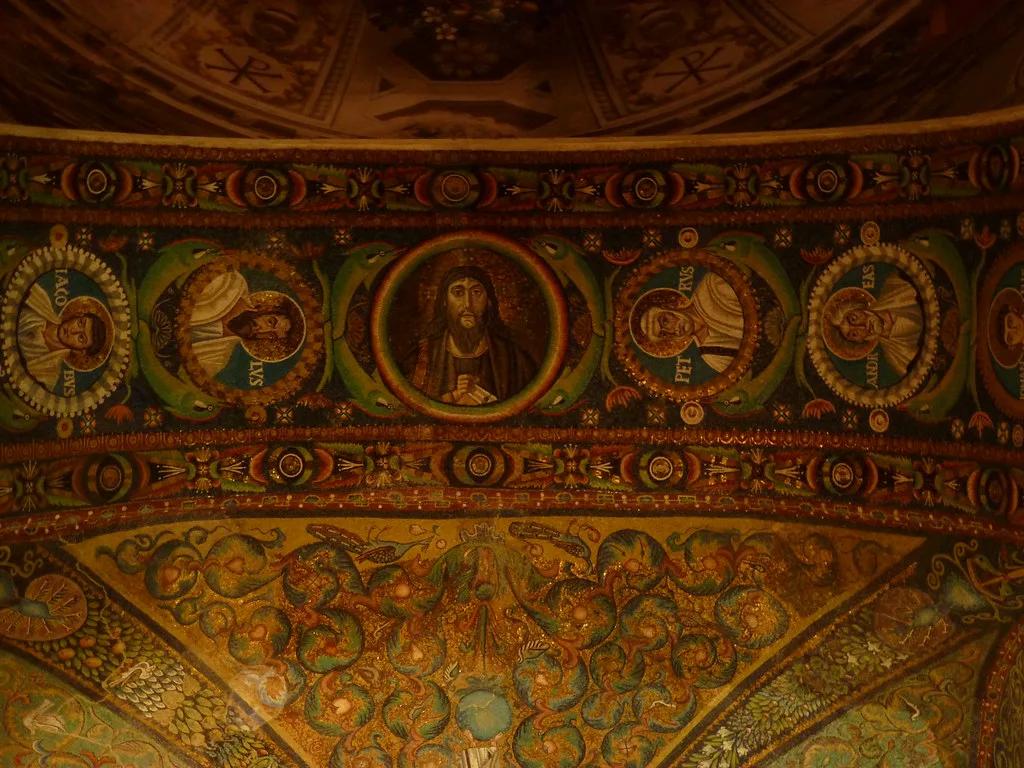
The remaining diocesan sites spread across the centre but stay within a walkable radius. The Battistero Neoniano, the Basilica di Sant'Apollinare Nuovo, and the Cappella di Sant'Andrea with the Museo Arcivescovile all appear on the operator's five-monument list. Inside the baptistery, the ceiling mosaic shows John the Baptist baptising Jesus in the Jordan, ringed by the twelve apostles, a compact and powerful interior that suits a wet stop.
At Sant'Apollinare Nuovo, the long walls carry rows of martyrs, the port of Classe and the three Magi, and the scale means you can spend far longer indoors than you planned. That is an advantage in rain: the building itself becomes the shelter. The Archiepiscopal Museum adds another layer, including the ivory Cattedra di Massimiano, which rewards close looking rather than a quick pass.
Do not assume one ticket covers all five with identical scope. The operator lists the monuments together and the main ticket categories should be checked at the ticket office or on the official site before you commit. Treat the cluster as a walking plan, not a single product.
How to Pace a Wet Day
The rhythm that works in rain is short hops and long looks. Rather than stringing together outdoor monuments, choose two interiors, cross the centre, and choose two more. This keeps you dry and also gives your eyes time to adjust between the gold of San Vitale and the blue of Galla Placidia, which are very different experiences even though they sit metres apart.
A guided visit can reduce the time you spend standing outside reading panels in the wet. A licensed local guide can explain the Justinian and Theodora panels or the iconography of the baptistery while you are inside, which turns a rainy constraint into an advantage. Check contact details and current arrangements through the operator before assuming walk-up availability.
Plan a warm-up stop between clusters. Piazza del Popolo is the central square lined with cafes, and it makes a natural midpoint for a coffee or a longer lunch when the rain sets in. The square itself is open air, so treat it as a crossing point rather than a destination on a wet day.
Museums as a Rain Plan B
If the mosaic circuit is crowded or you want a change of pace, the Museo d'Arte della città di Ravenna is a strong indoor fallback. A first-hand three-day account describes it in a former monastery, with collections spanning the 14th to 19th centuries and a section devoted to modern mosaic art, including works by artists inspired by the city's Byzantine heritage. That range makes it useful when you have already absorbed a lot of gold.
The same account describes the Basilica di San Francesco, close to the centre, with a flooded crypt below the main altar where goldfish swim. Dante's funeral was held in the church in 1321, and his tomb stands nearby. These are suggestions for filling a wet afternoon rather than a fixed route, and you should check current access before building a day around them.
For a broader shortlist of indoor and less-obvious stops, our guide to hidden gems in Ravenna is a useful companion when the weather turns. It helps separate the headline monuments from quieter corners that suit a slower, rainier pace.
Food and Warm-Up Stops
A long lunch is a legitimate rain strategy in Ravenna. Ca' de Vèn, housed in a 15th-century building, appears in the same first-hand account as a place for local wine and Romagnola dishes, and Osteria dei Battibecchi is described there for rustic regional cooking. Neither is a secret, and both are the kind of stop that makes a wet afternoon feel deliberate rather than spoilt.
Expect piadina, the region's flatbread, to appear on menus and in takeaway shops; a 2015 travel piece notes that locals treat it as something to eat immediately. That is still sound advice for a rainy day: a warm piadina eaten standing under an arcade beats a soggy picnic. Prices and opening hours change, so check before you rely on a specific address.
If you are based near the station or arriving by train, eat before you head into the monument circuit, because the historic centre rewards a slow start. Travel schedules and fares should be confirmed with the train operator rather than taken from older articles.
Practical Checks Before You Go
Before a wet-day visit, check the operator's current information and notices pages for opening times and anything affecting individual monuments. This is not box-ticking. The operator has published a notice that from October 2026 baptisms at the Battistero Neoniano will take place only on the last Saturday of each month, with visits suspended during the ceremony, so a Saturday plan needs verifying.
Do not assume covered walkways connect the sites. The evidence supports a walkable cluster, not a continuous indoor route, so bring a rain jacket and accept short exposed crossings between monuments. That is a small trade-off for the amount of time you spend dry inside.
Ticket scope, current prices and any combined-ticket validity are the details most worth confirming on the day. The operator lists the five monuments together but does not, in the material available, establish that every site shares one ticket with identical inclusions. Ask at the ticket office or check the official site rather than planning around a remembered price.
Half-Day or Full-Day: Two Suggested Shapes
For a half-day, as an editorial suggestion, concentrate on San Vitale and Galla Placidia, then add the Battistero Neoniano if time allows. This keeps walking minimal and gives you the two most celebrated interiors without rushing. It is a realistic shape for an afternoon arrival or a day when the rain is heavy.
For a full day, add Sant'Apollinare Nuovo and the Archiepiscopal Museum in the morning, break for a long lunch, and finish with the Museo d'Arte della città di Ravenna or the San Francesco area. The point is not to tick off every site but to use the rain as permission to look longer. Both shapes are suggestions, not official itineraries, and should flex around what is actually open.
Plan Your Visit
Rain does not ruin Ravenna; it changes the order of operations. Put the interiors first, keep the outdoor crossings short, and let a long lunch or a museum fill the wettest hour. The city's mosaics were made to be seen up close, and a wet day gives you an excuse to do exactly that.
Before you go, confirm hours, ticket scope and any notices on the operator's site, and use our Ravenna Attractions hub to compare individual monument guides. A little checking turns a rainy day from a compromise into one of the better ways to see the city.
Frequently Asked Questions
Is Ravenna worth visiting on a rainy day?
Yes. The mosaics that draw most visitors are inside monuments, and the five diocesan UNESCO sites form a walkable cluster in the historic centre. Rain mainly affects the short crossings between buildings, not the main experience.
Which Ravenna mosaic sites are indoors?
The Basilica di San Vitale, the Mausoleo di Galla Placidia, the Battistero Neoniano, the Basilica di Sant'Apollinare Nuovo, and the Cappella di Sant'Andrea with the Museo Arcivescovile are all interior visits listed by the Opera di Religione. Each has its own character and should be checked individually for access.
Can you see Ravenna's UNESCO mosaics in one wet afternoon?
You can see the core pair of San Vitale and Galla Placidia comfortably in an afternoon, and possibly add the baptistery. Seeing all five in one afternoon would be rushed, especially in rain, so treat the full circuit as a full-day plan.
What else can you do in Ravenna when it rains?
The Museo d'Arte della città di Ravenna offers classical and modern collections, including mosaic art, in a former monastery. Nearby churches and a long lunch are sensible additions, but check current access before relying on any single stop.
Do I need to check opening hours before a rainy-day visit?
Yes. Opening times and any ceremony-related suspensions vary by monument, and the operator publishes current details on its information and notices pages. A quick check prevents arriving at a closed door in the rain.
What happens if the Battistero Neoniano is closed for a baptism?
The operator has published a notice that from October 2026 baptisms there will take place only on the last Saturday of each month, with visits suspended during the ceremony. Check the notices page before a Saturday visit and reorder your day if needed.
Sources
Continue exploring
More guides you'll find useful





