
Museo Arcivescovile Ravenna: Chapel of Sant'Andrea Guide
Plan a visit to Ravenna's Museo Arcivescovile and its mosaic-filled Cappella di Sant'Andrea, with what to see, how tickets work and time to allow.
On this page
Most Ravenna itineraries are built around the great basilicas, yet the Museo Arcivescovile holds one of the city's most concentrated encounters with early Christian art: a museum collection crowned by an ivory throne and a chapel whose mosaics have survived since around the year 500. It sits beside Ravenna Cathedral on Piazza Arcivescovado, a short walk from the Battistero Neoniano and the Basilica di San Vitale. The Ravenna Attractions hub sets out guides to the city's principal sights so you can sequence them by location.
The stop rewards travellers who want context rather than another vast nave: the chapel is a compact room whose imagery is tied to the religious politics of Theodoric's era, and the museum explains where its objects came from. It is also the stop most easily misjudged on timing, since the chapel takes minutes to see but the collection deserves a proper look. A visit of roughly one hour for museum and chapel together is a sensible suggestion, not an official figure, and serious mosaic readers may want longer.
Where the Museum Sits in Ravenna
The Museo Arcivescovile occupies part of the Archiepiscopal Palace on Piazza Arcivescovado, in the heart of Ravenna's historic centre, next to the cathedral rebuilt in the 18th century. That position makes it easy to fold into a walking route rather than treating it as a separate excursion. The official Ravenna Mosaici site, run by the Opera di Religione della Diocesi di Ravenna, describes the diocesan monuments as lying within a few steps of one another in the centre.
Because the museum is an indoor collection with a small chapel attached, it works well as the opening or closing move of a mosaic morning: you gather background on early Christian Ravenna, then read the larger cycles in San Vitale or Sant'Apollinare Nuovo with sharper eyes. For older guides on the city's mosaics and UNESCO monuments, the Ravenna Attractions hub remains the place to start planning.
What the Museo Arcivescovile Holds
The collection gathers works that came from the old cathedral and other religious buildings in the Ravenna area. The ADAC listing describes early Christian sculpture, carved sarcophagi and textiles from the 5th and 6th centuries on display in the Episcopal Palace beside the 18th-century cathedral. Displaying them together gives a sense of the workshops and donors behind the city's monumental churches. Look for the labels explaining each object's original setting, since that is what turns a room of fragments into a story about how Ravenna's churches changed over centuries.
The signature piece is the Cattedra di Massimiano, an ivory throne produced by Byzantine craftsmen and densely inlaid with carved panels. It is the object that most justifies the museum stop, and it repays slow circling: the panels are small, the carving is fine, and the reading order is not always obvious. Many visitors give the throne a glance on the way to the chapel and regret it, so plan your sequence deliberately.
The Cappella di Sant'Andrea and Its Mosaics
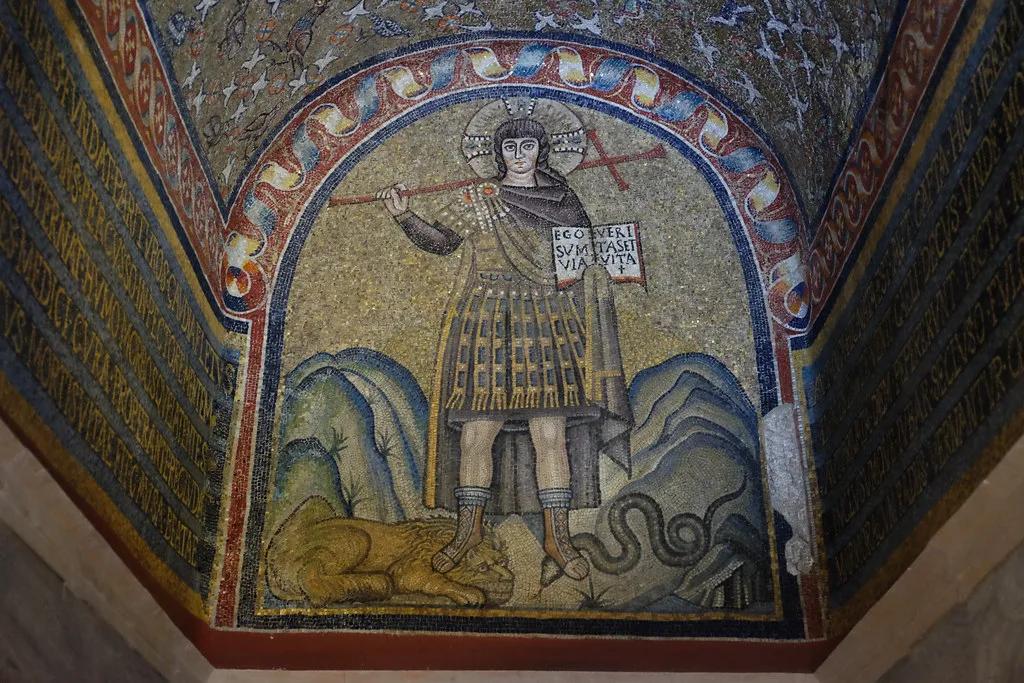
The Cappella di Sant'Andrea, also called the Archiepiscopal Chapel, is housed within the museum and is notable for mosaics created at the time of its construction, around the year 500. It is described as the only early Christian chapel of its kind to reach the present day intact, which is precisely why such a small room carries such weight. Expect a narrow, self-contained space rather than a basilica-scale interior.
The mosaic programme is often read as a statement against Arian worship under Theodoric, with a central image of Christ trampling a serpent and a lion while apostles, martyrs and evangelists glorify him. Knowing that framing changes how you look at the figures: this is theological argument in glass and stone, not decoration alone. Read the chapel's explanatory panels before studying the vault, because the iconography is easy to misread without the key.
The chapel forms part of the UNESCO listing of Ravenna's Early Christian monuments, one of eight sites that make up the inscription. That status is shared with better-known buildings such as the Mausoleo di Galla Placidia and Sant'Apollinare Nuovo, so treating the chapel as a minor footnote misreads the list. For a change of pace after the mosaics, the hidden gems in Ravenna guide covers smaller corners of the city that fit neatly into the same afternoon.
How the Diocesan Ticket Works
Ravenna's diocesan monuments are administered together, and the admission model is cumulative: a combined ticket covers the Basilica di San Vitale, the Basilica di Sant'Apollinare Nuovo, the museum with the Cappella di Sant'Andrea, the Battistero Neoniano and the Mausoleo di Galla Placidia. The practical consequence is that you are not buying five separate entries, so build your day around the single pass rather than budgeting each door. Always confirm the current scope and any conditions on the Opera di Religione's own opening hours and prices page, since third-party summaries can lag behind.
The Galla Placidia mausoleum is the exception worth planning around, because it has historically been handled as a distinct booking question with its own supplement rather than as a simple walk-in on the shared pass. Do not assume that buying the cumulative ticket guarantees immediate entry to that small building. Check the reserve-and-supplement arrangement directly with the operator before you commit to a time slot, and treat any figure you see on a travel listing as unverified until the official site matches it.
There is also a free dimension to Ravenna's church visiting that is easy to blur with the ticketed circuit: the ticket applies to the diocesan monument interiors, not to every church door in the city. If your budget is tight, decide in advance which paid interiors matter most and treat the rest of your walking route as free sightseeing. The hidden gems guide identifies the Basilica of San Francesco as a natural waypoint between stops and a reminder that Ravenna's streets deliver plenty without a ticket.
Suggested Pacing for Museum and Chapel
A workable suggestion is to allow about an hour for the museum and chapel combined, with the chapel itself taking only a short while and the ivory throne and display cases absorbing the rest. This is a planning estimate, not an official duration, so adjust it to your own pace. Photographers and anyone reading every label should add time, particularly in front of the throne's carved panels.
Within a half-day mosaic walk, the museum fits best either first thing before the larger basilicas or as a quieter interlude between them. If you start here, you can carry the chapel's anti-Arian imagery into San Vitale's imperial panels and Sant'Apollinare Nuovo's processions with a clearer sense of what the programmes were arguing. Reverse the order and the chapel becomes a compact recap rather than a primer. For the mosaic-and-monument circuit in a longer frame, see the Ravenna Attractions hub.
Checking Hours, Prices and Notices
Opening times and admission rates for the diocesan monuments are seasonal and periodically revised, so verify them on the Ravenna Mosaici site in the days before you travel rather than relying on a cached listing. The operator publishes notices about celebrations and temporary changes that affect visitor access, including scheduled services in the Battistero Neoniano from October 2026 that suspend visits during part of the morning on the last Saturday of the month. Check the notices page for the week you plan to visit.
Contact details are worth saving: the information and booking office is reachable by phone on 0544 541688 and by email at info@ravennamosaici.it, with office hours on weekday mornings excluding public holidays. If you need to confirm accessibility arrangements, group procedures or a specific chapel question, that office is the authoritative channel. Ask directly about step-free routes and any assistive materials rather than assuming the whole complex is uniformly accessible.
Who Should Include the Museo Arcivescovile
Include it if you want the ivory throne, the chapel mosaics and the museum's early Christian objects in one compact stop, or if you are following the UNESCO listing properly rather than ticking off the famous names. It also suits travellers who prefer a curated narrative to open nave space. Given its central position, the cost is mostly time rather than distance.
Consider skipping it if you have only a few hours in Ravenna and have not yet seen San Vitale and the Galla Placidia mausoleum, which carry more immediate visual impact for first-time visitors. The museum is a complement to those monuments, not a substitute, and a rushed ten-minute pass through the chapel wastes the cumulative ticket's value. Choose it when you can give the collection real attention, and pair it with the quieter stops in the hidden gems in Ravenna guide.
Plan Your Visit
Treat the Museo Arcivescovile as a single visit with two highlights, the Maximian throne and the Cappella di Sant'Andrea, and check the official Ravenna Mosaici pages for current hours, ticket scope and any service notices before you set out. Building the stop into a walking route around Piazza Arcivescovado lets you pair it with the baptistery and the larger basilicas without extra travel.
If you want more of the city beyond the headline monuments, use the hidden gems guide to add quieter corners to the same day, and browse the Ravenna Attractions hub for guides to the individual sights.
Frequently Asked Questions
Is the Cappella di Sant'Andrea inside the Museo Arcivescovile?
Yes. The chapel, also called the Archiepiscopal Chapel, is housed within the Archiepiscopal Museum on Piazza Arcivescovado in Ravenna. You reach it as part of the museum visit rather than as a separate building with its own entrance, so plan one stop for both.
What can you see in Ravenna's Museo Arcivescovile?
The collection includes early Christian sculpture, carved sarcophagi and textiles from the 5th and 6th centuries, much of it transferred from the old cathedral and other local religious buildings. Its best-known object is the Cattedra di Massimiano, an ivory throne with intricate Byzantine carving. The Cappella di Sant'Andrea, with its original mosaics, is the other highlight.
Is the Archiepiscopal Chapel a UNESCO World Heritage site?
Yes. The chapel is one of the eight sites that make up Ravenna's UNESCO listing of Early Christian monuments, alongside better-known buildings such as the Mausoleo di Galla Placidia and Sant'Apollinare Nuovo. That shared listing is why a small room can carry the same heritage status as a major basilica.
Do you need a separate ticket for the chapel?
The diocesan monuments are administered together and admission is sold as a cumulative ticket covering San Vitale, Sant'Apollinare Nuovo, the museum and chapel, the Neonian Baptistery and the Galla Placidia mausoleum. The mausoleum has historically involved its own booking conditions, so confirm the current scope with the operator before relying on any summary.
How long should you spend at the Museo Arcivescovile?
Allow roughly an hour for the museum and chapel as a planning suggestion, not an official figure. The chapel itself takes only a short time, while the ivory throne and the display cases reward slower attention. Photographers and detailed label readers should add extra time.
Where is the museum in relation to Ravenna Cathedral?
The museum occupies part of the Archiepiscopal Palace on Piazza Arcivescovado, next to the cathedral rebuilt in the 18th century. That central position places it within easy walking distance of the Neonian Baptistery and the other diocesan monuments.
How should you check opening hours and prices?
Use the official Ravenna Mosaici site, which publishes opening hours and prices along with notices about celebrations and temporary changes. Third-party travel listings can lag behind revisions. The operator's information office can also confirm details by phone or email.
Sources
Continue exploring
More guides you'll find useful





