
Ravenna One Day Itinerary: Which Mosaic Sites to Prioritise
Plan one day in Ravenna around the five diocesan mosaic monuments, with ticket logic, short entry windows, and what to drop when time runs short.
On this page
Ravenna's reputation rests on early Christian mosaics, and the UNESCO core is compact enough to walk in a single day. The five monuments run by the Opera di Religione della Diocesi di Ravenna form the natural spine, because they stand within a short walk of the historic centre and can be visited on one combined ticket. Three further UNESCO monuments are state-run and sold separately, which changes what a realistic one-day plan can include. The plan below is a suggestion, not an official schedule, and ticket detail should be checked with the operator before you travel.
Why Ravenna Rewards a Tight One-Day Plan
Ravenna's eight Early Christian monuments were inscribed together as one UNESCO listing, but they are not run by one organisation. Five belong to the diocese and share a combined ticket; the Arian Baptistery, the Mausoleum of Theodoric and Sant'Apollinare in Classe are state monuments with separate admission. That split is the single most useful fact for a one-day visit, because it tells you what one purchase does and does not cover. Assuming a single ticket opens every mosaic door is the classic day-tripper error.
The diocesan group is the city's focal cluster: the Basilica of San Vitale, the Mausoleum of Galla Placidia, the Basilica of Sant'Apollinare Nuovo, the Neonian Baptistery and the Archiepiscopal Museum with the Chapel of Sant'Andrea. The diocese presents these as five UNESCO places reachable on foot in the centre, with Justinian and Theodora in San Vitale and the starred vault of Galla Placidia as the headline images. For a first visit with limited hours, these five deliver the most mosaic viewing per kilometre walked.
Set your expectations on time before you set an order. A full mosaic day needs roughly four to five hours inside the monuments plus walking and a proper lunch break; a half-day version fits San Vitale, Galla Placidia and Sant'Apollinare Nuovo comfortably. Those are editorial estimates, not official visit times. Decide at the start whether you are doing the full diocesan group or the three-monument core, because that choice governs everything else.
First Decision: Combined Ticket or Separate Tickets
The diocesan combined ticket is sold in several tiers that determine which monuments you may enter. Wonderful Wanderings, reporting on a restructuring it dates to January 2026, describes a cheapest tier covering the two basilicas, a middle tier adding the Mausoleum of Galla Placidia and the Neonian Baptistery, and a top tier adding the Archiepiscopal Museum and Chapel of Sant'Andrea. Because those tiers and prices come from a third-party blog, treat them as indicative and confirm current scope and cost at a diocesan ticket office or on the Ravenna Mosaici site before you commit.
Two practical rules follow from the ticket structure. First, the small monuments require a booked entry time, so your ticket order shapes your day order rather than the reverse. Second, ticket offices sell for the same day only, which means buying at the counter days ahead gains you nothing. Buy or reserve online if you want a specific slot, then collect or validate on the day.
Separately ticketed highlights should be treated as optional add-ons, not automatic inclusions. The Arian Baptistery is a small, quick visit sold on its own ticket; the Mausoleum of Theodoric sits near the railway station; and Sant'Apollinare in Classe is a few kilometres out of town. Each earns its place only if your day has spare hours after the diocesan core.
Suggested Morning: San Vitale and Galla Placidia
Start with the Basilica of San Vitale, the octagonal sixth-century church whose presbytery carries the facing panels of Justinian and Theodora and whose floor hides a labyrinth in front of the altar. It is the richest single interior in the city, so give it unhurried time. The mausoleum stands in the same walled garden about 30 seconds away, which makes the pair the most efficient bloc of the morning.
Schedule San Vitale with one caveat in mind: Wonderful Wanderings reports that from Easter to the first Sunday in November, the basilica closes to visitors between 10am and 12pm because Mass is celebrated there. If your date falls inside that window, either arrive early or plan San Vitale for the afternoon and put a different monument first. Confirm the current arrangement with the operator, because Mass times can shift.
The Galla Placidia visit is short by design. The cobalt vaults studded with gold stars are the image most people come for, but the room is tiny and visitors are held to a five-minute window for microclimate reasons, with a queue forming behind you. Use those minutes for the Good Shepherd lunette and the star pattern, then step out without resisting the turnover. Photography is permitted here, but flash is not, so set your camera before you enter.
Midday: Neonian Baptistery and the Archiepiscopal Museum
The Neonian Baptistery is another short, slot-controlled interior: an octagonal fifth-century building whose dome holds the oldest surviving mosaic depiction of Christ's baptism in a monument, read by Wonderful Wanderings as the oldest such depiction in a monument. Twelve apostles circle the central medallion in two processions, and the floor preserves an octagonal font rebuilt in the sixth century. Expect a similar five-minute cap here, plus a booked time, so treat it as a fixed appointment rather than a lingering stop.
The Archiepiscopal Museum and its Chapel of Sant'Andrea are the deepest single stop on the diocesan circuit and the one most often dropped by people who have not understood the ticket tiers. Chapel access comes only with the top tier, and photography is not permitted anywhere in the museum, so there is no point saving it for later shots. Inside, look for the ivory throne of Maximian, whose surviving carved panels form one of the great early medieval objects in Italy.
The diocese posts service notices that can interrupt visits; it announces that from October 2026 baptisms at the Neonian Baptistery will be celebrated only on the last Saturday of each month, with visits suspended during the ceremony. Check the notices page shortly before your visit if the baptistery is a priority, and build a small buffer into your midday plan so a ceremony does not unravel the afternoon.
Lunch Stop Logic Near Piazza del Popolo
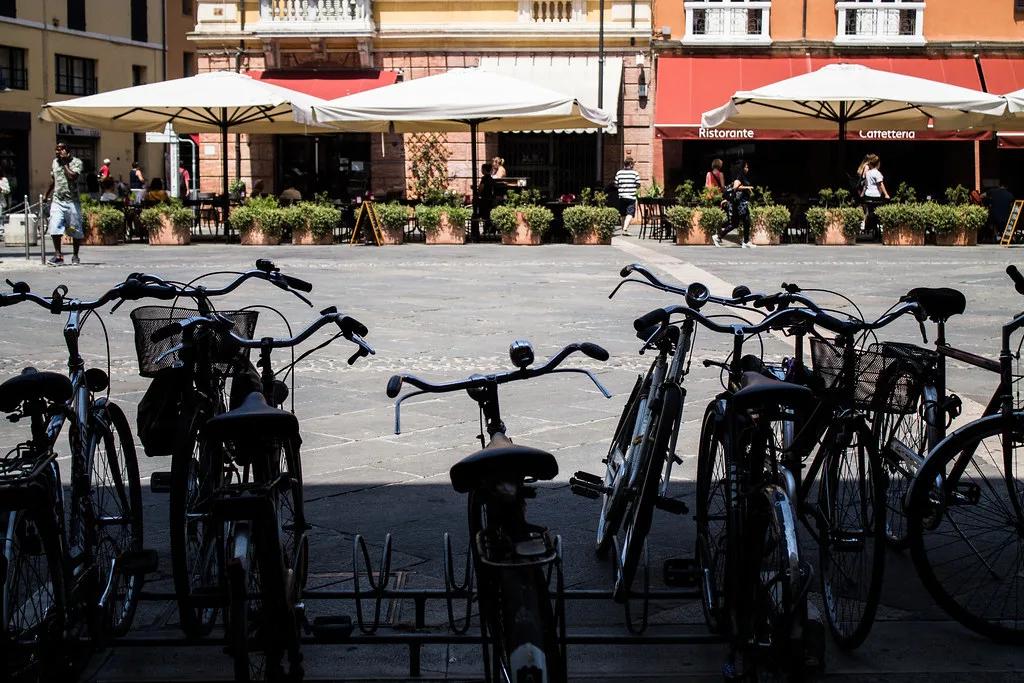
Aim to break between the diocesan core and Sant'Apollinare Nuovo, when your feet and attention are both tired. The old town around Piazza del Popolo is the natural pause point: the square has cafes with outdoor seating, and the surrounding streets hold everyday shops and eateries. Plan on a suggested 60 to 75 minutes; anything shorter and you eat badly, anything longer and the afternoon collapses.
Order with the region in mind, not a specific restaurant. Emilia-Romagna is known as Italy's food heartland, so piadina, cured meats and local pasta are safe bets, and a proper lunch is also your energy budget for the afternoon basilica. Full Suitcase notes that the more authentic and slightly cheaper tables tend to sit in the side streets leading off the square rather than on the piazza itself; check menus on the door before sitting.
Leave room for one small detour: Piazza del Popolo's two granite columns carry a carved zodiac on their bases that runs to thirteen signs, and the old town's lanes make a pleasant ten-minute loop on the way to Sant'Apollinare Nuovo. It costs nothing and resets your legs for the afternoon.
Afternoon: Sant'Apollinare Nuovo and Its Subtle Politics
Finish the diocesan circuit at the Basilica of Sant'Apollinare Nuovo, built by Theodoric as an Arian palace chapel around the year 500. The nave carries 26 Christological scenes, described by Wonderful Wanderings as the largest monumental New Testament cycle anywhere and the oldest surviving one in mosaic, with virgins and martyrs processing along the lower walls toward the enthroned Christ. Look for the political trace: Theodoric's palace is shown with court figures erased after the Byzantine conquest, and hands still grip the columns where the bodies were removed.
The cloisters add a craft layer that makes the mosaics legible. Full Suitcase notes exhibits showing how mosaics are made, with the material types and colour gradations artists work from, which is worth ten minutes before you leave the basilica. It turns the day from looking at pretty surfaces to understanding technique.
If the light and your time allow, walk ten minutes to the Basilica of San Francesco, where a flooded crypt reveals a submerged floor mosaic with goldfish drifting over the tesserae. Entry is free and it makes a calm bookend to the day; do not throw coins in the water. The free-to-enter church gives your budget some slack after a paid morning.
What to Skip When Time Is Short
The first thing to cut is Sant'Apollinare in Classe, which lies about six kilometres south of the centre and needs travel time on both ends. Its apse mosaic is superb, but no one-day plan can give it fair attention alongside five diocesan stops and a proper lunch. Save it for a second visit, or trade out the Archiepiscopal Museum instead, which is the deeper but more skippable stop.
The Mausoleum of Theodoric is the second cut: it sits in a small park behind the railway station rather than in the centre, and its appeal is architectural rather than mosaic-focused. The Arian Baptistery is the third; sold separately and with limited hours, it is only worth slotting in if your diocesan ticket is already secured and you have a free half-hour. Do not let these optional state monuments dictate the shape of a short day.
Among the centre's smaller museums, the Domus of the Stone Carpets and the National Museum are genuinely rewarding but distinct purchases, and neither replaces the mosaic core. If you have a spare hour after Sant'Apollinare Nuovo, the Domus offers underground mosaic floors a short walk from the basilicas; otherwise skip without regret. Better a focused five-monument day than a rushed eleven-site blur.
Photography, Dress and Booking Rules That Trip People Up
Photography rules differ by monument, so decide before you arrive. According to Wonderful Wanderings, photography is allowed in San Vitale, Sant'Apollinare Nuovo and the Neonian Baptistery, but flash is banned in the Mausoleum of Galla Placidia and no photography is permitted at all in the Archiepiscopal Museum. That means the ivory throne and chapel are memories only, while the basilica panels are fair game.
Dress for churches, not for sightseeing. Full Suitcase recommends covering knees and shoulders at Ravenna's religious sites, and it is also the practical reason to carry a light scarf in summer. The five-minute caps and booked slots mean arriving late is not a small problem: a missed slot can mean losing the interior you paid for, so plan each appointment with a cushion.
Seasonal opening times matter for how you sequence the day. Wonderful Wanderings reports that the diocesan monuments shift between longer summer and shorter winter hours, with last admission cut off before closing. Because these details change, compare the seasonal calendar directly with the official Ravenna Mosaici site when you book. The safest habit is to buy your slots first, then build lunch and walking around them.
A Slower Variant: Half Mosaics, Half Dante and the Old Town
If the mosaics-only day feels too rushed, split it: three diocesan monuments in the morning, then an afternoon of Dante and courtyards. Dante's tomb sits in the pedestrian Zone of Silence, free to view from outside, and was built between 1780 and 1781 in a neoclassical style locals call the sugar bowl. The story of his bones being hidden from Florence adds a thread that the mosaics alone do not tell.
Pair the tomb with the Basilica of San Francesco, where Dante's funeral was held in 1321, and the submerged crypt beneath the altar. From there the old town's lanes and squares fill the remaining hours without another timed appointment. This variant trades the Archiepiscopal Museum and one of the small monuments for a slower, cheaper afternoon that still feels specific to Ravenna.
For more overlooked corners beyond the classics, the city rewards a wander through quieter lanes and small churches. Pick one or two of the hidden gems in Ravenna to round out the day rather than chasing a long checklist.
Plan Your Visit
One day in Ravenna works if you choose a spine and defend it: the five diocesan monuments, booked in an order that respects Mass interruptions and short interior windows, with lunch in the old town and one free church to finish. Check the Ravenna Mosaici site for current hours, ticket scope and any ceremony closures, and treat third-party price reports as a starting point rather than a guarantee.
If you fall for the city and want to return, browse the Ravenna Attractions guides to plan a second day around Classe, the Mausoleum of Theodoric and the smaller museums. A one-day visit is a taster, not a verdict. For related planning, see Best Time to Visit Ravenna Without Crowds: A Season Guide.
Frequently Asked Questions
Can you see Ravenna's mosaics in one day?
Yes, if you focus on the five diocesan monuments in the historic centre: San Vitale, the Mausoleum of Galla Placidia, Sant'Apollinare Nuovo, the Neonian Baptistery and the Archiepiscopal Museum with the Chapel of Sant'Andrea. They sit within walking distance and share one combined ticket, but the small rooms require booked entry times. Sant'Apollinare in Classe and the other state monuments are separate tickets and normally a second-day trip.
Is Sant'Apollinare in Classe worth it on a one-day trip?
It is worth seeing, but it is the first thing to cut from a single day. The basilica lies several kilometres south of the centre, so travelling there costs time you would otherwise spend at the diocesan core. Its apse mosaic rewards a dedicated visit; book it into a second day or trade out a lesser stop rather than squeezing it in.
Do you need to book Ravenna mosaic tickets in advance?
Entry to the Neonian Baptistery, the Mausoleum of Galla Placidia and the Archiepiscopal Museum depends on a booked time slot, and the small interiors operate on short fixed windows. Booking online in advance is the safer route if you want a particular morning or afternoon. Confirm current arrangements on the official Ravenna Mosaici site before you travel.
Can you do a day trip to Ravenna from Bologna?
Ravenna sits within easy reach of Bologna and other Emilia-Romagna cities, and the historic core is compact enough for a day trip once you arrive. Plan around your booked mosaic slots rather than the train timetable, because the short entry windows inside the baptistery and mausoleum are the real constraint. Check current train times and seating options before you fix your monument appointments.
Sources
Continue exploring
More guides you'll find useful





