How to Get to Ravello: Bus, Car and Foot Routes
Ravello has no train station, so you arrive by bus, car or on foot. Compare routes from Amalfi and Salerno, parking constraints and arrival timing.
On this page
Ravello sits roughly 350 metres above the Amalfi Coast between Amalfi and Minori, and the climb to it is the part most visitors underestimate. There is no train station in town, so you arrive by bus, car, taxi or on foot. The final road is narrow and winding, and the historic centre is pedestrian-only, which means your choice of transport shapes how much of the day you spend on logistics rather than gardens. A realistic planning figure: one travel guide suggests a full day covers the headline sights, but two nights reveal a quieter town once day visitors leave.
Think of the journey in two parts: reaching the coast below, then getting up the hill. Boats and trains serve Amalfi, Salerno and Naples, but none of them reach Ravello itself, so the last leg is always road or path. That is why the bus from Amalfi is the default for most travellers, while drivers trade flexibility for scarce parking and walkers should plan their route downhill rather than up.
Where Ravello Sits and Why the Last Stretch Matters
Ravello occupies a rocky spur above the coastline, and the town centre is a web of narrow stone lanes rather than a through-road. The villas and terraces that draw most visitors sit at opposite ends of the historic core, so where you are dropped off affects how much walking you do with bags. Arriving at the main piazza puts you within easy reach of the cathedral and the gardens, while a wrong stop leaves you hauling luggage uphill on uneven stone.
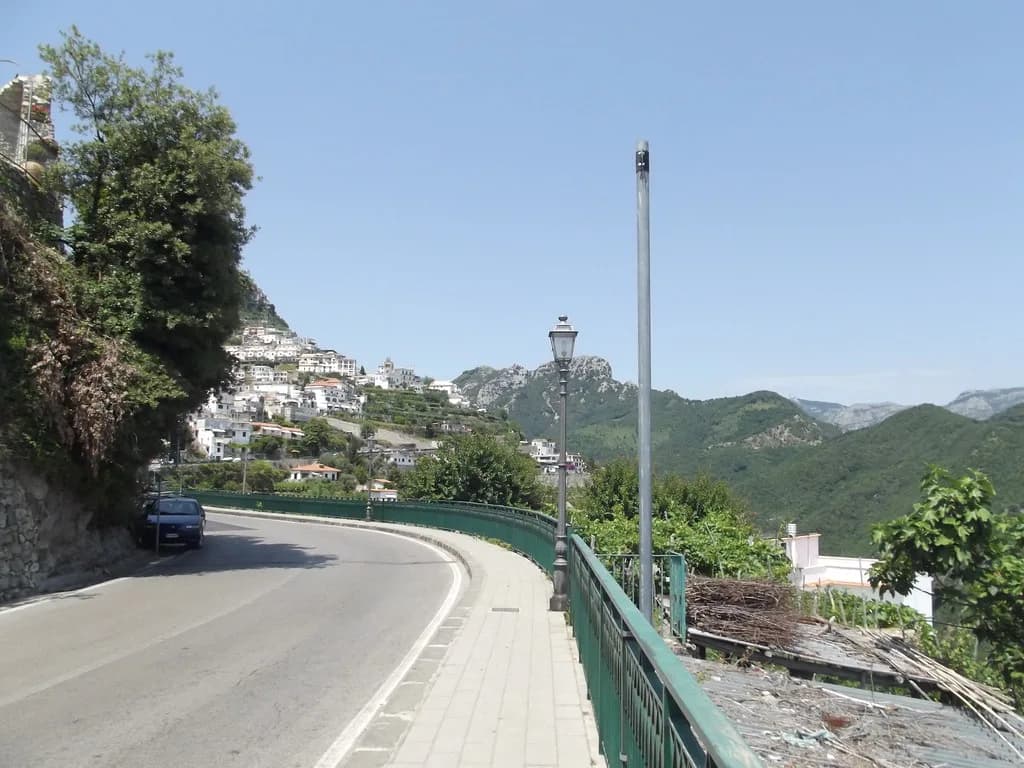
The climb from the coast highway is its own experience: one account describes a road so narrow that a traffic light lets cars in one direction proceed while the other side waits, and notes that vehicles do not all move at the same pace. That detail matters when you are planning a tight schedule or driving a larger car. If you only have half a day, the drive up can consume more of it than the map suggests.
Route Overview: Comparing Your Options
From Amalfi, the usual approach is the SITA bus up the mountain road; a travel guide describes regular service and a ride of about 25 minutes, but that figure comes from a secondary source and schedules change by season. Treat the bus as simple and cheap in principle, then confirm current times and fares with the operator before you rely on a specific departure. Buying a ticket in advance at a bar or tabacchi is the normal habit on this coast, though the exact rules are worth checking locally.
From Naples or Salerno, you first reach the coast by train, ferry or road, then transfer to a bus or taxi for the final climb. Driving directions published for visitors route you off the A3 autostrada at Vietri sul Mare, then along the SS 163 coast road following signs for Ravello. That approach is straightforward in principle, but the last few kilometres are where narrow lanes and parking pressure appear.
From Positano or Sorrento, the pattern is a coastal ferry or bus to Amalfi followed by the uphill leg; the boat ride is often the scenic highlight of the day. On foot, the realistic direction is downward: paths descend from Ravello towards Minori and Atrani through terraced countryside, and climbing them in reverse is a much harder proposition in heat. Whichever route you choose, build in buffer time because connections on this coast rarely run to a tight plan.
By Bus from Amalfi: The Default Approach
The bus from Amalfi is the option most visitors use, and it removes the parking problem entirely. The trade-off is that you share a small vehicle on a winding road with everyone else heading up at the same hour, so mid-morning departures fill quickly in high season. Arriving early gives you the gardens before the tour groups, and a travel guide advises visiting Villa Cimbrone at opening time because the grounds are nearly empty for the first hour.
Do not trust blog timetables for a same-day connection. Bus frequencies vary between summer and winter, and the operator publishes the authoritative schedule; confirm the last return bus before you commit to a late afternoon at the villas. A practical habit is to photograph the timetable at the Amalfi stop in the morning, so you know your fallback if the day runs long.
By Car: The A3, the SS 163 and the Narrow Climb
Driving gives you freedom to combine Ravello with Minori or other coast towns, but the final approach demands patience. The directions most often published take you from the A3 at Vietri sul Mare onto the SS 163 and then up the signed road to Ravello, which becomes progressively narrower as it climbs. A larger car or a nervous driver will find this stretch stressful, and the traffic-light-controlled single-lane section described by one visitor can add an unpredictable wait.
Parking in Ravello is very limited, and the centre is effectively car-free, so plan to leave the vehicle at the town entrance or below and walk. A holiday rental listing notes the historic centre sits in a limited-traffic zone with paid parking available at a set collection window, which illustrates the kind of restriction you should check with your accommodation before arriving. Ask your hotel whether it offers a shuttle or a permit, because turning up mid-morning with luggage and no plan is the most common way to waste an hour.
On Foot: The Downhill Walks to Minori and Atrani
Walking down from Ravello is one of the most rewarding ways to leave town, passing terraced lemon groves and small hamlets on the way to the coast. One guide suggests the descent to Minori takes roughly 30 to 40 minutes of steady downhill walking, and describes it as a favourite route on the coast. Treat that figure as a rough guide rather than a promise, since surface, weather and photo stops all affect the time.
Wear proper shoes: the lanes and paths are steep and made of uneven stone, so heels or smooth soles are a bad idea. If you walk down, plan your return by bus rather than retracing the climb in the afternoon heat. For a full picture of what to see once you are in town, the Ravello Attractions hub collects the individual sight guides in one place.
Arriving from Naples or Salerno
Naples International Airport and Salerno are the main gateways, but neither puts you in Ravello directly. The usual pattern is a train or ferry to the coast, then the bus or a taxi for the climb; ferries from Naples and Salerno connect to Amalfi, where the uphill connection begins. Confirm the current ferry season before you build a day around a boat, because coastal services are not year-round and weather can cancel crossings.
If you are arriving with luggage, a private transfer straight to your accommodation removes the awkward final walk, at a cost you should quote in advance. For public transport details, the town council site is the sensible starting point for local notices, while the operator handles bus schedules. Do not assume a late arrival will find shops or restaurants open, especially outside summer.
How Arrival Timing Shapes a Short Visit
If you only have a day, arrive early enough to reach Villa Cimbrone's gardens before the tour groups. A visitor account notes the grounds are nearly empty for the first hour after opening and that by late morning the experience is different, which makes the first bus from Amalfi a strategic choice rather than an early start for its own sake. Save the Duomo di Ravello and the lanes for the crowded middle of the day, when shade and a slow walk suit the heat. Further visitor details appear in Local Guide to Ravello, Italy (Amalfi Coast Town).
For a structured plan that fits the villas, viewpoints and a meal into a single day, a Ravello one day itinerary helps you sequence the sights around the bus times you have confirmed. The key decision is whether to anchor the day at Villa Rufolo and Villa Cimbrone or to spend it wandering the lanes and smaller churches. Both work, but trying to do everything between two buses leaves little room for the town's main pleasure, which is slowing down.
One Night or a Day Trip?
Ravello changes once the day visitors leave, and multiple guides make the same point: the evening and early morning are when the town feels quiet and the lanes belong to residents and overnight guests. Staying one night also removes the anxiety of the last bus, which is the single biggest constraint on a day trip. If your schedule allows only a day, accept that you will see the headline sights but not the atmosphere that most return visitors remember.
Hotels range from historic villas to small guesthouses, and several sit within the pedestrian centre, which makes arrival easier because you can walk from the drop-off point. Check whether your accommodation is inside the limited-traffic zone and what it recommends for parking before you drive up. For a broader look at the town's quieter corners, the hidden gems in Ravello guide covers places that reward an unhurried stay.
A Suggested Two-Day Shape
This is a suggestion, not an official itinerary. Day one: take an early bus from Amalfi, drop bags, and head straight to Villa Cimbrone's gardens before the crowds, then lunch and an afternoon at Villa Rufolo, staying for the terrace at sunset. Day two: walk the town before the first buses arrive, then descend on foot to Minori for a swim and return by bus for a late lunch. That pattern uses the morning light and avoids the midday crush.
If you have a car, use it for a longer loop rather than for the climb itself: park below and take the bus up, or drive to Minori and walk up only if you are fit and the weather is cool. For more ideas on where to go next, the best day trips from Ravello include coastal towns reachable by bus or boat.
Practical Mistakes to Avoid
The most common errors are arriving at midday with luggage, wearing the wrong shoes, and assuming you can book a popular restaurant on the day. The lanes are steep and stony, so wheeled bags are awkward; pack light and be ready to carry. Restaurants with views fill up in summer, so reserve ahead, and do not plan a late dinner if you depend on the last bus down.
Another trap is treating the bus as a fixed timetable rather than a seasonal service that can be affected by weather and demand. Check the operator's published schedule and buy tickets before boarding where that is the local practice. If you are combining Ravello with shopping, the ceramics and local crafts guide notes that hand-painted pieces are a signature purchase, which is easier to carry if you are not already hauling a suitcase up the hill.
Plan Your Arrival
Ravello rewards the traveller who plans the final climb rather than the itinerary. Take the bus from Amalfi if you want simplicity, drive only if you are comfortable with narrow roads and have confirmed parking, and walk down rather than up. Arrive early, stay a night if you can, and confirm current bus times, fares and any traffic restrictions with the operator or your accommodation before you set out.
Frequently Asked Questions
How do you get to Ravello without a car?
The usual route is a bus or ferry to Amalfi, then a bus or taxi up the mountain road. Ravello has no train station, so the last leg is always by road. Check the current bus schedule with the operator before you travel, and buy a ticket locally before boarding where that is the practice.
Can you walk from Ravello to Amalfi?
There are paths down towards the coast, including routes to Minori and Atrani, and walking downhill is far more realistic than climbing up. Expect steep, uneven stone and allow more time than a map suggests. If you walk down, plan to return by bus rather than retracing the climb.
Is it better to stay in Ravello or visit from Amalfi?
Staying overnight lets you experience the town after the day visitors leave and removes the pressure of the last bus. A day trip works if you arrive early enough to reach the gardens before the crowds and accept that you will not see the quieter evening atmosphere. Both are valid; the choice depends on how much time you have.
Where do you park in Ravello?
Parking is very limited and the historic centre is effectively car-free, so plan to leave your car at the town entrance or below and walk. Some accommodation sits in a limited-traffic zone with paid parking and a collection window, so ask your hotel what it recommends before you drive up.
Sources
Continue exploring
More guides you'll find useful