Hidden Gems in Parma: Lesser-Known Art, Food and Streets
Look beyond Parma's famous cathedral at lesser-known art, quiet frescoes and food traditions, with practical tips for pairing them on a slow city visit.
On this page
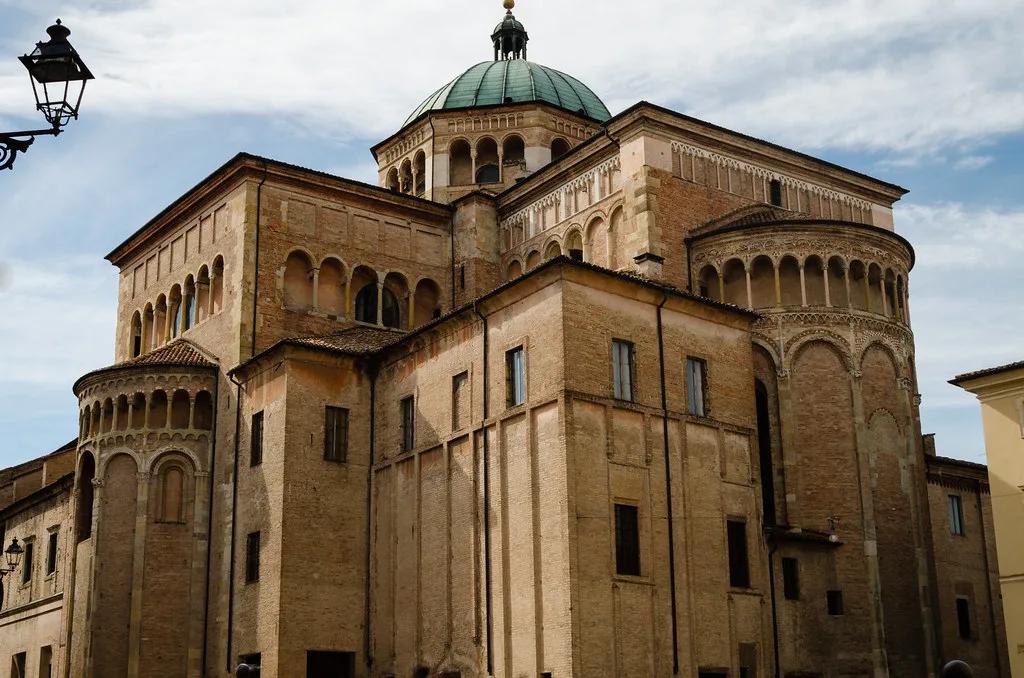
Parma is often reduced to two products and one composer, yet the city holds a dense layer of smaller, less crowded stops that repay an unhurried visit. The main sights sit within a compact centre, so the real question is not how much you can see but which secondary places fit around the Duomo and Piazza del Duomo. This guide focuses on those quieter options and the practical decisions that make them work.
One useful anchor is the Baptistery, whose construction began in 1196 under Benedetto Antelami, according to the city's tourism board. A suggested approach is to give the historic core a full day and treat the Baptistery area as the first stop before the streets fill. Pair sculptures seen in a museum with those in their original setting, and the city's medieval art becomes far easier to read.
Start with the Baptistery and the Diocesan Museum
The Baptistery is an octagonal building in pink marble, designed almost entirely by Benedetto Antelami and begun in 1196 as an inscription on its north entrance records. Inside, sixteen ribs converge in an umbrella-shaped dome above a large octagonal font, and the exterior portals and the band of carved animals known as the zoophorus reward a slow walk around the outside. It is one of the clearest examples in northern Italy of the shift from late Romanesque to early Gothic.
A travel account describes buying Baptistery tickets at the Museo Diocesano, with museum entry included in that ticket at the time of writing. Because ticket scope and prices can change, check the museum's own information before you rely on any combination. The point of starting here is practical: the museum holds original Antelami sculptures moved from the Baptistery, so seeing them first gives the monument more context.
Correggio Beyond the Duomo
Most visitors look up at Correggio's Assumption in the cathedral dome and move on, but two smaller Correggio sites are easy to miss. The Camera di San Paolo is a single room frescoed for an abbess in 1519, described as an early masterpiece with illusionistic effects and a green, garden-like palette. Its small size is the appeal, so expect a short visit rather than a full museum stop.
The church and monastery of San Giovanni Evangelista, founded in the eleventh century, holds Correggio's dome fresco of St John along with works by Parmigianino in the left aisle. The monastic complex also includes cloisters and a library, and the tall bell tower is noted as the highest in Parma at 75 metres. Treat the church as a free architectural visit and check separately whether any associated spaces require a ticket.
The Antica Spezieria: A Benedictine Pharmacy
Within the San Giovanni complex, the former Benedictine pharmacy known as the Antica Spezieria is now a small museum, according to a travel guide to the city. It is the kind of stop that suits a slow itinerary: modest in scale, attached to a larger religious site, and easily combined with the church and cloisters. Check locally whether it is open on the day of your visit, since small monastic museums often keep limited schedules.
The monastery itself is worth time beyond the famous dome. The complex blends Romanesque, Renaissance and Baroque layers, and the library is said to hold around 20,000 volumes including illuminated manuscripts. None of this requires a long visit, but it turns a quick church stop into a more textured hour.
Palazzo della Pilotta: Choose Your Collection
The Palazzo della Pilotta is the biggest decision on a short visit because it contains several distinct attractions. The National Gallery began with the Farnese family's academy and grew under Duchess Maria Luigia, and it now displays works by Correggio, Parmigianino, Leonardo and others. The Teatro Farnese, a largely wooden theatre built in the seventeenth century and rebuilt after wartime damage, is a separate highlight within the same building.
A sensible framework is to pick one priority rather than trying to cover everything. Choose the Galleria Nazionale if you want paintings and sculpture, the Teatro Farnese if you want atmosphere and architecture, or the archaeological collections if Roman finds interest you. A visitor account warns that the gallery is larger than expected, which is a good argument for deciding in advance.
Teatro Regio and Parma's Opera Identity
The Teatro Regio opened in 1829 with a Bellini opera and remains one of Italy's important opera houses, with a gilded auditorium and a painted ceiling. Even without a performance, the building explains why Parma treats music as part of its civic identity, alongside its connection to Giuseppe Verdi. The city's tourism board describes opera, ballet and concert seasons as well as a Verdi festival, but dates and tour availability change, so confirm with the theatre.
If you are not attending a performance, treat the theatre as a short architectural stop rather than a guaranteed interior visit. A travel account mentions main theatre and backstage tours, but access should never be assumed. Check the theatre's published programme and visitor information for the dates you plan to be in Parma.
Market Streets and the Evening Aperitivo
Parma's everyday life is easiest to sample around the Mercato Coperto and the central streets. A travel guide notes that the covered market is a morning affair, with local cheese, cured meats and seasonal produce, while the surrounding salumerie and delicatessens keep the food conversation going later in the day. Go early for the market and save the browsing for afterwards.
In the evening, aperitivo is the local ritual, with outdoor tables around Strada Farini and Piazza Garibaldi busy when the weather allows. Expect local wines and platters of cured meats, sometimes with torta fritta, the fried dough served with salumi. This is a good way to try culatello alongside Parma ham and taste the difference between them.
Food Day Trips Around Langhirano
The Parma Ham Museum sits in Langhirano, in the hills south of the city, in a former livestock market building near the Parma stream. Its eight sections explain the territory, the pigs, the salt and the curing process, and the visit ends with a tasting in the museum's prosciutteria. This is a half-day excursion rather than a city-centre stop, so plan transport before you commit.
Langhirano also hosts a festival dedicated to Parma ham over the first two weekends of September, according to the regional tourism board. That seasonal pattern is the reason to consider a countryside day in early autumn, but confirm the current year's programme before booking around it. Elsewhere in the area, the Torrechiara castle and the art trail connecting it to Langhirano add a walk to the food stop.
Culatello Country and Parmigiano Reggiano
Culatello is made in the humid lowlands north of Parma, and producers there depend on a specific microclimate rather than climate-controlled cellars. A visitor account describes curing cellars where hams hang in darkness and windows are opened and closed to manage the air. This is the rural counterpart to the city's food shops, and it is best arranged as a booked visit rather than an improvised stop.
Parmigiano Reggiano production is scattered across small creameries in the provinces of Parma, Reggio Emilia, Modena and beyond, with each creamery making a limited number of wheels per day. Factory tours are popular and often start early in the morning, so check times directly with the producer. Combining a cheese visit with a culatello stop makes a full day out of the city.
Street Life, Shops and Parks
Much of Parma's pleasure is unplanned: colourful streets, independent shops and outdoor tables that make the centre feel lived-in rather than museum-like. A travel account highlights mid-range fashion and houseware shops as a reason to browse, and notes the Ducal Park and the botanical garden as places to slow down. Use these as gaps between ticketed sights rather than as destinations in themselves.
The city is compact enough to walk between most central stops, though the Pilotta and the Baptistery area can each absorb more time than expected. If you are building a wider Italian itinerary, the same principle of slower wandering applies to the hidden gems in Florence and the hidden gems in Venice, where secondary sights often beat the queues.
Where to Base Yourself and How to Move
Staying within the centre keeps the Baptistery, Pilotta, Teatro Regio and the aperitivo streets within walking distance, which matters when you are fitting smaller stops around a main visit. A travel account recommends central hotels and apartments and notes that Parma is generally gentler on the budget than larger northern Italian cities. Book early for weekends and opera season.
For the countryside, a car gives the most flexibility for Langhirano and the culatello lowlands, while regional trains connect Parma with Milan and Bologna for arrival and onward travel. A travel guide suggests checking Trenitalia or Trainline for schedules, and flying into Bologna or Milan Linate if you are coming by air. Confirm current services rather than relying on any single route description.
Plan Your Visit
A slow Parma visit works best when you choose one major sight and two or three smaller ones per day. Start with the Baptistery and Diocesan Museum, add a Correggio stop, and leave room for an evening aperitivo rather than racing between tickets. Check current opening details and ticket scope directly with each site before you travel. For related planning, see Parma in One Day: A Walkable Itinerary for Art and Food.
Frequently Asked Questions
What should I not miss in Parma beyond the cathedral?
The Baptistery and the Diocesan Museum together give a deeper view of Antelami's sculpture than either does alone. Correggio's Camera di San Paolo and the San Giovanni Evangelista dome are the other essential stops for art, while the Teatro Regio and the aperitivo streets show the city's musical and social side.
Is the Baptistery included with the Diocesan Museum ticket?
A travel account describes buying Baptistery tickets at the Museo Diocesano with museum entry included, but ticket scope can change. Check the museum's current information before you rely on a combined ticket, and confirm whether any other sites in the complex require separate admission.
Do I need a separate ticket for the Camera di San Paolo?
Treat the Camera di San Paolo as a separately ticketed space until you confirm otherwise. Its small size means timed entry is sometimes used, so check locally or with the official visitor information before planning your day around it.
Is the Parma Ham Museum outside the city centre?
Yes. The museum is in Langhirano, in the hills south of Parma, so it needs a half-day and a transport plan. The town also hosts a ham festival over the first two weekends of September, but confirm the current year's programme before booking around it.
How long should a first visit to Parma take?
As a suggestion rather than an official recommendation, allow one full day for the historic centre and a second day if you want the Pilotta collections or a countryside food visit. Adding Langhirano or the culatello lowlands effectively takes another half-day.
Are the lesser-known places in Parma free?
Churches such as the cathedral and San Giovanni Evangelista are generally visited as free religious sites, while museums and frescoed rooms such as the Camera di San Paolo charge admission. Confirm each site's current policy, since free access to a church does not imply free access to every space in the complex.
Sources
Continue exploring
More guides you'll find useful