Getting Around Padua: Transport and Arrival Tips
Plan how to get around Padua: arriving by train or car, walking the compact historic centre, using buses and the tram, and handling the ZTL and car parks.
On this page
Padua, or Padova, sits on the Veneto plain roughly 30 kilometres from Venice, which makes it both a destination in its own right and a convenient base for northern Italy. Because most of the historic sights cluster inside a small centre, transport planning here is less about mastering a big city network and more about making a few good decisions before you arrive. Decide first how you will arrive, then whether you will walk, ride or drive, and the rest of the trip tends to fall into place.
In practice, that means choosing between the railway station and the motorway approach, then treating the compact centre as your main mode of movement. The city tourism board confirms a developed urban and suburban transport network, a tram line, regulated car parks and a traffic-restricted historic zone.
Quick Orientation: Where Padua Sits and Why the Centre Shapes Everything
Padua lies on the plains of the Veneto, about 30 kilometres from Venice, with the Euganean Hills rising behind the city and the Brenta Riviera waterway running between the two cities. That position puts it on major rail and road corridors, which is why it works equally well as a short city break and as a base for wider exploring.
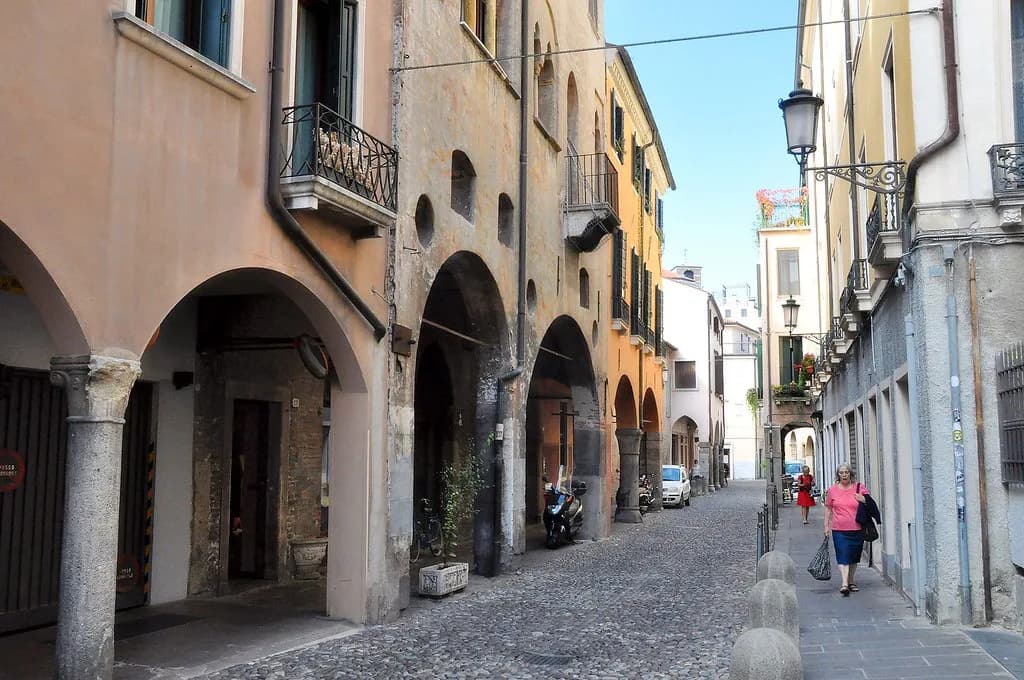
The practical consequence is that almost every transport choice funnels into the same small historic core. Blog-level accounts describe a centre small enough to cross on foot in a short stroll, with the main piazzas, churches and gardens packed close together. That compactness is your biggest asset, so resist the urge to over-plan vehicles for short hops.
Start with the wider picture of what there is to see in Padua before locking in transport, because a one-day visit and a four-day stay need very different logistics. Our Padua Attractions hub indexes visitor guides to the individual sights, so you can judge how much time the centre actually needs.
Arriving by Train: The Station as Your Main Gateway
For most visitors the railway station is the natural entry point, since it handles trains to and from major Italian cities and sits within easy reach of the historic centre. Travel guides note that the walk from the station into the heart of town is short and straightforward, which makes luggage-light arrivals almost frictionless.
Coming from the station, you cross the main river and immediately pass the Scrovegni Chapel and the remains of a Roman amphitheatre before continuing toward the medieval centre. Treat that route as a first orientation walk rather than a transfer, and check current departure boards or an operator app for services rather than relying on any remembered timetable.
If you are arriving with heavy bags or after a long journey, the tram and bus network meet at the station area, which the city tourism board describes as a hub for urban transport. That makes a short ride to your accommodation a reasonable alternative to walking with cases.
Arriving by Car: Motorways, the ZTL and Where Parking Fits
Drivers typically approach Padua on the A4 motorway and exit at Padua Est, then follow signs toward the centre until they reach the railway station area, where parking is easier to find than deeper in town. Local guides are blunt that the sprawling road network is not the place to improvise, so decide your parking plan before you enter the city.
The single most important constraint is that the historic centre of Padova is a traffic-restricted area, or ZTL, bounded by electronic gates that read vehicle number plates. The city tourism board publishes the boundary page separately, so check it before you drive and assume your hotel inside the centre does not automatically grant access.
Around 10,000 regulated parking spaces exist in the urban area, roughly half of them inside attended facilities, which gives you a realistic fallback when street parking looks tight. Park at the edge, confirm the current tariff and hours on site, and walk in rather than circling the restricted core.
If you are using Padua as a stopover between larger destinations, the car is genuinely useful for the Euganean Hills and the Brenta Riviera villas outside the city. Keep the car for those excursions and leave it parked for the days you spend in the centre.
Walking Padua: How Much of the Centre You Can Cover
Padua is a walking city in the practical sense: the historic centre is small enough that you can drift between the Basilica di Sant'Antonio, the botanical garden, the university quarter and the piazzas on foot rather than planning bus rides. Guides suggest the main sights could be covered in about half a day of steady walking, though most visitors will want longer to slow down.
A sensible walking day strings together Prato della Valle, the Basilica, the market squares and the riverside, leaving time for the interior visits that need advance planning. Our suggested Padua in One Day: Itinerary for First-Time Visitors gives a sequence you can adapt to your own pace.
Wear shoes that cope with stone paving and allow for detours into side alleys and along the waterways that thread through the city. If mobility is limited, the seasonal hop-on hop-off bus gives a low-effort overview, but it does not replace walking for the small lanes.
Local Transport: Buses, the Tram and Paying for Tickets
Beyond walking, Padova runs urban and suburban buses operated by FS Busitalia Veneto, plus a tram line connecting the north and south of the city. The tourism board also lists bike sharing and car sharing services, so you are not limited to buses if you want to move faster.
Ticket channels are the part travellers most often get wrong. One traveller account reports that buses no longer accept cash on board and that tickets are bought in advance from tobacconists or via an app, then validated in the machine when you board; treat that as a planning prompt to buy before you ride and confirm current rules with the operator.
Because fares, validation rules and app options change, check the operator's own information rather than assuming a remembered price or payment method still applies. Buy a spare ticket or two if you plan scattered rides, and validate it only when you actually travel.
Taxis, Car Sharing and the Seasonal Sightseeing Bus
Radio Taxi Padova runs a 24-hour service covering the city and the wider province, and car sharing lets you pick up a vehicle only when you need one. Both earn their place for late arrivals, luggage days or a single out-of-centre errand rather than for routine sightseeing.
The City Sightseeing Bus is a red double-decker aimed at orientation, and the tourism board describes it as running from March to October rather than year-round. Check the current season and route before building a day around it, and do not expect it in deep winter.
For most travellers, the sightseeing bus is a first-morning overview rather than the backbone of the trip. Combine it with walking so you still get into the churches, cloisters and gardens that make the city worth the visit.
Day Trips from Padua: Using the City as a Base
Padua's rail position on the Venice–Milan and Venice–Bologna corridors makes it a workable base for day trips across the Veneto and beyond, with the station as the launch point for each outing. Rather than over-scheduling, pick one direction per day and let the train do the work.
Venice is the obvious companion, and travellers heading there should check the current rules on day-tripper access before setting out, since entry requirements have changed in recent years. Confirm details through official channels close to your travel date instead of relying on older blog posts.
Inland, the Euganean Hills and the Brenta Riviera villas suit a slower day, and our Day Trips from Padua: Nearby Excursions guide covers options without locking you into a fixed timetable. Book any timed interior visits separately, because a day trip plus a ticketed attraction can easily fill a full day.
Practical Pitfalls: Tickets, Passes and the ZTL Mistake
Two mistakes account for most transport frustration in Padua: driving into the restricted centre without checking the ZTL boundary, and boarding a bus without a validated ticket. Both are avoidable with five minutes of preparation, and both are far cheaper to prevent than to fix afterwards.
Several Padua sights restrict entry by time slot, and the Scrovegni Chapel is the classic example, with limited numbers per slot making advance booking close to essential in high season. A timed interior visit shapes your whole day, so slot it into the plan before you decide how to travel around.
Some tourist passes bundle several sites, but inclusion varies and each attraction states its own conditions, so read the current terms rather than assuming a card covers everything you want to see. Check each site's own page for what is actually included before buying.
Where to Stay Relative to Transport
Accommodation choice effectively decides your transport plan: station-side stays simplify early trains and day trips, while centro-side stays put the piazzas, churches and restaurants on your doorstep. Neither is wrong, but the trade-off between luggage convenience and evening atmosphere is real.
If you arrive by car, prioritise a stay with its own parking or one near an attended car park at the edge of the restricted zone. Confirm parking with the property directly, since the ZTL boundary affects which addresses are reachable by car.
Travellers planning a slower trip can also weigh season against transport comfort, since summer humidity and winter fog both change how pleasant walking between sights feels. Our Best Time to Visit Padua: Avoiding Crowds guide sets out how the climate shifts across the year.
Plan Your Visit
Padua rewards a simple plan: arrive by train or park at the edge, walk the compact centre, and keep buses and the tram for longer hops or heavy luggage. Check the ZTL boundary before you drive, buy tickets through the operator's own channels, and book timed interiors such as the Scrovegni Chapel ahead of your visit.
Once the logistics are settled, the city opens up as a place for unhurried wandering between frescoed chapels, market squares and gardens. Our hidden gems in Padua guide picks up from there, pointing to the quieter corners worth building into your walking day.
Frequently Asked Questions
Is Padua a walkable city?
Yes, for the historic centre. The main sights sit close together and visitors commonly cover the core on foot in a half day of steady walking, though allowing a full day gives you time for interior visits and detours along the waterways.
Do you need a car to get around Padua?
No. The centre is compact and the railway station connects the city to major Italian destinations. A car is useful mainly for excursions to the Euganean Hills or the Brenta Riviera villas, and even then it should stay parked outside the restricted centre.
Can you drive into Padua's historic centre?
The centre is a traffic-restricted area bounded by electronic gates, so ordinary driving access is limited. Check the city tourism board's ZTL page before you set out, use regulated car parks, and confirm with your accommodation whether any access arrangement applies.
How do you get from Padua to Venice?
Trains run between Padua and Venice, and published journey estimates vary between roughly 25 and 40 minutes depending on the service, so check current timetables with the operator. Venice has also introduced day-tripper access requirements, so verify the current rules before you travel.
Is there a tram or bus network in Padua?
Yes. The city has urban and suburban buses operated by FS Busitalia Veneto and a tram line linking the north and south of the city. Buy and validate tickets through the operator's official channels and confirm current fares there.
Where should you stay in Padua if you arrive by train?
Staying near the station simplifies day trips and arrivals with luggage, and the historic centre is a short walk away. Staying inside the centre trades that convenience for piazzas, restaurants and sights on your doorstep.
Is Padua a good base for day trips in northern Italy?
Yes. Padua sits on rail corridors linking it to Venice and other northern cities, so it works well as a base. Plan one direction per day and check operator timetables and any city access rules, such as Venice's day-tripper requirements, before travelling.
How do you pay for buses in Padua?
Reports suggest on-board cash payment is no longer accepted and tickets are bought in advance from tobacconists or via an app, then validated on boarding. Because fares and payment channels change, confirm the current system with the operator before you ride.
Sources
Continue exploring
More guides you'll find useful