Free Things to Do in Olbia: Parks, Churches and the Waterfront
Plan a low-cost day in Olbia with free parks, churches and waterfront walks, plus guidance on which paid archaeological collections are worth it.
On this page
Olbia is often treated as a harbour and airport you pass through on the way to the Costa Smeralda, which is exactly why a free day here works so well. The historic centre is compact and pedestrian-friendly, the port sits beside it, and a large park gives the city a green centre rather than a suburban edge. A suggested half-day route covering the park, the centre and the waterfront needs no bookings at all, though interior opening depends on the day.
The useful distinction is between what is genuinely free and what merely looks free from outside. Churches, streets, squares and the waterfront are open-air or open-door experiences; museums and some associated collections are separate, ticketed propositions. This guide keeps those categories apart so you can decide where to spend and where to simply walk.
Why Olbia Suits a Free Day
Olbia began life as a port and has never stopped being one, which shapes what a visitor can see for nothing. The seafront looks onto ferry traffic heading for Genoa, Livorno and Civitavecchia, and the gulf is sheltered by small islands including the Peddone islet. That working-harbour character is visible without a ticket, and it gives the waterfront a purpose beyond posing.
The city also sits at the centre of Gallura, the northern sub-region of Sardinia, and its historic core is small enough to cross on foot in a single wander. Punic foundations, Roman trade and medieval rebuilding are layered here rather than displayed in one place, so the streets themselves do part of the interpretive work. If you want the wider context of overlooked corners in the city, the hidden gems in Olbia guide is a sensible place to start planning.
Start at Parco Fausto Noce
Parco Fausto Noce is the free green anchor of the city, a spacious urban park with olive groves, a pond, lawns and an amphitheatre used for concerts, fairs and food events. The park is described as extending across roughly eighteen hectares, which is enough space to turn a short stroll into a proper hour. Entry is free and the park is open year-round, so it works as an early-morning stop before the centre wakes up.
Published opening hours for the park circulate on third-party travel sites and vary between summer and winter, but they are not the same as official municipal rules. Treat any specific clock times you find as indicative and confirm current access with the Comune di Olbia before planning a dawn run or a late-evening walk. For layout, facilities and what to expect on the ground, see the Parco Fausto Noce, Olbia guide.
Within the park, the practical rules are simple. Keep to the paths around the older trees, bring your own water, and do not feed the ducks or turtles in the pond, advice that protects both the wildlife and the water quality. The amphitheatre side is the liveliest corner when events are on, while the olive groves stay calmer for a bench and a book.
Walk the Historic Centre
From the park, head for Corso Umberto, the main street of the old centre, where older Liberty-style buildings sit alongside cafes, wine bars and shops selling Sardinian souvenirs. Most of the surrounding lanes are pedestrian, and the small squares are where locals stop for a coffee or an aperitivo. Piazza Regina Margherita is a natural pause point, busy with errands in the morning and with people meeting friends in the evening.
The centre mixes old and new more honestly than most Italian historic cores, because heavy bombing during the Second World War destroyed much of the original fabric. A few historic buildings survive, and near the city hall you can see remains of the Roman court, while the older Punic defensive walls lie a little further out. Knowing this stops the rebuilt streets from feeling like a disappointment and turns them into part of the story.
Chiesa di San Paolo and Its Majolica Dome
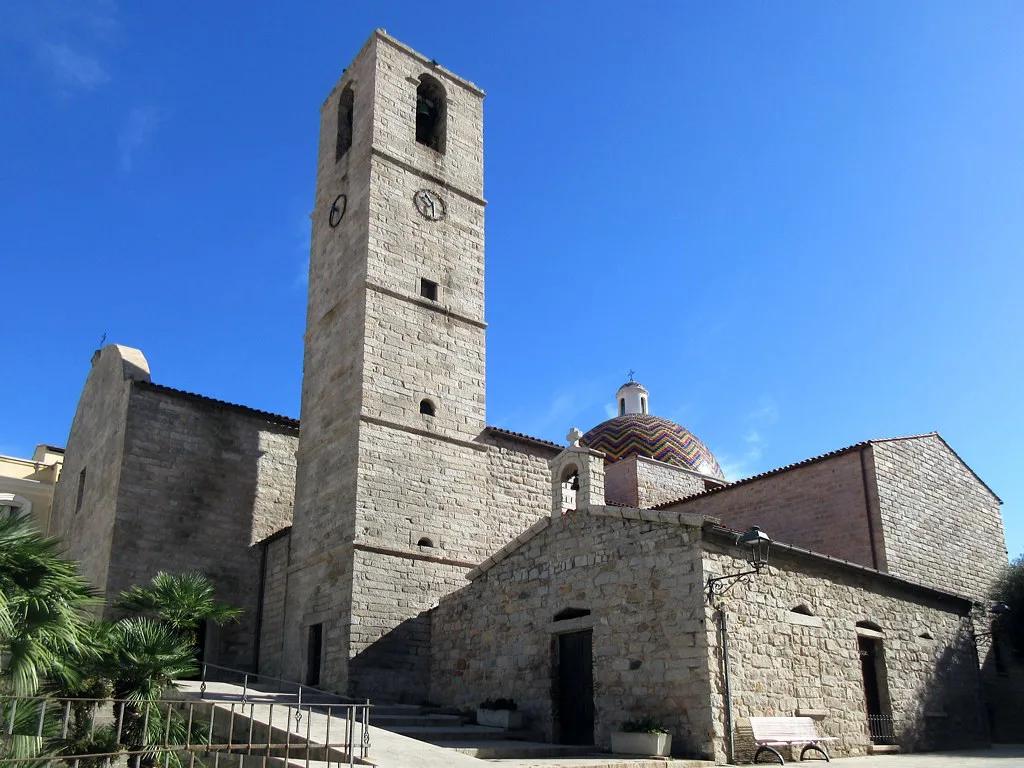
The Chiesa di San Paolo Apostolo on Piazza Civita is the centre's most photogenic free sight, thanks to a dome clad in polychrome majolica tiles in greens, yellows and blues. The core of the building reflects an eighteenth-century reconstruction, while the tiled dome belongs to later twentieth-century work, which explains the mix of sober granite and bright ceramic. The best light on the tiles tends to be in the morning.
Entry is typically free, but this is an active parish rather than a monument with a turnstile, so it may close during services and the interior should be visited quietly and modestly dressed. Check the notices on the parish door for Mass times, since published schedules change seasonally. If the doors are shut, the square and dome still justify the detour.
Inside, look for the timber ceiling, the baroque-inspired altar and side chapels, and the older granite masonry in the apse and lower walls. The church sits on a square that local tradition links to an earlier sanctuary, though that association is tradition rather than documented fact and is best treated as background colour. From here, the Basilica of San Simplicio is a walk of roughly ten to twelve minutes.
Basilica di San Simplicio and What to Know Before Going In
The Basilica of San Simplicio is Olbia's other identity marker, a Romanesque building in local granite whose forms crystallised in the twelfth century on what was understood as the grave of the city's martyrs. Its austere facade and three-nave interior reflect Pisan influence, and the surrounding area holds a Roman necropolis uncovered during twentieth-century excavations. The exterior and the square cost nothing and are the reason many visitors come.
The Civitatense museum associated with the basilica is a separate, paid proposition, and you should not assume a single ticket covers everything you see. SardegnaCultura lists the site's access as for a fee and does not publish a current price, recommending that visitors call ahead for ticket information. Its published access times are Monday to Saturday from 10:00 to 17:00, but these should be confirmed by phone before you build a day around them.
If you are travelling with a tight budget, the basilica's granite shell and the archaeology around it give you the sense of the place for free, while the museum is the optional layer for anyone who wants the interior story. Ring the number listed by SardegnaCultura if the collection is the main reason for your stop. Otherwise, treat San Simplicio as a short pause rather than a half-day commitment.
The Seafront Promenade and the Gulf Views
The seafront is the third free pillar of an Olbia day and can be walked in its entirety. From the promenade you can watch ferries connecting the island with the Italian mainland, see the sheltered waters of the gulf and, on clear days, look toward the islands of the La Maddalena archipelago. It works equally well as a morning leg-stretch or an evening loop before dinner.
The Peddone islet, connected to the waterfront by a short footbridge, is where the city's archaeological museum stands, so the promenade naturally brings you to the edge of a paid attraction without obliging you to enter. The view back toward the historic centre from the water gives a clearer sense of how small and how port-shaped Olbia really is. Bring a layer for the wind, which picks up along the harbour.
Free Versus Paid: When to Spend
The decision rule is straightforward: pay for collections you cannot see anywhere else, and skip paying for what you can already appreciate from a square. The Museo Archeologico di Olbia is the strongest case for spending, because it holds material recovered from the harbour itself, including remains of Roman ships and cargo displayed with explanations of ancient trade routes. Admission details are not reliably published in the sources here, so check with the museum before you go rather than assuming it is free.
The Civitatense museum at San Simplicio is the second, smaller paid option, and its appeal depends on how much you want the basilica's buried history rather than its visible stone. For anyone prioritising a low-cost day, one paid collection is usually enough; two can tip a relaxed day into an expensive one. Set a budget before you arrive and treat the second museum as optional.
If you want to stretch the free day into something slower, the archaeology outside the centre is worth considering. The Pozzo Sacro Sa Testa in Olbia is a Nuragic sacred well with a staircase descending to a water chamber, and the Pozzo Sacro Sa Testa Olbia guide explains how to approach it. Check access and any entry arrangements with the site or the Comune before setting out.
A Suggested Half-Day Free Route
A comfortable half day starts at Parco Fausto Noce in the morning, when the light is soft and the paths are quiet, then continues on foot into the historic centre via Corso Umberto. Allow roughly forty-five minutes in the park and an hour for the centre including San Paolo and a coffee in Piazza Regina Margherita. This is editorial advice, not an official schedule; finish with the basilica exterior and a seafront loop, and you have covered the free highlights in a single unhurried stretch.
Travellers with a full day can slow everything down: a longer park circuit, a proper sit-down lunch in the centre, time inside San Paolo if it is open, and an evening walk along the water. If you want more context for the wider city, the Olbia Attractions hub collects guides to individual sights so you can slot them into whichever version you choose.
Anyone staying longer can spread the free stops across several mornings and add paid collections on the days that interest them most. A Three-Day Olbia Itinerary is a better fit than trying to compress everything into one afternoon. The key is to keep at least one slot unplanned for the waterfront, which rewards lingering more than ticking off.
Practical Tips for a Low-Cost Day
Dress for churches: shoulders and knees covered, voices low, and no photography during services. Assume any active parish may close without notice for a funeral or Mass, and build a flexible order into your day rather than a rigid timetable. Bring a refillable water bottle, since the centre's fountains and cafes make it easy to top up.
Check hours before you go, especially for anything indoor. The pattern across Olbia is that outdoor sights are dependable and interiors are not, so a plan built around streets, squares, the park and the promenade will rarely collapse. Keep the Comune di Olbia and the regional tourism board as your reference points for current access rather than third-party listings.
Finally, resist the urge to treat free as synonymous with lesser. The most memorable parts of Olbia for many visitors are the tiled dome seen from Piazza Civita, the granite mass of San Simplicio, and the ferry traffic sliding past the promenade. None of those requires a ticket, and all of them reward a slower pace.
Plan Your Visit
Olbia works as a free day because its best-known landmarks are outside and open to anyone: a large park, two distinctive churches, pedestrian lanes and a working waterfront. Spend where a collection adds something you cannot see from the street, and keep the rest of the budget for lunch. Confirm current hours and entry arrangements with the Comune and the individual sites before you travel.
Frequently Asked Questions
Is Olbia worth visiting for a day?
Yes, if you like compact cities with a working port, a walkable historic centre and a large park. A single day covers Parco Fausto Noce, Corso Umberto, the Chiesa di San Paolo, the Basilica of San Simplicio from outside and the seafront promenade without rushing.
What can you do for free in Olbia?
The main free experiences are walking the historic centre and its pedestrian lanes, visiting the churches when they are open, strolling the seafront promenade and spending time in Parco Fausto Noce. Churches are working parishes, so entry is not guaranteed at every hour.
Is the Archaeological Museum in Olbia free?
Admission arrangements are not reliably confirmed in published sources, so do not assume it is free. Contact the museum directly before your visit and treat any free-entry claim you see online as unverified.
Are the churches in Olbia free to enter?
San Paolo is typically free to enter, but it is an active parish that may close during services. At San Simplicio the basilica itself is separate from the Civitatense museum, which is listed as for a fee with no current price published.
Is Parco Fausto Noce free and when is it open?
Entry is free and the park is open year-round, but published opening times vary between sources and seasons. Confirm current access with the Comune di Olbia rather than relying on third-party listings.
How long do you need to see Olbia's old town?
Around an hour is enough for a first walk along Corso Umberto and the main squares, including a stop at San Paolo. Add time if you want to sit for coffee, visit a museum or continue to the basilica and the seafront.
Sources
- Olbia: Sardinia's Hidden Gem Village in Italy
- Olbia, Sardinia: 11 Best Things To Do And 7 Best Beaches
- SardegnaTurismo - Sito ufficiale del turismo della Regione Sardegna
- Scopri il Parco Fausto Noce - Il Grande Parco di Olbia | Sardinia Blog
- Chiesa di San Paolo Apostolo Olbia - Discover History | Sardinia Blog
- SardegnaCultura - Olbia, Museum Civitatense - Basilica of San Simplicio
- Parco Fausto Noce - Olbia
Continue exploring
More guides you'll find useful