
Matera Self-Guided Walk Through the Sassi: Route & Tips
A self-guided walk through Matera's Sassi: four anchor squares, a blog-suggested two-to-three-hour route, stairs advice, and careful notes on tickets and viewpoints.
On this page
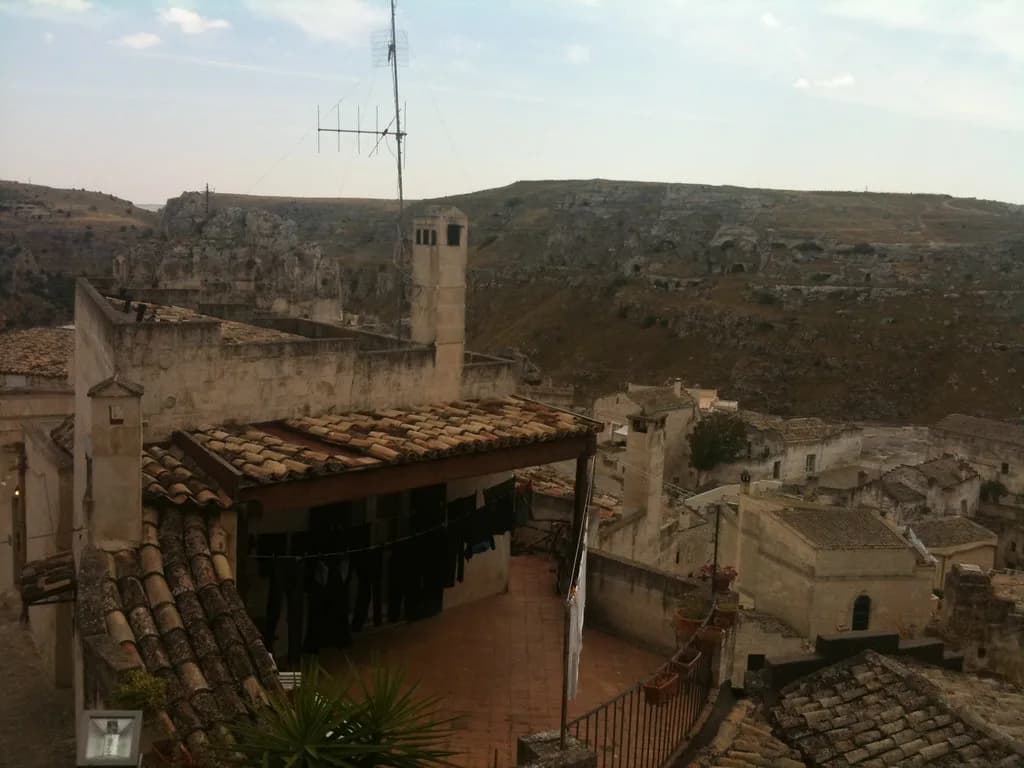
Matera's Sassi reward walkers who accept a simple truth: they are not a grid. The two cave districts, Sasso Barisano and Sasso Caveoso, fold around the Civita hill and its cathedral, and the lanes between them rise, drop and curl back on themselves. A self-guided walk works best when you navigate between a handful of landmarks rather than following turn-by-turn instructions.
One independent walking guide proposes exactly that structure: four anchor points at Piazza Vittorio Veneto, Piazza Duomo, Piazza San Pietro Caveoso and Piazzetta Pascoli, connected by winding alleys. Its author suggests allowing roughly two to three hours for the circuit, depending on how long you stop at each place, and says you can start anywhere and walk in either direction.
That timing is an editorial estimate from a travel blog, not an official figure, so treat it as a baseline and add time for coffee, church interiors and photographs. If you want a shortlist of corners beyond the four squares, start with our guide to hidden gems in Matera, and browse the Matera Attractions hub to decide which single sites deserve a proper visit.
Before You Start: Shoes, Water and Where to Begin
The streets here are steep and uneven, so comfortable shoes are the most useful thing you can bring. The same walking guide recommends water and sunscreen as well, which is practical advice in a city where the climbs arrive without warning and shade between the stone lanes is uneven.
Choose your starting square according to where you are staying. Piazza Vittorio Veneto sits on the modern side and suits anyone arriving by train or parking nearby, while staying inside the Sassi makes more sense starting at Piazza San Pietro Caveoso and climbing from there. The route is deliberately flexible: the blog's author stresses it is a suggested structure rather than a prescribed path.
If you later decide you would rather have context than independence, Materaturismo has been running guided itineraries in the city since 2002, covering the Sassi, the Murgia park and the rock churches. For orientation on what the two districts actually contain, read our Sassi di Matera visitor guide before you set out.
Leg 1: Piazza Vittorio Veneto to Piazza Duomo
At the upper end of Piazza Vittorio Veneto, a spot known as I Tre Archi gives you a panoramic look over the Sassi before you enter them. From the square the route continues toward Piazza San Francesco, then picks up Via delle Beccherie, one of the oldest streets in the quarter, lined with traditional stone houses and small shops that keep the ascent interesting.
The gradient begins gently and steepens noticeably on the approach to the cathedral, so the walk eases you in before the final push. That matters if you are carrying a bag or walking in warmth. Piazza Duomo, with the Basilica Cattedrale di Matera as its anchor, is the natural place to pause rather than press on when you first feel the climb.
The Duomo Decision: Long Loop or Short Descent
From Piazza Duomo you have a real choice. The longer variant curves toward Via Madonna delle Virtù and the rock-church lanes before dropping to Piazza San Pietro Caveoso, while the shorter line heads more directly toward the same square. The long version adds distance and more ups and downs between viewpoints; the short one protects your legs and your time in the heat.
Both arrive at the same reward: wide views over the city and across the gravina, the ravine separating the Sassi from the Murgia on the far side. Decide by energy and temperature rather than ambition. A wrong turn here does not spoil the walk; the lanes tend to funnel you back toward the main sights eventually, just with a longer detour than you had planned.
Leg 2: Downhill to Piazza San Pietro Caveoso
The descent from the cathedral to Piazza San Pietro Caveoso is where stone steps test knees that are not used to them. The square sits in the Caveoso district and is framed by historic buildings, including the Chiesa di San Pietro Caveoso, with terraces that make a sensible stopping point before the next climb. Take the slope slowly and watch your footing where the paving has been polished by use.
This is also the clearest place to separate public space from ticketed interiors. The square and its views are open to anyone passing through, but the churches, cave dwellings and exhibition spaces around it each set their own arrangements. No single ticket is known to cover them, so check each site you actually want to enter rather than assuming access.
Leg 3: Climbing to Piazzetta Pascoli
From Piazza San Pietro Caveoso the route climbs Via Bruno Buozzi toward Piazzetta Pascoli. Along the way you pass the Chiesa Rupestre di Santa Maria di Idris, cut into the hillside, which the walking guide singles out for its frescoes and which rewards a look even if you do not go inside. The street has plenty of places to eat or drink, and side lanes tempt you deeper into the Sassi if you want to roam.
At the top, Belvedere Piazzetta Pascoli offers a panoramic terrace over the cave districts and the ravine. It is open public space, so there is nothing to buy to stand and look, and it deserves more than a passing snapshot. Give it a few minutes before the final leg, particularly in late afternoon when the light softens the stone.
Leg 4: Back to Piazza Vittorio Veneto via Via Ridola
The last stretch is the kindest on the legs. From Piazzetta Pascoli, follow Via Domenico Ridola past shops and bars and the Chiesa di San Francesco, whose Baroque facade marks the edge of the Civita, then continue until you reach Piazza Vittorio Veneto. The walking guide describes this section as level-ish, a welcome change after the stairs and slopes of the earlier legs.
Closing the loop lets you see from above what you have just walked through. If you still have energy, the lanes around Piazza del Sedile reward a slow wander, and the cathedral and Civita surroundings deserve their own unhurried look; our Cattedrale di Matera visitor guide and Civita di Matera visitor guide go into those sites individually. If not, sit down and watch the city change toward evening.
How Long to Allow
The two-to-three-hour suggestion comes from a travel blog and assumes steady movement, so treat it as a starting point rather than a target. Add time for the climbs, for photographs at the viewpoints and for any church or cave interior you decide to enter. A leisurely half-day is a realistic way to plan if you want pauses and a proper sit-down.
If your stay is short, this circuit fits into the plan in our Matera one-day itinerary, which pairs the Sassi with other city sights. Readers with longer stays can spread the same ground across a two-day itinerary and still add the Murgia and its rock churches beyond the ravine. The route suits all of these because it is a structure, not a schedule.
Where the Route Can Go Wrong
Satellite navigation is unreliable in the Sassi, and the walking guide is direct about it: sat nav confuses rather than helps in these alleys. A wrong turn can send you in an unexpected direction and lengthen the walk, even if you eventually arrive at the same square. The practical answer is to navigate by landmarks, using the Duomo, the Caveoso square and the Pascoli terrace as compass points.
Keep track of whether you are heading up or down and which side the ravine lies on, and accept meandering as part of the experience. The blog's own plan is a rough direction between four key locations rather than a traced line, and it explicitly allows starting anywhere and going either way. That flexibility is what makes a self-guided walk work here.
Free to Look, Separate to Enter
It helps to separate what you can enjoy without buying anything from what you cannot. The squares, the Belvedere Piazzetta Pascoli and the lanes themselves are public space, while churches, cave dwellings and exhibition spaces are individual sites. Do not assume entry to one covers another, and do not assume every interior is open when you pass it.
Rather than guess at hours or prices, check the specific site before planning around it. Materaturismo publishes its own tour offerings, and operators and individual attractions set their own visitor terms, so a tour booking is not the same as admission to every monument on the route. For an overview of which sights exist across the city, browse the wider collection of attractions.
Optional Add-Ons: Guided Walks and the Sightseeing Bus
If stairs or heat are a concern, a guided walk or a bus tour removes some effort while keeping the overview. The walking guide mentions a small sightseeing bus with only a few circuits a day and advises booking ahead; its price and duration details come from an earlier visit, so confirm current terms with the operator rather than relying on the blog.
Walking still gives you the clearest sense of the Sassi's vertical logic, but mixing modes is perfectly sensible. A bus or guided tour on one day and the four-square walk on another is a reasonable split, especially in high summer. If you are building a longer stay, the route slots easily into our three-day itinerary so you can see the city without rushing.
Best Time of Day and Practical Notes
Mornings are cooler and the light on the cave facades is softer, which makes the climbing gentler and the viewpoints clearer. Midday heat is the main argument for choosing the short Duomo option and for doing the hardest climbing before lunch rather than after. The walk itself has no opening hours because the streets are public, but individual sites keep their own timetables.
None of this requires certainty on the ground. Check opening arrangements for any interior you care about on the day, carry water, wear proper shoes and keep the four squares as your mental map. The Sassi reward slow, curious walking rather than efficient route-following, so leave room to drift and to come back another time.
Plan Your Visit
The four-anchor route gives you structure without a rigid script. Start where it suits your accommodation, choose the long or short way after the Puomo according to your energy, and treat the two-to-three-hour estimate as a baseline rather than a target.
Before you set out, confirm entry arrangements for any church or museum you want to visit inside, since arrangements vary from site to site. Then let the city's vertical lanes do the rest, and follow up with individual guides for whichever sights you decide deserve more time.
Frequently Asked Questions
Can you do a self-guided walking tour of Matera's Sassi?
Yes. The Sassi are public streets and squares, so you can walk them without a guide. A workable structure is to link Piazza Vittorio Veneto, Piazza Duomo, Piazza San Pietro Caveoso and Piazzetta Pascoli, then explore the lanes between them as you please. A guide adds context inside churches and cave sites but is not required to walk the route.
How long does it take to walk around Matera's Sassi?
One travel blog suggests roughly two to three hours for a route connecting the four main squares, depending on how long you spend at each. Treat that as a non-official estimate. Add time for stairs, photographs and any interior you enter, and consider a half-day for a relaxed pace.
What is the difference between Matera and the Sassi di Matera?
Matera is the whole city, including the modern streets around Piazza Vittorio Veneto. The Sassi are the historic cave districts, divided into the Sasso Barisano and Sasso Caveoso and wrapped around the Civita hill and its cathedral. The walk described here moves between those two halves of the city's geography.
Should you start a Sassi walk at Piazza Vittorio Veneto or inside the Sassi?
The main square is convenient if you arrive by train or park nearby, and it gives you a view over the Sassi before you descend. If you are staying inside the districts, starting at Piazza San Pietro Caveoso and walking up is the more sensible choice. The walking guide is designed so you can start anywhere and go in either direction.
Is a phone map reliable for a self-guided walk in the Sassi?
Satellite navigation performs poorly in the Sassi's narrow, stacked alleys, so a phone map is a rough guide at best. Navigate instead by landmarks: the Duomo, the Caveoso square and the Pascoli terrace. Expect a wrong turn or two and treat the detour as part of the walk rather than a failure.
Are the viewpoints in Matera free to visit?
Standing in the public squares and at Belvedere Piazzetta Pascoli costs nothing, and the streets themselves are open. Churches, cave dwellings and exhibition spaces are separate sites, each with its own arrangements, so check before planning to go inside rather than assuming a shared ticket.
Sources
Continue exploring
More guides you'll find useful





