Getting Around Livorno: Trains, Port Shuttles and Local Transport
Plan how to move through Livorno: why the port is shuttle or taxi only, how to reach Livorno Centrale, and when a train day trip to Pisa or Florence makes sense.
On this page
Livorno rewards visitors who treat it as a transport city first and a strolling city second. The working harbour sits apart from the historic centre, so a cruise call involves a deliberate transfer rather than a wander down the gangway, and that single fact reshapes how you plan the day.
Once you are in town, the picture changes. The centre is flat and compact, the canal quarter is made for slow walking, and Livorno Centrale opens up the coastal line toward Pisa, Florence and Lucca. One traveller reported buying a round-trip port shuttle ticket for €7 and paying €1.20 for the city bus, figures worth treating as a recent report rather than an official tariff.
Why You Cannot Walk Out of the Port
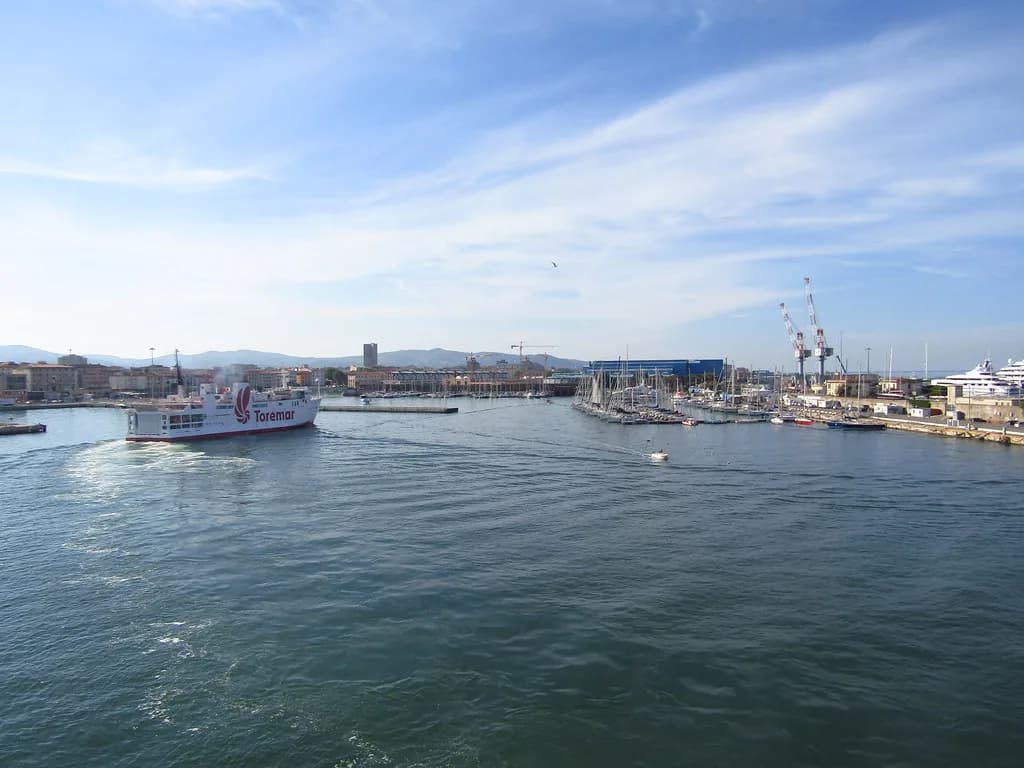
Livorno is a mixed industrial, ferry and cruise port, and in most cases passengers are not allowed to walk from the berths into town. That is not a quirk of one terminal but a safety rule across a working harbour where cargo, ferries and cruise ships share the water.
Large ships generally use the Porto Industriale, an industrial area about half a kilometre from the centre by road, while smaller vessels sometimes berth at Alto Fondale. Either way, passengers leave the secure zone by shuttle or taxi, so build that first transfer into your timing before you think about trains.
Port to Centre: Shuttle and Taxi Options
The usual route out is the port shuttle, which runs from outside the terminal to a central drop-off when ships are in port. One guide describes the trip to Piazza Grande taking roughly fifteen minutes, with the bus paid in cash, while another account puts the drop-off near the tourist information office; check the board at the terminal on the day rather than relying on a fixed point.
Traveller reports on cost vary widely, which is exactly why you should confirm before boarding. One guide cites a port shuttle at around five euros in cash, another traveller paid seven euros for a round trip, and taxi fares to the centre are quoted in ranges rather than fixed prices. Treat every figure as a report, carry small notes, and ask the driver or steward what the current charge is.
Do not count on a free cruise-line shuttle. Some passengers report complimentary coaches, others pay the port operator, and it depends on the line and the berth. The practical habit is to read your ship's daily programme the night before and to keep cash handy in case the service is charged on the day.
Centre to Livorno Centrale: The 1+ Bus or the Walk
From the city drop-off, the station sits about two miles east of the cruise port, and the standard link is the local 1+ bus, which one traveller describes boarding on Via Grande near the shuttle stop and riding to the terminus in front of Livorno Centrale. If you prefer to walk, allow roughly half an hour through the centre rather than treating it as a five-minute stroll.
One card quirk is worth knowing: a traveller reports that Livorno's local buses accept only one ticket purchase per credit card, so each person in your group needs a separate card or cash. If you are travelling as a family, sort payment before boarding, because fumbling at the door costs you the bus you wanted.
Queues grow when several ships are in port or when a train departure is close. Leave the ship as soon as the gangway opens if a day trip matters to you, and expect the return bus to be busiest in the late afternoon as passengers converge on the same departure window. A taxi is a reasonable upgrade when your group splits the cost and the queue looks long.
Livorno Centrale on the Coastal Line
Livorno Centrale sits on the Tyrrhenian corridor with direct services to Rome, Genoa, Florence and Pisa, which is why the station matters more than its modest size suggests. Regional trains are the workhorse for short hops, while faster services exist but rarely justify the extra cost on journeys of an hour or so.
Ticket validation is the habit that catches first-time rail users. After buying a ticket, punch it in the small machines near the platforms before boarding; inspectors are strict, and an unvalidated ticket can mean a fine. Check the departure board for your platform about fifteen minutes ahead, because it often appears late.
For live times, fares and seat options, use the national rail operator's own tools rather than a blog. Trenitalia publishes schedules and lets you buy in advance, which is useful if you want a specific train on a tight port day.
Train Day Trips by Time in Port
Under eight hours ashore, the maths rarely works for Florence. Count the shuttle, the bus to the station, the wait for a train, the ride, and then the same chain in reverse, and you are left with a rushed couple of hours in the city. Staying in Livorno, or making a quick Pisa hop, uses the time better.
Around eight hours, Pisa becomes realistic. Regional trains cover the short distance frequently, and the ride is brief enough that a half-day there and back does not feel reckless. Lucca is the quieter alternative for the same budget, with a change at Pisa, though the connection adds a variable you should watch.
With ten hours or more, Florence justifies the journey. One traveller measured about two and a half hours door to door from ship to Florence, which leaves roughly five usable hours in the city if you return with a margin. Treat that as a sample of one day, not a fixed schedule, and check current times before committing.
Pisa: Centrale or San Rossore
Trains from Livorno arrive at Pisa Centrale, where you have a choice. You can walk for twenty to thirty minutes to the Piazza dei Miracoli, or take a connecting train to Pisa San Rossore, which sits about five minutes from the Leaning Tower. The connection can involve a wait, so weigh the walk against the platform time.
The short hop makes Pisa the safest day trip for a modest port call, and the compact square means you can see the main sights without a plan. If your time is tighter still, consider staying in Livorno and leaving Pisa for a future trip rather than sprinting through both.
Florence and Lucca: Longer Rides, Tighter Returns
Florence trains run direct to Firenze Santa Maria Novella, which puts you within walking distance of the Duomo and the historic core. One source notes that tickets bought for a specific regional departure are tied to that train, so missing it means buying again. Build slack into your chosen return rather than assuming you can simply take the next one.
Lucca needs a change, usually at Pisa, and the journey is longer than Pisa's. In exchange you get a walled town that is easier to absorb in a few hours than Florence, with the station just outside the medieval walls. If you want a calmer day trip, Lucca trades the headline sights for breathing room.
Ferries and the Wider Port
Livorno is a ferry port as well as a cruise call, with passenger traffic sharing the harbour with cargo operations. Ferries from Sardinia and Corsica arrive and depart here, which adds to the bustle around the port area and explains why pedestrian access is controlled rather than open.
For ferry schedules and operator details, the city and port websites are the places to check rather than a travel blog, because routes and operators change by season. If you are arriving by ferry rather than cruise ship, confirm your onward transfer in advance, since the port's layout does not invite improvisation.
Walking Livorno Itself
Once you are in the centre, Livorno is a walking city with a flat core. Piazza della Repubblica is the odd landmark worth seeking out, a wide bridge-square over the Fosso Reale whose locals call it the Voltone. From there, the Fortezza Nuova and the canal streets of the Venezia Nuova quarter are an easy continuation.
The canal district rewards slower walking, and the fortress grounds are free to enter as a public park. Cobblestones and uneven surfaces are the main hazard, so bring supportive shoes rather than heels. If you have only a few hours, the canals and the piazzas make a satisfying loop without any train at all.
For a more structured half-day, our Livorno self-guided walk: canals, fortresses and the old harbour strings these stops together without relying on public transport. It suits anyone whose ship day is too short for a train ride or who simply wants to see the city rather than a highlight reel of Tuscany.
Tickets, Cash and Connectivity
Carry euro notes and coins for buses, shuttles and market stalls. Cards work in restaurants and larger shops, but small transactions and transport payments often prefer cash, and the bus payment quirk means a single card will not cover a group. ATMs are easy to find near the station and Piazza Grande.
Download an offline map before you leave the ship. Free wifi exists in cafes and the tourist office, but you do not want to depend on it while navigating a bus transfer or a station platform. A saved map of Livorno and your destination city removes one source of stress.
If you plan to stay in the city rather than day-trip, our Livorno neighbourhoods guide: where to stay and what each quarter is like helps you pick a base with the right transport connections. The train station area and the historic centre serve different trips, and choosing well saves a daily commute.
Buffer Discipline for the Return Leg
The return journey is where independent travellers get caught. Aim to be back at the port at least forty-five minutes before all aboard, and remember the last shuttle from the centre may leave earlier than you expect. A missed ship is far more expensive than an early train.
Trains can run late and the bus back to the centre fills with fellow passengers in the final hour. Plan your day around one earlier return train rather than the last possible one, and check the live departure board at the station before you commit to a final wander. That single choice is the difference between a relaxed day and a sprint.
If you have a full day and want a ready-made structure, our Livorno one-day itinerary: a realistic plan for a single day sets out how to balance the centre with a short excursion. It is a starting point, not a fixed timetable, so adjust it to your ship's actual hours ashore.
Plan Your Visit
Livorno works best when you respect its two-part geography: a working port you cannot cross on foot and a flat, walkable centre that rewards slow exploration. Decide early whether your hours ashore buy a train day trip or a canal-side afternoon, then build the transfers around that choice.
Check current shuttle arrangements, train times and fares with the operator or the city before you travel, since reports vary and schedules change by season. For the city itself, our Livorno Attractions collection covers the fortresses, canals and piazzas in more depth once your transport is settled.
Frequently Asked Questions
Can you walk from the Livorno cruise port into the city centre?
In most cases no. The berths sit in a working industrial port and pedestrians are not allowed to cross the secure zone, so you leave by port shuttle or taxi. Confirm the current procedure on your ship's daily programme or at the terminal information point before you set out.
How do you get from the Port of Livorno to the train station?
Take the port shuttle or a taxi to the city centre first, then catch the local 1+ bus or walk to Livorno Centrale. The station is about two miles east of the port, so the transfer is a two-step journey rather than a single ride from the berth.
Is the train in Italy easy to navigate for first-time visitors?
Reasonably so. Departure boards show platform numbers, signage is often bilingual, and ticket machines offer an English option. The habit that matters most is validating your ticket in the small machines near the platform before boarding.
How long does the train take from Livorno to Pisa and Florence?
Pisa is a short regional hop, while Florence takes roughly an hour to an hour and a half depending on the service and any stops. Check current times with the national rail operator before you plan a return, since schedules vary by day.
How much time do you need in Livorno to attempt a day trip?
Under eight hours ashore, staying in Livorno or making a quick Pisa hop makes more sense than Florence. Around eight hours suits Pisa or Lucca, and ten hours or more gives Florence enough room to be worthwhile without rushing the return.
Do you need to book train tickets from Livorno in advance?
For regional trains you can generally buy at the station on the day, though booking ahead gives you a specific departure and sometimes a cheaper fare. If your port call is tight, reserve a return train so you are not queuing at a machine when you should be heading back.
Where does the port shuttle drop you in Livorno?
Reports point to a central drop-off near Piazza Grande or the tourist information office, depending on the service. Ask at the terminal or check your ship's information so you know which way to walk for the bus stop or the historic centre.
Is Livorno's historic centre walkable once you are in town?
Yes. The centre is flat and compact, with Piazza della Repubblica, the Fortezza Nuova grounds and the Venezia Nuova canals within easy reach on foot. Watch for cobblestones and uneven surfaces, and wear supportive shoes rather than heels.
Sources
- Città di Livorno
- Port of Livorno: A 2026 Guide for Canadian Travelers | Remitly
- How to Get to Florence from Livorno Cruise Port - meganywhere
- Livorno Cruise Port Guide: Everything You Need to Know – Anchors Up
- Travel by rail in Livorno (Italy) Cruise Port: Review (2023)
- Official event website
- Livorno port to train station ? - Livorno Forum
- The Fortezza Nuova | Visit Livorno
- Piazza della Repubblica | Visit Livorno
- What to do in Livorno, Tuscany's Port City - Alex Getting Lost
Continue exploring
More guides you'll find useful