Rainy Day in Lecce: An Indoor Plan for Wet Weather
Rain in Lecce does not ruin a trip. Plan a wet day around Baroque churches, the castle and market breaks, with realistic timing and etiquette tips.
On this page
Lecce is usually sold as a city of sunshine and warm stone, but the Baroque centre works well under a grey sky too. Church interiors, the castle rooms and market arcades give you places to stand still while a shower passes, and the compact historic centre means short dashes rather than long transfers. Treat the plan below as a shape for the day, not a timetable: opening windows shift with services, seasons and local events.
Start with one realistic expectation. Church visiting hours in Lecce vary and are often concentrated in the morning, with some buildings reopening later in the day, and not every church posts reliable times outside. Build your circuit around the two anchors that are almost always described as visitable, the Basilica di Santa Croce and the Duomo, then add smaller churches only if they are open when you pass.
Why a Wet Day in Lecce Is Not a Lost Day
The city's historic centre is dense enough that you can move between covered or indoor stops without a car. That matters in rain, because the alternative, driving between outlying sights, adds parking, traffic restrictions and wet walks from car parks. Keep the day walkable and you keep the day simple.
The trade-off is that you will see fewer places. A dry day invites wandering; a wet day rewards a short list done properly. Two churches in the morning and one museum block in the afternoon will feel fuller than five rushed entries, especially when you are peeling off a wet jacket at every door.
Weather Reality Check: When Lecce Actually Gets Wet
Lecce is not a rainy city by Italian standards, but it has a clear wet season. Long-term climate averages for Lecce put the wettest month in November, with roughly 100 mm of precipitation spread across about a dozen days, while July is the driest with a small fraction of that total. Autumn and early winter are therefore when a wet-day plan earns its keep.
Do not over-read those figures. Averages describe a month, not your week, and a November visit can easily deliver bright intervals between showers. Check a short-range forecast a day or two ahead and keep the church circuit flexible, so you can swap the morning and afternoon blocks if the rain looks heavier later.
The Shape of the Day: Two Blocks and a Long Lunch
Plan a morning church block and an afternoon indoor block, with lunch as the hinge. The morning suits churches because that is when many are open for visitors, and the afternoon suits the castle and any museum rooms, which are less bound to service times. Lunch stretches the middle of the day, when rain is often heaviest and when many smaller churches are closed anyway.
This structure also gives you an escape valve. If the morning is a washout, do one church and go to lunch early; if the afternoon clears, walk the Baroque streets instead of sitting indoors. A wet day in Lecce is easier to salvage when the plan has two independent halves rather than one long chain of stops.
Church Circuit Part 1: Basilica di Santa Croce
Santa Croce is the obvious first stop, and its carved facade is worth a few minutes under an umbrella before you go in. The basilica sits on Piazza Santa Croce, and the decoration, with figures, grotesques and scrolls cut into the local stone, rewards close looking rather than a quick photo. Morning side light tends to show the relief work best, so it fits neatly at the start of the day.
Inside, dress for a place of worship: shoulders and knees covered, no flash during services, and a quiet voice. If a Mass is starting, step out rather than tour around it. The adjacent cloister is often the part people remember, and access to it or to guided visits can be separate from entering the church itself, so ask at the entrance rather than assuming one arrangement covers everything.
A short, clearly labelled walk between Santa Croce and the Duomo makes sense as the spine of the morning. For a fuller route through the carved facades and side chapels, a self-guided walk Lecce Baroque style keeps you moving without committing to fixed times.
Church Circuit Part 2: Piazza del Duomo and the Cathedral
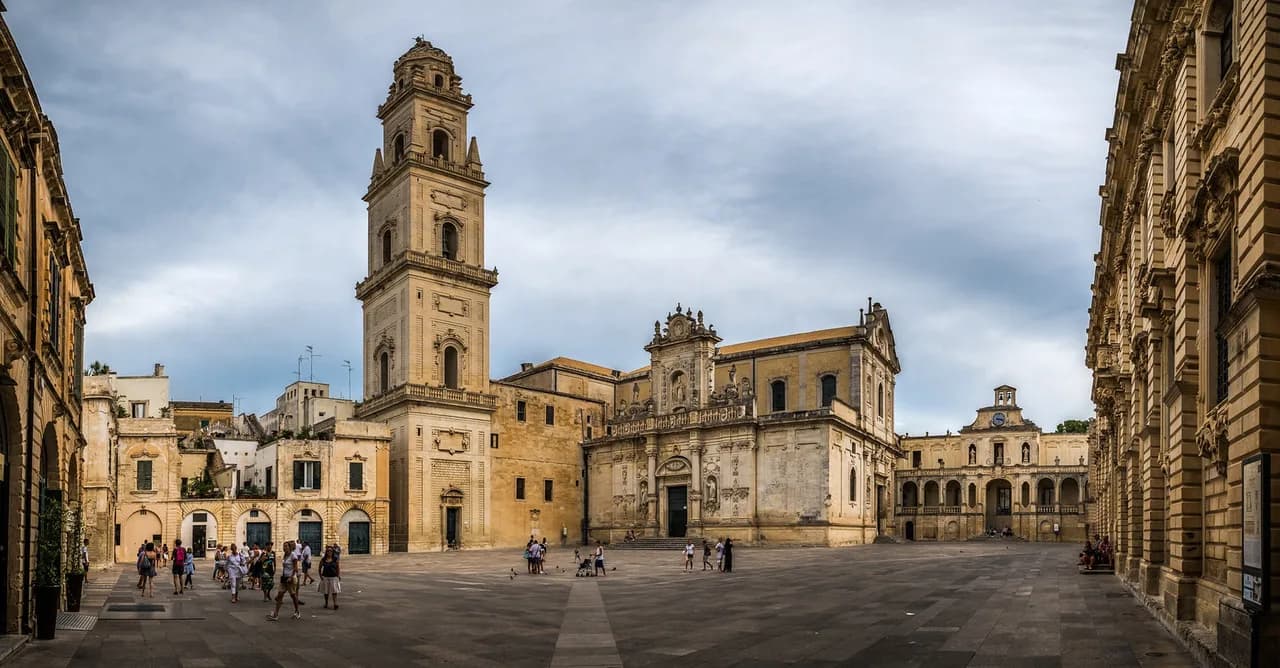
Piazza del Duomo is enclosed on several sides, which makes it one of the most sheltered squares in the centre and a good place to pause in a shower. The cathedral, the Cattedrale di Maria Santissima Assunta, anchors the square alongside the bell tower, the bishop's palace and the seminary building. Walk in through the narrow entrance and the noise of the streets drops away.
Treat the cathedral, the diocesan museum and the bell tower as separate things rather than one package. Sources describe the cathedral as generally free to enter as a place of worship, while museum rooms and tower climbs are ticketed, and ticketing arrangements have changed over time. Do not plan on a single pass covering every site; check what is actually on offer at the ticket desk or parish notice on the day.
If the tower is open and the weather has cleared, the climb gives you a view over wet rooftops that is arguably better than the summer version. Access is sometimes limited to small groups, and it can be restricted during services, so ask before queueing. Otherwise, the cathedral interior and its side chapels are enough for a damp half hour.
Church Circuit Part 3: Sant'Irene, Santa Chiara and San Matteo
These three smaller churches are worth adding only if you can see an open door. Sant'Irene sits near Piazza Sant'Oronzo and is dedicated to the city's patron saint; Santa Chiara has a convent setting and a cloister described as a peaceful pause; San Matteo has a curved facade and a dense interior of stucco and altars. All three are places of worship first, so visiting hours bend around services.
The practical way to handle them is to note their locations and walk past rather than plan a fixed slot. If one is open when you are nearby, go in for ten minutes; if not, move on without regret. Trying to force all three into one wet afternoon means more time on wet cobbles and less time inside anywhere.
Afternoon Anchor: Castello Carlo V
The castle, known locally as Castello Carlo V after its sixteenth-century rebuild under the Spanish king, gives the afternoon a roof, walls and enough rooms to absorb an hour or more. It sits in the heart of the historic centre, which makes it an easy pivot from the Duomo area. Displays inside have included exhibitions and papier-mache work, though the programme changes, so check what is on rather than expecting a fixed collection.
Guided visits have been offered in the past, including a papier-mache workshop format run with a local cultural group, but those were specific dated events rather than a standing offer. Ask at the ticket desk or check the city's cultural listings for what is running during your stay, and do not budget on a workshop that may not be scheduled.
Market and Food Breaks That Keep You Dry
The small market just outside Porta Rudiae is a practical short stop rather than a full afternoon. It is described as a modest, century-old market with produce stalls, a pastry shop and a cafe, and reviewers suggest arriving early for the freshest produce and fewer crowds. Some traders may prefer cash, so carry a little even if you mostly pay by card.
A pasticciotto, the custard-filled pastry associated with Lecce and Salento, or a savoury rustico makes a sensible mid-morning or mid-afternoon break between churches. For a wider look at what to eat and where the market fits, a Lecce market food guide is a useful companion to this plan.
Lunch deserves more time than usual on a wet day. A long, slow meal covers the worst of the rain and resets you for the afternoon; it also keeps you out of the narrow lanes when water is running down the pietra leccese. Book ahead if you are travelling in a busy period, and treat the meal as part of the itinerary rather than a delay.
When the Rain Is Heavy: Fallbacks Worth Knowing
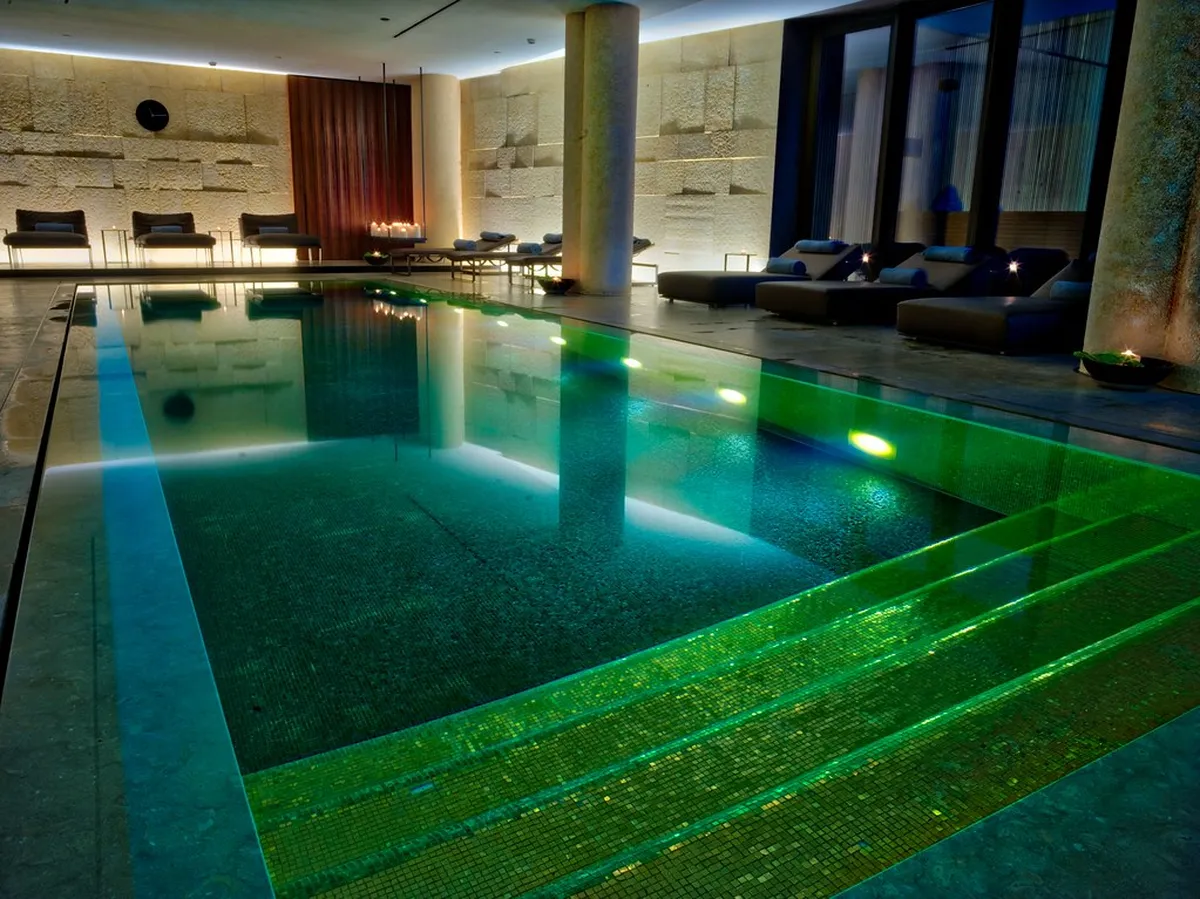
If the weather turns serious, shift the day indoors entirely. Cooking classes and olive oil or wine tastings are widely described as available across Puglia, including in smaller towns, and they occupy a full block of time without requiring you to walk between stops. Spa afternoons in converted historic buildings are another option, with some offering hourly or day entry. Further visitor details appear in How to spend a rainy day in Apulia.
The Grotte di Castellana are sometimes suggested as a rainy-day outing, and the caves are genuinely underground, but they are not in Lecce. Treat them as a regional day trip rather than a city stop, and factor in the drive and the tour length before committing on a wet morning.
What to Skip on a Wet Day in Lecce
Skip the ambition to see every church on a list. Lecce has a large number of churches in a small area, and once you have seen Santa Croce and the Duomo, the marginal return from a fifth or sixth interior is small compared with the time spent walking wet streets. Pick the two anchors, add one small church if it is open, and stop there.
Also defer anything that depends on dry ground: long wanders through the lanes, the Roman amphitheatre in the open square, and out-of-town archaeological sites. Save those for a brighter day and use the wet hours on interiors. If you only have one day in Lecce, a Lecce in One Day plan helps you decide what survives the cut.
Etiquette, Tickets and Practical Checks
Churches in Lecce are working places of worship, so the rules are simple: cover shoulders and knees, keep voices low, do not photograph during services, and leave a donation if you have had special access. Some sites restrict photography in particular chapels. Check notices at the door rather than relying on a guidebook, and never treat a church interior as a cafe with better decoration.
For ticketed components, verify on the day. Museum rooms, towers and cloisters may have separate arrangements, and prices and hours change; nothing in this plan should be read as a guarantee that a given site is open or free. Ask at the ticket desk, check parish notices, or look at the city's official site before you build a morning around one entry.
Walkers should wear shoes with grip, because wet pietra leccese and cobbles are slippery and the polished pavements near the main squares are worse. If you drive, note that the historic centre is a limited traffic zone with camera enforcement at certain hours, as described by a local accommodation operator; park outside and walk in rather than testing the rules.
If you have time to spare, the city's hidden gems in Lecce include smaller sites and underground spaces that work well when it rains, but check access before walking across town. A half-day version of this plan is simply Santa Croce, the Duomo, lunch and the castle, with one small church added only if it is open when you pass.
Plan for the Rain, Not Around It
A wet day in Lecce works when you accept a shorter list and give the two main churches proper time. Use the morning for Santa Croce and the Duomo, let lunch run long, and put the castle in the afternoon, with the market as a quick, useful stop rather than a destination. That structure survives a shower and still leaves room for a wander if the sun appears.
Before you go, check the forecast, confirm which churches are open that day, and carry a little cash for market stalls. Everything else, including the ticket arrangements and opening windows, is best verified on the spot or through the city's official channels rather than fixed in advance.
Frequently Asked Questions
How long do I need in Lecce on a rainy day?
A single wet day is enough for the two main churches, a long lunch and the castle. If you have only an afternoon, choose Santa Croce and the Duomo and skip the castle rather than rushing all three. Two days lets you add smaller churches and a museum block without spending the whole time walking in the rain.
Do you have to pay to enter Lecce's churches?
Not usually for the worship area of a church, but museum rooms, cloisters and bell towers may be ticketed separately. Sources disagree on current ticket scope, and arrangements have changed over time, so check at the entrance or with the parish rather than assuming a single pass covers everything.
What can I do in Lecce if it rains all afternoon?
Head for the castle or the cathedral complex, then take a long lunch or a wine and olive oil tasting. Cooking classes and spa afternoons in converted historic buildings are other options, though you should book and confirm availability rather than turning up.
Is a rainy day in Lecce still worth it?
Yes, if you keep the plan short. The historic centre is compact, so you can move between churches, the castle and lunch without a car. The trade-off is that you will see fewer places, so pick the two main churches and one indoor block rather than trying to cover the whole city.
When is Lecce's wettest month?
Long-term climate averages point to November as the wettest month, with autumn and early winter generally wetter than summer. Those averages describe the month rather than your specific week, so check a short-range forecast before you commit the day to churches.
What should I skip on a wet day in Lecce?
Skip long wanders through the lanes, out-of-town archaeological sites and any plan that depends on dry ground. Also skip stuffing five or six small churches into one afternoon; once you have seen Santa Croce and the Duomo, add one more interior at most and spend the rest of the time indoors.
Sources
Continue exploring
More guides you'll find useful