Day Trips from Ferrara: City Sights and the Po Delta
Plan a Ferrara day trip with confidence: see the castle, cathedral square and fresco museums, plus how a Po Delta lagoon outing fits, with hours and ticket tips.
On this page
Most travellers treat Ferrara as a stop on a Bologna-to-Venice train line and give it an afternoon. The city rewards more than that: a moated castle sits in the centre, the cathedral square anchors the medieval grid, and Via delle Volte threads under brick arches past old warehouses. Before you look outward for excursions, budget one full day here and see what is left over.
Opening hours, ticket scopes and group limits below are drawn from museum, tourism and operator pages, and any duration we suggest is editorial advice rather than an official recommendation. Where the source we consulted does not support a claim, we say where to check instead of guessing.
Why Ferrara Itself Deserves a Full Day First
Ferrara's historic centre belongs to a UNESCO World Heritage listing that also takes in the Po Delta, which is why the city feels like a complete destination rather than a stopover. The Este family shaped it as a Renaissance court, and the old town still reads as one continuous piece of urban design. Our guide to the hidden gems in Ferrara picks out the quieter corners once you have covered the headline sights.
The practical consequence is simple: a single day in Ferrara can disappear without boredom. Castle interiors, a fresco cycle, a cathedral and a wall walk are each substantial, and the gaps between them are filled with arcaded streets and small trattorias. If you have only two nights in the region, spending one of them here is a reasonable trade against a longer excursion.
A Reality Check on Excursions from Ferrara
Search results promise quick hops to Modena, Bologna, Ravenna and the Po Delta, but the material we could verify describes Ferrara's own monuments and one lagoon outing that was actually made from Bologna. That is a meaningful distinction: the Comacchio account documents a road trip starting in Bologna, not a verified departure from Ferrara. Treat a delta outing as an area suggestion and confirm your own transport before committing.
For trains and buses, go to the operators rather than to a blog. The regional tourism site publishes a planning section covering transport, museum passes, tourist material and guided tours, which is the right starting point before you fix a schedule. Check timetables for your own dates, because seasonal services change.
Build Your Ferrara Day: Castle, Cathedral Square, Via delle Volte
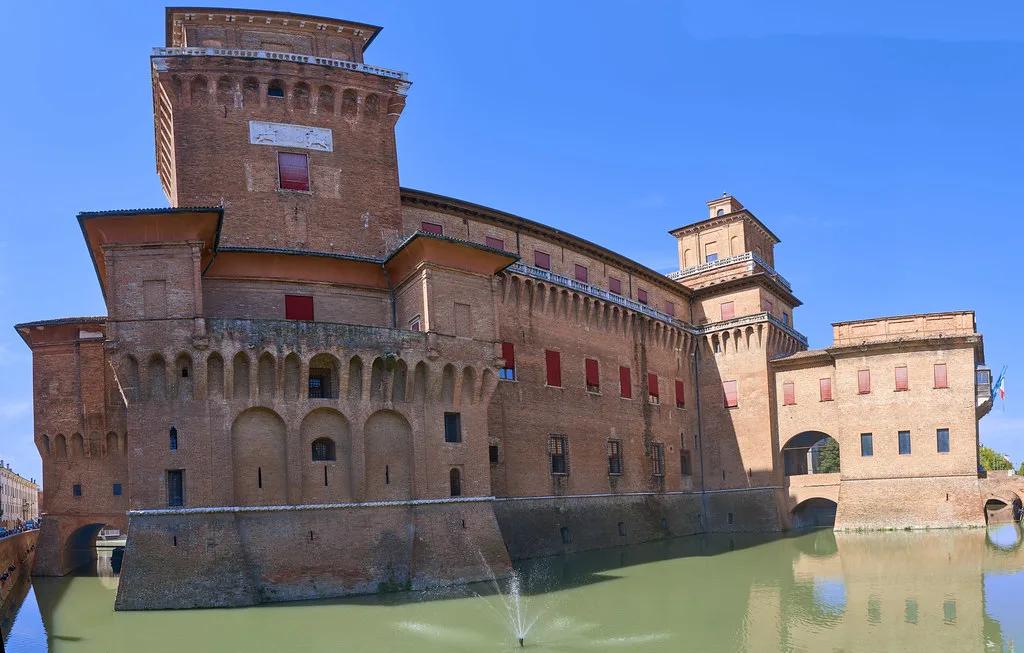
Start at the Castello Estense, the red-brick fortress begun in 1385 and still ringed by a water-filled moat fed by the old Po branch. The courtyards and the exterior walk are freely visible; the museum, chambers and old prisons require a ticket, and the price is set by the operator, so check the castle's own page rather than relying on older blog figures.
From the castle, walk to Piazza Trento e Trieste, where the Cathedral of San Giorgio, the Palazzo Municipale and the Torre della Vittoria stand together. Entering the cathedral costs nothing and offers a cool pause, while the adjacent cathedral museum is a separate visit. Continue into Via delle Volte, a narrow medieval lane of arches that once linked warehouses to artisan workshops, for the most atmospheric stretch of the day.
Free Squares and Exteriors Versus Paid Interiors
Ferrara is generous with things that cost nothing: the cathedral square, the castle courtyards and moat views, the city walls, and the courtyards of palaces such as the Palazzo dei Diamanti. One traveller's account of a budget day notes that everything seen was free, with paid interiors optional. That distinction is worth building into your plan so a tight budget does not mean a thin day.
Paid interiors are where the city's art sits, and each has its own ticket. A museum pass can bundle several sites, but it does not automatically cover every room or every collection in a complex. Read the scope of whatever pass you buy, and remember that house museums and church visits often have separate arrangements.
Palazzo Schifanoia and the Hall of the Months
Palazzo Schifanoia holds the Salone dei Mesi, a secular fresco cycle painted for Borso d'Este by the leading artists of the Ferrarese school, including Cosmè Tura, Francesco del Cossa and Ercole de' Roberti. Seven of the original twelve month sections survive, arranged in three registers that move from court life through astrological deities to the planetary triumphs above. It is the strongest single argument for giving Ferrara an art-focused day.
Standard hours run Tuesday to Sunday from 10am to 7pm, with the ticket office closing at 6pm, and a full ticket is listed at 12 euros with reductions for younger and older visitors. Those figures come from the tourism portal and can change, so confirm on the day. Booking online is offered, which is sensible if the Hall of the Months is your priority.
The frescoes were rediscovered in the nineteenth century after the palace had been put to industrial use, and a later renovation following the 2012 earthquake reopened the hall with new lighting. Allow an hour for the museum if you read the panels, more if you linger. Pair it with the nearby Casa Romei or the Palazzo dei Diamanti rather than trying to see everything on the same ticket.
Palazzina Marfisa d'Este: A Smaller Renaissance Residence
The Palazzina Marfisa d'Este was built around 1559 by Francesco d'Este as a summer residence, and it later passed to his daughter Marfisa, who stayed in Ferrara after the city returned to papal rule. Inside, the refreshed display mixes paintings, ceramics, furniture and coins, and the garden loggia once served as a small theatre and a winter shelter for citrus trees. It is a compact, manageable visit rather than a half-day commitment.
Opening hours are listed as 9.30 to 13.00 and 15.00 to 18.00 from Tuesday to Sunday, closed on Mondays and on 25 December, with the ticket office shutting half an hour before closing. The tourism page lists a full price of 6 euros and a reduced price of 3 euros, with free entry for under-18s, registered guides and visitors on their birthday. Verify before you go, since these conditions are the kind that get revised.
Sant'Antonio in Polesine: A Quiet Cloister Stop
Sant'Antonio in Polesine is the oldest continuously inhabited monastery in Ferrara, founded in 1257 for Beatrice d'Este and her companions, and still home to Benedictine nuns. Visitors enter through the cloister and reach the nuns' choir, where the side chapels carry frescoes of the Giotto school from the early fourteenth century. It is one of the city's most striking interiors and rarely busy.
Visiting is confined to narrow windows: Monday to Saturday from 9.30 to 11.30 and 15.15 to 16.45, with Sunday afternoons only. Entry is by free donation, dogs are not allowed, and the church has documented accessibility limits, with the side altars, chancel and sacristy not accessible. Small groups of up to fifteen can tour, and phoning ahead is advisable.
The monastery's guest house is intended for people seeking silence and prayer, not for ordinary tourist stays, so do not plan an overnight here unless that is your purpose. Day visitors are welcome during the published hours, and the nuns sing Vespers in Gregorian chant at 5pm on weekdays and holidays. That service is a reason in itself to time your stop late in the afternoon.
Walk or Cycle the Walls for a Low-Cost Half Day
Nine kilometres of ramparts enclose the old centre, with gates and passages along the route, and the circuit works equally well on foot or by bicycle. Blog accounts describe walking inside, outside and on top of the walls as a relaxed way to spend a few hours, with grassy banks and long views. It is the cheapest half day in the city and a good fallback if a museum is closed.
Bikes are part of local life, and renting one lets you combine the walls with the Certosa cemetery or the Palazzo dei Diamanti in an afternoon. Keep the wind in mind: the plains are flat but exposed, and the ramparts offer little shelter. Carry water and plan a cafe stop near the castle before you set off.
Toward the Po Delta: Comacchio as a Lagoon Contrast
For a change of scenery, Comacchio offers canals, coloured houses, the Trepponti bridge and a lagoon landscape that belongs to the same UNESCO designation as Ferrara. The documented outing that included it started from Bologna by car and combined it with the walled village of Dozza, so take it as a template rather than a fixed itinerary.
If you go, the Museo Delta Antico occupies the old hospital building and tells the story of the Po Delta and its Roman shipwreck finds. Boat trips into the delta marshes are the other obvious draw, and the tourism site covers the delta park, the valleys and the lidos. Confirm current services with the local information office, since seasonal boat schedules vary.
Ticket Logistics: Passes, Scopes and Separate Collections
Ferrara's tourist card, the MyFE Card, is sold at ticket offices such as the one at the Palazzina Marfisa, where cardholders get free entry to that museum. Holding the card does not mean every collection in every palace is included, and temporary exhibitions often sit outside the standard ticket. Check what each site lists before you assume a single purchase covers the day.
The same rule applies to any combined ticket for the castle and the cathedral museum, and to packages advertised by third-party sellers. Buy from the operator's own page where possible, and keep the confirmation. If a price seems unusually low, it may refer to a past season rather than the coming one.
Timing Traps: Mondays, Midday Gaps and Last Admission
Monday is the main obstacle: the Palazzina Marfisa closes then, and other museums keep their own weekly closing day, so build a Monday around the castle exteriors, the cathedral and the walls rather than a museum list. Sant'Antonio in Polesine opens Monday mornings and afternoons but its Sunday visiting is limited to the afternoon window.
Midday gaps matter too. Several museums shut for lunch, and the last admission rule usually falls thirty minutes before closing, which can catch you out if you arrive late. An afternoon spent walking between a morning museum and an evening service is a sensible rhythm rather than wasted time.
Accessibility and Group Limits to Check Before Committing
Accessibility varies from site to site and should not be assumed. The Palazzina Marfisa is described as fully accessible, with a tactile path and a video guide in Italian sign language, while Sant'Antonio in Polesine has documented limits inside the church. If mobility is a factor, ask each museum directly rather than relying on a general city guide.
Group size is the other constraint. The monastery tour is capped at fifteen people, and some museums offer out-of-hours group bookings with a minimum number of tickets and an advance notice period. For a family or a small tour group, phone or email in advance instead of arriving and hoping.
Suggested Durations, Clearly Labelled as Advice
These are our suggestions, not official guidance. Half a day covers the castle exterior, the cathedral square and Via delle Volte; a full day adds the Hall of the Months and a wall walk; two days let you add the Palazzina, the monastery and a delta outing. Adjust freely to your interests and the season.
Travellers who stay longer often use Ferrara as a base for train trips to nearby cities, and the city's flat geography and compact centre make that easy. If you only have one night, prioritise the frescoes and the castle moat at dusk, and save the delta for a future visit. See our Ferrara Attractions hub for the individual sight guides.
Where to Verify Transport and Current Hours
Rail and bus timetables, ticket rules and journey details belong to the operators, and this guide intentionally avoids quoting them. The regional tourism site's planning pages point to transport information, tourist offices and guided tours, and the local information office can answer questions about current services. Confirm a week before travel and again on the day.
For opening hours, use the museum's own page or the tourism portal's downloadable hours list, both of which are updated more often than third-party listings. Holiday openings exist in Ferrara, including the patron saint's day and national holidays, but assume nothing and check. A five-minute call saves a wasted morning.
Plan a Ferrara Day Before You Look Outward
Ferrara rewards the traveller who gives it a day rather than an hour: the castle moat at sunset, the Hall of the Months, the monastery choir and the wall circuit all sit within a short walk or ride of each other. Build that day first, then decide whether a lagoon outing adds enough to justify the travel.
Treat suggested durations as advice, verify hours and ticket scopes at the source, and keep Monday closures and midday gaps in view. With those checks done, the city and the delta fit together without rushing either.
Frequently Asked Questions
Is Ferrara worth visiting on its own?
Yes. The historic centre is part of a UNESCO World Heritage listing, and the castle, cathedral square, fresco cycle and wall circuit fill a full day comfortably. Many visitors treat it as a stop between Bologna and Venice, but it holds up as a destination in its own right.
How many days do you need in Ferrara?
Two days let you cover the main sights at a relaxed pace, including the Hall of the Months and one Renaissance residence. Three or four days allow time for the monastery, the walls and a Po Delta outing. These are our suggestions rather than official guidance.
What can you do in Ferrara on a Monday?
Several museums close on Monday, including the Palazzina Marfisa d'Este, while Sant'Antonio in Polesine keeps Monday visiting hours in the morning and afternoon. Build the day around free exteriors, the cathedral and the walls, and check each museum's listed weekly closing day before you go.
Do you need to book Ferrara museums in advance?
Booking is offered for the Palazzo Schifanoia and recommended at some smaller sites, and the monastery suggests phoning ahead for small groups. Walk-in entry is often possible, but booking reduces risk on busy weekends and around holidays.
Is the MyFE Card useful for museum visits?
The tourist card can bundle museum entry and also grants free admission at participating sites such as the Palazzina Marfisa. It does not automatically cover every collection or temporary exhibition, so read what each site includes before buying.
What is free to see in Ferrara?
The cathedral square, the cathedral interior, the castle courtyards and moat views, and the city walls are freely accessible. Palace courtyards such as the one at the Palazzo dei Diamanti can also be entered without a ticket, while interiors remain paid.
Can you visit Sant'Antonio in Polesine without staying at the monastery?
Yes. Visitors may enter during the published morning and afternoon windows and see the choir and frescoes for a donation. The guest house is reserved for people seeking silence and prayer, so it is not an option for ordinary tourist stays.
Sources
- Ferrara Terra e Acqua - Ferrara Terra e Acqua
- Ferrara, Comacchio & Dozza in One Day: The Best Day Trip From Bologna
- St. Anthony Polesine - Musei di Ferrara
- Monastero Sant'Antonio in Polesine: retreat in Ferrara - RITRIT
- Monastery of Sant'Antonio in Polesine - Ferrara Terra e Acqua
- Monastery of Sant'Antonio in Polesine - InFerrara
- Museo Schifanoia - InFerrara
- 24 Hours Sightseeing In Ferrara Italy & Nice Places For Food
- to-be-seen
- Palazzina Marfisa D'Este - Musei di Ferrara
- Palazzina Marfisa d'Este - InFerrara
- Palazzina Marfisa D'Este - Ferrara Terra e Acqua
Continue exploring
More guides you'll find useful