Como Neighborhoods Guide: Where to Stay and Wander
Compare Como's neighborhoods for staying and wandering: the old town, lakefront, Borgo Vico, station area and the slopes reached by the funicular.
On this page
Como packs a walled old town, a lakefront promenade and a hillside village into a space you can mostly cross on foot, but where you sleep still decides how your days feel. Picking a base here is a trade-off between convenience, views and cost.
Start with the tourist office if you want a paper map and an events calendar before committing to an area. The Info Point Broletto sits on the ground floor of Palazzo del Broletto and is open every day from 09:00 to 13:00 and from 14:00 to 18:00, according to the Comune di Como.
This guide treats each district as a decision rather than a list of pretty corners: what it gives you, what it costs you in time or money, and how to check the details that change. For individual sights rather than sleeping areas, browse the Como Attractions hub alongside this comparison.
How to Read Como's Geography
Picture the city in layers. The lake runs along one edge, the old town clusters around the Duomo and the Broletto, and the funicular base sits near the edge of the centre. Hills rise behind, with the village of Brunate on the slope above.
That compactness means most visitors can link two or three central areas in a single day without transport. The exception is the climb to Brunate, where the funicular replaces a long uphill walk.
Treat district labels loosely. Como's central areas blend into each other, and the useful distinction is less about postcodes than about whether you are inside the old core, facing the water, near the station or up the hill.
Old Town Around the Duomo and Broletto
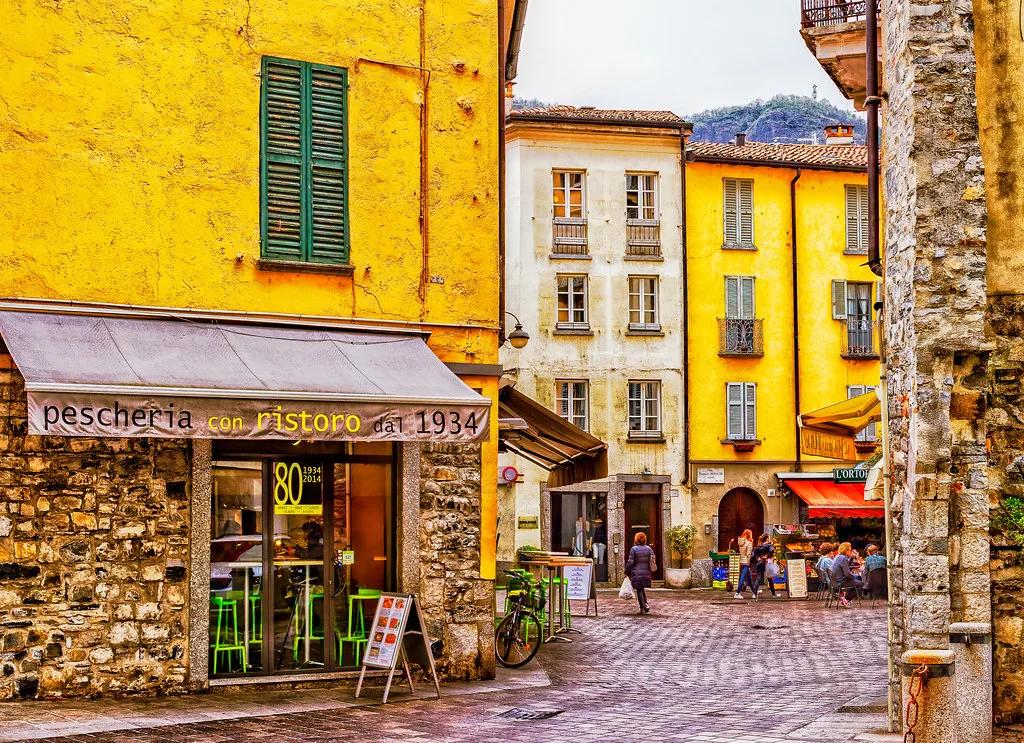
The historic core is the obvious first base. Wandering here means narrow lanes, the Duomo, the Broletto and a steady supply of cafés and shops, all within a short walk of each other.
Central convenience has a price in noise and foot traffic, especially in high season. If you want calm evenings, an inner-old-town address may work against you, and you should weigh that against the pleasure of stepping out straight into the lanes.
One practical reason to start here is orientation: the tourist office inside the Broletto hands out city maps, tourist flyers and an events calendar, and it is open daily from 09:00 to 13:00 and 14:00 to 18:00, per the city's own listing.
The Broletto itself sits by the cathedral square, so a morning spent here naturally folds in the Duomo and the surrounding streets even if you skip the interiors.
The Lakefront and Passeggiata Lino Gelpi
Facing the water changes the character of a stay. The lakefront gives you a promenade for early walks and evening air, and the gardens near the memorial make a natural starting point.
The Passeggiata Lino Gelpi is the lakeside path running from the Villa Olmo area toward the seaplane base, as mapped in route notes for the Como waterfront loop. Walking it is free, and it is the simplest way to understand how the city meets the lake.
The Monumento ai Caduti anchors the waterfront near the Tempio Voltiano and its gardens. The 30-metre tower was inaugurated in 1933 to commemorate Como's World War I dead and bears the names of 650 fallen citizens, as Italia.it describes.
The trade-off for a lake-facing base is straightforward: you gain views and open space, but you are slightly further from the station and the old-town lanes. Whether that matters depends on how much you plan to move around versus how much you want to stare at the water.
Borgo Vico and the Western Edge
West of the centre, toward Villa Olmo and the promenade, the city feels more residential than monumental. This is the zone to consider if you want to be near the lake but away from the densest visitor traffic.
It does not solve everything. You will still walk or take transport into the old town for the Duomo, the Broletto and the main shopping streets, so treat it as a base for lake-oriented days rather than a do-everything location.
For slow travel, the appeal is the rhythm: a morning on the promenade, an afternoon wander back toward the centre, and an evening without the crush of the core. That suits travellers who value walking over ticking off sights.
The Station Area
Arriving by train, the station area is the pragmatic choice for a short stay. You can drop bags, walk into the centre and be on the lakefront without hauling luggage across the city.
The flip side is atmosphere. Station districts tend to trade charm for convenience, and Como is no exception, so book here if logistics matter more than evening ambience.
A reasonable compromise is to stay near the station for one or two nights and move to the old town or lakefront for the rest. That split lets you handle arrival and departure easily while still enjoying the areas you came for.
The Slopes Above: Brunate and the Funicular
Brunate is the village on the hill above Como, reached by a funicular whose lower station sits at Piazza Alcide de Gasperi 4 on the lake side of the old town. One hospitality guide describes the ride as taking about seven minutes at a 55% gradient, with wheelchair-accessible cars carrying one wheelchair per car. These are the guide's figures rather than operator data, so confirm details at the ticket window.
Staying up here changes your rhythm rather than just your view. You ride down for a morning in the city, return to rest, and head out again in the cooler evening, which avoids competing with day-trippers for the last descent.
The honest trade-off is dependence on the funicular. If you want to come and go at any hour without checking a timetable, the slopes may frustrate you; if you want a different pace and a wide view, they reward the compromise.
Museums and Culture as a Neighborhood Decision
Sightseeing in Como clusters neatly, which helps you choose where to stay. The city sells a single online ticket for the Pinacoteca civica, the Tempio Voltiano and the Cattedrale, according to the Comune di Como, so treat those three as one paid outing rather than assuming each has its own separate arrangement.
Note the distinction between free public space and ticketed interiors. The lakefront gardens, the memorial exterior and the streets around the Duomo cost nothing to wander, while the civic collections sit behind that single purchase.
A base in the old town or near the lakefront puts this cluster within easy reach. If museums are a priority, staying central reduces the time you spend moving between them and leaves more of the day for walking.
Walkability Compared
Old town to lakefront is the easiest pairing: a short stroll takes you from the Duomo and Broletto down to the water and the memorial gardens. Most visitors can link these in a single unhurried day.
The station area links to the centre comfortably on foot, which is why it works as an arrival base. Borgo Vico and the western promenade connect to the lakefront naturally but add distance if your plan centres on the old town.
The slopes are the exception, since the funicular replaces the climb. Plan the descent deliberately rather than assuming you will walk down, and check the last departure before you settle into a long dinner up in Brunate.
Budget Trade-offs Without Invented Prices
Rates shift by season and by booking window, so this guide does not quote them. What drives cost in Como is fairly predictable: lake views, proximity to the old town and short stays in peak summer all push prices up.
Check current accommodation rates directly with hotels or booking platforms, and confirm museum ticket terms on the city's own pages rather than relying on older reviews. Third-party sites often carry prices and hours that are out of date.
For the funicular, buy at the ticket window and ask about single versus return fares, since categories can change. Treat any fare quoted on review sites as a snapshot of the year it was written, not as today's price.
Mistakes to Avoid
Booking purely on a lake view is the most common error. Waterfront rooms can sit further from the station and the old-town lanes than you expect, so check the walking distance to the places you actually plan to visit.
Underestimating the climb from the funicular station is another. The upper station opens onto a hillside village, and some addresses sit well above it, so ask your accommodation about the final approach before you arrive with luggage.
Finally, do not treat the sunset descent casually. Queues can build when day-trippers head down together, so plan to descend before the rush or accept a wait at the upper station.
Suggested Half-Day and Full-Day Shapes
These are suggestions, not official itineraries. For a half day, start at the Info Point Broletto for a map, walk the Duomo and Broletto, then follow the lanes down to the lakefront and the memorial gardens.
For a full day, add the lakeside promenade toward Villa Olmo in the morning and take the funicular up to Brunate in the afternoon, returning before the evening rush. That shape pairs the city's two defining features: the water and the height above it.
If museums matter more than views, spend the day between the Pinacoteca civica, the Tempio Voltiano and the Cattedrale on the single civic ticket, then finish with an evening wander through the old town.
Where to Go Next
Once you have picked a base, use a guide to the hidden gems in Como to find the corners that reward slower wandering beyond the obvious squares.
City-comparison readers may also find our Bologna neighborhoods guide useful for seeing how another Italian city's districts differ in character and cost.
If you are weighing several Italian stops, the Turin neighborhoods guide offers a parallel way of thinking about where to stay relative to what you want to see.
Plan Your Visit
Como rewards a decision made on purpose rather than a booking made on a photo. Choose the old town for convenience, the lakefront for space and views, Borgo Vico for a residential feel, the station for logistics or Brunate for a different rhythm.
Confirm the details that change, from museum ticket terms on the city's pages to funicular fares at the window, and build your days around walking rather than racing between areas.
For the sights themselves, the Como Attractions hub and the hidden gems guide take you further once your base is settled. For related planning, see Como Getting Around and Arrival Guide: Trains, Boats, Buses.
Frequently Asked Questions
Which Como neighborhood is best for a first visit?
The old town around the Duomo and Broletto is the simplest first base, because it puts the main squares, the tourist office and the lakefront within walking distance. If views matter more than convenience, the lakefront or the slopes above are worth the trade-off.
Can you walk between Como's old town and the lakefront?
Yes. The historic core sits just above the water, and the walk from the Duomo and Broletto down to the memorial gardens and the Passeggiata Lino Gelpi is short enough to link both areas in one unhurried day.
Is staying in Brunate better than staying in Como's center?
It depends on your priorities. Brunate offers height, cooler air and a different pace, but you depend on the funicular to come and go. Staying in the centre gives you more flexibility for evenings and early starts.
How long does the Como–Brunate funicular take?
A third-party hospitality guide describes the ride as taking about seven minutes. Those figures are not official operator data, so confirm current timing and fares at the ticket window before you rely on them.
Do Como's civic museums share one ticket?
The Comune di Como states that a single online ticket covers the Pinacoteca civica, the Tempio Voltiano and the Cattedrale. Check the city's pages for current terms before you buy, and remember that public spaces such as the lakefront gardens are free to wander.
Sources
Continue exploring
More guides you'll find useful