Best Time to Visit Arezzo to Avoid Crowds: A Season Guide
Use this season guide to pick quieter months in Arezzo, weigh summer heat and August slowdowns, and plan around the Giostra del Saracino crowds.
On this page
Choosing when to visit Arezzo is less about finding a single best month and more about deciding which version of the city you want. The trade-off is straightforward: the quietest weeks do not always coincide with the warmest weather or with the events that bring the city to life. Arezzo also receives noticeably fewer visitors than Florence or Pisa, which means even the busier periods here can feel calmer than a peak day in those cities.
This guide breaks the year into seasons and maps each one to a type of traveller, from first-timers who want comfortable temperatures to culture-focused visitors willing to trade warmth for near-empty fresco viewing. It also flags the specific pressure points, such as the June jousting tournament and the August holiday slowdown, so you can plan around them rather than be surprised by them.
Quick Decision Table: Match Your Season to Your Trip
For a first visit that combines landscape, food and reliable weather, late April through May and September through October are the most straightforward choices. These shoulder periods pair mild temperatures with fewer visitors than midsummer and with restaurants and shops operating normally. Couples prioritising gastronomy and romance often do well in October, when harvest season deepens menus and the crowds thin. Further visitor details appear in Best Time To Visit Province Of Arezzo: Month By Month Weather, Crowds & Tips - Luxury Villa Rental Guide - Exc.
Families who need warmth and pool weather should look at mid-June through mid-July rather than late August, because the Ferragosto period brings Italian holiday crowds and some smaller businesses close. Culture-first travellers willing to pack a layer can choose December for quiet access to the Piero della Francesca frescoes in the Basilica of San Francesco. Each of these windows is a suggestion based on typical seasonal patterns, not an official designation.
Spring (March to May): Fresh Landscapes and Manageable Weekends
Spring arrives gradually in the Province of Arezzo, with the forested hills of the Casentino shifting from grey-brown to vivid green over a few weeks in March. The seasonal guide describes April daytime temperatures across the valley floors as typically between roughly 12°C and 18°C, with cooler nights at higher elevations, and light that flatters the medieval streets and cypress-lined roads. It also reports that Arezzo town is busy on weekends in this period but nowhere near the crush of high summer, making it a comfortable base for exploring the wider area. For wider planning, see Arezzo Attractions: Visitor Guides to 10 Sights.
The same guide notes that May is when local sagre, the village food festivals that anchor rural Italian life, begin in earnest, with celebrations of wild asparagus, truffles and new-season lamb. It also observes that villa pools are not reliably warm enough for serious swimming until late May, so families planning water time should aim toward the end of the season. For a broader picture of the area's quieter corners, the hidden gems in Arezzo guide covers places that stay calm even when the main squares fill.
Early Summer and the Giostra del Saracino: Plan Around, Not Against
June is the pick of the summer months for weather in the seasonal guide, with valley temperatures typically in the mid-20s Celsius rather than the searing heat of July and August. But June also brings the Giostra del Saracino, Arezzo's medieval jousting tournament, which that same guide reports takes place on the third Saturday of June. That single weekend fills the town properly, so anyone who wants to see the pageantry should book accommodation well ahead, and anyone who wants quiet should avoid those dates.
The rest of June is a good compromise: warm enough for long evenings outdoors, with crowds lower than the August peak. Rather than fight the tournament weekend, plan around it. If your dates are fixed by the event, accept higher demand and reserve early; if your priority is calm, shift to the first half of June or wait until September.
July and August: Peak Heat, Ferragosto and the Closure Risk
July and August bring the province's highest temperatures. The seasonal guide reports that the Valdichiana plain can reach the mid-30s Celsius, though the forested Casentino hills are typically several degrees cooler and the Valtiberina catches breezes near the Umbrian border. This elevation contrast is a practical heat-management lever: base yourself higher and travel down to the plain in the cooler parts of the day. The same guide notes that August 15 brings Ferragosto, when Italian families holiday en masse.
The real planning risk in August is not only heat but closures. The seasonal guide notes that some smaller restaurants and artisan shops shut during the Ferragosto period, which catches visitors who assume everything stays open at the height of summer. If your trip depends on a particular workshop or trattoria, confirm directly before you travel rather than relying on a general assumption. For travellers interested in the city's craft heritage, the Arezzo goldsmiths and artisan workshops guide explains what is typically on offer, and it is worth checking hours individually.
Autumn (September to November): Thinning Crowds and Harvest Season
September retains much of summer's warmth, with the seasonal guide reporting temperatures commonly in the low-to-mid 20s Celsius, while crowds thin noticeably after the first week. October brings warmer, more amber light and the beech forests of the Casentino turn colour over an extended period that the guide says receives far less attention than similar displays elsewhere. The grape harvest begins in late September across the Valdichiana and Valdarno vineyards, and olive picking runs through October into November.
Truffle season, especially the prized white truffle from the Valtiberina, peaks between October and December in the seasonal guide, and local restaurant menus shift accordingly. The guide also notes that prices for accommodation generally drop from summer peaks while quality of experience stays high, and that towns such as Cortona, Anghiari and Monterchi feel less pressed by visitors. November turns cooler, roughly 8°C to 15°C by the same account, with rain more likely in the hills, and some smaller agriturismo and rural villa operators close for the season, so check availability carefully before committing. For wider planning, see Arezzo Antiques Fair and Markets.
Winter (December to February): Quiet Frescoes and Reduced Rural Services
Winter is not for everyone, and the seasonal guide is candid about it. According to that guide, January temperatures typically sit around 2°C to 8°C, snow occasionally falls in the higher Casentino and around Anghiari, and days are short. It also warns that some rural accommodation, independent restaurants and smaller attractions reduce hours or close between January and mid-February, so winter requires more checking than summer. For culture-focused travellers, though, the payoff is real.
In December, Arezzo's Christmas atmosphere is genuine rather than staged, and the seasonal guide notes that the absence of summer tourism means you can stand before Piero della Francesca's Legend of the True Cross in the Basilica of San Francesco with far fewer people around. The same guide describes this quiet viewing as an experience of a different order, and it is the strongest argument for a winter visit. Treat winter closures as possibilities to verify rather than fixed rules, and confirm any specific business before building a day around it.
If you are planning a short stay around a specific sight, a One day in Arezzo itinerary can help you sequence the city efficiently, but in winter you should also leave slack for reduced hours. The city's compact centre makes it easy to adjust on the day.
How Shoulder Seasons Change the Crowd Maths
Arezzo is not Florence or Pisa, and that matters. The crowd-avoidance guide notes that Arezzo sees fewer visitors than those cities and makes a satisfying day trip for strolling medieval streets and shopping for antiques. In practice, this means the shoulder seasons here feel even calmer than the same months in the bigger Tuscan centres, and the busiest days in Arezzo may still be quieter than an ordinary weekday in Florence.
That said, shoulder-season value works best when you book with the same discipline as summer, just earlier or later in the calendar. The seasonal guide recommends May, early June, September and October as combining lower demand with fully open restaurants and attractions, with the logistical friction of high season largely dissolving. For repeat visitors it suggests late April and October add depth through food and harvest events that summer cannot match.
Time Your Days, Not Just Your Months
Even in a quieter city, the busiest sights have rhythms. The crowd-avoidance guide recommends early mornings and late afternoons for the smallest crowds, and this holds for Arezzo's main squares and churches. If you want the Basilica of San Francesco without a crowd, plan it for the opening or closing part of the day rather than midday, and check current opening arrangements before you go.
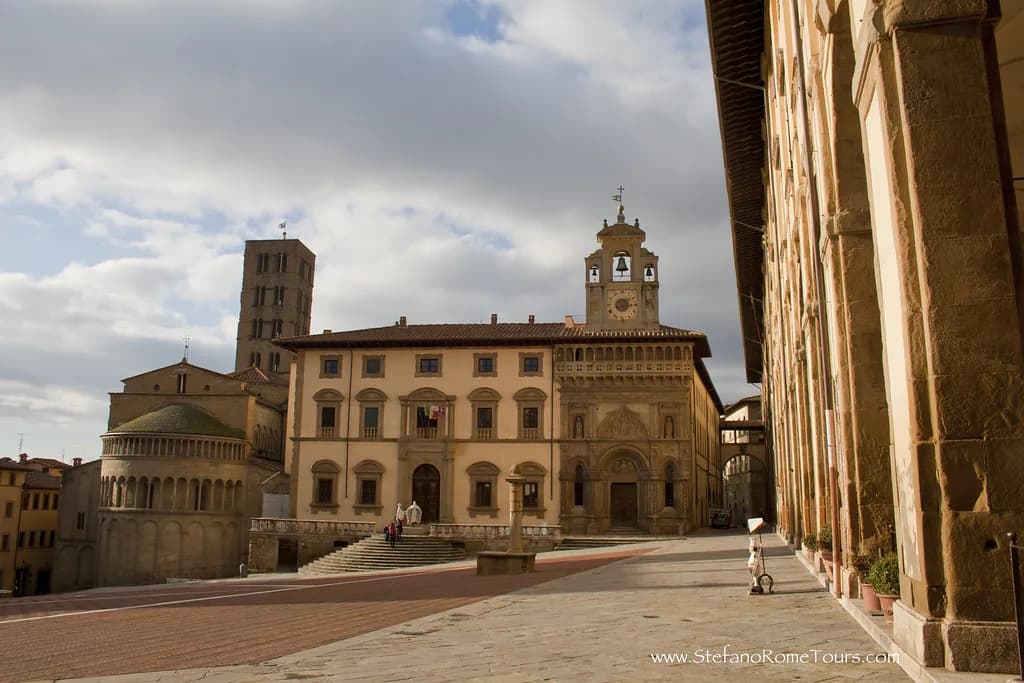
Piazza Grande is the natural crowd barometer. On ordinary days it is a calm place to sit, but when the antiques market is running it fills with stalls and visitors. Use the square as a read on the city's mood: if it is busy, head for the side streets and the hidden gems that stay quiet, and return later.
Using the Antique Market as a Crowd Barometer
The antiques market in Piazza Grande is one of Arezzo's signature experiences, but it is also a recurring event whose dates should not be assumed. The seasonal guide refers to a monthly antique market continuing year-round, yet the safe approach is to confirm the specific edition with the organiser or the city's tourism office before planning a trip around it. The Arezzo antiques fair and markets guide explains what the market typically offers, but it is not a guarantee of dates.
If your trip coincides with a market weekend, expect Piazza Grande and the surrounding streets to be busier, and book accommodation earlier. If your priority is calm, treat market dates as a period to avoid rather than a fixed fixture to chase. Either way, verify before you commit.
Where to Base Yourself to Stay Outside the Busiest Pockets
Basing yourself outside the historic centre can soften the crowd experience without removing you from the city. The crowd-avoidance guide suggests that in busier Tuscan cities, staying on the outskirts or in residential neighbourhoods keeps you connected while reducing daily friction. In Arezzo the centre is compact, so in principle a short walk or local bus ride from a quieter edge puts you in Piazza Grande quickly, though you should check current transport options yourself rather than assume a schedule.
For a more rural base, the province offers hill villages such as Caprese Michelangelo, Pieve Santo Stefano and Chiusi della Verna, which the seasonal guide describes as places where local life continues at its own pace even in August. These are wider context, not substitutes for staying in Arezzo itself, but they give you a quieter rhythm if you plan to explore the Casentino or Valtiberina. For wider planning, see Day trips from Arezzo.
Practical Booking Rhythm: June, May and Winter Differ
Booking timing should follow the pressure point rather than a single rule. For the Giostra del Saracino in June, the seasonal guide advises reserving accommodation as early as you can, because the town fills for that weekend. For May and October, you have more flexibility, but booking a few weeks ahead still helps you get the better rooms and the restaurants you want.
For winter, the task is different: confirm rather than rush. Check that your chosen rural accommodation and any specific restaurant or small attraction will be open, since the seasonal guide notes that some operators reduce hours or close between January and mid-February. If you are building a trip around the Piero della Francesca frescoes, verify access arrangements with the Basilica of San Francesco directly, and keep a flexible second option in case of reduced hours.
Fondazione Arezzo Intour is the destination management foundation for Arezzo, and its site is the place to check official visitor context and contact details as your trip approaches. It publishes destination information and contact details rather than a guaranteed event calendar, so use it as a starting point and confirm specific dates with the named organiser.
Pick the Season That Matches Your Priority
The most useful way to choose a time for Arezzo is to name your priority first. If it is comfortable weather with manageable crowds, aim for May or September, or late April and October for deeper food culture, following the seasonal guide's own recommendations. If it is warmth for a family, choose mid-June to mid-July and treat the tournament weekend and Ferragosto as periods to plan around.
If it is quiet culture, December offers the frescoes with far fewer people, provided you accept short days and verify rural opening hours. Whichever season you choose, confirm the specific event dates, market editions and individual business hours before you book, because Arezzo's quieter character does not remove the need for basic verification.
Frequently Asked Questions
What is the best month to visit Arezzo for good weather without peak crowds?
May and September are the most reliable combination of mild, settled weather and lower visitor numbers, according to the seasonal guide; both sit outside the July and August peak, restaurants and shops operate normally, and the landscape is at a seasonal high. Late April and October are strong alternatives for travellers more interested in food and harvest season than in pool weather.
How hot is Arezzo in July and August, and where can visitors find relief?
The seasonal guide reports that the Valdichiana plain can reach the mid-30s Celsius in July and August, which is genuinely hot. The surrounding hills offer relief: the forested Casentino is typically several degrees cooler than the valley floor, and the Valtiberina catches breezes near the Umbrian border. Visitors can also follow the Italian rhythm of active mornings, long lunches and evening walks.
Is Arezzo worth visiting in winter?
For culture-focused travellers, yes. December in particular allows quieter viewing of Piero della Francesca's Legend of the True Cross in the Basilica of San Francesco, which the seasonal guide describes as far busier in summer. Expect short days and cooler temperatures, and check that any rural accommodation or specific restaurant you plan to use is open, since the guide notes some reduce hours or close between January and mid-February.
When does the Giostra del Saracino take place?
The seasonal guide reports that the Giostra del Saracino takes place in Arezzo on the third Saturday of June. Because event schedules can change, confirm the specific edition with the organiser before booking travel around it. If you want to avoid the crowds it brings, choose dates outside that weekend.
Do restaurants and shops close in August in Arezzo?
The seasonal guide notes that some smaller restaurants and artisan shops close during the Ferragosto period around August 15, when Italian families holiday en masse. Not everything closes, and larger businesses typically remain open, but if a particular workshop or trattoria is central to your trip, confirm its hours directly before you travel.
Sources
Continue exploring
More guides you'll find useful