Amalfi Neighborhoods Guide: Where to Stay in Amalfi Town
Compare Amalfi's central centro storico with quieter hillside hamlets like Pogerola, Lone and Vettica, and weigh steps, parking and evening transport.
On this page
Most Amalfi Coast planning conversations start with the wrong question. Deciding to base yourself in Amalfi rather than Positano or Ravello settles the big geography, but it does not settle your days, because the town climbs from a flat waterfront into a ravine and then up onto terraced hillsides. The base you choose inside Amalfi determines how many stairs you climb before breakfast and whether dinner ends with a walk or a lift.
The town also works unusually well as a transport hub. Amalfi is the main bus hub on the coast, with direct services toward both ends, and its marina offers ferry connections to other coastal towns and to Capri. That central position is why the historic core often makes a practical first base.
How to Read Amalfi's Geography Before You Book
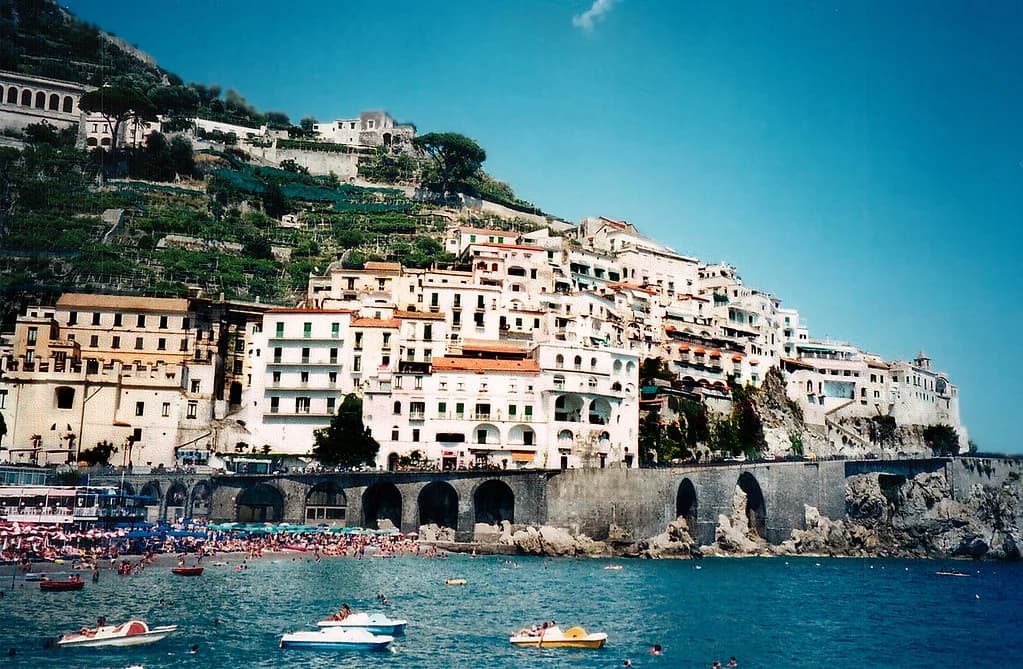
Picture three layers. At sea level sits the waterfront and the lanes around Piazza Duomo, where the cathedral, shops, cafés and ferry landing concentrate. Above and behind the town, the Valle dei Mulini runs inland past the ruins of centuries-old mills along the Canneto River, and higher still the land steps up into hamlets that look down on the coast.
That vertical layout is why two hotels a few hundred metres apart can feel like different towns. A room near the duomo puts crowds and boats on your doorstep; a room up a hillside lane trades that convenience for quiet and a climb. Before comparing addresses, decide which of those two you actually want at seven in the evening.
Map distances mislead here. The Amalfi Coast towns are linked largely by the single Amalfi Drive road, which runs from Positano to Vietri sul Mare; one source notes the coast is small enough that any base lets you reach a beach, a terrace and neighbouring villages. The practical difference is not how far you go but how easily you get in and out of your own front door.
Centro Storico: Piazza Duomo, the Cathedral and the Ferry Landing
The historic centre is the version of Amalfi most travellers picture: a maze of narrow lanes along the floor of a steep ravine, opening onto quiet squares and airy viewpoints. Staying here means the Duomo di Amalfi, the paper museum and the waterfront are all within a short wander, and valley trails begin just beyond town.
The trade-off is daytime pressure. Day-trippers pour in to see the cathedral, and midday around Piazza Duomo can feel like an invading crush. Staying centrally flips that: you get the early mornings and evenings when the town is peaceful again, and you can head out to explore once the coaches arrive.
For a first visit focused on ferries, buses and short day trips, this is the least friction you can buy. It is also the busiest and often the most expensive corner of town, and steep climbs are part of the deal. Book a room close to the level you will actually use rather than trusting a pin on a map.
The Waterfront and Southern Edge Toward Atrani
Below the duomo, the flat waterfront strip is where you feel the sea rather than the ravine. Beaches here are decent rather than exceptional, which the source is candid about, but a seafront room shortens every walk to the ferry and removes a daily climb.
South of the centre, the edge of town runs toward Pastena and on to Atrani, a maze-like village an easy walk away. Staying on this side suits travellers who want the beach and a coastal stroll at the end of the day, and who accept that the cathedral square is a short walk uphill rather than outside the door.
Treat specific claims about Pastena with care. Descriptions of its character, amenities or step counts vary, so ask your host directly about the final approach, lift access and how luggage reaches the door before you commit.
Hillside Hamlets: Pogerola, Lone, Vettica and Tovere
Above and around the centre sit the hamlets of Pogerola, Lone, Vettica and Tovere, each on higher ground. They share one broad advantage: distance from the day-tripper crush, cooler air and views back over the coast. They also share one broad constraint: the last stretch is usually uphill, often on foot.
The evening is where this decision bites. Most transport around the coast stops relatively early in the evening by one traveller's account, so treat late services as thin rather than guaranteed. Confirm the last realistic connection to your hamlet before you book a dinner in the centre.
Taxis exist but are costly, and relying on them nightly quickly erases the savings of a cheaper hillside room. A car helps on paper but brings its own problem: parking in Amalfi and Positano is extremely limited and expensive in high season. Ask any hillside property whether parking is included, guaranteed or simply nearby.
Tovere sits furthest out on the hillside, which makes it the calmest option and the most car-dependent. If your trip is built around slow mornings, a terrace and a book rather than ferries and day trips, that trade can be worth it. If you plan to move every day, it will cost you time.
Access Check: Steps, Baggage and Narrow Lanes
Amalfi is built on slopes, and the centre includes steep climbs; hillside accommodation adds more. Before booking, ask three questions: how many steps from the nearest road, whether anyone helps with bags, and whether a lift reaches your floor. Baggage handling exists at some properties, but not everywhere, so confirm it rather than assume.
Driving brings a second set of constraints. The Amalfi Drive is narrow and slow in peak season, and a large car is a liability rather than a comfort. If you intend to keep a vehicle, book the smallest one available and confirm your accommodation's parking arrangement in writing before you pay.
Mobility needs deserve a direct conversation rather than an algorithm. Ask for photographs of the approach, the entrance and the bathroom, and be explicit about stairs. A property that suits most guests may still be unworkable for someone with limited mobility, and hosts know their own building best.
Getting Around Without a Car
Basing yourself centrally in Amalfi means fewer transfers. Buses run direct from Amalfi to both sides of the coastline, so you avoid changing services and waiting around, and the marina adds ferry connections to other towns and to Capri.
Ferries can also spare you the coast road entirely, and they are a practical option between Positano, Amalfi, Sorrento and Capri. Schedules shift with the season and the weather, so check the operator's own timetable in the days before you travel rather than planning around a timetable you read months earlier.
For nearby comparisons: Ravello is a short bus ride up from Amalfi, while Minori and Maiori lie east on flatter ground with longer beaches. Sorrento, further west, is better connected for trains to Naples, Pompeii and Herculaneum, which is why it suits some itineraries better than a coastal village.
Everyday Anchors Near the Centre
The Duomo di Amalfi anchors the historic core, a mosaic-clad cathedral that carries traces of the town's maritime past. Nearby, the Museo della Carta covers the papermaking trade, and the Valle dei Mulini walk passes the mill ruins along the Canneto River.
This cluster is the argument for staying central: you can see the sights before the crowds build, then use the middle of the day for a boat or a bus. An Amalfi one-day itinerary can cover the core, though staying two nights lets you walk the valley and still have an evening in town.
Walking the old town lanes properly takes an hour or two, and a self-guided walk is a good way to learn the layout so you know which slopes you are committing to each day.
Should You Stay in Amalfi at All?
Amalfi suits travellers who want a beautiful base with real substance: history, museums, hiking from town and direct transport in both directions. It is the one place on the coast where a full day without leaving town is easy to fill. The cost is midday crowding and a centre that is not cheap.
Positano is more dramatic and more expensive, with stairs everywhere and heavy summer crowds. Ravello is elegant and tranquil but remote and costly, which makes getting elsewhere time-consuming. Sorrento is a working town with year-round businesses, flat walking and good links to Pompeii and Naples, but less of the village charm.
Two nearby alternatives deserve mention. Minori and Maiori offer flatter ground, longer beaches and lower prices than the famous towns, at the cost of polish. Vietri sul Mare, at the eastern end, is known for ceramics and has a quieter atmosphere than Positano or Amalfi, with lower prices.
Suggested Stay Lengths by Travel Style
These are suggestions, not rules. With one full day, stay central and cover the cathedral, the paper museum and the waterfront on foot; add an evening stroll once the day-trippers leave. That is the version of Amalfi most people can manage without a car.
With two or three days, split the time: one day in town and one day moving by ferry or bus, plus a morning in the Valle dei Mulini. An Amalfi two-day itinerary covers the core and one excursion comfortably, and a third day opens up a hike on the Valle delle Ferriere side of the valley.
With four or more days, a hillside hamlet becomes viable because you are not commuting into the centre daily. Build in one full slow day with no plan except lunch and a view, and check how you will get home after dark before you commit to that dinner booking.
Booking Checklist Before You Reserve
Ask four things of every property: the exact approach and step count, whether baggage help is available, the parking arrangement if you have a car, and the realistic late-evening transport option. Get answers in writing and be specific about arrival time and luggage.
Check the season too. Much of the coast's tourist economy runs from roughly spring to autumn, with many hotels and restaurants closed in winter, so shoulder-season trips need accommodation confirmed before flights. Late October to Easter needs particular care.
Finally, sanity-check the shape of your trip against the room. If your days end with a ferry and dinner in the centre, stay central. If they end with a glass of wine on a terrace and an early night, a hillside hamlet is not a compromise but the point.
A Decision Framework, Not a Winner
Start with how you move, not how the photos look. If you will use buses and ferries daily, book the historic centre near Piazza Duomo and accept the midday crowds in exchange for quiet mornings and easy evenings. If you will have a car and want stillness, look up the hillside and confirm parking and the final approach in writing.
Between those two, the waterfront edge and the southern side toward Atrani offer a middle path: flat walks, sea air and the cathedral still reachable on foot. Wherever you land, ask about steps, bags, parking and evening transport before you pay, then let the rest of the trip stay flexible.
Frequently Asked Questions
Where should a first-time visitor stay in Amalfi town?
For most first visits, the historic centre around Piazza Duomo makes the most sense. Buses run direct to both sides of the coast, ferries connect onward, and the cathedral and waterfront are close. The trade-offs are midday crowds, higher prices and steep climbs, so ask about the exact approach before booking.
Can you stay in Amalfi without a car?
Yes, especially in the centre, where buses run direct to both sides of the coast and ferries connect to other towns. If you choose a hillside hamlet such as Pogerola, Lone, Vettica or Tovere, check evening connections carefully before booking, and confirm with your host how you would return after dinner.
Which parts of Amalfi are quietest at night?
The hillside hamlets above town, such as Pogerola, Lone, Vettica and Tovere, are generally removed from the evening bustle. The centre becomes calmer once day-trippers leave, but it remains the liveliest option. Ask your host what the immediate surroundings are like after dark rather than assuming.
Is parking a problem in Amalfi town centre?
Parking is very limited and expensive in high season, and the coastal road is narrow and slow. If you keep a car, book the smallest available and confirm your accommodation's parking arrangement in writing, including whether the space is guaranteed or simply nearby.
How many days do you need based in Amalfi town?
Two nights covers the cathedral, the paper museum and the waterfront at an easy pace, plus one excursion by ferry or bus. Three or four nights adds a valley walk and a slower day. These are suggestions, not official guidance, and depend on how much you want to move.
Sources
Continue exploring
More guides you'll find useful