Piazza dei Signori Treviso: Guide to the City's Main Square
Piazza dei Signori is Treviso's central square, framed by the Palazzo dei Trecento and arcades with cafe tables. See what to notice and where to walk next.
On this page
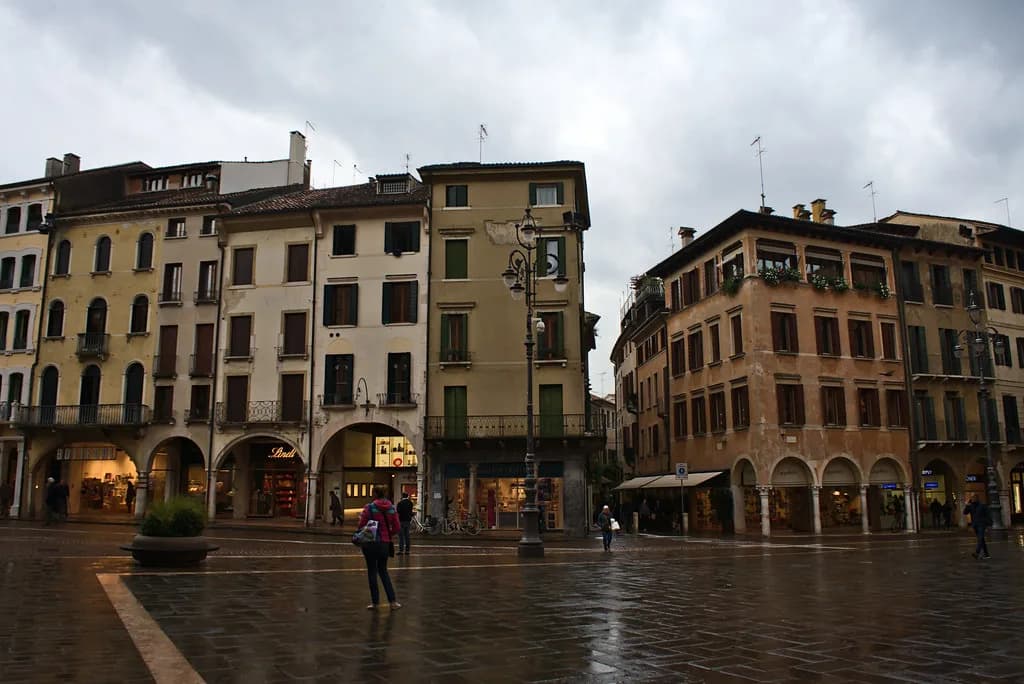
Piazza dei Signori is the square most descriptions treat as Treviso's main square, and it is easy to see why: it is framed on one side by the great brick mass of the Palazzo dei Trecento, the thirteenth-century council hall whose open loggia is still used as a covered public space. On the other sides, continuous porticoes carry cafes whose tables spill into the open square. That mix of civic architecture and everyday sitting-about is what makes the place worth more than a photograph.
This guide stays on orientation: what frames the square, how its civic and social lives share the same space, and where you end up if you keep walking. Variable details such as cafe menus, prices and opening times are left for you to check on the spot, because the available sources do not fix them.
Why the Square Sits at the Centre of Treviso
The square reads as a room made by civic power rather than a random gap in the street plan. The Palazzo dei Trecento anchors one side and its loggia still serves as covered public space, while porticoes run along the surrounding sides where the cafes set out tables. Standing roughly in the middle, you can take in the whole arrangement at once.
Its name refers to the palaces of Treviso's old seignory that frame the space, which is why the architecture feels formal and enclosed. For a visitor, that means the square is an ensemble rather than a single monument: circle it once, look up, then choose the side that interests you. Treat it as somewhere to slow down, not a checklist item. Further visitor details appear in Piazza dei Signori site features - Goparoo.
Reading the Buildings Around the Square
Most accounts put the Palazzo dei Trecento, also called the Palazzo della Ragione, at the centre of the description, and its loggia is the part you will actually use, since it gives shade and shelter along the edge of the square. Around it stand the Palazzo del Podesta with the Civic Tower, and the Palazzo Pretorio with its seventeenth-century facade. Together they explain the square's enclosed, official character.
The Torre Civica is the medieval bell tower and, in the square's highlights, the one truly old vertical element in the piazza. It is the thing to look up for on arrival, since everything else around you is horizontal arcade and roofline. If you are composing a photograph, the tower gives the square an anchor the porticoes alone cannot. Further visitor details appear in Piazza dei Signori site features - Goparoo.
Civic Life and Cafe Tables in the Same Space
What sets this square apart from a purely monumental one is that its roles sit stacked rather than separate. The loggia of the Palazzo dei Trecento remains a covered public space, while the porticoes shelter cafe tables along the sides. The same stretch of pavement can be a civic threshold, a place to wait out rain and a spot to sit with a coffee.
Practical advice for that side of the square: choose your cafe on arrival rather than from a guide. Seating, menus and prices shift with the season and are not published in any dependable fixed form, so compare what is actually out and ask before sitting down. The setting itself costs nothing to enjoy while you decide.
User-contributed notes on Komoot describe the piazza as the city's cultural, historical and social centre and a meeting point for Treviso residents. Read that as a steer on atmosphere rather than a schedule: it tells you the square is lived-in, not when anything happens there.
The Exits That Matter: Calmaggiore, the Duomo and the Canals
The most useful thing to learn in Piazza dei Signori is which way to leave it. Calmaggiore runs from the square toward the Duomo, giving a clear line into the cathedral quarter, while the canals and the fish market lie a few streets in the other direction. Knowing both lets you sequence a walk without retracing the arcades.
If you want a quieter second half to the outing, head for the water. Treviso's canal corners reward a slower pace, and our guide to the hidden gems in Treviso covers the smaller, easily missed places that suit an unhurried afternoon. Pairing the square with the canals gives you contrast: civic formality first, then residential calm.
Whichever way you go, the square stays close enough to return to later, which is why it works as a base for a walk rather than a single stop. General descriptions give the layout but not step-by-step wayfinding, so confirm directions locally. The Canale dei Buranelli area is the kind of water-side detour that fits naturally before or after the piazza.
How Long to Give the Square
There is no official visit duration for a public square, so this is an editorial suggestion, not an operator figure. Budget roughly twenty to thirty minutes to walk the perimeter, look up at the Torre Civica and read the Palazzo dei Trecento's loggia, and add time if you plan to sit under the porticoes. That is enough to understand the square without making it a task.
For a square-centred walk, a sensible shape is to arrive through the side streets, circle Piazza dei Signori once, take Calmaggiore toward the Duomo, then loop back through the lanes toward the canals and fish market. That keeps the square as the hinge rather than the whole outing. For more nearby sights, browse the Treviso Attractions collection.
What to Confirm on the Ground
Some things about the square cannot be pinned down in advance, and pretending otherwise wastes time. Cafe names, prices and hours change and should be read from the establishment itself. Events, markets or stalls on the square are not documented in the available sources, so check the Comune di Treviso's site or local notices on the day rather than assuming a programme.
Practical arrangements such as parking and local bus routes are best verified with the city or the local tourism portal rather than a general guide, since lines and restrictions change. The Treviso information portal carries city-level listings and orientation material, but it is not a live timetable, so confirm anything time-sensitive directly.
Avoid attaching events, exhibitions or seasonal fairs held elsewhere in the province to this square unless a current notice says so. Treviso's calendar moves, and a listing for a museum show or food festival has nothing to do with the piazza unless it names it. Check the venue before redirecting your day.
Use the Square as Your Starting Point
Piazza dei Signori rewards a short, deliberate visit: walk the arcades, look up at the civic tower, read the Palazzo dei Trecento, then choose an exit. Its value is as a hinge for the historic centre, not a monument to be studied for an hour. Visit it early in your trip so you can return later with a sense of the city's shape.
Leave the variable details, such as where to sit and what is on, for the moment you arrive, and confirm anything time-sensitive with the city's own channels. Plan around the architecture and the two main exits, and the square will do the rest.
Frequently Asked Questions
Why is Piazza dei Signori considered the heart of Treviso?
It is described as the square at the centre of the city's civic life, with the Palazzo dei Trecento on one side and porticoes around the rest. Civic, social and cafe life share the same space, which is what gives the square a central role beyond any single monument.
Which buildings frame Piazza dei Signori?
The Palazzo dei Trecento, also called the Palazzo della Ragione, has an open loggia still used as covered public space. Around it stand the Palazzo del Podesta with the Civic Tower and the Palazzo Pretorio with its seventeenth-century facade. The Torre Civica is described as the one genuinely old vertical element in the square.
Is there an entrance fee to visit the square?
Piazza dei Signori is a public space in the historic centre, entered like any street there. Cafe seating or nearby ticketed interiors are separate arrangements with their own conditions. If you need certainty about a specific interior, check with the venue or the city.
Where can I walk next from the square?
Calmaggiore leads from the square toward the Duomo, while the canals and the fish market are a few streets in the other direction. Either route lets you build a loop through the centre without walking the same arcades twice.
How long should I spend in Piazza dei Signori?
There is no official duration for a public square. As an editorial suggestion, allow about twenty to thirty minutes to walk the perimeter and look at the loggia and tower, longer if you sit under the porticoes. Add time for whichever exit route you choose.
Sources
Continue exploring
More guides you'll find useful