Palazzo dei Trecento Guide: Treviso's Civic Hall on Piazza dei Signori
See Palazzo dei Trecento from outside on Piazza dei Signori in Treviso. Learn what it is, how to walk there and why interior access needs checking.
On this page
Piazza dei Signori is the square where Treviso has long conducted its public life, and the building that gives the space its weight is the Palazzo dei Trecento. Its open loggia and brick battlements make it the first thing many visitors notice, even before they know its name. This guide leads with the square walk itself, treats indoor access as something to confirm locally, and does not borrow details from Verona's square of the same name.
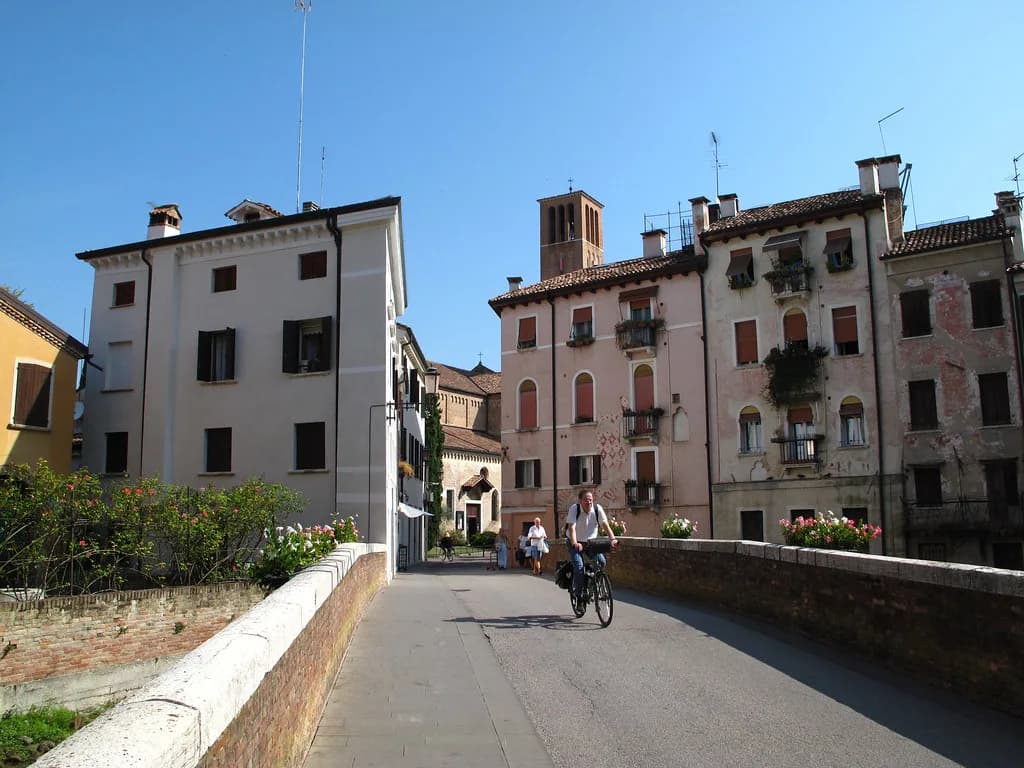
The building is best understood as part of a group, not a standalone monument. The square is framed by several palaces, including the Palazzo dei Trecento, the Palazzo del Podestà and the civic tower beside it, and the arcades below them shelter cafés and passageways. That ensemble is what repays slow looking, and it is a natural stop on a broader route through Treviso.
What the Palazzo dei Trecento Is
The Palazzo dei Trecento was built as a council hall for the city's governing bodies, a function that explains its broad, fortress-like footprint. ViaggiArt notes that the palace was constructed around 1185 as a hall for meetings of various organs of city government, and that it suffered serious damage from a bombing in 1944. That helps a visitor read the building correctly: it is not a palace in the residential sense, but a civic hall whose job was to hold assemblies.
Its position at the centre of the square is deliberate. The name Piazza dei Signori refers to the lords or governing authorities who held power here, and the palaces around the space were the seats of that authority. Standing on the square, you are looking at a compact map of medieval and Renaissance civic life, with the council hall as its centrepiece.
A useful distinction for planning is that the public square and the building's interior are different things. The square is open civic space; the palace has served as an exhibition venue, but the sources here do not establish current open hours, ticket arrangements or tour schedules. Plan the square first and treat anything indoors as a separate question to resolve on the spot.
Reading the Exterior: Loggia, Battlements and the Civic Tower
The feature most often mentioned is the open loggia on the ground floor, still used as a covered public space, with the arcades around the square continuing that sheltered rhythm. Above it, the brick mass rises to battlements that give the building its castle-like silhouette. A good approach is to stand back near the edge of the square first and take in the whole facade, then move in to see how the arcades connect the ground level.
The civic tower beside the palace is the square's genuinely old vertical element, and it is the easiest landmark to orient yourself by. Together with the palace, it forms the visual anchor that appears in most descriptions of the square. If the loggia is in use for an event or is closed off, the exterior still reads clearly from a few steps away.
If you want to trace the city's medieval layers before or after the square, the Musei Civici Treviso publish their sites and exhibitions, and the Santa Caterina complex is a walkable stop nearby. Use their published pages to confirm what is on rather than assuming a particular palace interior is open.
The Rest of the Square: Palazzo del Podestà and the Surrounding Palaces
The Palazzo dei Trecento does not stand alone. The Palazzo del Podestà, with its thirteenth-century civic tower, and the Palazzo Pretorio are among the structures that frame the square, creating the enclosure that makes it feel like an outdoor room. Walking the perimeter once is a simple way to see how the different facades meet at the corners and how the arcades flow around the space.
The architecture mixes Romanesque, Gothic and later elements, which is part of the pleasure of standing in one spot rather than rushing between facades. Look for the shifts in brickwork and window shape as you move around. The square is a public place, so there is no ticket to enter it, and you can visit at any hour that suits your walk.
Cafés and shops line the arcades, and they are a practical way to pause without committing to a full meal. The Treviso tourism portal maintains general visitor information and event listings, which is useful if you want to check what might be happening near the square during your stay.
Is the Interior Open? What to Confirm Before You Go
There is no reliable published confirmation here that the palace interior or loggia is routinely open to visitors, and no ticket or opening-hours information is given. That is not a reason to skip the square, but it is a reason to arrive with the exterior as your plan A. Ask at a local tourist information point or check the municipality's channels on the day rather than relying on older blog posts, which may describe a past exhibition as if it were permanent.
The Comune di Treviso website is the most appropriate place to check for official notices about civic buildings and events, though the portal is a general civic-services hub rather than a visitor guide. If a specific exhibition or opening is announced, confirm the dates and any entry conditions there before you build your day around it.
One common confusion to avoid is with Verona. Verona also has a Piazza dei Signori, with its own Dante statue and Scaliger tombs, but those details belong to a different city. Treviso's square and the Palazzo dei Trecento are their own ensemble, and guides that mix the two will send you looking for landmarks that are not here.
Approaching on Foot: From the Duomo, via Via Calmaggiore or the Canals
The most natural approach is from the Duomo end of Via Calmaggiore. ViaggiArt describes Via Calmaggiore as the main street of the historic centre, connecting Piazza del Duomo to Piazza dei Signori and following the line of the Roman cardo maximus. Walking it gives you a straight, signposted route and a sense of arrival as the street opens into the square.
From the canal side, a route through the Buranelli area and the fish market island brings you into the centre from a different angle, with the water and porticoes as a contrast to the formal square. The Marcadoc itinerary links Ponte San Martino, Piazza dei Signori, Via Calmaggiore and the Duomo, then continues to Piazza San Vito and the Buranelli canal, which is a useful sequence if you want one continuous walk rather than a series of separate stops.
Allow a short, labelled suggestion of a few minutes to cross the historic centre on foot, but treat that as a planning estimate rather than an official time. The walk is flat and central, and the main challenge is choosing which side streets to take.
What to Pair with the Square
The Fontana delle Tette, the small fountain near Piazza San Vito, and the porticoed Buranelli canal are within a few minutes of the square and make a natural extension to the walk. They are modest sights rather than major monuments, so pair them with the square rather than making them a separate expedition. For a wider list of quieter corners and overlooked stops, the hidden gems in Treviso guide is a useful companion.
The Musei Civici Treviso run the Santa Caterina and Luigi Bailo museums, and their official site publishes current exhibitions, opening days and access information. If you want a paid, ticketed art stop to balance the free square, check their pages for what is on during your visit and how to reach the museums on foot. Tuscany Now & More notes the Museo di Santa Caterina holds the Tommaso da Modena fresco cycle and other works, which gives a reason to build in time for the collection rather than just passing the door.
The fish market on the Isola della Pescheria is another local stop that rewards an early visit, and it sits naturally on a canal-side loop back toward the square. Check the market's operating days locally, since schedules are not fixed in the sources consulted here.
Practical Notes for Seeing the Palazzo dei Trecento
Think of the square as free public space and the palace interior as unconfirmed. That framing keeps expectations realistic and avoids disappointment if the building is closed or in use for an event. The exterior, the loggia from outside, and the surrounding arcades can all be seen without a ticket.
A suggested half-hour to an hour is enough to walk the square, look closely at the palace facade and the civic tower, and take a coffee under the arcades. That is a suggestion for pacing, not an official visiting time. If you add the Duomo, Via Calmaggiore and the canal side, allow a morning or an afternoon rather than trying to squeeze it into a single stop.
Treviso is compact and pedestrian-friendly in the centre, and the square is easy to reach on foot from the station side. The wider Treviso Attractions hub can help you fit the palace into a route through the city's museums, churches and waterways.
A Civic Hall Best Seen from the Square
The Palazzo dei Trecento is not a museum you tick off; it is the stern, brick centre of a square that still works as a public living room. Approach it on foot through Via Calmaggiore or from the canals, read the loggia and battlements from outside, and let the surrounding palaces and tower complete the picture. Confirm any interior access locally, and keep the walk flexible so the square can be the destination rather than a quick photo stop.
If you want to go deeper into the city's art after the square, the civic museums are the logical next stop, and their official pages will tell you what is actually on. Either way, the square itself rewards the time you give it.
Frequently Asked Questions
Is the Palazzo dei Trecento open to visitors inside?
There is no reliable confirmation in the available sources that the interior is routinely open, and no verified ticket or opening-hours information. The palace has served as an exhibition venue, but you should check with local tourist information or the municipality on the day rather than assuming it will be open.
Do you need a ticket to see Piazza dei Signori?
No. The square is public civic space and is free to walk through. Any museum or exhibition in the surrounding buildings may be ticketed separately, so check the venue's own information before you plan on going inside.
How long should you spend at the Palazzo dei Trecento and the square?
A suggested half-hour to an hour is enough to see the facade, the loggia and the civic tower, and to sit under the arcades. That is a pacing suggestion rather than an official visiting time, and a longer walk linking Via Calmaggiore and the canals will take more of a morning or afternoon.
How do you walk to Piazza dei Signori from the Duomo?
Take Via Calmaggiore, the main street of the historic centre, which connects Piazza del Duomo to Piazza dei Signori. It is a straightforward walk and a good way to arrive at the square from the cathedral end of the city.
What else is within a few minutes of the square?
The Fontana delle Tette near Piazza San Vito and the Buranelli canal are a short walk away, and the civic museums at Santa Caterina are also within the historic centre. These make a natural extension to a walk around the square.
Is Treviso's Piazza dei Signori the same as Verona's?
No. They are different squares in different cities. Verona's square has its own landmarks, such as the Dante statue and Scaliger tombs, which do not belong to Treviso's square or the Palazzo dei Trecento.
Sources
- Hotel Treviso Alberghi bed and breakfast B&B ristoranti treviso agriturismi
- myPortal | Comune di Treviso
- Treviso Travel Guide - Reasons to Visit this City Near Venice | Tuscany Now & More
- A slow trip to Treviso, the treasure chest of good living - Marcadoc
- Treviso: what to see and what to do | ViaggiArt
- Piazza dei Signori site features - Goparoo
- Platz der Signori – Wander- & Radrouten | Komoot
- Musei Civici Treviso - Sito Ufficiale dei Musei civici di Treviso
Continue exploring
More guides you'll find useful