Castello del Buonconsiglio Guide: Torre Aquila and What to See
Plan a visit to Trento's Castello del Buonconsiglio: what each wing holds, why Torre Aquila's Cycle of the Months needs its own timed slot, and how long to allow.
On this page
The Castello del Buonconsiglio is not a single castle but a cluster of buildings added over roughly five centuries, sitting on a rocky rise at the edge of Trento's historic centre. That matters for planning: you are choosing between a general museum visit and a separately managed climb to the Torre Aquila, and the two shape your day differently.
Settle the tower first. The Cycle of the Months frescoes are reached on a timed, capacity-limited basis to protect the fragile paintwork, so a fixed slot can anchor everything else you do in the complex. General admission and tower access are best treated as separate questions until the museum confirms otherwise.
Orientation: How the Complex Stacks Up
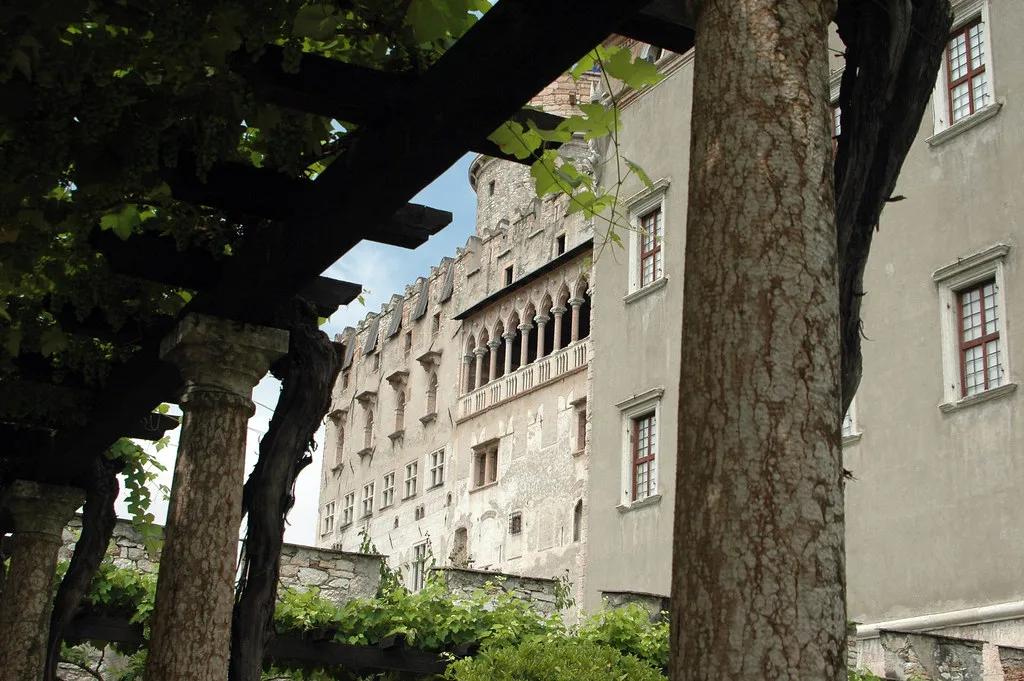
The oldest piece is Castelvecchio, the thirteenth-century core with its cylindrical tower and fortified walls. The Magno Palazzo was added in the sixteenth century under Prince-Bishop Bernardo Clesio and is the Renaissance showpiece, while the Giunta Albertiana, built in the late seventeenth century, links the medieval and Renaissance sections.
Two towers carry the fresco highlights: Torre Aquila with the Cycle of the Months and Torre del Falco with a sixteenth-century hunting cycle. A practical route is to enter through the medieval core, cross into the Renaissance palace, and keep the tower slot as the fixed point you build the rest around.
Do not confuse the Trento complex with Castel Thun, which is a separate provincial site in Vigo di Ton. The Buonconsiglio's own site lists its various locations individually, so check which building you are booking before you assume a single ticket covers them all.
Torre Aquila and the Cycle of the Months
The tower's fresco sequence was painted around 1400 and depicts aristocratic and peasant life through the seasons, from snowball fights to the grain harvest. Eleven panels survive; the March scene was lost in a fire, which is why the cycle is described as a near-complete rather than intact sequence.
Access is managed with timed entry and strictly limited numbers, and the museum advises booking ahead for the tower, particularly in summer and at weekends. Treat that as the one appointment worth fixing before you leave home, because a sold-out slot cannot be swapped for a walk-up later the same day.
The climb is via a steep spiral staircase, which shapes who should book and who should plan an alternative. If stairs are a concern, ask the museum directly about the route before committing to a tower time rather than assuming a lift reaches the top.
Castelvecchio and the Archaeology Floors
Castelvecchio is the medieval heart, entered through an imposing Gothic door over an old drawbridge arrangement. It began as a military stronghold above the River Adige before passing to the church in the late thirteenth century, and the fortified character is still legible in the walls and courtyard.
Lower floors hold archaeological material, including Roman finds from the region, so budget time here even if frescoes are your main reason for coming. The museum frames its collections as covering Trento and its territory from prehistory to the early nineteenth century, which is a useful way to read the sequence of rooms.
Magno Palazzo and Clesio's Renaissance
The Magno Palazzo wraps around the Courtyard of the Lions and was designed to compete with the great Italian courts of the period. Frescoes appear on stairways and in room after room, which is why the palace rewards slow walking rather than a checklist approach.
Look for the chapel with its terracotta vaulted ceiling of apostles and church figures, attributed in visitor accounts to Zaccaria Zacchi. Nearby, the Romanino loggia opens onto garden and city views, with frescoed vaults that are easy to miss if you keep your eyes at street level.
The Giunta Albertiana, the late seventeenth-century link between the medieval and Renaissance wings, has tiered open galleries around a small internal courtyard. It also carries portrait galleries of the prince-bishops, a useful reminder that this was a seat of political and spiritual power as much as a residence.
Torre del Falco: The Hunting Cycle
The route to Torre Aquila typically passes through Torre del Falco, whose upper walls carry hunting and outdoor scenes painted in the 1530s by Hans Bocksberger the Elder. One scene is said to depict Salzburg, a detail that rewards a close look at the landscape backgrounds.
Because this tower sits on the same timed route as Torre Aquila, it is not somewhere to linger indefinitely if a group is moving through. Treat it as a bonus on the way up and give the months cycle your full attention once you reach it.
Gardens, Rose Trellis and Viewpoints
Outside the walls, a rose trellis beside the castle walls is a genuine pause between interior rooms, and morning light is generally kinder for photographs there. The gardens and outdoor viewpoints also give you a breather between the density of the frescoed interiors.
The castle sits on a rocky outcrop with views across the city towards the Dolomite foothills, and the towers and open loggias frame the rooftops of Trento. Whether the gardens are free to enter or tied to a museum ticket is not something to assume; ask at the ticket desk what your admission actually covers.
Tickets and Admission: What to Confirm
Older visitor accounts give specific admission figures and a tower supplement, but those numbers date from 2019 and should not be treated as current. Check the museum's own pages for today's ticket prices, any reductions, and whether the tower carries a separate charge.
The museum publishes notices about temporary exhibition arrangements and reduced rates during installation periods, which can change what a standard ticket includes on your dates. Read the news section on the official site close to your visit rather than relying on a guide written months earlier.
On opening hours, third-party guides describe seasonal schedules with a Monday closure, but they also advise checking the official site. Verify the day and hours you plan to visit directly, especially around public holidays and exhibition changeovers.
Practical Logistics: Arrival and Rules
The address is Via Bernardo Clesio 5, at the north-eastern edge of the centro storico, close enough to Piazza Duomo that the castle fits naturally into a city walk. Walking from the historic centre is the obvious approach, though exact times from the station vary by route and pace.
There is no dedicated visitor car park at the castle, and third-party guides point to city-centre facilities a walk away, so arriving on foot is simpler if you are staying centrally. A cloakroom is described as available for bags, coats and umbrellas, with large backpacks usually needing to be left behind.
Photography rules vary by section and exhibition, with flash typically restricted and tighter limits around the tower frescoes. Ask at the ticket desk on the day rather than assuming a rule from another museum applies here.
How Long to Allow
For a highlights visit, plan roughly ninety minutes to two hours and prioritise the medieval core, the Magno Palazzo courtyard and whichever tower slot you hold. A fuller pass through the collections and the Cycle of the Months is commonly estimated at two to three hours, which is a suggested allowance from third-party guides rather than an official figure.
Add time if a temporary exhibition is running, since the museum hosts rotating shows alongside the permanent collections. Building in a buffer also protects you if your tower slot falls later than you expected and you need to fill the gap.
Accessibility Reality Check
This is a medieval-Renaissance fortress on uneven terrain, with cobbled approaches, historic staircases and irregular courtyard stone. Some ground-floor areas of the Magno Palazzo are easier to manage, but a complete visit of every section is not realistic for visitors who cannot handle stairs.
The tower is the hardest part, reached by a steep spiral staircase and unsuitable for wheelchairs or anyone with limited mobility. Contact the museum before visiting to discuss specific needs and current provisions instead of relying on a general accessibility statement.
Pairing the Castle With the Rest of Trento
Because the castle sits at the edge of the centro storico, it combines well with Piazza Duomo, the cathedral and the Diocesan Museum in Palazzo Pretorio. The frescoed Renaissance palazzi along Via Belenzani are on the same walk, and the MUSE science museum is a longer stroll or short bus ride away.
If you want to slow the day down, use the castle as a morning anchor and leave the afternoon for quieter corners of the city. Our guide to hidden gems in Trento is a good place to look for the parts of the centre that most day-trippers skip.
Plan Your Visit
Book the tower slot before anything else, then treat the rest of the complex as a flexible sequence of medieval core, Renaissance palace and outdoor viewpoints. Confirm current prices, hours and photography rules with the museum, since published details change with exhibitions and seasons.
Allow a half-day if you want both the frescoes and the collections without rushing, and less if you are fitting the castle into a wider Trento itinerary. Either way, the fixed tower time is the detail that makes the rest of the day work.
Frequently Asked Questions
Do I need a separate ticket to see the Cycle of the Months in Torre Aquila?
The tower is managed with timed, capacity-limited entry to protect the frescoes, and third-party guides describe it as a separate booking from general admission. Check the museum's own ticket pages for how the tower is currently sold and whether any supplement applies on your date.
How long does a visit to Castello del Buonconsiglio take?
A highlights visit covering the main courtyards and one tower slot can be done in roughly ninety minutes to two hours. Guides commonly suggest two to three hours for a thorough visit, and you should add time if a temporary exhibition is running.
Is the castle closed on Mondays?
Third-party guides describe a standard Monday closure with seasonal hours, but they also advise confirming with the museum. Check the official site for the day you plan to visit, particularly around public holidays and exhibition changeovers.
Which part of the castle should I see first?
Start with Castelvecchio to read the medieval core, then cross into the Magno Palazzo for the Renaissance rooms and courtyard. If you hold a tower slot, plan the surrounding wings so you are near the staircase in good time rather than rushing across the complex.
Is the castle suitable for visitors with limited mobility or with children?
Children usually respond well to the fortress architecture and tower stories, though the art collections may hold less interest for younger visitors. For limited mobility, expect cobbles, stairs and a steep spiral climb to the tower; contact the museum in advance to discuss what is feasible.
Can I photograph the frescoes inside the museum?
Policies vary by section and exhibition, with flash usually restricted and tighter rules around the tower frescoes. Ask at the ticket desk on arrival rather than assuming a general permission applies throughout the complex.
Sources
Continue exploring
More guides you'll find useful