Chiostro di San Francesco Sorrento: Visit Guide
Plan a calm visit to the Chiostro di San Francesco in Sorrento: its medieval cloister, Baroque church, gardens, wedding crowds, and nearby landmarks.
On this page
The Chiostro di San Francesco is a sight that rewards a slower pace rather than a checklist. It sits in Sorrento's historic center, a short walk from Piazza Tasso, and pairs an arched courtyard with a garden that visitors describe as calm and green. Plan it as a twenty-to-thirty-minute pause rather than a half-day destination, and treat that duration as a suggestion shaped by how long you linger.
What makes the stop unusual is the double identity of the complex. The cloister is medieval, while the church beside it took on its Baroque appearance centuries later, so the two parts do not offer the same experience. Sources also differ on the site's earliest history, which is why this guide separates what is well described from what remains uncertain. Hours, entry conditions and ceremony closures are not published in the sources used here, so check locally before you build a day around it.
What the Chiostro di San Francesco Is
The cloister is a fourteenth-century religious courtyard in the middle of Sorrento, celebrated for its arches, columns and greenery rather than for a large collection of artworks. One source notes that the complex began as a monastery, with the present church and cloisters dating to the 14th century, though the claim of a 7th-century origin appears in only one account and should be read cautiously. In practice, most visitors come for the courtyard atmosphere, not for a museum-style visit. Further visitor details appear in Church and Cloisters of San Francesco: beautiful courtyard and favourite venue for weddings - Sorrento Review.
It is also a working venue. The courtyard hosts weddings and cultural events such as concerts and exhibitions, which is why the space can look dressed for a ceremony on a summer afternoon. Treat that as part of its character rather than an inconvenience: the cloister is a central, popular spot, not an overlooked corner of the city. Further visitor details appear in Chiostro di San Francesco: History and Beauty in the Heart of Sorrento.
If you are mapping the old town, this is one of several stops worth grouping together rather than crossing town for. The wider Sorrento Attractions collection is a useful way to see how the cloister compares with the cathedral, the Villa Comunale and the harbour before you commit time to it.
Architecture to Look For in the Courtyard
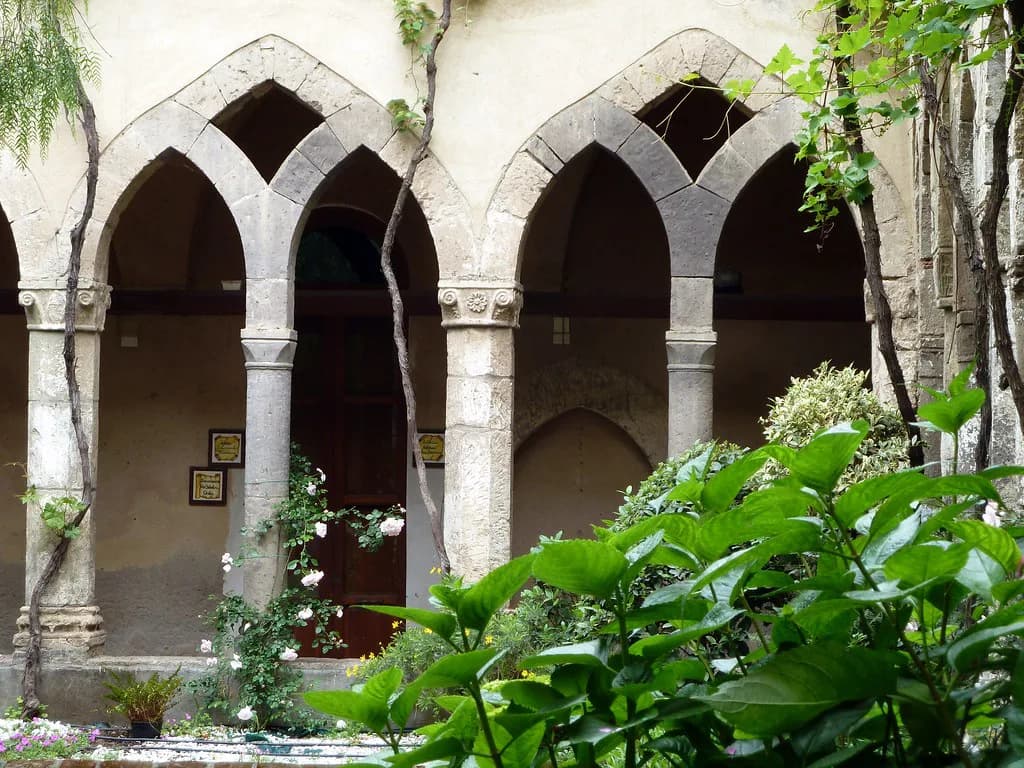
Look up rather than straight ahead. The cloister is known for elegant arches and columns that blend Arab, Gothic and Renaissance touches, a mix that reflects centuries of building and reworking rather than a single design moment. That combination is the reason photographers gravitate here: the arcades frame the garden and give the small courtyard a sense of depth it would otherwise lack. Further visitor details appear in Chiostro di San Francesco: History and Beauty in the Heart of Sorrento.
Give yourself a few minutes to walk the perimeter and notice how the light changes between the shaded arcade and the open center. Because the courtyard is compact, the details reward close looking: capitals, arch profiles and the rhythm of repeated openings. If you are travelling with someone who tires of churches, this is an easy place to sit rather than tour.
The Courtyard Garden and Its Quiet Mood
The garden is the element most often singled out in visitor descriptions, with lush greenery and seasonal flowers filling the center of the courtyard. Spring and early autumn are described as the most pleasant seasons, when the planting is at its best and the weather is comfortable for lingering outdoors. That is a general recommendation rather than a guarantee, since planting and maintenance vary through the year. Further visitor details appear in Chiostro di San Francesco: History and Beauty in the Heart of Sorrento.
If you want the courtyard at its calmest, aim for early morning or late afternoon, when foot traffic thins and the space is easier to enjoy without feeling you are in someone's way. Evenings take on a different mood under soft lighting, which is one reason the venue suits ceremonies.
Church Versus Cloister: Two Different Visits
Do not assume the church and the cloister offer the same experience. The church is Baroque in style, while the cloister is the older medieval courtyard, and the two are entered and used differently. The church entrance sits next to the Villa Comunale park, and walking around the right side of the park brings you to the rear of the church building, which helps you orient yourself before stepping inside. Further visitor details appear in Church and Cloisters of San Francesco: beautiful courtyard and favourite venue for weddings - Sorrento Review.
If your interest is architecture, see the church for its interior character and the cloister for its arcades and garden. If your interest is quiet, the courtyard is generally the better bet, though ceremonies can occupy it. Neither element is a major museum, so budget your time accordingly rather than expecting a long visit.
Getting There on Foot from Piazza Tasso
The cloister sits in the center of Sorrento, and one source describes it as roughly a five-minute walk from Piazza Tasso along Corso Italia and Via San Francesco. Another gives an approximate six minutes and a slightly different route via Piazza Sant'Antonino, so treat any figure as a rough orientation rather than a precise measure. The old town is compact and best covered on foot, with parking nearby but not especially convenient. For wider planning, see A Self-Guided Walking Tour of Sorrento's Historic Center.
A practical way to arrive is to combine the walk with a broader loop through the historic center. A self-guided walking tour of Sorrento is a sensible framework if you want the cloister to sit among other stops rather than as a standalone errand, and it keeps you from retracing the same lanes.
Weddings and Events: What to Expect
The cloister is one of Sorrento's most sought-after settings for weddings, and during summer there is almost always a ceremony taking place in the courtyard. Visitors can often step in to enjoy the scene, but the honest expectation is that the space may be occupied, decorated or briefly closed to casual wandering while a ceremony is under way. Build flexibility into your plan rather than treating the cloister as guaranteed. Further visitor details appear in Church and Cloisters of San Francesco: beautiful courtyard and favourite venue for weddings - Sorrento Review.
The site is also used for concerts and art or photography exhibitions, so what you find on a given day depends on the calendar. Details of wedding bookings, capacity and event schedules are not published in the sources used for this guide, and the municipal and regional tourism websites do not provide extracted visitor information here. Check the Comune di Sorrento site or ask at a local tourist office if a specific date matters to you.
Timing Your Stop
Broad visitor descriptions present the cloister as accessible through the year, with spring and early autumn singled out as the nicest seasons for the garden and the weather. Early mornings and late afternoons are recommended for a quieter experience, which is useful if you want photographs without a crowd in the frame. None of this amounts to a published timetable, so confirm current access before a special trip. Further visitor details appear in Chiostro di San Francesco: History and Beauty in the Heart of Sorrento.
Hours, ticket arrangements and any closure for a private event are not confirmed by the sources available, so do not plan around an assumed opening time. The simplest check is to look at the entrance as you pass and, if it is busy, return later in the day. If you are visiting specifically for the garden, a shoulder-season trip gives you better odds of a relaxed courtyard.
Good Things to Combine with a Visit
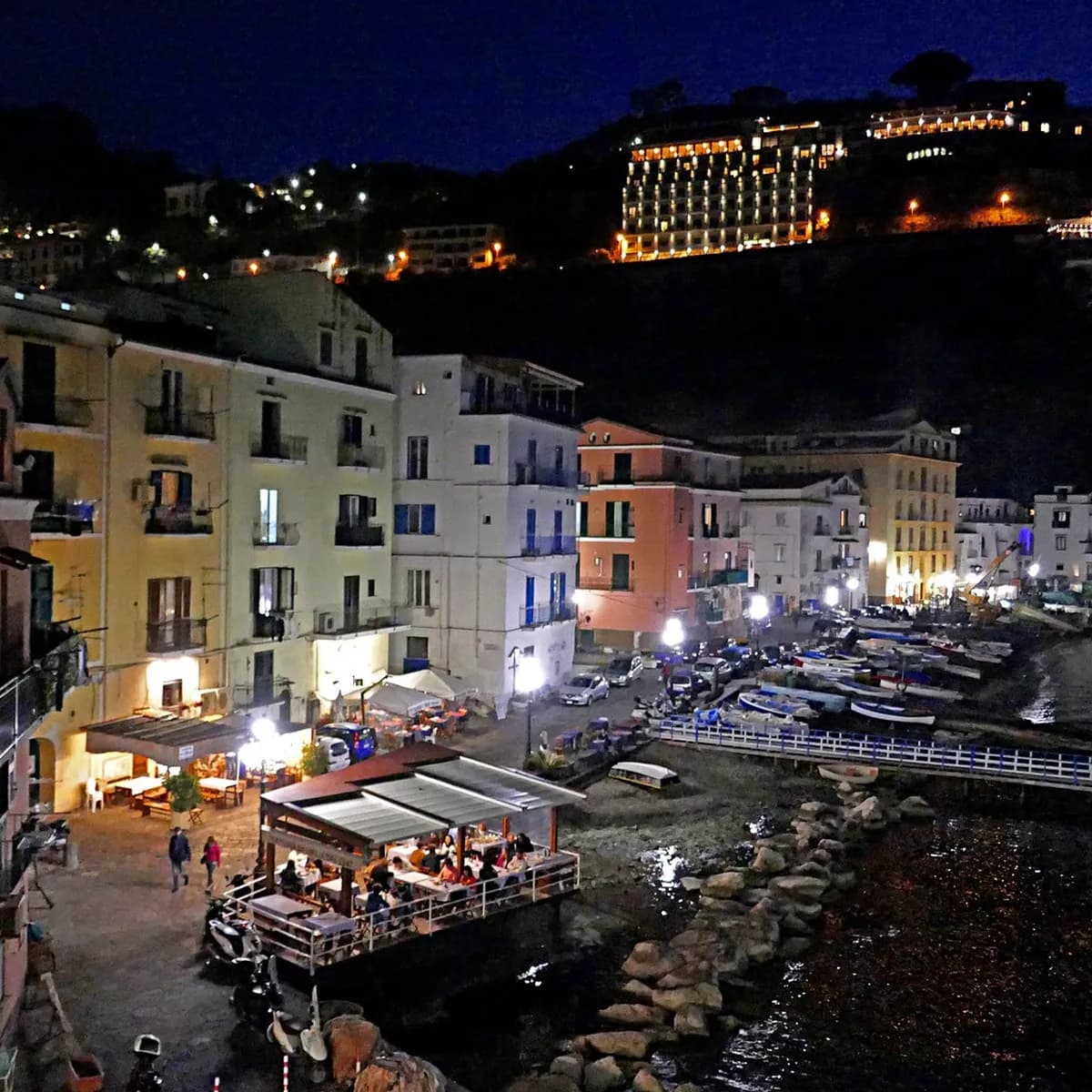
The Villa Comunale park is immediately beside the church and offers panoramic views over the Bay of Naples toward Mount Vesuvius, making it a natural pairing with the cloister. Piazza Tasso, Sorrento's busy main square, is a short walk away, and the Museo Correale and Marina Piccola harbour are also within the central area. Grouping two or three of these keeps the day paced rather than packed.
If you are keeping costs down, several of these stops are outdoor spaces you can enjoy without a ticket, and a broader list of free things to do in Sorrento can help you build a low-cost afternoon around the cloister. Note that any paid interiors or museums are separate from the courtyard and may have their own conditions.
Walkers who want to keep going after the old town can head toward the Basilica di Sant'Antonino in Sorrento, another central religious site with a different history and character. It fits naturally into the same on-foot loop as the cloister and Piazza Sant'Antonino.
Is It Worth It for Families and Short Stays?
Yes, with modest expectations. The cloister is described as peaceful and family-friendly, and its central position near the Villa Comunale and Marina Piccola makes it an easy stop during a family outing rather than a separate excursion. Children tend to do better here with a short garden pause than with a lengthy guided explanation.
For a short stay, the cloister works as a fifteen-to-thirty-minute interlude between larger sights, not as the headline of a day. If your time in Sorrento is very limited, prioritise it only if you are already walking the historic center. The Bagni della Regina Giovanna Sorrento visitor guide covers a very different, outdoor side of the area if you would rather trade courtyards for coastline.
Practical Etiquette During a Ceremony
If a wedding is in progress, treat the courtyard as someone's celebration rather than a sight to be toured. Stay at the edges, keep voices low, avoid crossing the ceremony space, and be prepared to come back later if ushers ask you to wait. Dressing respectfully for a religious setting is a simple courtesy that also applies inside the church.
Photography is popular here because of the arches and light, but discretion matters when guests are present. If you are unsure whether visitors are welcome, ask at the entrance rather than assuming, and accept a polite no as the answer.
Where to Verify Before You Go
For a specific date, the most reliable route is to check with the city or regional tourism bodies rather than relying on a general guide. The Comune di Sorrento and the Incampania regional tourism site are the official starting points, though neither publishes extracted visitor details for the cloister in the material reviewed here.
If you want to plan the cloister alongside other lesser-known corners of the city, the hidden gems in Sorrento guide is a useful companion for building a route that does not repeat the same streets. Use it to position the courtyard within a wider walk rather than as a destination in isolation.
Plan a Calm Visit
The Chiostro di San Francesco is best approached as a small, generous pause in the middle of Sorrento: a medieval courtyard, a garden, and a Baroque church next door that each ask for a different kind of attention. Go early or late, expect the possibility of a wedding, and do not count on published opening details.
Confirm access locally, pair the stop with the Villa Comunale and Piazza Tasso, and let the courtyard be a moment rather than a mission. That is what its calm reputation is built on.
Frequently Asked Questions
Is the Chiostro di San Francesco free to visit?
The sources used here do not confirm current ticket arrangements or entry conditions for the cloister or the adjacent church, so this guide does not state a price. Check the Comune di Sorrento website or ask at the entrance on the day, especially if a ceremony is scheduled.
How do you walk to the cloister from Piazza Tasso?
It is a short walk through the historic center, described in one account as roughly five minutes along Corso Italia and Via San Francesco and in another as about six minutes via Piazza Sant'Antonino. Treat those as approximate orientations and follow signs for the Villa Comunale, which sits beside the church.
When is the cloister quietest?
Early morning and late afternoon are the times most often recommended for a calmer visit, and spring or early autumn is described as the nicest season for the garden. Summer ceremonies can occupy the courtyard, so flexibility matters more than a fixed schedule.
Can you visit during a wedding?
Sometimes visitors can step in to watch, but a ceremony takes priority and access may be restricted. Keep to the edges, stay quiet, and be ready to return later if you are asked to wait.
What is there to see inside the cloister?
Look for the arcades and columns, which mix Arab, Gothic and Renaissance influences, and the garden at the center with its greenery and seasonal flowers. It is a compact space, so allow a short pause rather than a long tour.
Is the cloister suitable for families?
It is described as peaceful and family-friendly, and its central position near the Villa Comunale and Marina Piccola makes it easy to include in a family outing. A brief garden stop tends to work better with children than an extended visit.
What else is nearby worth combining with a visit?
The Villa Comunale park, Piazza Tasso, the Museo Correale and Marina Piccola are all in the central area, and the Basilica di Sant'Antonino fits the same walking loop. Two or three stops make a comfortable half-day without rushing.
Do I need to book to see the cloister?
No booking requirement for general visits is confirmed in the sources used here, and wedding bookings are handled separately without published details. Verify current arrangements with the city or on arrival if your plans depend on access.
Sources
Continue exploring
More guides you'll find useful