
Chiesa di Sant'Agostino, San Gimignano: A Visitor's Guide
A practical guide to the Chiesa di Sant'Agostino in San Gimignano and the pilgrim guesthouse beside it, plus what to confirm before you visit.
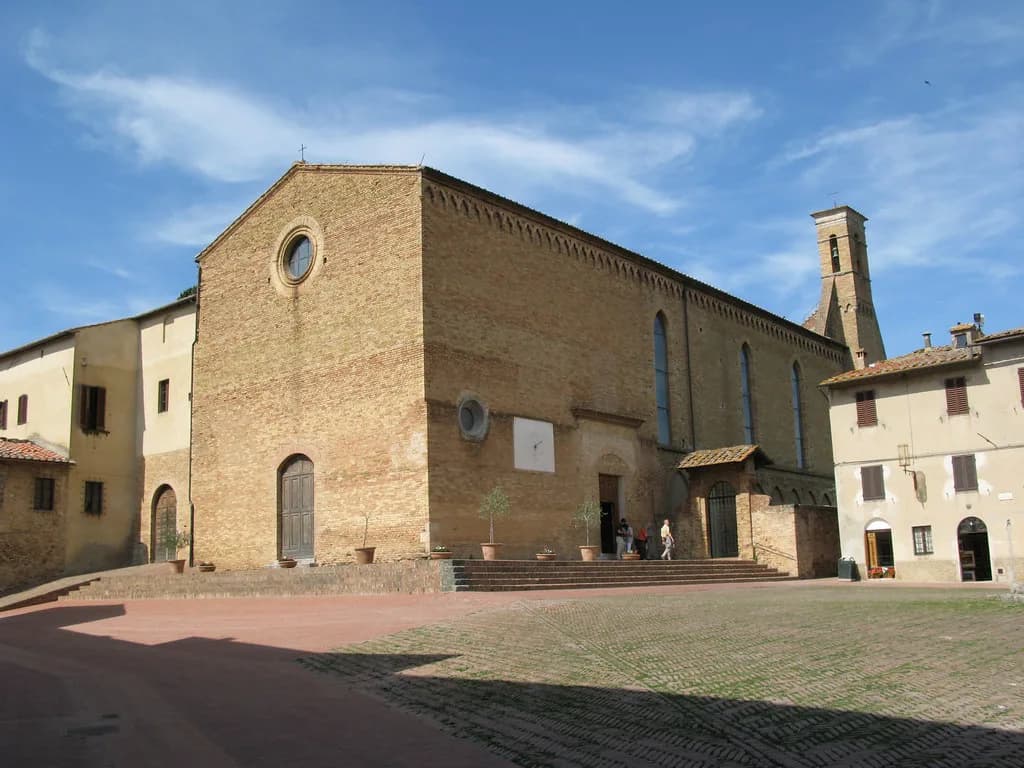
On this page
The Chiesa di Sant'Agostino belongs to San Gimignano's religious fabric rather than its ticketed museum circuit, and that distinction shapes how you should plan a visit. It is listed among Italian heritage places in the FAI census of beloved sites, which records its location in San Gimignano, Siena province. What that listing does not do is answer the practical questions most visitors arrive with.
The most concrete details available concern the Augustinian convent beside the church, which runs a small guesthouse for Via Francigena pilgrims. The pilgrim association Camminando sulla Via Francigena lists it as a religious structure accepting an offering-based contribution, listed as open all year, with four single cells and overnight accommodation including bathroom and shower but no kitchen use. That listing is the firmest ground in this guide.
Everything else, from whether the church interior is open on a given morning to how you reach it through the walled centre, needs checking at the source rather than assumed. This guide separates what is documented from what you must verify, and points you to the town's own channels for the live answers. For the wider set of sights around it, start with the Yondli San Gimignano Attractions hub.
Where the Church Sits in San Gimignano
The church is identified in heritage listings as standing in San Gimignano, in the province of Siena, and the convent guesthouse is listed at Piazza Sant'Agostino. Use that piazza as your orientation point rather than searching for a civic street number, which the available source material does not supply. Once you are in the walled town, asking for Piazza Sant'Agostino is the simplest way to locate the complex.
San Gimignano is a compact hill town, and its historic centre is subject to a controlled traffic zone with video-monitored access points, as the Comune's own site sets out in a dedicated ZTL section. If you are arriving by car, read that material before you drive, because the rules affect where you can go and what you need to do. The Comune publishes the zone map and permit rules on its pages.
The Augustinian Complex: Church and Convent Together
It helps to think of the Chiesa di Sant'Agostino and the adjoining Convento di Sant'Agostino as one religious complex rather than two separate stops. The pilgrim accommodation is described as a religious structure, which tells you the site is active in a way that shapes how you behave inside it. Treat the church as a place of worship first and a visitor sight second.
The convent's pilgrim listing gives an address at Piazza Sant'Agostino together with a telephone number and an email address, and points to the Augustinian order's own website. Those are the channels to use for any question about the church or the guesthouse. Rather than guessing at access, write or call before you travel.
The FAI census entry records the church as a place that has drawn local votes across several campaigns, which says something about how people in the area regard it. It does not function as a visitor information page, so do not look to it for timetables or entry conditions. Use it for context, not logistics.
The Pilgrim Guesthouse: Who It Accepts and What It Offers
The guesthouse is not a general hotel, and the listing is explicit on this point: it welcomes only pilgrims who hold a credential and a letter from their parish. That requirement is the single most important thing to understand before you consider staying, because it rules out casual tourist bookings. If you do not carry both documents, plan your accommodation elsewhere in town.
Capacity is small and clearly stated: four single cells. Overnight accommodation comes with access to a bathroom and shower, and kitchen use is not available, so plan meals around the town rather than self-catering. The structure is listed as open throughout the year, which is useful to know if you are walking the Via Francigena outside the main season.
The contribution is described as an offering rather than a fixed tariff, so do not expect a published rate card. Nothing in the listing suggests online booking, and the practical route is to contact the convent directly by the phone number or email given. Ask about availability, what to bring, and the current expectations for guests before you set out.
Practical Planning: What to Confirm Before You Go
No verified opening hours or entry conditions for the church appear in the available material, so build your day around confirmation rather than assumption. The sensible sequence is to contact the convent first, then plan the rest of your time in San Gimignano around whatever they tell you. That avoids arriving at a closed door.
The town's official municipal site is the second place to look, since civic channels carry notices about events, works and access changes that can affect a visit. The Comune's homepage aggregates news items and alerts, including weather warnings and road or bridge updates that matter to anyone moving around the area.
For a general orientation to the destination, the official event and tourism site for San Gimignano is a reasonable starting point before you build a schedule. Cross-check anything time-sensitive against the Comune's notices, because civic announcements are updated more frequently than static visitor pages.
Pairing the Visit With the Rest of the Town
Because the church visit itself may be brief, it works well as one stop on a broader walk through the centre. A San Gimignano self-guided walk lets you set your own pace and fold in the Augustinian complex without committing to a fixed itinerary, and it can carry you onward toward Porta San Matteo. Keep the church as an unhurried pause rather than a timed slot.
If you want to compare how the town's other religious buildings handle visitors, the guide to the Chiesa di San Francesco in San Gimignano makes a useful companion read. Between the two, you get a clearer sense of what is open to the public and what is not in this small centre.
Travellers with time for quieter corners should look at the hidden gems in San Gimignano for ideas beyond the headline squares. Pairing one of those with a stop at Sant'Agostino gives a day that balances the town's better-known sights with its religious heritage.
Respectful Visiting: A Place of Worship, Not a Museum
The presence of a working guesthouse for pilgrims changes the register of a visit. People staying here are walking a long-distance route and using the convent as a place of rest, so keep voices low and avoid treating the complex as a photo set. If a service or prayer is under way, wait or return later.
Dress and behaviour expectations in Italian churches are conventional but worth restating: cover shoulders and knees, remove hats, and silence phones. These are courtesies rather than rules the sources spell out, and they apply here as they would in any active parish. When in doubt, follow the example of the people around you.
Checking Live Conditions in the Historic Centre
San Gimignano's controlled traffic zone uses video-monitored access points, and the Comune maintains a dedicated portal with the zone plan and the rules for permits. If you are driving, this is the page to read rather than relying on older blog posts that may predate the current arrangements.
Civic notices also cover temporary disruptions, from weather alerts to short closures of municipal offices, and these can shift on a daily basis. Check the Comune's news feed in the days before you travel so that a road closure or an alert does not catch you out.
The official tourism site can help with broader trip planning around San Gimignano, but treat anything about specific opening times as provisional until confirmed directly. A quick call to the convent settles the question that matters most for this particular church.
Plan Your Visit
The Chiesa di Sant'Agostino rewards a visit built on confirmation rather than assumption. Contact the convent at Piazza Sant'Agostino by phone or email to ask about access, and read the Comune's notices for anything affecting the town centre on your dates. Those two steps cover most of what could go wrong.
If you are walking the Via Francigena, the guesthouse is a genuinely specific option with clear conditions: a pilgrim credential, a parish letter, four single cells and no kitchen. Read the requirements carefully before you count on a bed. For everything else in town, the Yondli San Gimignano Attractions guides give you a practical base to plan from.
Frequently Asked Questions
Is the Chiesa di Sant'Agostino in San Gimignano free to enter?
No verified entry price or ticketing arrangement for the church appears in the available sources, so it would be wrong to state one. Contact the convent directly using the phone number or email listed at Piazza Sant'Agostino and ask about current access and any conditions. If a contribution is expected, they will tell you.
Can pilgrims stay at the Convento di Sant'Agostino in San Gimignano?
Yes, according to the pilgrim accommodation listing maintained by Camminando sulla Via Francigena. It describes a religious structure welcoming pilgrims for overnight stays, with four single cells and access to a bathroom and shower. Kitchen use is not available, and the structure is listed as open all year.
What do you need to book a stay at the Augustinian convent in San Gimignano?
The listing states that guests must hold a pilgrim credential and a letter from their parish. Those are the stated conditions, and without them the guesthouse is not open to you. The contribution is described as an offering rather than a fixed rate, and there is no indication of online booking, so contact the convent by phone or email.
Is the Chiesa di Sant'Agostino part of the main tourist route in San Gimignano?
The sources describe it as a religious site with an active pilgrim guesthouse, not as a ticketed attraction on a museum circuit. Beyond that, no source supports claims about how busy or quiet it is. Plan it as a place of worship and let the conditions on the day guide how long you stay.
What is the best time of year to visit San Gimignano?
No source in this material gives seasonal guidance, so treat any specific recommendation with caution. The convent guesthouse is listed as open throughout the year, which is useful if you are walking the Via Francigena off-season. For weather and event timing, check the Comune's notices and the official tourism site before fixing dates.
How do I check current access rules in San Gimignano's historic centre?
The Comune publishes a dedicated section on the controlled traffic zone with the access plan and permit rules, so start there if you are driving. Its news feed also carries short-notice notices such as weather alerts and temporary closures. Read both in the days before you travel rather than relying on older guides.
Sources
Continue exploring
More guides you'll find useful





