
Domus dei Tappeti di Pietra: Ravenna Mosaic Floor Guide
Plan a visit to Ravenna's Domus dei Tappeti di Pietra, the underground mosaic floors beneath Sant'Eufemia: what survives, how to enter and how long to allow.
On this page
Most mosaic itineraries in Ravenna climb into gold-ground basilicas and baptisteries. The Domus dei Tappeti di Pietra goes the other way: you descend roughly three metres below street level into the shell of a private Byzantine building, where the surviving decoration is underfoot rather than overhead.
The site is entered through the small church of Sant'Eufemia in the historic centre, and its fourteen rooms are paved with polychrome mosaics from the fifth and sixth centuries. A reasonable planning allowance is about 30 to 45 minutes, which is a suggestion rather than any official figure, because the visit is compact and self-paced.
What the Domus Actually Is
This is not a church and not a museum built around a single masterpiece. It is the excavated ground floor of a wealthy late antique residence, preserved in a modern underground enclosure, and the draw is the mosaic paving that belonged to domestic rooms rather than to liturgy.
The structure itself dates to the Byzantine period, while the archaeological work that revealed it belongs to the 1990s. Keeping those two timelines separate matters: the mosaics are fifth- to sixth-century work, but the visitable space is a recent excavation and display project rather than an ancient monument that was always visible.
Why It Complements Ravenna's UNESCO Monuments
Ravenna's UNESCO listing rests on its fifth- and sixth-century religious monuments, and the Opera di Religione manages five diocesan sites that carry most of that fame: the Mausoleo di Galla Placidia, Basilica di San Vitale, Basilica di Sant'Apollinare Nuovo, Battistero Neoniano, and the Cappella di Sant'Andrea with the Archiepiscopal Museum. Those are the headline stops, and they deserve the bulk of a first visit.
What the Domus adds is context. In a basilica the mosaic announces theology and imperial power; in a house it announces taste, wealth and the decoration of everyday rooms. Seeing both in one trip makes clear that mosaic work in Ravenna was a craft applied across building types, not only a sacred art.
What to Look For Inside
Fourteen rooms are on view, and the pavements mix geometric grids, floral motifs and figurative scenes. Rather than trying to read every panel, pick out the shifting patterns room by room, which is the clearest way to sense how a private residence was zoned and decorated.
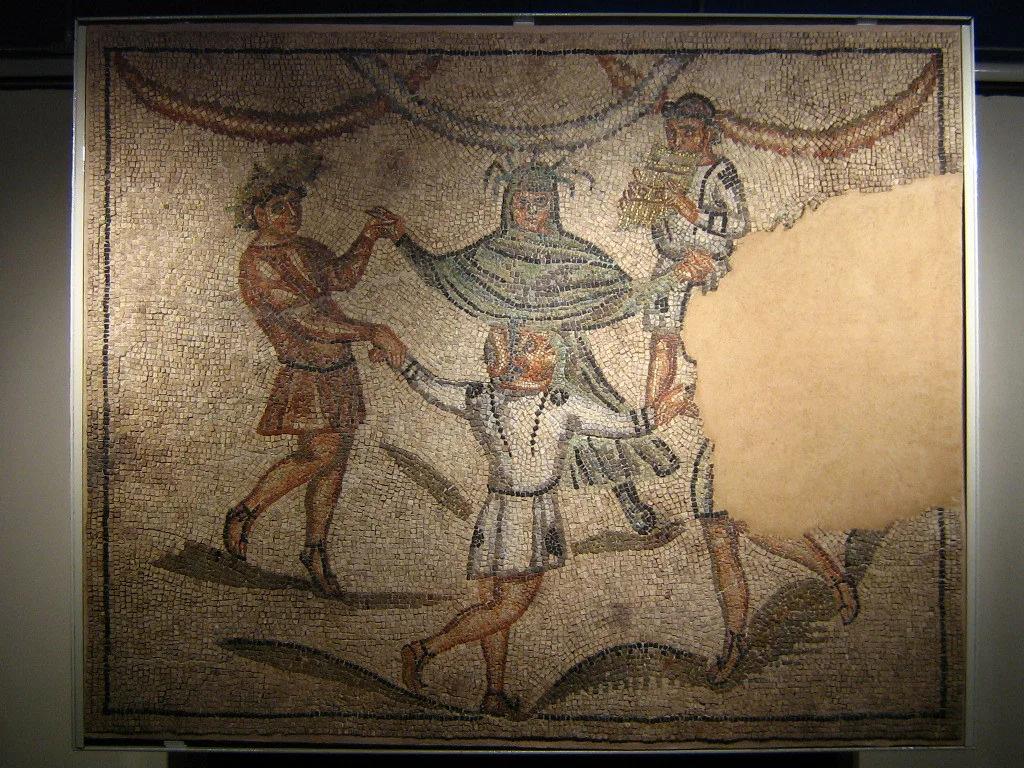
Two pavements are singled out in published descriptions. The Dance of the Geniuses of the Seasons shows figures circling in a ring, a rare composition, and the Good Shepherd here departs from the familiar Christian iconography found elsewhere. Look for both deliberately, because they are easy to pass while scanning the floors.
How Entry Works
Access is through the church of Sant'Eufemia, and the archaeological space lies beneath it and beneath the adjacent street. In practice this means you enter a working church first, then continue into the underground display, so dress and behaviour should suit a place of worship as well as a museum.
Published listings differ on the exact street number for Via Gian Battista Barbiani, so do not navigate by house number alone. Use the church of Sant'Eufemia as your landmark in the historic centre and confirm the entrance with the operator before setting out.
Tickets, Prices and Closures: What Is Confirmed
The Domus is a paid interior run separately from the diocesan UNESCO monuments, so do not assume a San Vitale ticket covers it. Whether it appears in any combined Ravenna card is a question for the operator; the sources here do not settle it, and guessing could cost you a wasted queue.
One secondary listing reports a full-price ticket of a few euros, a reduced rate, free entry for children under six and closure on Mondays, but those figures and rules are not confirmed as current. Treat them as indicative only and check the official Domus site or telephone the operator before you rely on them.
Another reseller page states that the site closes on Mondays and that entry is free for children under six, which broadly agrees with the other listing but still does not amount to a current official timetable. Opening hours are described elsewhere as variable, so a same-week check is the sensible habit rather than trusting a page written years ago.
How Long to Allow
Plan on roughly half an hour, stretched to 45 minutes if you read the panels and linger over the figurative floors. That is a workable suggestion based on the size of the display, not an official duration, and photographers or mosaic specialists will naturally take longer.
Because the visit is short, it slots neatly into a half-day mosaic itinerary as an addition rather than a centrepiece. Pair it with the nearby diocesan monuments in the morning, when you are freshest, and keep the Domus for a quieter slot when you can look down rather than up.
Access and Comfort Underground
The display sits about three metres below the surface, which implies stairs or a ramp between street and floor level. One listing describes the site as accessible, but that claim covers one operator's assessment and not a guaranteed step-free route into a historic church and an excavation.
If stairs, confined spaces or low light are a concern, contact the site before booking and ask specifically about the route from the street to the mosaics and whether a lift exists. Underground rooms also tend to feel cooler and more humid than the street, so a light layer helps on a hot day.
Who Should Add It and Who Can Skip It
Add it if you have already seen San Vitale and Galla Placidia and want to understand how mosaic craft worked outside imperial and ecclesiastical settings. Families often find the compact scale manageable, and the figurative floors give children something concrete to hunt for.
Skip it on a first visit if your time in Ravenna amounts to a single day and you have not yet seen the UNESCO core. Those five diocesan monuments carry the weight of the city's reputation, and the Domus is a complement to them rather than a substitute.
Pairing It With Other Ravenna Sites
The natural pairing is the cluster around Piazza Arcivescovado: the Battistero Neoniano, the Archiepiscopal Museum with the Cappella di Sant'Andrea, and San Vitale with the Mausoleo di Galla Placidia a short walk away. Each of those is ticketed under its own arrangements, so budget and book accordingly.
Outside the mosaics, Ravenna rewards slow walking between sites, and the city's quieter corners give your eyes a rest from dense pattern. If you want to extend the day beyond the famous monuments, browse the hidden gems in Ravenna for small stops that break up the mosaic circuit.
Confirm Before You Travel
The Domus dei Tappeti di Pietra rewards a small investment of time with something the basilicas cannot offer: mosaic art in a domestic key, seen at floor level in the cool beneath a church. Treat the reported ticket prices, the Monday closure and the accessibility claim as unverified and check directly with the operator for opening hours, entrance arrangements and step-free access.
Frequently Asked Questions
Is the Domus dei Tappeti di Pietra underground?
Yes. The excavated rooms sit roughly three metres below street level, beneath the church of Sant'Eufemia and the road beside it. You enter through the church and then descend into the enclosed archaeological space, so expect stairs and cooler, damper air than on the street.
How do you get into the Domus?
Access is through the church of Sant'Eufemia in Ravenna's historic centre. Published listings give slightly different street numbers for Via Gian Battista Barbiani, so use the church as your landmark and confirm the entrance with the operator rather than relying on a house number.
Is the Domus included in the Ravenna UNESCO monument ticket?
Do not assume so. The Domus is a separately run, ticketed site, while the five diocesan UNESCO monuments are managed by the Opera di Religione and ticketed under their own arrangements. Ask the operator directly whether any combined ticket currently covers the Domus.
Do I need to book in advance?
The site's published information does not establish a booking requirement or any timed entry system for the Domus. Check the operator's own information before you travel, especially in peak season, and telephone if you need to confirm same-day entry or group arrangements.
How long does a visit take?
Allow around 30 to 45 minutes as a planning suggestion, not an official duration. The display covers fourteen rooms and is compact, so it works well as an addition to a half-day mosaic itinerary rather than a standalone outing.
Sources
Continue exploring
More guides you'll find useful





