
Dante's Tomb in Ravenna: Zone of Silence Visitor Guide
Visit Dante's Tomb in Ravenna: the free Zone of Silence, the hidden-bones story, and the separate combined Museo Dante and Casa Dante ticket.
On this page
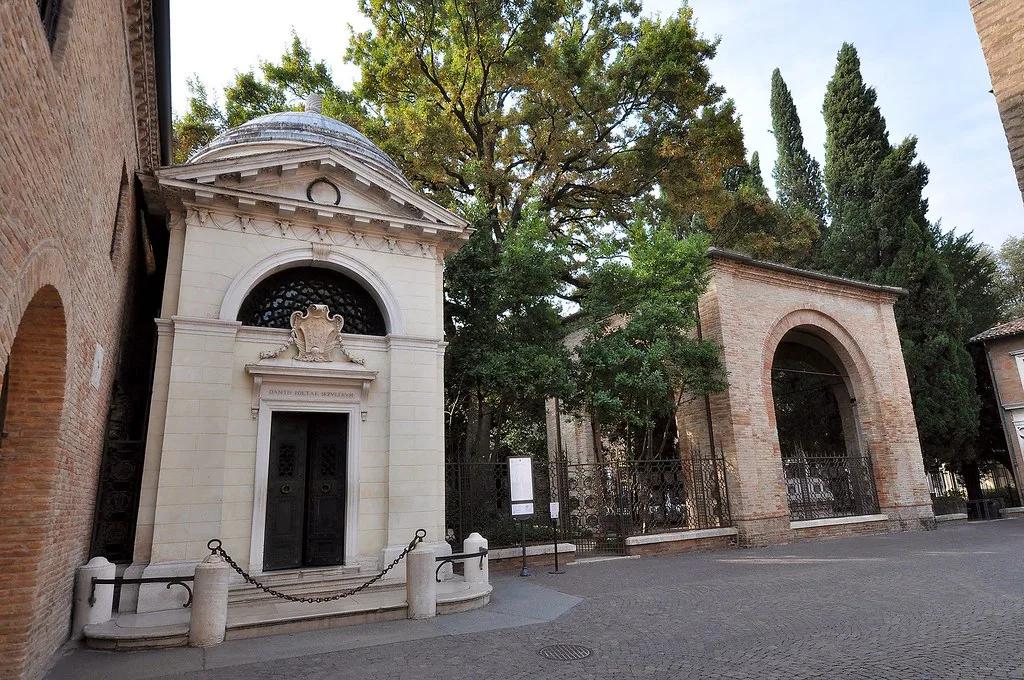
Dante Alighieri died in Ravenna in the night between 13 and 14 September 1321, and his remains are still in the city. The tomb stands in a small pedestrian precinct beside the Basilica of San Francesco, a short walk from Ravenna's central streets. The monument you see is a neoclassical temple designed by Camillo Morigia at the end of the 18th century.
The site is often treated as one ticketed attraction, but it is not. The tomb exterior and the adjoining Quadrarco di Braccioforte form an open-air memorial space. The Museo Dante and Casa Dante are separate indoor collections sold together on a combined ticket. Planning around that split is the most useful decision before you arrive.
Quick Orientation: What Sits in the Zone of Silence
The area around the tomb is known as the Zone of Silence, a small cultural precinct grouped beside the Basilica of San Francesco in the historic centre. Within it you find the tomb, the Quadrarco di Braccioforte, the Museo Dante in the former Franciscan convent and, nearby, Casa Dante. The Emilia-Romagna tourism board's walking itinerary treats Dante's tomb as the natural first stop for anyone tracing the poet's marks across the city.
Think of the site in two layers. The first is the open-air memorial: the temple, the sarcophagus and the surrounding quadrarco. The second is the indoor museum circuit, which explains the poet's life, works and the city's long devotion to him. You can see the first without buying anything, but the second involves a ticket and a little forward planning around opening times.
Why Dante Is Buried in Ravenna, Not Florence
Dante spent his final years in Ravenna as a guest of the da Polenta lords, and he died in the night between 13 and 14 September 1321. His funeral was held at the Basilica of San Francesco, the ancient church beside which his tomb now stands. Florence, his native city, later pressed hard for the return of the remains, but Ravenna kept them.
That rivalry is the key to reading the site. Florence built its own memorial in Santa Croce, but the actual remains never left Romagna. When you stand in front of the sarcophagus, you are looking at the outcome of a centuries-long custody dispute rather than a straightforward burial monument.
The Neoclassical Tomb by Camillo Morigia
The small temple that shelters the sarcophagus was designed by Camillo Morigia in the late 18th century, giving the site the grave, classical look it has today. Inside, the marble sarcophagus holds the poet's remains, and a votive lamp is kept burning there. The lamp is fed with oil from the Tuscan hills, brought to Ravenna by a Florentine delegation each year on the second Sunday of September.
The monument reads as a deliberate statement of civic pride: modest in scale, formal in tone, and placed with care beside the church where Dante was mourned. Photographs taken from the surrounding precinct show the temple framed by the quadrarco, which is why the approach matters as much as the structure itself. Treat the exterior as the main event and the interior as a bonus if it happens to be accessible when you visit.
The Hidden-Bones Story: Empty Sarcophagus, 1810 and 1865
The most memorable part of the site is what happened to the body. When a papal delegation arrived to claim the remains for Florence, the Franciscan friars had already removed them, leaving the sarcophagus empty. During the Napoleonic period, around 1810, the bones were taken out again and walled up in an adjacent oratory, and for decades visitors paid their respects at a tomb that held nothing.
The remains were rediscovered in 1865 by a worker during renovation works for the sixth centenary of Dante's birth. The bones were reassembled, displayed in a crystal case, and then returned to the sarcophagus inside Morigia's temple. Walking the site with that sequence in mind, a hiding, a recovery and a reburial, makes the quiet precinct feel considerably less static.
The Quadrarco di Braccioforte Beside the Tomb
The Quadrarco di Braccioforte is the open structure immediately beside the tomb, and it played a direct role in the 1865 story: it is where Dante's bones were displayed during the centenary celebrations. A bell donated by Italian municipalities also hangs here, and it rings thirteen times each evening to mark the poet's death.
Many visitors pass through in a few minutes on the way to the museum, which is a shame. The quadrarco is the part of the site that explains how Ravenna has publicly commemorated Dante over the centuries, and it costs nothing to linger. Read the inscriptions and look at how the tomb, the quadrarco and the church sit in relation to one another before heading indoors.
The Daily Reading of the Divine Comedy
In front of the tomb, a project called L'ora che volge il disìo runs a perpetual reading of the Divine Comedy, described by the city's mosaic tourism portal as a daily event open to all. It is a living ritual rather than a staged performance, and it is one of the reasons the precinct feels active rather than merely monumental.
The published material does not promise a fixed hour, so do not build your day around catching a specific canto. If hearing a reading matters to you, ask at the tourist information office or check the city's tourism pages shortly before you travel. Otherwise, simply spend a few quiet minutes at the tomb and let the setting do the work.
Museo Dante: The Bone Box and the Franciscan Convent
The Museo Dante occupies the first floor of the former Franciscan convent next to the tomb, and it was fully renovated in 2021. Its rooms use artefacts, images and multimedia displays to trace the poet's life and the three canticles of the Divine Comedy. Among the exhibits is the wooden box discovered in 1865 that had held Dante's bones during their concealment.
A highlight for mosaic-minded visitors is Il grande saio, a 2010 installation by Paolo Racagni on the museum staircase. The work folds Franciscan symbolism together with the closing line of the Inferno, and it ties the Dante story back to Ravenna's better-known art form. Allow more time here than you might expect from the museum's compact size.
Casa Dante and the Combined Ticket
Casa Dante, inaugurated in 2021 in collaboration with the Uffizi Galleries, sits in the same small cultural zone and expands the story of the city's devotion to the poet. Entry to the Museo Dante and Casa Dante is sold as a combined ticket only, so you cannot buy a standalone museum ticket at the desk. The Ravenna Città del Mosaico portal lists an adult combined price of 5 euros, with concessions at 3.50 euros and reduced school-group rates, and notes free entry for young children, disabled visitors, carers and guides; confirm the current figure before you travel, as prices change.
Booking for the museum is handled by email, using the address published on the official tourism portal; the page also lists a telephone contact for the tourist information office. Neither the tomb exterior nor the quadrarco requires a ticket or a reservation. Check current opening hours on the city's tourism pages before setting out, since the published material does not guarantee fixed daily access to the tomb interior.
Free Grounds Versus Paid Interiors: What to Expect
The practical split is simple: the outdoor precinct, including the tomb exterior and the Quadrarco di Braccioforte, is freely accessible, while the Museo Dante and Casa Dante require the combined ticket. Nothing in the published sources guarantees that the tomb's inner chamber is open at all times, so treat an interior view as something to check on the day rather than assume. If the inner space is closed, the sarcophagus and the monument are still visible from the precinct.
This split matters for budgeting and for expectations. A short, free stop at the memorial is entirely legitimate if your day is packed with mosaics. Conversely, if you want the hidden-bones narrative explained properly, the museum is where the artefacts and interpretation actually live, and the ticket is the only route in.
How Long to Allow, and Where to Go Next
Allow roughly twenty to thirty minutes for the open-air memorial if you read the inscriptions and look around the quadrarco, and add an hour or more for the Museo Dante and Casa Dante. That is a suggestion based on the size of the complex, not an official figure. A half-day in this corner of the centre leaves room to walk to the Basilica of San Vitale and the Mausoleum of Galla Placidia, both part of Ravenna's UNESCO mosaic circuit.
If you want to go beyond the headline sights, the city rewards slow wandering between the Zone of Silence and the quieter lanes nearby. Our guide to the hidden gems in Ravenna covers the smaller churches and corners that most day-trippers skip, and it pairs naturally with a Dante-focused morning.
Plan Your Dante Visit in Ravenna
Dante's Tomb is not a single ticketed attraction but a small precinct with a free open-air heart and a paid museum layer. Decide in advance whether you want the monument alone or the full story with the bone box and the Casa Dante displays, and check current opening arrangements before you go.
Go early in the day if you want the precinct to yourself, read up on the 1810 hiding and the 1865 recovery beforehand, and leave time to sit with the quadrarco rather than rushing through to the next mosaic. The rewards here come from context, not from scale. For related planning, see Free Things to Do in Ravenna: Churches, Squares and Walks.
Frequently Asked Questions
Is Dante buried in Ravenna or Florence?
Dante's remains are in Ravenna, in the sarcophagus inside the neoclassical temple beside the Basilica of San Francesco. Florence, his birthplace, repeatedly tried to reclaim the body and eventually built its own memorial in Santa Croce, but the actual remains never left Romagna.
Do you need a ticket to see Dante's Tomb?
The open-air memorial area, including the tomb exterior and the Quadrarco di Braccioforte, does not require a ticket. However, published sources do not guarantee that the tomb's inner chamber is open at all times, so check access on the day and treat the museum as the paid part of the visit.
Is the Quadrarco di Braccioforte free to visit?
Yes. The quadrarco sits within the same open-air precinct as the tomb and is not part of the combined museum ticket. It is where Dante's bones were displayed during the 1865 centenary celebrations, and a bell there rings thirteen times each evening.
Does one ticket cover the tomb, the museum and Casa Dante?
No. Only the Museo Dante and Casa Dante are sold together, as a combined ticket. The outdoor tomb precinct is separate and free, and it should not be assumed that the museum ticket includes any guided access to the inner tomb chamber.
How long should I allow for the visit?
A reasonable suggestion is twenty to thirty minutes for the tomb and quadrarco, plus at least an hour for the Museo Dante and Casa Dante. These are our own estimates based on the size of the site, not official guidance, so adjust them to your interest in the poet.
How do I book the Museo Dante?
Booking is handled by email, using the address published on the Ravenna Città del Mosaico tourism portal, which also lists the tourist information office phone numbers. Before you travel, confirm current opening hours and the current combined-ticket price, since both can change.
When is the best time to hear a reading from the Divine Comedy at the tomb?
A daily reading project in front of the tomb is described as open to everyone, but the published material does not promise a fixed hour. Ask at the tourist information office shortly before your visit rather than planning your day around a specific canto.
What should I see nearby after the tomb?
The Basilica of San Francesco is right beside the precinct, and Ravenna's UNESCO mosaic sites, including San Vitale and the Mausoleum of Galla Placidia, are within walking distance in the historic centre. Allow time for the smaller churches and lanes covered in our hidden gems guide.
Sources
Continue exploring
More guides you'll find useful





