
Sant'Apollinare Nuovo: A Visitor Guide to Ravenna's Mosaics
Use this Sant'Apollinare Nuovo guide to read Ravenna's mosaic processions, understand the diocesan ticket, and verify visit details before you travel.
On this page
Sant'Apollinare Nuovo is one of five diocesan monuments in Ravenna that form a walkable UNESCO circuit, the others being the Basilica of San Vitale, the Mausoleum of Galla Placidia, the Neonian Baptistery, and the Chapel of Sant'Andrea with the Archiepiscopal Museum. The basilica itself faces via di Roma and rewards close reading of its mosaic bands. A suggested visit here is at least 30–45 minutes if you want to follow the processions and the upper scenes, though no official duration is published; plan longer if you study the iconography carefully. Current prices, opening times, and any restrictions should be confirmed on the operator's own pages before you go.
Why Sant'Apollinare Nuovo Matters in Ravenna
Ravenna's mosaic churches are often described as a single highlight, but each site has a distinct character. Sant'Apollinare Nuovo is the one with the long lower processions of male and female saints advancing across the nave walls, a feature the diocesan operator presents as part of the city's five-monument core. The basilica sits inside the historic centre on via di Roma, close enough to the others that you can visit it on foot in the same day. That compactness makes it easy to treat as one stop in a mosaic itinerary rather than a separate excursion.
The building's exterior is modest and set back from the street, which the operator notes can make visitors walk past without realising what is inside. The reward is the interior, where the tesserae are tilted to catch the light. Enter through the adjacent cloister and take the first view of the nave slowly. This is not a church where a quick photo stop does justice to the decoration.
How to Read the Mosaic Bands
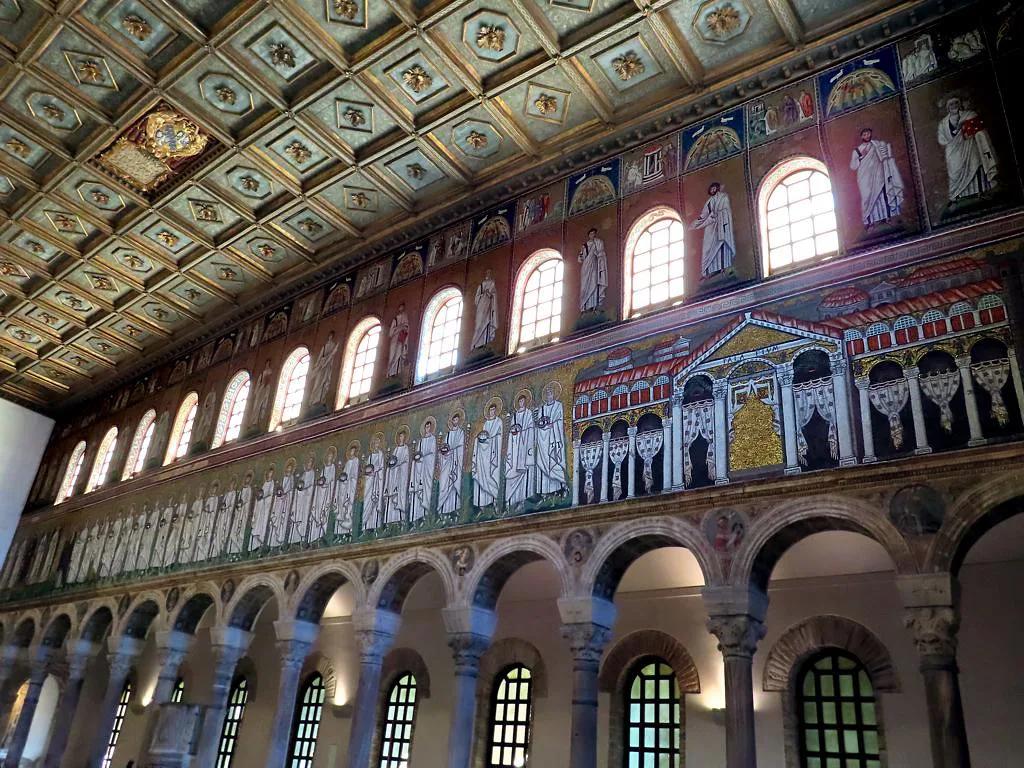
The mosaics are arranged in horizontal bands, and reading them from the bottom up is the clearest way in. The lowest band holds the processions: on one side, a line of male martyrs advances toward Christ enthroned; on the other, female virgins move toward the Virgin and Child, with the three Magi kneeling in a courtly gesture. These processions are the panels most visitors remember, but they are only part of the programme.
Above the processions, the decoration shows the civitas Classis in bird's-eye view and the Palatium, or palace, of Theodoric. The Palatium panel is notable for its gaps: after Theodoric's court fell from favour, figures were removed and replaced with curtains. The operator notes that surviving fragments, including hands, still show the erasure. Looking for those traces is one of the most tangible ways to connect the mosaics to the political history of the building.
The upper band contains scenes from Christ's life, separated by ornamental canopies. On one wall are thirteen miracles or parables; on the opposite wall are Passion scenes and events after Christ's death. Christ appears young and beardless in the left-hand cycle and bearded in the right-hand cycle. The operator explains the beard as a Roman sign of mourning, while the youthful type has Eastern origins. Knowing this contrast helps you see two deliberately different programmes rather than one continuous gold background.
Benches at the base of the walls allow you to sit while reading the panels. While no official visit duration is published, a suggested 30–45 minutes is enough to walk the nave and identify the main bands; longer if you want to study the Palatium and the upper scenes. If mosaics are the focus of your trip, consider whether a guided visit through the operator would help you interpret the iconography, or whether a local host could add further context. The basilica also appears naturally in broader itineraries such as the city's hidden gems guide, which covers lesser-known corners of Ravenna beyond the UNESCO core.
A Brief History of the Basilica
Theoderic, king of the Goths, built the church between 493 and 526 as a palatine basilica. It was originally an Arian foundation, and its later decoration reflects a change in religious authority. Around 561, after the Goths lost control of Ravenna, the church was converted to Catholic orthodoxy and reconsecrated. That shift explains why the mosaic programme contains both original Arian-era work and later adjustments rather than a single unified scheme.
The name Sant'Apollinare came much later. In the ninth century, the relics of Saint Apollinaris were moved into the city from Classe because the coastal site had become vulnerable to raids. The church took the saint's name at that point, and the word Nuovo distinguishes it from the older basilica outside town. The two are separate monuments, and the operator explicitly warns against confusing them.
Tickets and the Five-Monument Circuit
The Opera di Religione della Diocesi di Ravenna manages Sant'Apollinare Nuovo together with the other four diocesan monuments, and its site presents them as a single ticket option. The ticket covers those five monuments, not every religious building in Ravenna. Entrance times and prices are set by the operator and are subject to change. Check the official information and prices page for the current scope and any reduced or combined options before you travel. Do not budget from a figure in an older guide.
Other churches, including Sant'Apollinare in Classe, are managed separately and are not covered by this ticket. If you want to visit both the in-town basilica and the one at Classe, plan them as two distinct stops rather than assuming one pass covers both. The broader Ravenna attraction guides hub lists the main sights and explains how each one fits into a city itinerary.
Before You Travel: Verify Hours and Notices
Opening hours at Sant'Apollinare Nuovo are seasonal and set by the operator. The official site publishes current times, evening openings, and any planned closures. Because these details can change, check the site shortly before your visit rather than relying on a blog post from an earlier year. The operator also maintains a notices page that flags disruptions, such as religious celebrations affecting access. For example, a current notice concerns baptisms at the Neonian Baptistery, where visits are suspended for part of certain mornings; that notice does not apply to Sant'Apollinare Nuovo, but it shows why checking notices before a fixed-date visit is sensible.
If you need to confirm a specific date or ask about access, the operator provides contact details for information and bookings on its site. Staff are available on weekday mornings excluding public holidays. Use these channels rather than relying on third-party descriptions of current rules.
Pairing Sant'Apollinare Nuovo With Other Sites
Because the five diocesan monuments are close together, the most practical approach is to build a walking day around them and keep the order flexible. San Vitale offers the imperial portraits of Justinian and Theodora; the Mausoleum of Galla Placidia has its small, intense blue ceiling; the Neonian Baptistery contains the baptismal cycle; and the Archiepiscopal Museum holds the ivory throne and the Chapel of Sant'Andrea. Each site has its own character and its own reason to linger.
Spread the visits across two days if you want to absorb each space without rushing. Beyond the UNESCO circuit, Ravenna rewards slower wandering, and a short detour to lesser-known corners, such as those described in the hidden gems guide, makes a good counterweight to the mosaic highlights. The city's attractions hub provides an overview of the main sites and can help you decide how to prioritise.
Accessibility and Practical Preparation
The operator publishes a For All section describing itineraries designed around universal accessibility criteria, along with tactile maps and panels for its monuments. Provision varies between buildings, so the general material is not a guarantee of what is available at Sant'Apollinare Nuovo specifically. If you need precise access information, contact the information office directly before your visit rather than assuming facilities are identical across the five sites.
Ravenna's historic centre is compact and best explored on foot or by bicycle. The operator encourages a slower pace, describing the city as one to savour rather than rush through. Leave buffer time between timed entries, especially if you are combining the diocesan monuments with other churches or a day trip from Bologna or Florence.
Plan Your Visit
Sant'Apollinare Nuovo rewards preparation more than most churches. Knowing that the lower processions are the main axis, that the Palatium panel preserves the erasure of Theodoric's court, and that the upper bands contrast a youthful and a bearded Christ changes what you see. Arrive with that sequence in mind, and the nave stops being a wall of gold.
Before you go, confirm the current ticket scope, opening hours, and any notices on the operator's official pages. Keep your itinerary flexible around religious celebrations. Build the basilica into a walking day with the other diocesan monuments, and Ravenna's mosaic landscape begins to read as one connected story rather than five separate stops.
Frequently Asked Questions
Is Sant'Apollinare Nuovo the same as Sant'Apollinare in Classe?
No. Sant'Apollinare Nuovo is the basilica on via di Roma in Ravenna's historic centre, known for its processions of martyrs and virgins. Sant'Apollinare in Classe is a separate monument outside the city, associated with the original site of Saint Apollinaris's relics before they were moved into Ravenna in the ninth century. The two are managed separately, so check ticket coverage before planning.
Do I need a separate ticket for Sant'Apollinare Nuovo?
The Opera di Religione della Diocesi di Ravenna presents Sant'Apollinare Nuovo as one of five monuments covered by its cumulative diocesan ticket. Scope and any variations can change, so confirm the current arrangement on the operator's official information and prices page before you travel rather than relying on older guides.
What do the processions of virgins and martyrs represent?
On one wall a line of male martyrs advances toward Christ enthroned; on the opposite wall virgins move toward the Virgin and Child, with the three Magi kneeling before them in a courtly gesture. These processions occupy the lower mosaic band and were made after the church was reconsecrated to Catholic orthodoxy around 561. Above them sit the Palatium and the civitas Classis panels.
Why was Theodoric's image removed from the mosaics?
After Theodoric's Gothic court fell from favour, his image and those of his courtiers were removed from the Palatium panel and replaced with curtains, a deliberate erasure of memory. The operator notes that surviving fragments, including hands, are still visible today. Looking for those traces is one of the most interesting details in the church.
How long should I spend inside the basilica?
No official duration is published, so treat any figure as a suggestion. Reading both walls in order, then studying the Palatium and civitas Classis panels, takes longer than a quick photo stop. A comfortable visit of around 30 to 45 minutes lets you identify the main bands; allow more time if you plan to study the iconography carefully or sit and absorb the atmosphere.
Is Sant'Apollinare Nuovo still an active place of worship?
The basilica is a consecrated church under the Opera di Religione della Diocesi di Ravenna, and religious activity can affect visitor access. Check the operator's notices page before a fixed-date visit, since celebrations at diocesan monuments occasionally suspend visits for part of a day. Contact the information office if you need to confirm a specific date.
Can I visit Sant'Apollinare Nuovo with limited mobility?
The operator publishes a For All section describing itineraries designed around universal accessibility criteria, plus tactile maps and panels for its monuments. Provision varies between buildings, so confirm the specifics for this basilica directly with the information office before travelling rather than assuming identical facilities across all five sites.
Sources
Continue exploring
More guides you'll find useful





