
Museo Archeologico di Olbia Guide: Roman Ships & Harbor History
Plan a visit to Olbia's harbor-side archaeology museum: what the Roman shipwreck finds reveal, how the collection is organized, and what to verify before you go.
On this page
Olbia's archaeology museum is not a general antiquities cabinet; it is an argument about why this harbor mattered. The collection follows the city from Nuragic and Phoenician phases through Punic, Greek, Roman and medieval occupation, and it uses finds pulled from the port and its subsoil to make that case. A short footbridge connects the museum building on the small Peddone islet to the waterfront, so you can walk from the historic center without arranging transport.
What that location buys you is context: you are looking at objects recovered meters from where they were found. The museum's most distinctive material is the Roman shipwreck assemblage, hull and cargo remains raised during harbor works. For the city around it, use the Olbia Attractions hub to line up the museum with churches and streets you can reach on foot.
Orientation: A Museum On A Harbor Island
The museum occupies Isola Peddone, a small island in Olbia's harbor linked to the waterfront by a short bridge, according to a guide to Olbia. That makes it easier to reach on foot than the industrial edges of a working port might suggest, and it is a short walk from the historic center. Plan your arrival on the waterfront side rather than circling for parking first; the approach on foot is the point.
The town itself is the main center of Gallura in northeastern Sardinia and a genuine gateway rather than a resort, with a working port and year-round life. Treat the museum as an in-town stop, not a day trip, and build it into a walk along the seafront where you can watch ferry traffic to mainland ports. That framing keeps a modest collection in proportion to the city it explains.
Why This Museum Is Different: A Port, Not A Checklist
Many provincial museums organize finds by type: pottery here, coins there, a case of jewelry at the end. This one is built around Olbia's long run as a Mediterranean harbor, so the logic of the displays follows trade, shipping and the city's decline and revival. One travel guide states the modern building opened in 2004, and the exhibits spread across two floors that reconstruct the port's history from ancient golden ages to its modern rebirth.
The chronological sweep is wide: Nuragic, Phoenician, Punic, Greek, Roman and medieval material recovered from Olbia and its gulf. That breadth is the museum's strongest asset and its limitation. With a small footprint, breadth means depth is uneven, so read the labels around shipwreck material and San Simplicio material rather than trying to absorb every case.
Inside: From Nuragic Olbia To The Medieval Port
The collection's early phases set up the city before Rome: Nuragic traces in the area, Phoenician trading contacts along the coast, and a Carthaginian-founded port that controlled a sheltered gulf. Punic and Greek material in the museum makes those connections visible rather than abstract. Look for amphorae and everyday objects that show what moved through the port, not just what elites owned.
The Roman section carries the story into imperial trade, when Olbia became a commercial hub between Rome and Sardinia with harbor infrastructure and public buildings. Excavations through the twentieth century uncovered public buildings, necropolises and harbor structures. The museum gathers that material into a sequence, which is useful if you have already walked the modern seafront and want to see how the same geography shaped ancient traffic.
Medieval and later finds round out the narrative, connecting the Roman port to the Pisan and Aragonese centuries and eventually to the commercial revival tied to the modern harbor. If you are short on time, prioritize the shipwreck section and the necropolis material; those are the threads that tie the museum to the rest of your Olbia walk. The remainder rewards slow reading more than quick browsing.
The Roman Shipwreck Highlight
The centerpiece is the Roman shipwreck material recovered from the harbor: parts of hulls and cargo raised from the seabed and displayed with explanations of ancient trade routes. A guide to Olbia reports that the wrecks came to light during port expansion in the 1990s and early 2000s, when dozens of Roman vessels and harbor structures were uncovered. That provenance matters because it anchors the museum in the actual water you can see from its windows.
A guide to Olbia describes the vessels as likely destroyed during a Vandal attack on Olbia, but the precise date is debated across sources, so read the museum's own labels instead of treating any single year as settled. The surviving cargo and hull sections point to a port handling bulk goods on regular routes, which is more revealing than a single dramatic object. Allow time to read the trade-route explanations carefully; they explain the harbor's role better than the artifacts alone.
Reading The Necropolis Connection
The museum is not only about the sea. A guide to Olbia notes that an extensive Roman necropolis was excavated around the Basilica of San Simplicio, and many of its objects were moved into the museum, while some tombs were left in place to show their original setting. This is the vital link that makes a paired visit worthwhile: see the archaeological context near the basilica, then see the objects that left it.
The Basilica of San Simplicio itself sits in pale granite and preserves Romanesque forms that crystallized in the twelfth century, built on the site associated with the martyr Simplicio and his companions. Beneath it, excavations returned a temple dedicated to Ceres and many burials. The separate Civitatense museum interprets that basilica, and regional heritage pages list it at Piazza San Simplicio with a fee-based entry.
Do not assume one ticket covers both places. The Peddone museum and the Civitatense museum at San Simplicio are separate entities with separate admission arrangements, and sources disagree on the Peddone museum's entry terms. Treat them as two visits to plan and confirm, and use the Basilica di San Simplicio visitor guide for the church side of the pairing.
Pairing The Museum With San Paolo And The Center
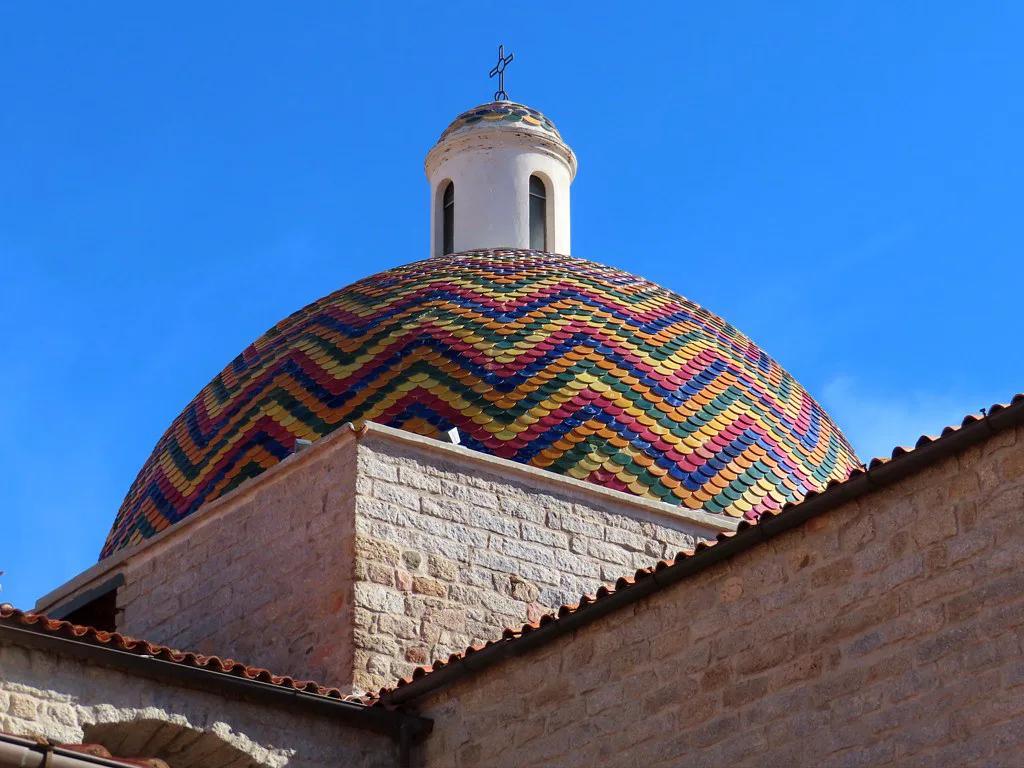
A sensible half day starts at the waterfront, moves through the museum, then crosses into the historic center. The Chiesa di San Paolo Apostolo anchors Piazza Civita with its polychrome majolica dome, and its parish life means entry is normally free but the building may close during services. Dress modestly and keep voices low, and check notices on the door for seasonal Mass times rather than relying on a listed schedule.
From San Paolo, Corso Umberto I is the pedestrian spine of the center, with boutiques, cafés and Liberty-style buildings worth a slow walk. The Centro Storico is compact and easy on foot, so a museum stop plus a church and a stroll is realistic rather than rushed. If you are building a longer day, the Olbia one day itinerary helps you sequence these pieces without backtracking.
For a green pause near the center, Parco Fausto Noce spreads over roughly eighteen hectares of Mediterranean planting with paths, playgrounds and a pond. It is a local park, not a sight, and that is its appeal between museum and church. If you prefer quieter corners of the city, the hidden gems in Olbia guide points to places beyond the main circuit.
Practical Planning: What To Verify Before You Go
Published sources contradict each other on the museum's admission. A budget-travel page lists an approximate entry figure while user comments on a mapping site describe free entry, and neither is an official statement. Do not budget from either; check with the museum and the regional museum authority before you travel, and ask whether any reduced categories apply.
Opening days are similarly unverified. One travel guide states the museum opens Tuesday to Sunday, while user tips on a mapping service describe it as open every day with free admission. That is a clear conflict, so confirm the weekly schedule and any holiday closures in advance rather than arriving on a whim. The safest approach is to contact the museum directly in the week before your visit and ask about current hours and entry.
If you plan to add San Simplicio's Civitatense museum, check its admission separately and in advance; regional heritage pages direct visitors to call the property for current ticket information. Some sources describe guided tours there, and the basilica necropolis may require advance booking for a visit. Neither arrangement should be assumed for the Peddone museum, so ask each site what it actually offers.
A Half-Day Walking Sequence
Start at the harbor waterfront and walk the bridge to the museum while the light is fresh. The seafront lets you see ferry traffic that has defined Olbia for centuries, and the Peddone setting makes more sense after that. Give the museum a focused visit rather than a full morning; sources describe a two-floor exhibit, so planning for roughly an hour or two of reading time is realistic for most visitors, though that is a suggestion rather than an official duration.
Back on the mainland, head into the center for the Chiesa di San Paolo Olbia and its tiled dome, then walk Corso Umberto I toward the basilica area. If the Civitatense museum is open and you have time, add it; if not, the basilica itself is a rewarding stop on its own. Finish with a park stroll or a seafront coffee depending on the weather.
Who The Museum Suits, And Who Might Skip It
History-focused travelers get the most from the shipwreck material and the necropolis links, especially if they have already seen San Simplicio. Families with older children who can read labels will find the harbor story clear and concrete; the displays are not designed as hands-on play, despite claims on some budget-travel pages about interactions and dress-up. Treat those claims sceptically and plan for reading, not touching.
Rainy-day planners will find a compact indoor stop, but those with limited time and no particular interest in maritime archaeology may prefer to spend the hours on churches and the waterfront instead. If your priority is the coastline, the Costa Smeralda and the islands are close enough for a separate day. Either way, do not expect a full morning's worth of exhibits.
Make The Harbor The Thread
The museum works best when you treat it as the indoor chapter of a harbor walk. See the waterfront, cross to Peddone, then follow the Roman necropolis thread to San Simplicio and the Civitatense museum. That sequence turns scattered displays into a story about a port that has been in business for more than two thousand years.
Before you travel, confirm the museum's current opening days and admission with the museum or the regional authority, because published sources disagree. Confirm the Civitatense museum's terms separately. Build the rest of your day around walking and churches, and leave margin for the small surprises of the center rather than squeezing in one more sight.
Frequently Asked Questions
How much does the Museo Archeologico di Olbia cost?
Sources conflict: one budget-travel page lists an approximate entry figure, while user comments describe free admission. Neither is official. Contact the museum or the regional museum authority in the week before your visit and ask for current admission terms and any reduced categories, rather than budgeting from a third-party listing.
Is the museum open every day?
That is unverified. One travel guide reports a Tuesday-to-Sunday schedule, while user tips describe daily opening, so the two do not agree. Confirm the current weekly days and any holiday closures directly with the museum before you plan your day around it.
How long should I allow for the museum?
Sources describe a two-floor exhibit focused on Olbia's port history. For most visitors, a focused hour or two of reading is realistic, but that is a planning suggestion rather than an official duration. If you plan to add the Civitatense museum at San Simplicio, allow separate time and confirm its opening separately.
What can you see besides the Roman ships?
The collection spans the Nuragic, Phoenician, Punic, Greek, Roman and medieval phases of Olbia and its gulf, with amphorae, ceramics, coins and everyday objects. Material from the Roman necropolis near San Simplicio is also displayed here, which makes a paired visit with the basilica worthwhile.
Should you visit the museum and San Simplicio on the same day?
Yes, they pair well, but treat them as separate visits. The Peddone museum and the Civitatense museum at San Simplicio have separate admission arrangements, and one ticket should not be assumed to cover both. Check each site's terms and the basilica necropolis booking requirements in advance.
Is the museum good for children?
It is better suited to older children who can read labels than to very young ones. Some budget-travel pages claim hands-on exhibits, craft activities and dress-up, but those claims are unverified and should not be relied upon. Plan for reading and looking, and keep the visit short.
Sources
- Olbia
- Olbia: Sardinia's Hidden Gem Village in Italy
- Olbia, Sardinia: 11 Best Things To Do And 7 Best Beaches
- Museo Archeologico di Olbia – trasy pro pěší a cyklistiku | Komoot
- Chiesa di San Paolo Apostolo Olbia - Discover History | Sardinia Blog
- SardegnaCultura - Olbia, Museum Civitatense - Basilica of San Simplicio
- 5 Must-Visit Places Near Olbia | Wonderful Italy
- Parco Fausto Noce - Olbia
Continue exploring
More guides you'll find useful





