
Chiesa di San Paolo Olbia: Majolica Dome Guide
A guide to Olbia's San Paolo church: its majolica dome, layered history, hilltop setting, and how to time a quiet old-town walk around parish life.
On this page
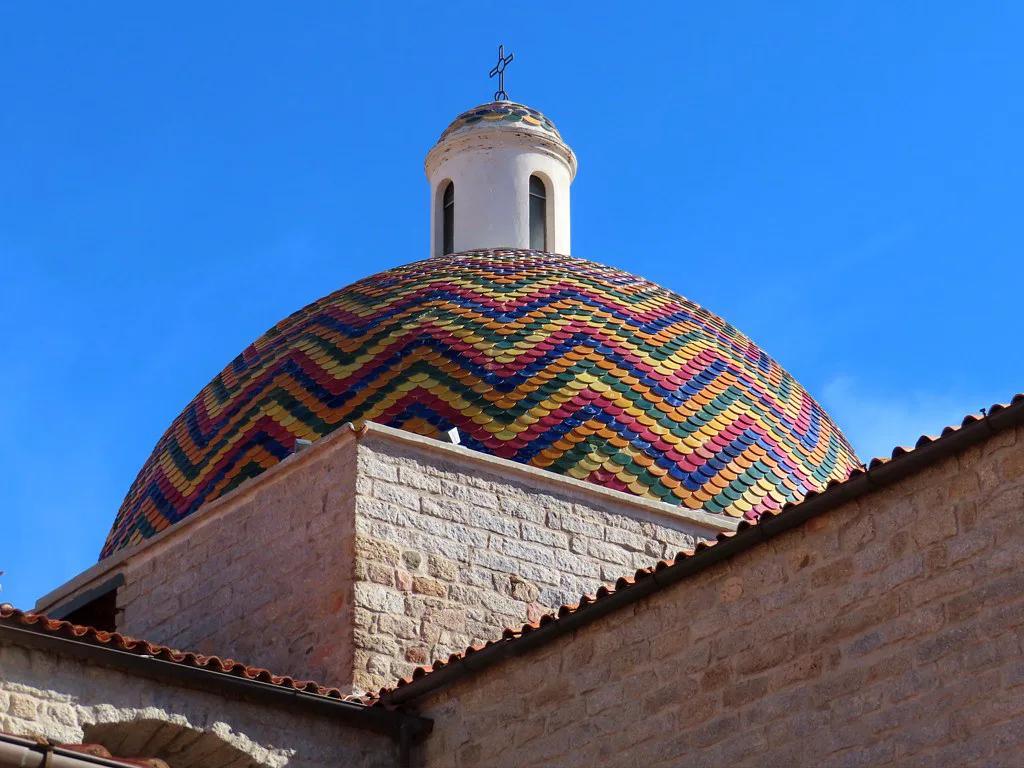
From the harbour and much of the centro storico, a dome covered in coloured majolica tiles marks the high point of Olbia's old town. That dome belongs to the Chiesa di San Paolo Apostolo, a working parish church on Piazza Civita, and it is the reason many travellers add a short detour between Corso Umberto and the waterfront. A suggested allowance of roughly 45 to 60 minutes is enough for the church and its square; that is an editorial estimate, not an official duration. This guide explains what the building is, what to look for inside, and how to plan a visit without relying on schedules the parish has not published.
Where the Church Sits in the Old Town
San Paolo stands at Piazza Civita, in the upper part of Olbia's historic centre, a setting the city's port guide describes as the highest point of the old town. That position explains why the dome works as a wayfinding device: you can orient yourself by it while walking the lanes below. Address listings for the parish give Piazza Civita 3, in the 07026 Olbia postcode.
The church is a short walk from the places most visitors already pass through, though the climb is gentle rather than flat. A visitor guide estimates roughly ten to fifteen minutes on foot from Olbia's railway station, and fifteen to twenty minutes from the port along the older streets. Treat those figures as planning estimates rather than guarantees, since gradients and your starting point both matter.
If you are building a wider itinerary, this church pairs naturally with the other stops in our Olbia Attractions collection, which covers the city's Romanesque basilica, its archaeology museum and its harbourfront. Pairing San Paolo with one or two of those keeps a city day compact and walkable, and it avoids zigzagging across town.
The Dome: Polychrome Tiles Above Granite
The dome's multicoloured tiles are the church's signature feature, contrasting with the grey granite that dominates northern Sardinian architecture. Lonely Planet describes the covering as a Valencian-style dome added after the Second World War, so treat the Iberian label as a descriptive comparison rather than a documented design brief. Whatever its stylistic ancestry, the result is a landmark that photographs well from the square below.
The dome is not original to the earliest church on the site. The regional tourism board Gallura Turismo records that a 1939 intervention reshaped the building from a rectangular plan into a Latin cross with a transept and dome. That campaign also removed the old oratory of the Confraternita della Santa Croce, which had stood against the church's southern side. Knowing this helps you read the building as a series of decisions rather than a single frozen design.
Light matters more than you might expect. Morning sun makes the tiles glow from the square, while late afternoon warms the granite and the dome takes on a deeper tone. A local guide notes that the dome becomes a photographic subject at sunset, when residents still stop to capture it. If you only have one slot, choose whichever fits your walk rather than rearranging a whole day around the light.
A Layered History, From Tradition to Rebuilding
Local tradition places a Punic-Roman sanctuary, probably dedicated to Hercules or Melqart, on the acropolis area where the church now stands. The port guide hedges this appropriately, describing the identification as the view of some scholars based on finds including a mid-fourth-century BC structure and fragments of archaic Greek pottery. It is a persuasive story rather than a settled fact, so enjoy the layers without treating every plaque claim as proven.
The fabric you see is largely the product of eighteenth-century work, and an inscription inside the church carries the year 1747. Gallura Turismo cautions that the date may refer to a restoration or reconsecration of an older building rather than a fresh construction. The same source notes medieval phases and possible use as a palatine chapel of the Judges of Gallura, which is a reminder that the present baroque character sits on much older foundations.
The parish's later role in the city is part of the story too. According to Gallura Turismo, San Paolo remained Olbia's only parish church until 1954, which explains why it looms so large in local religious memory. That historical weight is worth keeping in mind when you step inside: this is a building that carried a community's rituals for generations before tourism arrived.
What to Look For Inside
Inside, expect an intimate single nave rather than a museum-scale interior. Gallura Turismo highlights eighteenth-century wooden choir stalls and a wooden pulpit, along with sacred silver kept in the sacristy, including a silver halo and sandals associated with the Assumption and a Palermo-made monstrance. These are the kinds of objects that reward a slower look rather than a quick circuit.
The port guide adds that the granite interior carries panels translating Latin texts about the life and conversion of Saint Paul, which gives the decoration a narrative thread. Look for the contrast between the austere stonework and the softer baroque touches added in later renovations. The pairing is what makes the interior feel local rather than generically ornate.
Some online listings mention crypts and specific fresco attributions, but these details are not confirmed by the parish or a regional authority. Without official confirmation, treat them as things to ask about on site rather than reasons to plan the visit. A short, honest look at what is actually visible will serve you better than a checklist assembled from aggregator pages.
Planning a Visit Around Parish Life
San Paolo is an active parish, not a ticketed monument, and that shapes how you should time a visit. Sources agree that services take priority and that opening periods can vary by season, so check the notices on the church door or call the parish before making a special trip. Contact listings for the church give the number +39 0789 22265, and Trip.com notes that visitors should confirm current hours directly with the attraction.
Our suggestion is to allow roughly 45 to 60 minutes for the church and the square, with more time if you linger over the viewpoint or stop for coffee nearby. That is our planning estimate, not an official duration. If a service is in progress, wait outside or return later rather than treating the nave as a sightseeing corridor.
Dress and behaviour matter here. Cover shoulders, keep voices low, and avoid photography during worship, because this is a place of active devotion rather than a heritage attraction with fixed visitor rules. There is no reliable published statement that entry is currently free, so ask locally or check parish notices rather than assuming.
The Feast of Saint Paul: What Is Documented
The feast of Saint Paul the Apostle is traditionally associated with 29 June, when the square around the church fills with processions and families. That date appears in local guide material, but the parish has not published a programme of services, procession routes or timings that can be relied on in advance. If a June visit matters to you, contact the parish directly rather than planning around a blog description.
For a broader view of what is happening in the city during your stay, the Comune di Olbia publishes a running events calendar alongside its institutional notices. It is a useful cross-check for cultural events but does not replace parish information for religious celebrations. Use both together rather than relying on either alone.
If you want a quieter experience, aim for an ordinary weekday rather than a feast day, and build the church into a broader wander. Our guide to hidden gems in Olbia can help you fill the rest of the day with lesser-known corners of the centre and its surroundings.
Nearby Sights That Fit the Same Walk
The Basilica di San Simplicio is the obvious companion, a Romanesque granite church that the regional culture department calls one of the two poles of Olbia's identity alongside San Paolo. SardegnaCultura lists the Civitatense Museum at the basilica with access Monday to Saturday and a fee-based entry mode, and notes that ticket information should be confirmed with the property by phone before you go. It is a separate site from San Paolo, so do not assume a shared ticket.
Corso Umberto I runs below the old town and is the natural route between the church, the shops and the waterfront. The archaeological museum on the small Peddone island is a further short walk and gives context to the Roman port that made Olbia wealthy. Together these three stops make a coherent half day without any need for a car.
If you want a licensed guide to put the church in context, the local guides association lists San Paolo among the sites it covers alongside the sacred well of Sa Testa and the basilica. Booking through a guide is a reasonable option if you want the history explained rather than read from a plaque. Otherwise, the square and the surrounding lanes are easy to explore independently.
Plan Your Visit
San Paolo rewards a modest amount of planning: check the parish notice or call ahead, dress respectfully, and give the church and its square about 45 to 60 minutes as a suggested allowance. The dome delivers the photograph, but the layered history and the working-parish atmosphere are what make the stop memorable. Build it into a walk between Corso Umberto and the waterfront, and pair it with San Simplicio or the archaeology museum if you have a half day.
Frequently Asked Questions
Where is the Chiesa di San Paolo in Olbia?
It stands on Piazza Civita in the upper part of Olbia's historic centre, a short uphill walk from the railway station and the port. Address listings give Piazza Civita 3 in the 07026 Olbia postcode.
Why does the dome have coloured tiles?
The polychrome majolica covering is a later addition, generally described as post-war and often compared to Valencian tilework. It contrasts with the granite that dominates northern Sardinian architecture and has become the church's most recognisable feature.
Is entry free and when can I go inside?
The church is an active parish, and no operator source confirms current opening hours or a definitive entry rule. Check the notices on the church door or call the parish at +39 0789 22265 before making a special trip.
How long does a visit take?
Allow roughly 45 to 60 minutes for the church and the square as a suggested estimate, with more time if you linger for photographs or a coffee nearby. If a service is underway, wait or return later.
When is the feast of St Paul celebrated?
Local guide material associates the feast with 29 June and describes processions and families filling the square. The parish has not published a confirmed programme of services or procession timings, so contact the parish if the date matters to your trip.
What else can I see near Piazza Civita?
The Basilica di San Simplicio, Corso Umberto I and the archaeology museum on Peddone island are all within a walk of the church. Each is a separate site, and the basilica's Civitatense Museum has its own fee-based access, so check details before you go.
Sources
- Comune di Olbia
- Chiesa di San Paolo Apostolo Olbia - Discover History | Sardinia Blog
- Parish Church of St. Paul the Apostle Tickets [2026] - Promos, Prices, Reviews & Opening Hours | Trip.com
- Chiesa Parrocchiale di S.Paolo Apostolo: Visitor Guide
- Chiesa di San Paolo | Olbia, Italy | Attractions - Lonely Planet
- Olbia: Basilica di San Simplicio e chiesa di San Paolo e i dolmen - Gallura Turismo
- Olbia old town: the Basilica of San Paolo and what to do | Kombo Street
- Chiesa Parrocchiale di San Paolo Apostolo | Port of Olbia
- Guide Turistiche Olbia: visite guidate, archeologia e tour in Gallura
- SardegnaCultura - Olbia, Museum Civitatense - Basilica of San Simplicio
Continue exploring
More guides you'll find useful





