Norman-Swabian Castle in Bari: What to See Inside
Plan a visit to Bari's Norman-Swabian Castle: which parts are free, what the ticket covers, what's inside, and how to fit it into a slow Old Town half day.
On this page
The castle that anchors Piazza Federico II di Svevia is Bari's most imposing piece of medieval military architecture, and it sits a few minutes' walk from the lanes of the Old Town. Most travellers treat it as one sight; in practice it splits into two visits, one free and one ticketed, and knowing which is which changes how you plan the stop.
One caution before you plan around numbers: published hours and prices for the castle differ between sources, and it is not clear which figures are current. Treat any specific time or price you read elsewhere as provisional and confirm against the regional museums service before you travel. The sections below flag what needs checking rather than repeating doubtful figures.
Why the Castle Matters: Norman Origins and the Norman-Swabian Name
The fortress is usually dated to the 12th century and linked to the Norman King Roger II, which is why older texts call it simply the Norman castle. It was refortified in the 13th century under Frederick II of Swabia, and that second phase explains the compound Norman-Swabian name. Later rulers left their own layers, so what you see is a palimpsest rather than a single-era building.
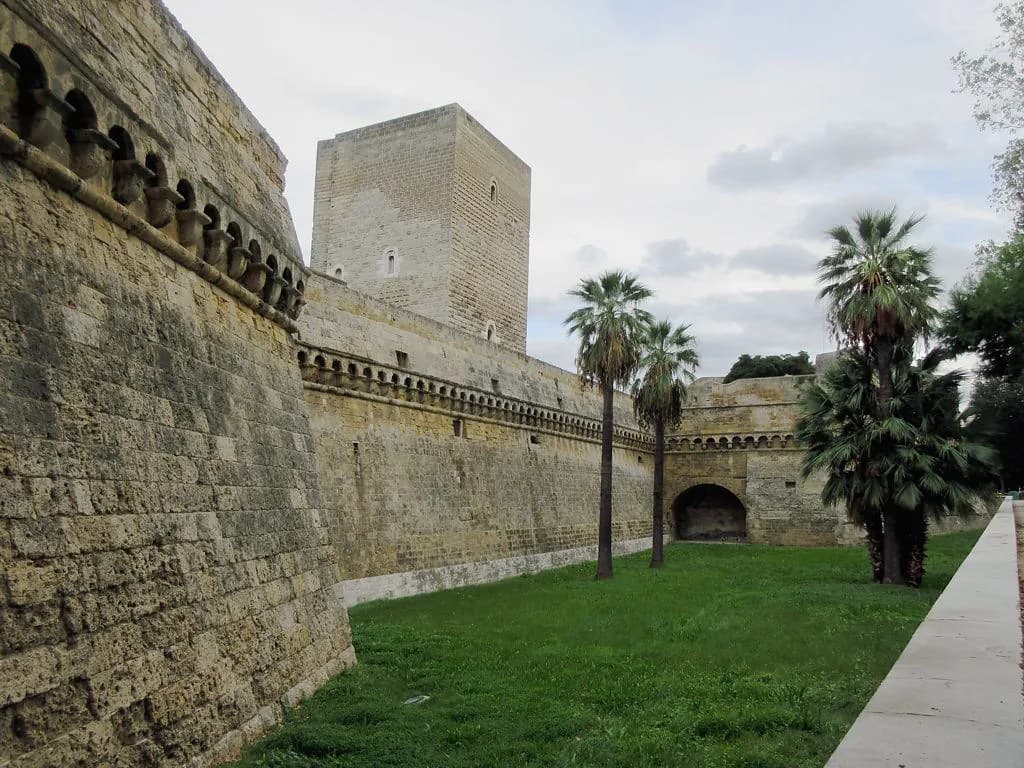
That mixed ancestry shows in the architecture: heavy stone walls, fortified towers and a moat that once formed a defensive ring, with traces of several ruling houses layered on top of each other. Photographing the facade alone shows you the cumulative result of repeated sieges, destruction and rebuilding rather than one architect's single design.
Where It Sits in Bari and How to Reach It
The castle occupies Piazza Federico II di Svevia on the edge of the historic centre, between the Old Town and the newer grid of streets inland. From the seafront promenade and the small old harbour it is a short walk, which makes it easy to fold into a waterfront stroll rather than treating it as a separate excursion.
Because it sits at the seam between the two halves of the city, the castle works well as the hinge of a walking day: Old Town lanes in the morning, castle around midday, then the Murat streets for shopping and dinner. If you want a slower read on that newer quarter, a dedicated Murat neighbourhood Bari guide will help you pace the second half of the day.
Free Versus Paid: Ramparts, Towers and Moat
You do not need a ticket to appreciate the outside. Walking the perimeter, the ramparts and the moat area is free, and the museum requires a separate ticket to enter. Budget fifteen to twenty minutes to circle the walls, look up at the towers and take in the scale of the fortifications before deciding whether to go in.
The ticketed interior is its own proposition: it covers the museum and exhibition spaces within the castle, not an all-access pass to every corner of the complex. Do not assume that a castle ticket also covers nearby churches or other museums, each of which has its own arrangements. If you mainly want the atmosphere and the photographs, the free circuit is a legitimate choice.
What's Inside: Exhibitions, Art and Archaeology
Inside, the castle is not presented as a furnished medieval palace. The halls are used for permanent and temporary art and archaeological exhibitions, and some displays feature objects unearthed during work on the castle itself. Expect gallery-style rooms rather than period interiors, which suits some visitors and disappoints others. One account notes that a photo display traces the building's restoration history, alongside ceramics, jewellery and other items. The rooms once associated with Bona Sforza and Frederick II are used for cultural events and periodic exhibitions, so what you can walk into depends on the current programme.
One recurring element in accounts of the interior is a display documenting the building's long restoration, alongside ceramics, jewellery and other artefacts. The castle's structure includes Aragon walls and a main tower used for exhibitions, which helps explain why the visit reads as galleries rather than as furnished royal rooms. Because the exhibition programme changes, check what is actually showing before you commit to the entry fee. A quick look at the entrance or a phone check of the museum's programme will save a wasted ticket.
Frederick II and Isabella of Aragon: What Is History and What Is Legend
Frederick II is tightly bound up with the castle's identity, and it is tempting to repeat the claim that the emperor lived here. The safer reading is that he refortified the building in the 13th century, which is well supported, while the more colourful domestic stories around him are harder to pin down. Treat them as storytelling rather than verified biography.
Isabella of Aragon, who lived in the castle in the 16th century with her daughter, is associated with a cultural revival in Bari, and her period is part of the building's established narrative. The tale of a secret underground passage linking the castle to the Basilica of San Nicola, by contrast, is legend: no confirmed route has been established, and it should be enjoyed as folklore rather than planned as a route.
Opening Hours and Tickets: Verify Before You Go
This is the part of the planning where you should not trust secondhand figures. Published times and prices for the castle differ from one source to the next, and it is not clear which remain current, so the only reliable move is to check the regional museums service shortly before your visit. The Direzione regionale Musei Puglia publishes the official information for the castle.
Practically, that means confirming the day's opening window, whether the museum is open that day at all, and what the ticket includes, rather than relying on a blog post or a photo caption. Reduced and free categories, if any, also need checking against the official page, since eligibility rules change. Build a flexible plan so a closed door does not derail the day.
How Long to Allow and How to Slot It Into a Half Day
As a rule of thumb rather than an official figure, most visitors spend an hour or two inside, and the free exterior circuit takes about twenty minutes. That makes the castle a comfortable one-to-two-hour component of an Old Town morning, not a standalone day out. Add the basilica, the cathedral and a pasta-street wander and you have a full, unhurried half day.
A workable sequence is to start in the lanes of the old centre while they are quiet, reach the castle mid-morning, then finish along the seafront and the old port. That order keeps the sun and the crowds behind you where possible and leaves the afternoon free for a day trip or a slow lunch. For a deeper read on those lanes before you set out, the Bari Vecchia neighbourhood guide covers the main threads.
Is It Worth It With Children?
Families usually get the most out of the exterior: open space, thick walls, towers to point at and a moat to circle, all without a ticket or a queue. The interior is a different matter, since it is a museum-style sequence of displays with modest sensory payoff for younger children. Read the two halves as separate outings and plan accordingly.
The sources reviewed do not describe a dedicated family offering at the castle, so do not count on activity sheets, audio guides or play areas. Cobbled surfaces and stone steps make sturdy shoes sensible, and a short visit with a clear end point works better than a lengthy museum session. If the children are flagging, skip the interior and spend the ticket money on gelato instead.
Pairing the Castle With Nearby Sights
The Basilica di San Nicola, a few minutes away, is the natural companion: it houses the relics of Saint Nicholas in its crypt and is shared by Catholic and Orthodox worshippers, which gives it an unusually ecumenical character. Bari Cathedral at Piazza dell'Odegitria is a short walk in the other direction, and its crypt museum holds excavated remains of an earlier church on the site. Each is worth its own stop.
Then head for Via Arco Basso, the street where local women shape orecchiette by hand outside their doorways, and finish at the old port where fishermen still bring in the catch. That loop keeps you inside the historic centre and avoids a second transport leg. If you want more of these quieter corners, the hidden gems in Bari round-up is a useful next read.
Practical Logistics: Arriving and Getting Around
From Bari's international airport it is roughly a twenty-minute drive to the old centre, and Bari Centrale station puts you within walking distance of the castle. Ferries from Croatia, Greece, Montenegro and Albania arrive at the modern port, which is separate from the small old harbour where the fishing boats moor. Allow a little time to orient yourself between the two.
Driving into the old centre is genuinely awkward and parking is not straightforward, so most visitors are better off on foot or using the city's buses once they have arrived. There is no need to rent a car for a castle-and-old-town day. If you do drive, plan to leave the car outside the historic core and walk in.
Plan Your Visit
The Norman-Swabian Castle rewards a modest, well-sequenced visit: circle the free exterior, decide whether the current exhibitions justify the interior ticket, and keep the rest of the morning for the basilica, the cathedral and the pasta street. Confirm hours and prices on the regional museums site in the days before you go, because the numbers published elsewhere disagree with one another.
Build the castle into a half-day walk rather than a destination in its own right, and let the old town set the pace around it. That approach leaves room for the small pleasures Bari does best: a slice of focaccia, a coffee by the harbour and an unhurried look at the sea.
Frequently Asked Questions
Does the Castello Svevo ticket cover the whole castle?
No. The exterior, including the walls, ramparts, towers and moat area, can be seen without paying. The ticket covers the museum and exhibition spaces inside the castle. Nearby churches and other museums have their own arrangements, so do not assume one ticket covers them. Check the regional museums service for what the current ticket includes.
How long does a visit to the Norman-Swabian Castle take?
There is no official duration. As a suggestion, most visitors spend an hour or two inside the exhibition spaces, and the free exterior circuit takes about twenty minutes. That makes the castle a comfortable component of a half day in the old town rather than a full day out.
Is the castle worth visiting, or is the exterior enough?
It depends on what you want. If you mainly want the atmosphere, the scale of the fortifications and the photographs, the free exterior is a legitimate and rewarding visit. If you enjoy museum displays, ceramics and archaeological finds, the ticketed interior adds a layer. Check what is currently on show before deciding.
Who built the castle in Bari, and why is it called Norman-Swabian?
The fortress is usually dated to the 12th century and linked to the Norman King Roger II, hence the older name Norman castle. It was refortified in the 13th century under Frederick II of Swabia, which is where the Swabian part of the name comes from. Later rulers added their own layers.
Is the castle good for families with children?
The exterior works well for children: open space, thick walls, towers and a moat, all without a ticket or a queue. The interior is a museum-style sequence of displays, which holds less appeal for younger children. The sources reviewed do not describe dedicated family facilities, so plan a short visit and sturdy shoes for the cobbles.
Where is the castle in relation to Bari's Old Town?
It stands on Piazza Federico II di Svevia at the edge of the historic centre, between the old town and the newer streets. The seafront promenade and the old harbour are a short walk away, and Bari Centrale station is within walking distance, which makes it easy to slot into a walking day.
Sources
- Visit Castello Svevo Di Bari in Bari | Live the World
- Bari - beaches, attractions - what to see? - Via Italia GUIDE
- 17 Unexpected Things To Do In Bari, Italy - The Globetrotting Teacher
- 17 Fun Things to do in Bari, Italy - Adventurous Kate
- Official event website
- Castello Svevo di Bari in Bari, Puglia | Ask Anything
Continue exploring
More guides you'll find useful