Trento Market Guide: Shopping Like a Resident
Plan a Trento market morning with our guide to Piazza Fiera and covered market stalls, seasonal produce, gourmet shops and a relaxed café stop.
On this page
Trento rewards travellers who shop the way residents do: with a basket, a rough plan and a willingness to ask questions at the counter. The city centre is compact enough to combine an outdoor market, a covered hall and a specialist food shop in one unhurried morning, with a café stop built in. The practical catch is that market days and stall hours vary, so treat any published schedule as indicative and confirm before you travel.
Why Trento Suits Market-Minded Travellers
Trentino's food identity is mountain-fed: aged cheeses, cured meats, apples from valley orchards and single-flower honeys from small beekeepers. Much of that production happens on a small scale, which means sellers at Trento markets often cut, slice and explain rather than simply ring up a purchase. For a visitor, that turns a grocery run into the most useful introduction to the region's larder.
The city also works as a market base because the surrounding valleys supply it directly. Val di Non, Valle dei Laghi and Vallagarina all sit within reach for travellers with a car and time to visit producers, though most small operations expect a call ahead rather than walk-in visitors. Within the centre itself, the Comune di Trento is the reference point for city information and event listings.
Timing matters more than any list of addresses. A Saturday morning gives you the widest choice, while a weekday visit leans on the covered hall and shops instead. Decide which of those two experiences you want before you book accommodation, because arriving on the wrong day is the single most common way to miss the outdoor stalls.
Map the Stalls Before You Go
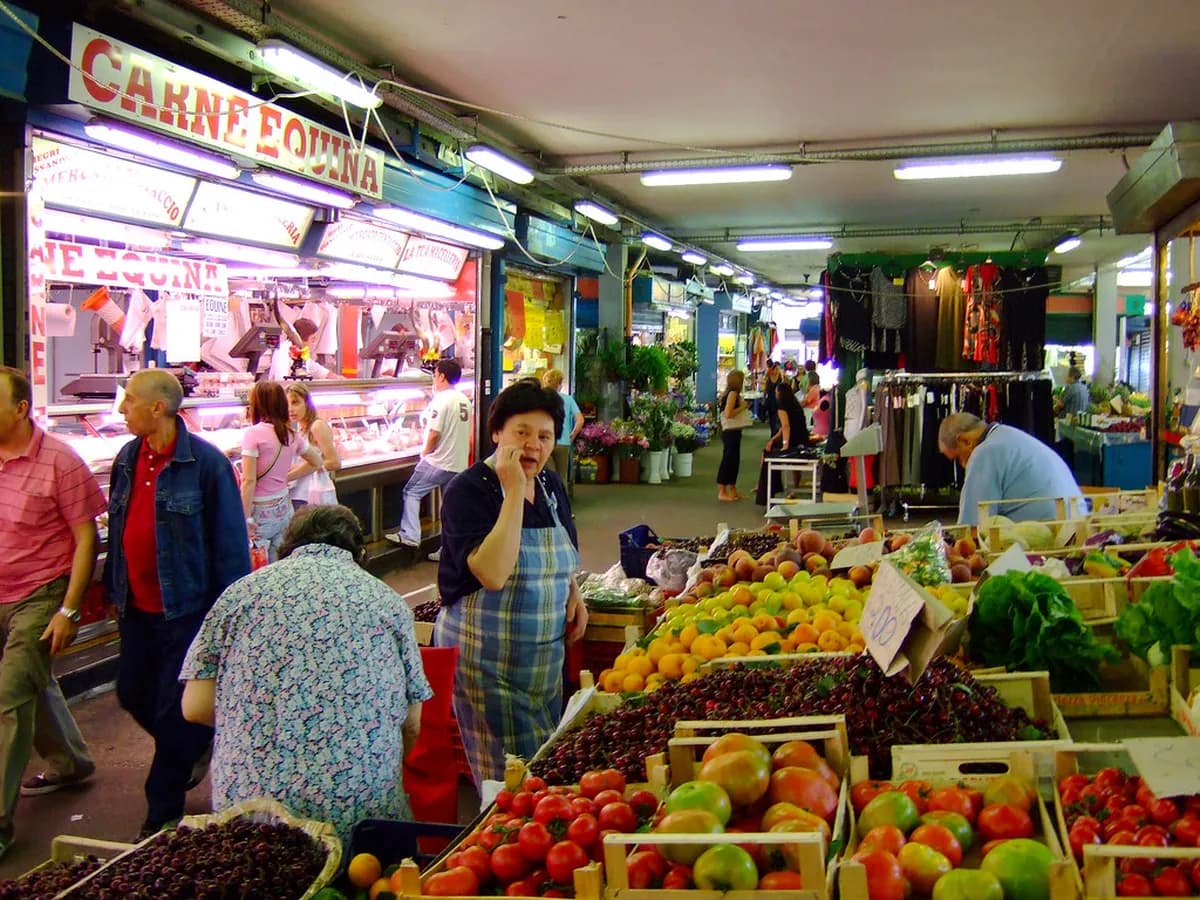
Three distinct shopping settings sit close together in the centre, and each serves a different purpose. The outdoor market at Piazza Fiera is the big weekly event, best for seasonal fruit and vegetables, meat and cured-meat stalls and the occasional non-food stand. The covered market near Piazza Vittoria is the weather-proof option, with a fishmonger, butcher, cheesemonger and delicatessen under one roof. The Coldiretti farmers' market on Piazza Dante Alighieri is the smallest and most focused, built around member producers selling honey, jams and small-dairy cheeses.
Published timings for these markets circulate widely online, but they are indicative rather than official. One visitor guide lists the Piazza Fiera market as a Saturday morning fixture and the covered market as open Tuesday to Saturday with a midday break and an afternoon session, while the farmers' market is described as a Wednesday morning event that varies by season. Use those patterns to plan your week, then verify the current schedule locally before relying on them.
Trentino's tourism board frames the region's retail landscape around weekly markets, farmers' markets, seasonal fairs and shopping centres, with the Christmas markets taking over town squares in winter. That seasonal swing is worth knowing: a December visit is a different shopping trip from a June one, and the Christmas stalls are a distinct experience from the produce markets.
If markets are only part of your trip, the city's quieter corners fit neatly around a shopping morning. The Castello del Buonconsiglio and the streets below it make a natural continuation once your bags are full, and a walk through the historic centre costs nothing beyond time.
What to Buy When: A Seasonal Shopping List
Apples are the backbone of Trentino's orchards, and valley-grown fruit appears in baskets across the markets through the autumn. Pressed mountain cheeses, fresh ricotta and butter from small dairies are available year-round but change character with the grazing season, so ask what is youngest and what has been aged. Speck and hand-made salami sit alongside them at the deli counters. Further visitor details appear in Trento Foodie Guide: Best Local Markets & Gourmet Shops.
Honey deserves its own pause. Trentino beekeepers produce single-flower varieties such as acacia and dandelion alongside mountain wildflower blends, and the floral origin genuinely changes the flavour. Ask which flowers were in bloom and whether the jar is raw, because crystallisation is normal in unpasteurised honey and not a defect.
Seasonality extends to what you should not buy. Cherries and other soft fruit have narrow windows, alpine cheeses are most varied after summer grazing, and cured meats keep better in cool months for travellers without a fridge. Build your basket around what is in front of you rather than a fixed shopping list.
For a picnic, the covered hall is the efficient stop: bread, cheese, sliced speck and a piece of fruit can be assembled in one building. For gifts, honey and vacuum-packed cheese travel better than anything fresh, and small jars leave room for wine later in the trip.
Covered Market Strategy for a Picnic or Suitcase
The covered market is the answer when it rains, when you are leaving early the next day, or when you want a cheesemonger who can advise on portions. Ordering by weight rather than by piece lets you buy exactly what fits a picnic or a suitcase, and asking for a taste is entirely normal at a cheese or salumi counter.
The trade-off is cold chain. Fresh cheese and sliced meat should not sit in a warm bag all afternoon, so buy them late in the day or carry an insulated pouch. If your plan includes a long walk or a museum visit after shopping, reverse the order and shop last.
Beyond the hall, Trento has specialist shops worth knowing for gifts: delicatessens selling oils, vinegars, preserves and pasta, and cheese shops that vacuum-pack portions on request. A visitor guide describes vacuum sealing as a service offered at cheesemongers and salumerie, sometimes for a small fee. Confirm the service and any charge at the counter rather than assuming.
Wine belongs in the same errand if you are organised. Teroldego from Vallagarina and other regional bottles appear in Trento wine shops and bars, and half-bottles are a sensible way to sample without overloading luggage. Ask about shipping if you are buying several bottles.
Reading Labels and Asking for a Taste
Italian food labels carry origin and certification marks that are worth a glance. PDO and PGI stamps tell you a product follows a defined method and area, while simpler labels may still come from small local producers without certification. Neither is a guarantee of quality on its own, but the marks help you tell a protected regional speciality from a generic imitation.
On cheese, ask about ageing before deciding. A young pressed cheese suits a picnic the same day, while a long-aged wheel is firmer and better for transport. On honey, ask about floral source. On cured meats, ask for hand-slicing if the counter offers it, because the cut affects texture more than most visitors expect.
Haggling is not the norm in Italian food shops, but asking for a small concession on a bulk purchase is acceptable in a friendly way. Sampling, by contrast, is normal and expected at counters. Let the seller guide you rather than negotiating hard over a few euros.
Getting Your Haul Home Intact
Pack in the order of fragility. Honey and oil jars go in sealed bags, wrapped in clothing in the middle of a suitcase. Bottles travel on their side in protective sleeves. Cheese and cured meats should be vacuum-packed and, where possible, bought near the end of the trip.
Airline liquid rules apply to oils and vinegars in cabin baggage, so plan on checking them or buying smaller bottles. Animal-origin products may face checks when crossing borders, so declare where required. None of this is particular to Trento, but a market basket makes it easy to forget until you are at the airport.
Ask vendors for storage advice before you leave the stall. They can tell you whether a cheese should be eaten within days, whether a salume needs refrigeration, and how to bring a chilled item back to room temperature. That conversation is more useful than any generic packing list.
Producers in the Valleys Around Trento
If you have a car and a spare day, the valleys around Trento open up direct buying. Val di Non, Valle dei Laghi and Vallagarina hold small dairies, beekeepers, oil mills and cooperative cellars, some of which welcome visitors by appointment. The visitor guide that lists them stresses calling ahead, because these are working farms rather than shops with fixed public hours.
A cooperative cellar in Rovereto is described as reachable in roughly half an hour by car from Trento, with guided tastings that usually need booking. Outside the city, mountain producers tend to work early mornings around milking and production, so an early visit gives you a better chance of seeing the work in progress.
Treat every visit as unconfirmed until you have spoken to the producer. Availability shifts with the season and no valley itinerary can promise a welcome. The safer plan is to choose one producer that matches your interests, call ahead, and let the rest of the day stay flexible.
Budgeting Without Guesswork
Published prices for markets and shops go stale quickly, so use them only to sense relative cost. The more reliable method is to watch the per-kilo figure at the counter and ask for a smaller quantity when a piece looks larger than you need. Sliced meats and aged cheeses are the items where a casual request can produce an expensive bag.
Buying by weight also protects against waste. A quarter-kilo of cheese is plenty for two people's picnic, and a small jar of honey is a better souvenir than a litre bottle you have to check in. If you cannot find a posted price, ask before the seller cuts.
Keep some cash on you. Small producers at Italian markets sometimes run card readers, sometimes not, and a few euros in coins covers the stall that does not. Cards are usually accepted at established shops, but that is not a rule to build a day around.
Pairing Your Haul at the Table
A ripe Teroldego with a long-aged pressed cheese is the classic Trentino pairing, and it works because the wine's structure stands up to the salt and fat. A lighter white such as Müller-Thurgau suits fresh cheeses and softer flavours. If you are unsure, ask at the wine shop for a pairing that matches the exact cheese you bought.
Honey is the flexible finish. A spoonful of mountain wildflower honey alongside an aged cheese is a simple dessert that needs no kitchen. Local oil and vinegar complete a picnic assembled entirely from market purchases, with bread from the covered hall.
If your accommodation has no kitchen, keep the menu cold-friendly: cheese, salumi, fruit, bread, honey and a half-bottle of wine. That combination needs no cooking and packs down easily for a train.
A Slow Half-Day Route Through the Centre
Start early at the outdoor market, when the best produce has not yet been picked over. Walk the stalls once without buying to compare, then return for what looked best. Move to the covered hall for bread, cheese and sliced meat, and finish in a delicatessen for gifts.
Build in a café stop between the two shopping stops rather than at the end. A short sit-down gives you time to reorganise bags and decide whether the fresh cheese you bought will survive the rest of the day. Trento's centre has plenty of cafés, so choose one on your route rather than detouring.
Finish with something that is not shopping. The city's quieter streets and squares make a natural loop from the market area, and the hidden gems in Trento guide gives options for an afternoon that does not depend on opening hours.
Common Mistakes to Avoid
Arriving late is the easiest error to make. Outdoor stallholders sell out of the best produce and pack up earlier than the official closing time suggests. Aim for the first couple of hours and treat any later arrival as a bonus.
Packing cheese at the last minute is the second. If your train or flight is the next day, buy fresh items then, not at the start of a week of travel. For the suitcase, choose vacuum-packed cheese and honey, and leave soft cheeses for eating on the spot.
Finally, do not treat a weekday as a market day without checking. The covered hall and shops fill the gap, but the Piazza Fiera experience is a weekly event rather than a daily fixture. Build your itinerary around the market you can actually reach.
Plan Your Trento Market Morning
Trento works best for market-minded travellers who match their day to the stalls that are actually open. Pick a Saturday for the outdoor market, a wet day for the covered hall, and a short weekday morning for the farmers' market. Confirm the current schedule with the Comune di Trento or your accommodation before setting out.
Buy seasonally, ask for a taste, keep the cold chain short and pack fragile items last. If you have time, add a call-ahead visit to a valley producer. That combination turns a shopping errand into the most memorable food day of a Trentino trip. For related planning, see Free Things to Do in Trento: A Budget Guide to Churches, Squares and Walks.
Frequently Asked Questions
When does the Saturday market at Piazza Fiera in Trento take place?
Visitor guides describe the Piazza Fiera outdoor market as a Saturday morning event, sometimes with extra Friday sessions in season. Those timings are indicative rather than official, so check the current schedule with the Comune di Trento or your accommodation before travelling.
What should I buy at Trento's covered market?
The covered market near Piazza Vittoria is the place for bread, cheese, sliced cured meats and fish under one roof, which makes it the best stop for a picnic. Ask for a taste at the cheese and salumi counters and buy fresh items late in the day if you have nowhere cold to store them.
Do Trento market vendors accept cards?
Established shops generally accept cards, while smaller producers at outdoor and farmers' markets may prefer cash. Carry some euros in coins and small notes as a precaution, and ask before the seller cuts if you are unsure.
What local food is worth bringing home from Trento?
Honey, vacuum-packed aged cheese, olive oil and regional wine travel best. Ask for vacuum sealing at cheesemongers and salumerie, seal jars in bags, and check airline liquid rules before packing oil or vinegar in cabin baggage.
Can I visit producers in the valleys around Trento?
Val di Non, Valle dei Laghi and Vallagarina hold small dairies, beekeepers and cellars, some of which welcome visitors by appointment. Call ahead, expect seasonal availability, and treat any published opening hours as a guide rather than a promise.
Is haggling normal at Trento food markets?
No. Italian food sellers set their prices, though a friendly request for a small discount on a bulk purchase is usually acceptable. Tastings, by contrast, are a normal part of buying at cheese and salumi counters.
Sources
Continue exploring
More guides you'll find useful