One Day in Vicenza: A Walkable Palladian Plan
A realistic one-day Vicenza itinerary: Piazza dei Signori and the Basilica in the morning, Teatro Olimpico as the afternoon anchor, Villa La Rotonda as an add-on.
On this page
Vicenza packs an unusual density of monumental buildings into a small historic core, which is exactly what makes a single day here workable. Rather than chasing every Palladian site in the province, build the day around one square and one interior, then let the streets between them do the rest. This plan suggests roughly a full day on foot in the centre, with Villa La Rotonda treated as a separate decision rather than a compulsory stop. Related guide: Villa La Rotonda Vicenza Guide: Palladio's Masterpiece.
The logic is simple. Travel guides describe the centre as compact and largely pedestrian, with the main railway station a short walk from Corso Palladio, the city's main street. That means you can arrive by train and start sightseeing almost immediately, without needing a car. Anyone who bolts the countryside villas onto the same afternoon will spend more time moving than looking.
Quick Answer: The Shape of a Good One-Day Vicenza Plan
Give the morning to Piazza dei Signori, the Basilica Palladiana and the surrounding streets, and reserve the afternoon for the Teatro Olimpico as your one planned interior. Fill the gaps with Corso Palladio and the side lanes of palazzi, which cost nothing to wander. This structure keeps the day flexible if a queue or a closed door forces a change of order.
What to leave out matters as much as what to include. Vicenza's headline sights are split between the flat centre and the hills and countryside beyond, so one day cannot honestly cover both without rushing. Treat the Palladian villas outside the city, Villa La Rotonda included, as a half-day add-on for another visit or a second day. For wider planning, see Hidden Gems in Vicenza.
Why the Compact Centre Rewards Walking
Travel guides note that the historic centre is small enough that the main attractions cluster within a short walk of one another, and that cars are banned from entering the main historic areas. Visitors arriving by car generally park on the outskirts and continue on foot. That makes a pair of comfortable shoes the single most useful thing to bring.
Vicenza sits on the main railway line between Milan and Venice, and the station is close to the centre. If you are coming from either city for the day, the train removes the parking question entirely. Check current departures and fares with the train operator before you commit, since these change by service and season, and confirm any live disruption with the operator rather than a blog.
Morning: Piazza dei Signori and the Basilica Palladiana
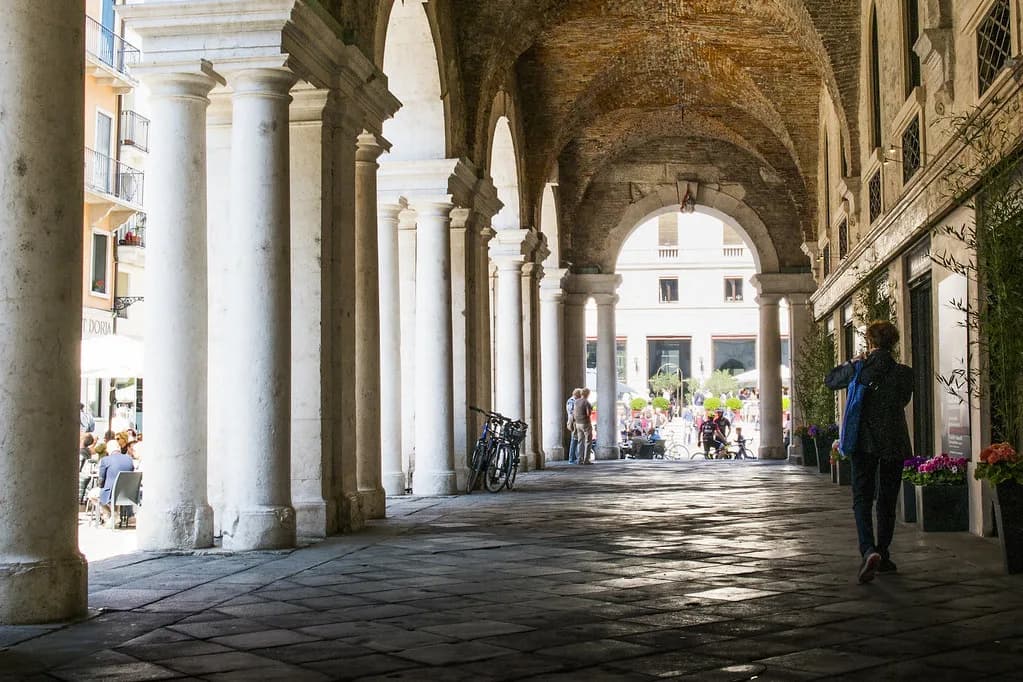
Start in Piazza dei Signori, the city's main square, laid over the site of the ancient Roman forum. The Basilica Palladiana dominates one side, wrapped in the loggias associated with Andrea Palladio, and the tall Torre Bissara rises beside it. Circling the square once gives you the orientation you need for the rest of the day.
Under the arches of the Basilica you will find jewellery shops, a nod to the province's long association with gold production. Manufacturers deal in wholesale, but the retail windows give a sense of the local trade without any appointment. It is a good place to slow down before the day's main interior.
Deciding on the Basilica Palladiana: Terrace or Square?
The Basilica functions as a monument and, at times, as an exhibition venue, so what you can see inside depends on what is currently on. Rather than assuming the upper level is open, check the city's events pages on the day or ask at an information point. If the building is not open to visitors, circling the exterior and reading the loggias from the piazza costs nothing and takes very little time.
This is the first real trade-off of the day. A climb for a view competes directly with the Teatro Olimpico for your limited indoor time. If you can only do one interior, the theatre is the more singular experience and the harder one to replicate elsewhere, so let it win unless the Basilica is the reason you came.
Late Morning: Corso Palladio and the Side Streets
Corso Palladio, the city's main street, runs through the centre lined with shops and palazzi, and the back streets running off it hold numerous palaces Palladio built for local noble families. Wander one or two of these lanes rather than marching the full length of the corso. The reward is a closer look at facades and courtyards you would otherwise pass at speed.
Later buildings in the city also reflect Palladio's influence, alongside medieval fabric that guides date from as early as the ninth century, so the streets are not a single-period showcase. Reading the facades as layers rather than a uniform style makes the walk more interesting. Structured or self-guided walking routes are the best way to avoid drifting.
Lunch Strategy Near the Centre
Keep lunch loose. Rather than tying the day to a specific restaurant's hours, eat when you are near the square and the theatre, and check opening times at the door or by phone that morning. Many kitchens in small Italian city centres close between lunch and dinner service, so a late-afternoon meal is the plan most likely to fail.
A standing coffee and a slice of pizza near the piazza is a reasonable choice if you would rather spend the time walking. If you want a seated meal, make it the fixed point of the middle of the day and build the morning around it. Either way, decide before you arrive so the day does not stall at one o'clock.
Afternoon: The Teatro Olimpico as Your Anchor
The city's own pages describe the Teatro Olimpico as Palladio's last work, commissioned in February 1580 by the Accademia Olimpica. It is the interior that justifies planning your afternoon at all: a small, intimate space rather than a sprawling museum, so the visit fits comfortably into a short slot. Reserve or book only through official channels if the site requires it, and confirm current visiting arrangements directly with the operator.
Access and any capacity limits can change with performances and maintenance, so treat the theatre as the fixed point of the afternoon and arrange everything else around it. Check the operator's current information before you travel rather than relying on an old blog post. If the theatre is closed on your date, the Piazza dei Signori and Corso Palladio walks absorb the extra time easily. For wider planning, see Teatro Olimpico Vicenza.
Teatro Olimpico or Villa La Rotonda: The One-Day Trade-Off
Villa La Rotonda is the other name most visitors associate with Vicenza, and tour operators present it as the epitome of Palladian villa design. But it sits outside the compact historic centre, so reaching it and touring it consumes a substantial part of a day. Trying to pair it with the Teatro Olimpico and a proper look at the square is where one-day plans usually fall apart.
The honest recommendation for a single day is the city. If you must choose, take the Teatro Olimpico: it is central, it pairs naturally with the square, and it requires no extra transport. Save the villa for a visit when you have a car, a driver or a second day. For wider planning, see A Two-Day Vicenza Itinerary.
If You Add Villa La Rotonda: Treat It as a Half-Day
Should you decide the villa is unmissable, give it its own half-day rather than an hour squeezed between city sights. Tour companies list it as part of longer guided or private excursions, and the grounds and interior together take real time. That is where organised tours earn their cost, since they remove the logistics problem. For wider planning, see Hidden Gems in Vicenza.
If your trip includes Venice, some operators run private excursions that combine Vicenza's centre with the villa over a long day. That is a different kind of day from the walkable plan above, and it works best when you accept that the city portion will be shorter. Compare published inclusions carefully before committing, and confirm what is actually visited.
Sequencing the Afternoon So Nothing Is Rushed
A workable order is early lunch, then the Teatro Olimpico while your energy is still good, then a slow walk back through the side streets toward the square. If the theatre slot is fixed for later in the afternoon, put a longer Corso Palladio wander before it. Avoid placing two fixed appointments back to back with no buffer between them.
Build in slack. If you are relying on a train home, choose a departure that leaves room for a delayed entry or a longer-than-expected look around. Live departure boards at the station are more reliable than a printed timetable, so check them when you arrive in the morning.
What to Cut When the Day Runs Short
If time collapses, drop the Basilica climb first, then any shopping detour, then the extended walk. The square, the Corso and the theatre are the irreducible core of a one-day visit. Everything else is bonus, and cutting it does not diminish the day.
What deserves a return visit is the wider Palladian landscape: the villas scattered through the countryside, the museums, and the slower streets you skipped. That is exactly the material for a longer trip, and it is honest to leave it rather than sprint through it. For wider planning, see Museo Civico Palazzo Chiericati Vicenza.
Practical Notes: Trains, Parking and the Pedestrian Core
Arriving by train is the simplest option for a one-day visit, since the station is central and the sights are walkable from it. Drivers should plan to park on the outskirts and walk in, because the historic core restricts vehicles. Do not plan to drive between individual sights inside the centre.
For current civic notices and event listings, the city's official site is the reliable starting point, and it is where civic pages about the Teatro Olimpico sit. Check it in the week before you travel for any official changes to visiting arrangements.
Evening: The Passeggiata and the Lit Square
Finish with a slow walk through the centre as the light drops, returning to Piazza dei Signori for a last look at the Basilica and the Torre Bissara. The evening passeggiata is a good use of an hour a rushed itinerary usually wastes. It also gives you a natural point to decide whether dinner here or back in Venice or Verona suits you better.
If you are staying, this is the moment to pick a table without pressure, checking menus as you walk. If you are leaving, head to the station with time to spare rather than cutting it fine. A calm end matters more than one extra sight.
Plan Your Visit
One day in Vicenza works best when you accept the city's scale rather than fighting it. Anchor the day on Piazza dei Signori and the Teatro Olimpico, walk the Corso and its side streets, and leave Villa La Rotonda for a trip with more time. That plan is realistic and mostly free, and it does not depend on unverified opening hours.
Before you go, confirm the theatre's current visiting arrangements and any Basilica access changes through official sources, and check train times for your return. A Palladian architecture walk is the ideal way to fill the hours between fixed points, and it costs nothing but shoe leather.
Frequently Asked Questions
Is Vicenza worth visiting for a day?
Yes, if you concentrate on the historic centre. The main square, the Basilica Palladiana, Corso Palladio and the Teatro Olimpico sit close together and are walkable from the station, which makes a single day productive rather than frantic. Trying to add the countryside villas is what makes a one-day visit feel rushed.
Can you see Vicenza and Villa La Rotonda in one day?
Only at a push, and not well. Villa La Rotonda lies outside the compact centre, so reaching and touring it consumes a large part of the day. For a first visit, prioritise the city centre and the Teatro Olimpico, and treat the villa as a half-day add-on for a longer stay.
How do you get to Vicenza from Venice or Verona?
The most practical route is by train, since Vicenza sits on the main line between Milan and Venice and its station is close to the centre. Check current departure times and fares with the train operator before travelling, as these vary by service and season.
Is Vicenza easy to explore on foot?
Yes. The historic core is compact, cars are restricted in the main historic areas, and the key sights cluster within a short walk of one another. Comfortable shoes matter more than any transport pass for a centre-focused day.
Sources
Continue exploring
More guides you'll find useful