
Trieste Roman Heritage Walk: Teatro Romano & Ancient Tergeste
Trace Trieste's Roman past on foot from the Teatro Romano, with its burial-and-rediscovery story and a realistic historic-centre loop for slow travellers.
On this page
Trieste layers its history so openly that a single morning can move from Roman stone to Habsburg facades without a ticket barrier in between. This walk is built around one anchor, the Teatro Romano on Via del Teatro Romano, and treats everything after it as context rather than a checklist. It is a slow, self-guided route through the historic centre, not an official trail with signage or a fixed circuit.
The honest scope matters here: the evidence supports detailed history for the Roman Theatre, but not a continuous signed path linking every ancient fragment in the city. So this guide describes one stop in depth, explains what you are looking at from street level, and then suggests a realistic loop uphill and back through the centre. Any hours, entry rules or performances should be confirmed with the city before you go.
Why Trieste Reads as a Layered City
Trieste spent centuries as the Austro-Hungarian Empire's main seaport, which is why the grand squares and cafés feel more Central European than Roman. Underneath that Habsburg surface, the Roman town of Tergeste left a theatre, fragments of walls and inscriptions that now sit between apartment blocks and modern streets. Walking rather than touring is the best way to catch those seams, because the ancient pieces appear suddenly and without fanfare.
The city's own tourism portal treats its heritage as a mix of museums, castles, itineraries and hidden corners rather than a single Roman route, which is a fair reflection of what you will find on the ground. Use that framing to set expectations: you are assembling a walk yourself, stop by stop. Further visitor details appear in Discover Trieste - La tua guida online alla città di Trieste.
Start at the Teatro Romano on Via del Teatro Romano
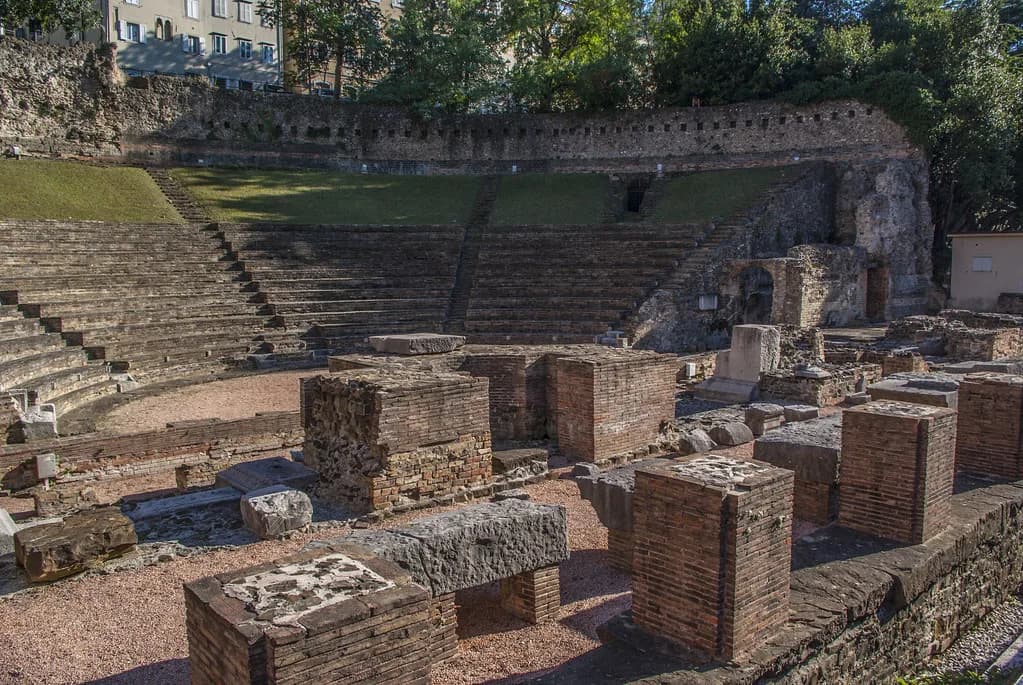
Begin on Via del Teatro Romano, in the historic centre at the foot of San Giusto hill, where the ancient auditorium is built into the slope. The theatre dates to the first century BC and was later expanded in the second century AD, so what you see reflects more than one phase of building. Its original capacity is usually estimated in the thousands, but treat that figure as history rather than anything that governs your visit today.
Because the ruins sit right at street level, you can pause and look without planning a formal visit. Stand on the roadway, look up at the surviving tiers, and read the structure as a bowl cut into the hillside. There is no need to rush the stop, but there is also no reason to build a whole morning around it.
How the Theatre Vanished and Came Back
For centuries the theatre was effectively lost under houses built over the site, which is why Trieste's Roman past surprises visitors who expect ruins to be fenced and signposted. It was identified in 1814, and the structure was only properly unearthed in 1938 during demolition work in that part of the old city. The finds from the excavations, including statues and inscriptions, went into the collections associated with San Giusto Castle rather than staying on the theatre site.
That sequence explains why the ruins feel embedded in the city rather than isolated in an archaeological park. You are looking at a monument that was rediscovered late, and the surrounding streets were shaped by the same demolition that exposed it. Keep that in mind as you walk away and the everyday buildings start to look like part of the story too.
What to Look For From Street Level
Focus on three things: the curve of the seating area cut into the hill, the flat stage zone at the base, and the surviving columns and ornament that hint at the decorative scheme. Travel accounts describe original seating, a stage area and columns adorned with statues, which gives you a reading order as you look. The point is not to inspect every stone but to hold the whole shape in your head as you move.
Remember that the theatre is sometimes used for outdoor summer shows, so the site can look different depending on what is set up. Do not assume you will see the ruins bare, and do not rely on catching a performance without checking the programme. If staging is in place, step back to the street corner to read the original outline.
Orientation: Fitting It Into a Historic-Centre Loop
The theatre sits below San Giusto hill, a few minutes from the cathedral and castle, which makes a natural uphill-and-back loop. Walk up one way and down another so the return feels different, and use the climb as the transition from Roman stone to medieval and Habsburg layers. The San Giusto Cathedral guide covers what to expect at the top if you want to plan that section properly.
Treat the theatre as one stop rather than the spine of the day, because no source describes a continuous signed route connecting Trieste's Roman relics. A practical loop might run from the theatre up to the castle area, then down through the old streets toward the waterfront. Build in slack for pauses rather than timing each leg to the minute.
A Habsburg Detour That Frames the Roman Stop
Coming down from the theatre, the centre shifts abruptly to Habsburg set pieces: Piazza Unità d'Italia opening onto the sea, and the short Canal Grande lined with cafés. Walking these streets after the ruins makes the contrast concrete, because the same city built both. The Canal Grande di Trieste is a useful pause point before continuing.
If the Austro-Hungarian side interests you more than the Roman one, the same streets can be strung into a longer themed day. The self-guided Trieste Habsburg walk covers that circuit in its own right.
Travel accounts consistently note that Trieste rewards walking rather than queuing, and that the old town's monuments and ruins appear around ordinary corners. That is the right pace for this section: keep the route loose and let the architecture set the rhythm.
Practical Decisions: What to Combine and How Long to Allow
One sensible plan is to spend under an hour around the theatre and San Giusto hill, then choose a single larger companion for the rest of the day. Castello di San Giusto keeps you in the historic centre with city and sea views, while Miramare Castle takes you up the coast for a different scale of visit. Published third-party figures for castle hours and admission are not reliable enough to plan around, so check the official websites before setting out. Related guide: Trieste Viewpoints Guide: San Giusto, Miramare and the Carso.
If you want the walk framed by what else is worth seeing in the city, the hidden gems in Trieste guide helps you choose between viewpoints, cafés and quiet corners. And if your trip runs longer, the Trieste 3-Day Itinerary spreads the Roman and Habsburg stops across separate mornings instead of cramming them together.
Where the Walk Ends and What to Pair With It
Finish in the centre with coffee, since Trieste treats its cafés as civic institutions rather than tourist stops. Order a capo in B if you want the local glass-served macchiato, and linger rather than drinking standing up. Travel writers consistently single out historic cafés such as Caffè San Marco as part of the city's identity.
For the evening, head to Cavana for an aperitivo in the narrow pedestrian lanes, or walk out to Barcola if the weather is kind. A local ferry trip to Muggia is another low-effort way to extend the day. Check current ferry schedules before you commit, since seasonal routes and timetables change.
Plan Your Roman Walk
Build the day around one reliable anchor, the Teatro Romano, and treat the rest as a walkable frame rather than a fixed circuit. Verify opening arrangements for castles and museums through the city and official attraction sites, and keep an offline map of the centre so you can improvise.
If you only have half a day, do the theatre, climb to San Giusto hill, and come down for coffee. If you have longer, add the Habsburg streets or a coastal excursion later in the day.
Frequently Asked Questions
Is the Roman Theatre in Trieste free to visit?
The ruins sit on Via del Teatro Romano at street level, and sources describe them as openly visible from the surrounding roads rather than behind a ticket booth. Published sources do not list current entry rules or times for the site, so check official city information before relying on unrestricted access.
When was the Teatro Romano in Trieste excavated?
The theatre was identified in 1814, but its main excavation happened in 1938 during demolition work in the old city. Statues and inscriptions found there are said to be held in the San Giusto Castle collections rather than on site.
How long does the Roman Theatre stop take?
Most walkers will spend a short time looking at the seating curve, the stage area and the remaining columns from street level, then move on up the hill. Treat that as a suggestion rather than an official figure, and allow extra time if you plan to visit the cathedral or castle.
Where is the Roman Theatre in Trieste?
It is on Via del Teatro Romano in the historic centre, at the foot of San Giusto hill, within easy walking distance of the cathedral and castle. The surrounding streets are ordinary city lanes rather than a formal archaeological park.
Can you visit the Roman Theatre at night or watch a performance?
The theatre has been used occasionally for outdoor summer shows, which means the site can be staged rather than bare. Those performances are not guaranteed, so check the city's event listings or official channels before planning an evening around one.
Sources
- Discover Trieste - La tua guida online alla città di Trieste
- Official event website
- Roman Amphitheatre, Trieste, Italy - SpottingHistory
- Via del Teatro Romano, Trieste, Italy - Reviews, Ratings, Tips and Why You Should Go – Wanderlog
- 9 Amazing Things to Do in Trieste That Aren’t Just Tourist Traps
- 12 Best Things to Do in Trieste (From an Expat) - Mamma Mia Indeed
Continue exploring
More guides you'll find useful





