
San Giusto Cathedral Guide: Trieste's Hilltop Mosaics
Plan a visit to Trieste's San Giusto Cathedral, where two ninth-century churches merge into one building with Ravenna-style apse mosaics and a reused Roman gateway.
On this page
San Giusto hill is where Trieste began, and the cathedral on top is not a single building but a merger of two. Approaching from the centre you pass Roman fragments, a medieval castle and the church within a few minutes' walk, so the hill is the most efficient place to read the city's chronology in one stop.
A suggested half day is realistic for the cathedral, the castle and the Roman remains at an unhurried pace. That is a planning estimate, not an official duration. This guide covers what the building contains, which artwork sits in which apse, and where the documentation stops.
Where the Cathedral Sits on the Hill
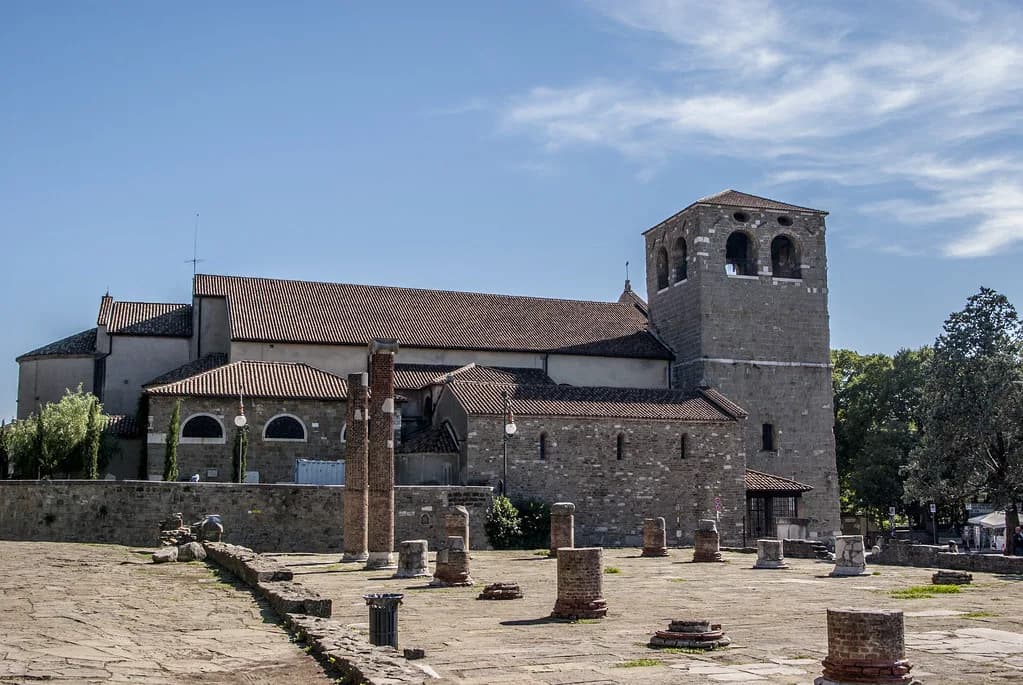
The Cathedral of San Giusto stands on the hill of the same name, in what was the core of ancient Roman Tergeste, at piazza della Cattedrale 2. That address places it beside the castle and within view of the surviving Roman forum remains, so the church belongs to a compact archaeological ensemble rather than standing alone.
Trieste's first inhabited centre developed on this hill, close enough to the sea for trade but elevated for protection, and the most important public buildings followed it upward over the centuries. If you only see the cathedral from the city below, you miss why it is where it is; the climb is part of the visit.
How Two Churches Became One Cathedral
In the ninth century two sacred buildings stood here: a cathedral dedicated to the Assumption of the Blessed Virgin Mary, with a nave, two aisles and three apses, and the smaller Sacellum of San Giusto. They were separate structures with their own apses, which is why the present interior is unusually wide and has two mosaic focal points instead of one.
In the fourteenth century the two were fused into one building by demolishing the right aisle of the cathedral and the left aisle of the sacellum to create a single central nave. Knowing this changes how you read the plan: the nave with its four aisles is the seam where two churches were stitched together.
Earlier still, a fifth-century Early Christian basilica with mosaic flooring had stood where the Roman capitolium once was. The site was sacred ground long before either medieval church was conceived, which is worth holding in mind as you walk in.
Start with the Facade and the Bell Tower
On the facade, look for the Gothic rose window, the element that most clearly marks the visible exterior as a medieval work rather than a Roman or Early Christian one. The solid, squat bell tower behind and beside it incorporates the remains of a Roman propylaeum, a monumental gateway reused as building material, so the tower is at once a campanile and an archaeological exhibit.
A niche on the tower holds a fourteenth-century sculpture of Saint Justus carrying a martyr's palm and a model of the walled city he protects. That small figure is a useful orientation point: it shows that the city's patron saint is the reason for the shrine that became half of this cathedral.
The Apse Mosaics: What to Look For
The two central apses are covered with mosaics in a Byzantine-Ravenna idiom. The first depicts the Virgin Mary enthroned; the second shows Christ with Saint Justus and Saint Servulus. Because they sit in separate apses, comparing them is the best way to see the two-church history of the building without any explanatory panel.
Stand in the nave and look up rather than walking straight through: the interior, with its nave and four aisles, is described as a striking sight, and the mosaics reward slow looking. For travellers interested in medieval art, this is the reason to make the hill a priority rather than an afterthought.
The Chapel of the Treasure
The Chapel of the Treasure holds the reliquary urn of Saint Justus and the Battuti crucifix, both dating from the thirteenth century, alongside the halberd of Saint Sergius. The halberd became the emblem of Trieste and is the object most likely to puzzle visitors, so it helps to know its story before you see it.
According to legend, the weapon fell from the sky into the city forum on 8 October 303, when the holy soldier Sergius was martyred in Syria. Another tradition holds that the weapon-reliquary resists both rust and gilding. Treat both as tradition rather than documented metallurgy: the object is genuine, the sky-fall is not a fact to repeat.
Saint Justus: Legend and Record
Tradition holds that Justus was a Christian martyr thrown into the sea with weights tied to his body, and that the ropes melted so his followers, warned in a dream, could bury him. Local storytelling adds that on stormy nights the sound of lead weights dragged along the street can be heard on the hill, and that the cathedral well's water had healing powers.
The documented record is narrower: the relics of San Giusto were kept in one of the two churches, and the saint gave his name to the cathedral and the whole area. He is celebrated each year on 3 November, when, according to local guidance, many museums offer free or discounted access, though it is worth confirming the current year's arrangements rather than assuming them.
Keeping legend and history apart matters here because the building invites both. The Roman propylaeum in the tower, the ninth-century apses and the fourteenth-century union are features you can trace; the halberd's fall and the well's powers are stories that explain why objects were treasured, not evidence of what happened.
Reading the Hill as One Archaeological Ensemble
Beyond the cathedral door the hill holds the Castle of San Giusto, now a museum, and the remains of the Roman forum within a short radius. The castle was built between 1468 and 1636 under Austrian rule with Venetian contributions, and inside are the Lapidario Tergestino with Roman inscriptions and sculpture, and an armoury covering the twelfth to nineteenth centuries.
Castle grounds have been reported as free to enter while museum sections require a fee, so do not assume one ticket covers everything in the complex, and certainly do not assume the cathedral shares any ticket with the castle. Our Castello di San Giusto guide covers that side of the hill in more detail.
Down at the foot of the hill, the Roman Theatre survives as a reminder of the same settlement. It was built in the first century BC and expanded in the second century AD, seated an estimated 3,500 to 6,000 spectators, was identified in 1814 and unearthed in 1938, and is still occasionally used for outdoor summer shows.
Walking Up from the Centre
A rewarding approach on foot runs via the Giants' Staircase, a monumental 1907 staircase climbing from Piazza Goldoni with mirror-image ramps and broad belvederes, before crossing the Park of Remembrance. The view embraces the entire Gulf of Trieste, and the hill is a favourite evening spot for sunset.
In summer the area around the Venetian Bastion picks up outdoor concerts and aperitivi, which can make an evening visit livelier than a midday one. Plan the climb for the cooler part of the day and keep the descent simple by retracing your route or continuing down into the old town.
What the Sources Do Not Confirm
Entry conditions, opening hours and whether the cathedral is free or ticketed are not confirmed in the material available for this guide, so no figures or days are given here. Check the city's official tourism pages and the Comune di Trieste site for current visitor information before you travel, and ask at a tourist information point on arrival if the website is unclear.
No dress code requirement for the cathedral is documented in these sources, though respectful clothing is a sensible default at any active place of worship. Guided tours and booking options for the cathedral are also unconfirmed, and any third-party ticket listing should be read carefully rather than assumed to be official.
The city tourism portal is the practical place to check how to get around Trieste, where the info points are and what is on during your dates, since it keeps current event and transport sections. It also lists a bike-sharing scheme run by the city's transport company with 19 cycle stations, useful if you plan to combine the hill with the Karst or the coast.
Pairing the Cathedral with the Rest of Trieste
For a half day, keep to the hill: cathedral, castle museum and Roman remains, then descend for coffee. For a longer day, add the Roman Theatre near the centre and one of the city's quieter corners; our guide to hidden gems in Trieste suggests where to slow down without leaving the centre behind.
If Roman layers are your reason for coming, a Trieste Roman heritage walk makes sense as a separate morning so the hill does not have to carry everything. For a full-day structure that fits the cathedral, the castle and the waterfront together, a two-day Trieste plan keeps the geography realistic.
Further afield, the Grotta Gigante at Borgo Grotta Gigante in Sgonico is a guided-tour cave with a constant temperature of about 11 degrees, which the operator advises dressing for; its own site publishes prices, hours and booking requirements, so check there rather than relying on secondhand figures. A short trip up the coast to Miramare Castle pairs naturally with a hill morning if you start early.
Travellers staying longer can add the city's Jewish heritage: the synagogue on Via San Francesco d'Assisi was inaugurated in 1912 and is described as among the largest in Europe, but visits are reported to run at set times, often by arrangement with the Jewish Community, so confirm before going.
Who This Visit Suits
San Giusto Cathedral rewards travellers who like to read a building: the merged plan, the two mosaic apses and the reused Roman gateway in the bell tower give a compressed course in Trieste's layers. Photographers should time the hill for late afternoon, when the light over the gulf is at its best and the summer crowd gathers on the bastion.
Before you go, confirm current opening arrangements through the city's official channels rather than a booking reseller, and budget more time for the hill than for the church alone. The reward is a view over the whole city and a clear sense of why Trieste started here.
Frequently Asked Questions
Why is San Giusto Cathedral significant in Trieste?
It stands on the hill where Roman Tergeste developed and where the city's most important buildings were concentrated. The cathedral is a union of two ninth-century churches, the Assumption basilica and the Sacellum of San Giusto, merged in the fourteenth century, and its two apses still carry Byzantine-Ravenna-style mosaics. It also preserves Roman fabric in its bell tower and holds the relics and treasures associated with the city's patron saint.
What can you see inside San Giusto Cathedral?
Look for the two central apses: one shows the Virgin Mary enthroned, the other Christ with Saint Justus and Saint Servulus, both in mosaic. The Chapel of the Treasure holds the thirteenth-century reliquary urn of Saint Justus and the Battuti crucifix, plus the halberd of Saint Sergius. The interior is unusually wide because two separate churches were joined into one nave with four aisles.
How did the cathedral come to be built from two churches?
In the ninth century a cathedral dedicated to the Assumption, with a nave, two aisles and three apses, stood alongside the smaller Sacellum of San Giusto. In the fourteenth century the right aisle of the cathedral and the left aisle of the sacellum were demolished to create a single central nave, fusing the two buildings. The surviving mosaics in the two apses mark where each original church ended.
Is the halberd of Saint Sergius in the cathedral real?
The object in the Chapel of the Treasure is genuine and became the emblem of Trieste. The story that it fell from the sky into the city forum on 8 October 303, when Sergius was martyred in Syria, is legend, as is the claim that it resists rust and gilding. Treat the artefact as historical and the sky-fall as tradition.
How much time should I allow for the cathedral and San Giusto hill?
A suggested half day is realistic if you want the cathedral, the castle museum and the Roman remains without rushing. Add the walk up via the Giants' Staircase and the Park of Remembrance, and allow extra time at the end of the day for the gulf view. This is a planning suggestion, not an official duration.
What else is near San Giusto Cathedral?
The Castle of San Giusto, now a museum with a lapidary collection and an armoury, sits beside the cathedral on the same hill, and the Roman forum remains are close by. Down in the centre, the Roman Theatre on Via del Teatro Romano is a short walk away. Further out, Grotta Gigante and Miramare Castle work as separate excursions.
Is the cathedral free or ticketed?
Entry arrangements for the cathedral are not confirmed in the sources used for this guide, so no price or free-entry claim is made here. Check the Comune di Trieste and the city tourism portal for current visitor information before travelling. Do not assume that the castle museum or any other site on the hill shares a ticket with the cathedral.
Sources
- Discover Trieste - La tua guida online alla città di Trieste
- Cathedral of San Giusto
- Trieste and San Giusto: history and legend in the heart of the city - DoubleTree by Hilton Trieste
- [2026 Trieste Attraction] Castello di San Giusto Travel Guide & Travel Experiences | Updated Oct | Trip Moments
- Official event website
- Synagogue of Trieste: the great Israelite Temple of 1912
- Roman Amphitheatre, Trieste, Italy - SpottingHistory
- Grotta Gigante (Giant Cave)
Continue exploring
More guides you'll find useful





