Sorrento One Day: A Slow Plan for 24 Hours
One day in Sorrento: a walkable order for Piazza Tasso, the old lanes, San Francesco cloisters and Villa Comunale, plus the Marina Grande or beach-club choice.
On this page
Sorrento suits a single day because its centre is compact: from Piazza Tasso you can reach the old lanes, the Church and Cloisters of San Francesco and the clifftop Villa Comunale on foot. The hard choice is the afternoon, when the beach clubs below the cliffs and the fishing harbour of Marina Grande compete for the same hours.
As a rough editorial suggestion rather than an official timing, allow about six to eight hours of waking time for this route, leaving meals out of the count. That is enough for the centre at a slow pace, one afternoon anchor, and a sunset stop. Treat any transport or price you read here as reported context and confirm it with the operator before you rely on it.
Before You Go: Decide Your Afternoon Anchor
Sorrento is reachable by train from Naples, by bus from the Amalfi Coast and by ferry across the bay, but each arrival point sits differently relative to the centre. Positano.com notes that ferries dock at Marina Piccola below the town, from where you reach the centre by stairs, the lift cut into the rock, or a bus. Knowing that in advance saves a hot, grumpy climb with luggage.
The second decision is what the afternoon is for. Swimming and sunbathing at the beach clubs of Marina Piccola and a lingering seafood lunch at Marina Grande pull in opposite directions, and the walk to Marina Grande is about 15 minutes on foot from town, according to On the Luce. Pick one and let the other wait for another visit.
Third, find the sunset time for your date and work backwards from it. Both clifftop viewpoints sit close to the centre, so the binding constraint is where you want to eat afterwards rather than how far you must travel.
Morning: Piazza Tasso, the Lanes and a View Down the Valley
Start at Piazza Tasso, the busy junction named for the poet Torquato Tasso, who was born in Sorrento. Cafés line the square, and Fauno Bar is one of its best-known addresses for a coffee while the traffic, scooters and occasional horse cart pass by. It is lively rather than restful, which is exactly why it works as an orientation point.
From the piazza, drift into the centro storico, the maze of lanes running back from the cliff. Shops sell lemon products, lace and leather, and some workshops make intarsia, the inlaid woodwork associated with the town; the Museo Bottega della Tarsia Lignea, in an 18th-century palazzo on Via San Nicola, explains the craft. A self-guided Sorrento walking tour can give the morning a spine if you would otherwise circle the same corner twice.
Two stops fit here if you want more than shopping. The Basilica of San Antonino has Roman columns, and the Museo Correale holds historic paintings and porcelain in an 18th-century residence with a sea-view terrace. These are separate places with their own visiting arrangements, so check each one individually rather than assuming a combined ticket.
If time allows, peek into the Valle dei Mulini from Viale Enrico Caruso. These stone mills were built in the 13th century at the bottom of a steep valley and abandoned in the 1940s; On the Luce reports that a contested restoration begun in 2019 later paused. You are looking down at the site, not touring it, so do not plan on walking among the buildings.
Late Morning: The Cloisters and Villa Comunale
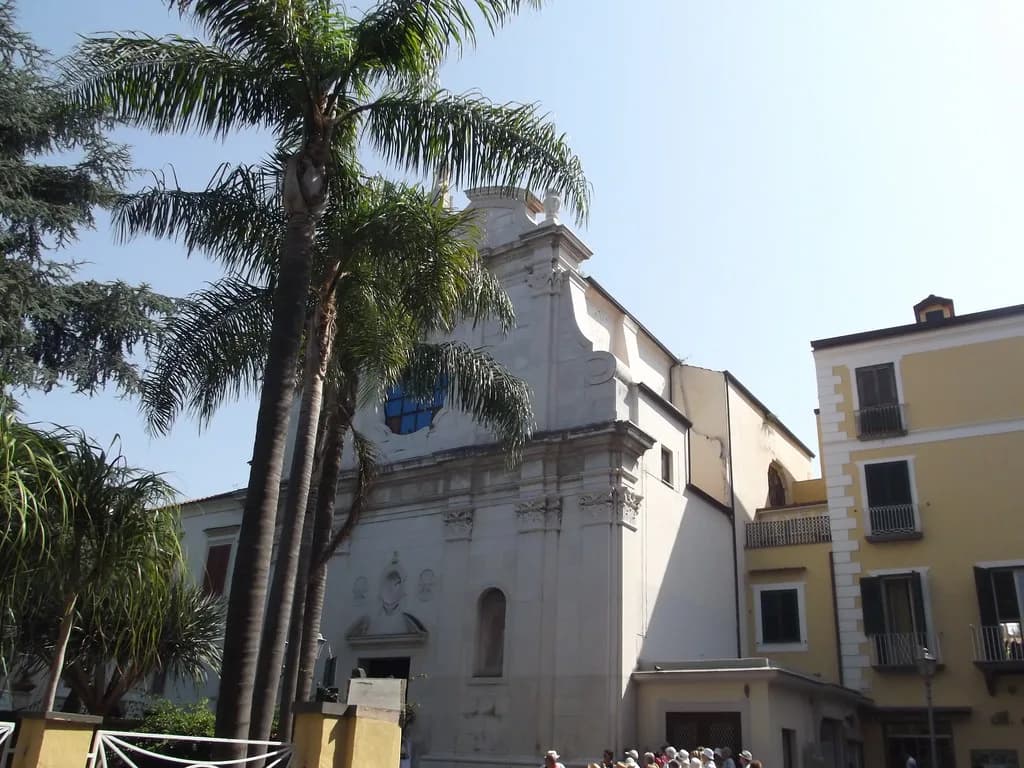
The Church and Cloisters of San Francesco sit beside Villa Comunale Park and feel calmer than the streets a few steps away. A monastery was founded on the site in the 7th century, with the Baroque church and cloister added in the 14th. The cloister's plant-draped arches make a natural pause, and it is sometimes used for concerts and art shows in summer.
Upstairs, the Gallery Raffaele Celentano shows black-and-white photographs of Italian scenes dating back to the 1930s and has a roof terrace. Treat the church, the cloister and the gallery as separate spaces with their own access arrangements, and confirm what is open on the day rather than assuming one entry covers all three.
Then step into Villa Comunale, the clifftop public park, where the bay opens out below you. It is free to enter and has a café bar, which makes it a sensible place to sit before lunch. A shorter free-things guide to Sorrento is useful if the budget is tight and you want to build the day around spaces that cost nothing to enter.
Lunch: Local Plates and Where to Eat Them
Sorrentine food leans on what grows and swims nearby: tomatoes, olives, citrus, mozzarella and fish landed that morning. Plates to look for include caprese salad, spaghetti vongole, gnocchi alla Sorrentina baked with tomato and mozzarella, and delizia al limone for dessert. Seafood is often priced by weight, so ask before you commit.
A Sorrento local food guide what to eat is the place to sort the region's dishes and drinks before you order, so that one proper meal carries the day. Use it to choose your anchor restaurant instead of eating indifferently three times.
If you want market produce, On the Luce reports a street market on Via San Renato on Tuesdays from 8am to 2pm. That is a published day and window rather than a standing guarantee, so check locally before building a picnic around it. Outside those hours, a simple panino and fruit keeps the afternoon free.
Afternoon Option A: Swim Below the Cliffs at Marina Piccola
Sorrento has little conventional beach. What it offers instead is a string of private piers and beach clubs where you hire a sunbed and umbrella, most of them around Marina Piccola, reached by steps from Villa Comunale, by the lift cut into the rock, or from the harbour. On the Luce reported sunbeds at roughly 20 euros, but that figure is dated; check the club's own price on arrival rather than budgeting it as fact.
The same source reported the lift at 1.20 euros one way and 2.20 euros return, and warned about long queues back up at the end of the day. Verify the fare at the lift; take the queue warning as the part that still shapes your timing. Leave the water earlier than feels necessary if you are depending on the lift.
Without paying, the options are small. On the Luce describes a tiny public patch of sand at Marina Piccola, which it found reserved for locals in July, and a larger stretch at Marina Grande. Treat free sand as a bonus rather than the plan, and keep a paid club in mind if swimming is the point of the afternoon.
Afternoon Option B: Marina Grande and a Seafood Terrace
The other afternoon is the walk west around the headland to Marina Grande, a working fishing village of pastel buildings, a small beach and waterfront restaurants. It takes about 15 minutes on foot. Fishermen unload their catch in the morning, which is why the harbourside kitchens compete on freshness.
Choose this over the beach clubs if eating well matters more than lying down. Take a terrace table facing the bay toward Vesuvius, order fish, and ask what came in that day. You will spend more than at a bar, but the meal becomes the afternoon rather than a pause in it.
If you are deciding where to sleep afterwards, a Sorrento neighborhoods guide can help you weigh Marina Grande against staying near the centre. For a single day, the practical difference comes down to walking time and how much uphill you want at the end.
Limoncello and Lemon Products
Lemons shape Sorrento's identity, and limoncello is the simplest way to taste them. It is made by steeping lemon peel in alcohol and usually served well chilled as a digestif after dinner. Shops all over town sell bottles, but a producer who explains the process makes a better stop than a souvenir shelf.
On the Luce names Limonoro and I Giardini di Cataldo as traditional producers worth visiting. Those are suggestions, not guarantees of current opening hours or tour availability, so check before making a detour. A small bottle travels well; a large one may not clear hand-luggage rules.
If you do not drink, the flavour turns up in gelato, cakes and the Sorrento Spritz served around town, and lemon soaps and oils make easy gifts. That gives everyone something to sample without committing to the liqueur.
Sunset: Villa Comunale or Piazza della Vittoria
Villa Comunale is the popular sunset spot, with a café bar and often a busker. It is also the most crowded, and the railings fill on clear evenings. Arrive at least 20 minutes before sunset if you want a place at the edge.
Piazza della Vittoria offers the same view with fewer people, according to On the Luce. The five-star Bellevue Sirene stands on the remains of a Roman villa there, and non-guests can order drinks on its terrace, though its rooms run to 600 euros and up per night — a reported figure to verify, not a plan.
Whichever you choose, sunset is the day's fixed point. Everything before it can bend; this cannot. If the sky is overcast, skip both and spend the hour over an unhurried dinner instead.
Evening: Passeggiata and Dinner
After sunset, the centre fills with the evening passeggiata, the slow stroll through the lanes and along Corso Italia. Join it without a destination; it is the cheapest and most characteristic hour of a Sorrento day. Cafés around Piazza Tasso stay busy late.
For dinner, choose by where you are sleeping rather than chasing a name from a list. A table near your hotel saves a late climb, and the gap in food quality between central and outlying restaurants is smaller than the gap in how tired you will be.
Before you commit, browse Sorrento Attractions for individual visitor guides to the sights you shortlisted, so you know what each one involves before giving it a morning.
If You Only Have Half a Day
With half a day, drop the beach clubs and the Valle dei Mulini, and keep the piazza, the lanes, the cloisters and the park. That sequence stays within a compact area and needs no transport. Add Marina Grande only if you have a full afternoon and want a sit-down meal.
If you are passing through en route to the Amalfi Coast, note that the coast road is famously winding, as Positano.com describes, and that the ferry is steadier for those who suffer from motion sickness. Ferries can also be suspended in rough seas, so keep a bus plan in reserve rather than relying on a single sailing.
Arrivals: Verify Fares and Times With Operators
On the Luce, in a page last updated in January 2026, reported the Circumvesuviana train from Naples at 4.60 euros one way in about 75 minutes, the Campania Express tourist service at 15 euros one way, airport buses at 13 euros and ferries from Naples at around 40 minutes from 17 euros. Those are reported figures from that date, not live prices, so confirm with the operator before you travel.
Positano.com puts a private transfer from Positano to Sorrento at around 70 euros and notes that Amalfi Coast buses are frequent but often crowded, with seats scarce at stops along the route in high season. Book a transfer only if a fixed rate and door-to-door service are worth it to you.
For local notices and time-sensitive details, check the comune's own site rather than an old blog page, and confirm schedules with the transit operator on the day.
Season, Crowds and What to Confirm
Sorrento's season runs roughly from Easter to October, with July and August the busiest, so book accommodation well ahead for those months. Spring brings long sunny days with highs around 18 to 22 degrees Celsius, while summer highs average near 29 degrees, which makes exposed sites such as Pompeii hot work. Further visitor details appear in The best things to do in Sorrento, Italy.
Winter is mild but subdued: after Christmas, many shops, restaurants and hotels close from January to March, which changes what a one-day visit can include. If you are travelling in that window, check that your chosen restaurants and sights are operating before you commit. If you are staying longer, the three-day Sorrento itinerary spreads these stops out and adds the outlying corners.
Plan Your Visit
One day in Sorrento works best as a slow line through the centre rather than a checklist: Piazza Tasso, the lanes, the cloisters and the park, then a single afternoon anchor at Marina Piccola or Marina Grande, then sunset and dinner. That is a full day without a rushed transfer.
If you have longer, give the hidden gems in Sorrento their own morning and let the sights have individual visits rather than a circuit. Either way, verify fares, hours and restaurant opening close to your date, because published details age quickly.
Frequently Asked Questions
Can you see the main sights of Sorrento in one day?
Yes, on foot. Piazza Tasso, the old-town lanes, the Church and Cloisters of San Francesco and Villa Comunale sit within a short walk of each other. What does not fit comfortably is both a beach-club afternoon and a sit-down seafood lunch at Marina Grande, so choose one for the afternoon.
Is it better to spend the day in Sorrento or take a day trip to Capri or Pompeii?
A boat crossing to Capri or a visit to Pompeii uses most of the day, so treat it as an either-or choice rather than an add-on. Stay in Sorrento if you want the lanes, the cloisters and a sunset over the bay; take the day trip if a ferry crossing or archaeological site is the reason for your journey, and plan a separate day for the town.
Where can you watch sunset in Sorrento?
Villa Comunale is the popular clifftop spot, with a café bar and often a busker. Piazza della Vittoria offers the same view with fewer people, according to On the Luce. Check the sunset time for your date and arrive early, because the railings fill on clear evenings.
What local food should you try on a day in Sorrento?
Look for caprese salad, spaghetti vongole, gnocchi alla Sorrentina and delizia al limone. Seafood is freshest at Marina Grande, where fishermen unload their catch each morning. Ask the price of fish by weight before ordering, and finish with limoncello or a lemon dessert.
Do you need to book beach clubs in Sorrento in advance?
The clubs around Marina Piccola rent sunbeds and umbrellas by the day. Booking rules are not something to guess at: check the club's own website or ask on arrival before paying. Prices in older guides are dated, and public sand is limited, so if swimming is essential keep a paid option in mind.
How do you get from the harbour up to Sorrento's centre?
From Marina Piccola you can take the stairs, the lift cut into the rock, or a bus, according to Positano.com. Fares and queue lengths change, so allow extra time if you are catching a train or ferry. Walking up is free but steep.
Sources
Continue exploring
More guides you'll find useful