
Ravenna Historic Centre Guide: Where to Stay and Walk
Plan a stay in central Ravenna: how the pedestrian core around Piazza del Popolo connects the mosaic sites, Dante's zone and where to base yourself.
On this page
Ravenna rewards travellers who treat the centre as a single walkable container rather than a checklist of separate sights. The city's UNESCO monuments from the fifth and sixth centuries sit within a few minutes of each other, and the same streets hold the places tied to Dante's final years. Planning around that geography saves backtracking and leaves room for slower stops.
This guide explains what counts as the historic centre, how Piazza del Popolo works as an orientation point, and which mosaic sites you can reach on foot from a central bed. It also marks the line between the centre and Classe, so you do not mistake a separate district for a strolling extension of the old town.
What Counts as Ravenna's Historic Centre
Ravenna's historic centre is the compact old town where the main early Christian and Byzantine monuments cluster within a short walk of one another. The mosaics organisation describes reaching five UNESCO sites in the centre in a few steps, which is a practical clue for planning: you do not need transport between San Vitale, Galla Placidia, Sant'Apollinare Nuovo, the Neonian Baptistery and the Archiepiscopal complex.
The centre suits a walking-based stay because most of what a short break needs is inside it: monuments, cafes, the market and the main square. It is also small enough that a hotel near the core puts the mosaics within a morning's stroll rather than a day's logistics. The trade-off is that central streets are busy, and quieter corners are best found on foot rather than by chasing a single address.
Piazza del Popolo: Your Orientation Hub
Piazza del Popolo has been the focal point of local life for more than seven centuries, ringed by civic and religious buildings and crossed by streets that lead to the major attractions. Treat it as your map's centre: from here you can walk toward Via di Roma for Sant'Apollinare Nuovo, or toward the San Vitale area for the paired monuments of San Vitale and Galla Placidia.
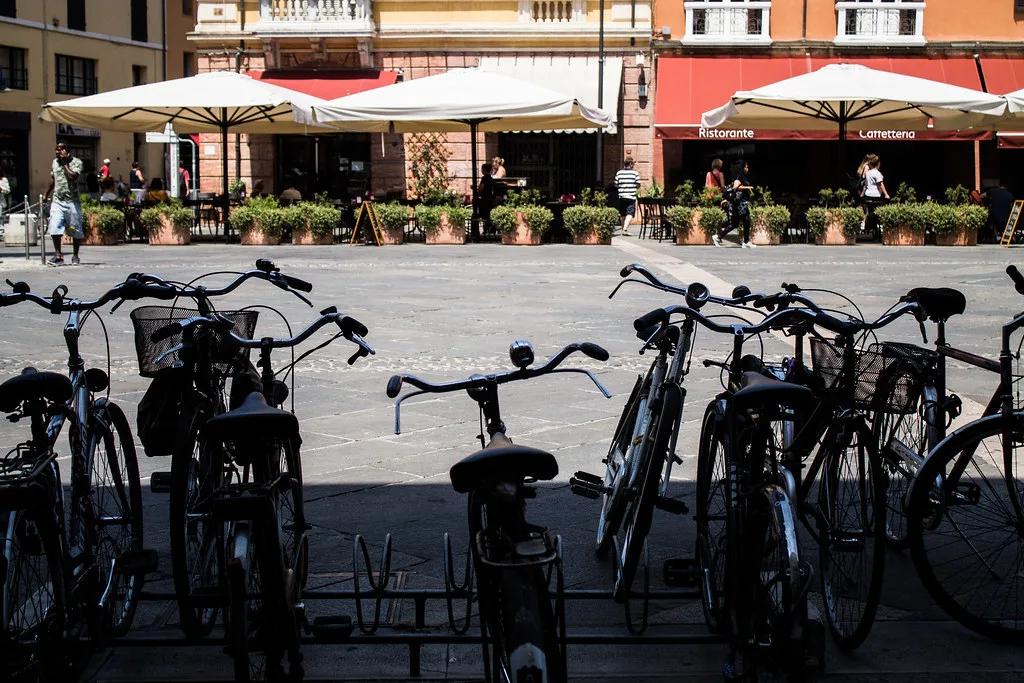
The square is also where a stay feels most urban: cafes spill out and the streets around it connect the shopping lanes with the quieter side streets. If you are deciding between two addresses, use the piazza as the reference point and check the walking route on a map before booking. A bed a few minutes from here keeps both the monuments and evening meals easy.
Mosaic Monuments Inside the Pedestrian Core
The Basilica of San Vitale and the Mausoleum of Galla Placidia stand almost side by side, and the official mosaics site describes the two as neighbours that visitors experience in sequence. San Vitale's octagonal interior holds the famous portraits of Justinian and Theodora, while Galla Placidia's small chapel is known for deep blue and gold ceiling mosaics. Plan them as one stop rather than two separate outings.
The Basilica of Sant'Apollinare Nuovo sits on Via di Roma and is reached through an adjacent cloister, with long mosaic processions of martyrs and virgins along the nave walls. It is easy to confuse with Sant'Apollinare in Classe, which is outside the centre, so keep the names straight when planning your day. This one belongs firmly inside the walking core.
The Neonian Baptistery and the Archiepiscopal Chapel with its museum complete the central set, and the mosaics organisation groups them with the other diocesan monuments for visit planning. Do not assume a single ticket covers every mosaic site in the city; check the scope of whatever pass you are offered at the ticket desk or on the official site before relying on it.
What Is a Short Walk and What Is Not: Classe
Sant'Apollinare in Classe and the Classis Ravenna museum sit in a separate district about five kilometres from the historic centre, not as a continuation of the old-town stroll. A private guided tour of the two describes reaching the area by dedicated cycle path, taxi, or by bus from the train station, so budget a half-day rather than tacking it onto a monument morning.
The basilica is one of Ravenna's eight UNESCO World Heritage Sites and is known for its apse mosaic with pastoral and symbolic scenes, while the Classis museum in a former sugar factory explains the ancient port's history. If your trip is short, decide up front whether Classe makes the cut: it rewards those interested in early Christian art and Roman history, but it uses time you could spend in the centre.
The Dante Quarter: One Compact Cluster
Dante's tomb, the Basilica of San Francesco and the Dante Museum form one tight stop in the so-called Zone of Silence rather than three separate visits. The poet died in Ravenna in 1321, and a regional itinerary lays out the cluster clearly, starting from the neoclassical tomb and moving to the basilica where his funeral was held, then to the museum in the former Franciscan convent.
The Museo Dante documents the poet's life and afterlife through multimedia displays, and a wooden box found in 1865 that once held his bones is on show. Entrance details for the museum are published on the city's mosaic portal, so check there rather than trusting older figures.
Where to Base Yourself: Core Versus Station Side
Staying inside the pedestrian core puts evening walks and early monument entries within minutes, which matters if you want to beat the busiest hours or return after dinner. The compromise is that you trade some quiet for convenience, and rooms near the main square can feel busier. The station side is more practical for arrival and departure days but adds a walk or ride to the square for every meal and evening stroll.
For a two-night break in central Ravenna, choose a bed within a short walk of Piazza del Popolo and plan one day in the core and one half-day out at Classe. Bed-and-breakfast options in the old town, such as a small guesthouse tucked into the medieval lanes, show how close the centre's quieter streets sit to the busy ones. Book direct with the property and confirm walking routes on a map rather than relying on distance claims.
Practical Walking Logic for the Centre
Group the monuments by proximity rather than by fame: San Vitale and Galla Placidia together, Sant'Apollinare Nuovo with the Neonian Baptistery and Archiepiscopal complex, and the Dante cluster as a separate short walk. That keeps you from crisscrossing the old town and leaves time for a proper pause in the square. Reserve timed entries for the mosaics where they are offered, since slots can sell out, then build your walking route around those fixed points.
Check the Neonian Baptistery's schedule before locking in a mid-morning visit, because the diocesan site publishes notices about baptisms that can suspend visits for part of the day. These arrangements can change, so confirm the current notice on the official site close to your travel date.
Beyond the Mosaics: Slower Stops in the Centre
The Mercato Coperto on Piazza Andrea Costa is a good lunch stop, with seafood and meat dishes alongside Romagna pasta, and it gives you a break from church interiors. The MAR contemporary art museum on Via di Roma holds a mosaic collection spanning the twentieth century to today, which is a useful counterpoint to the ancient sites. The Classense Library is another indoor option if weather turns. Related guide: Ravenna Rainy Day Guide: Indoor Mosaics and Museums.
Ravenna's wider story as a former Western Roman and Ostrogothic capital explains why so many buildings crowd into a small area, and it makes a slow wander worthwhile between appointments. The regional tourism site keeps a calendar of events and exhibitions that can add a reason for an evening in the centre.
Accessibility, Etiquette and Small Practicalities
The mosaics organisation publishes For All routes designed for universal accessibility, which is worth checking before you travel if anyone in your group has mobility needs. Churches remain active places of worship, so dress respectfully and keep voices low near services. Some interiors restrict large bags and photography, so check signs at each entrance rather than assuming a single rule applies everywhere.
Where the Centre Ends
The old town ends around the station and the ring roads, and Classe lies clearly beyond it, so treat the two as separate halves of a Ravenna visit. That distinction is the main planning error worth avoiding: people assume the mosaics are all one walk and run out of time for the basilica by the sea. If you have only one full day, keep Classe for a future trip or a longer stay, and use the centre for the rest.
A Suggested Two-Night Base in the Centre
For a two-night stay, use the first afternoon to get your bearings from Piazza del Popolo, visit the Dante cluster, and book timed entries for the mosaics. Spend the following morning on San Vitale and Galla Placidia, take a slow lunch at the Mercato Coperto, then spend the afternoon on Sant'Apollinare Nuovo and the baptistery. Keep one morning free for Classe if your schedule allows, and leave the final evening for a walk back through the centre.
Plan Your Central Stay
Central Ravenna works best as a base, not a backdrop: choose a bed near the square, group the mosaics by proximity, and treat Classe as a separate outing. Confirm ticket scope, opening arrangements and the Neonian Baptistery's schedule on the official sites before you travel, since these details change. That planning leaves your walking time for the mosaics themselves. For related planning, see Ravenna Self-Guided Mosaic Walk: Route, Tickets and Rest Stops.
Frequently Asked Questions
Is Ravenna's historic centre walkable on foot?
Yes. The main mosaic monuments, the Dante cluster and Piazza del Popolo sit close together, so most of the centre can be covered on foot. Classe is a separate district and needs transport.
Where should I stay in Ravenna to see the mosaics?
A bed within a short walk of Piazza del Popolo keeps the monuments, restaurants and evening strolls close. The station side is more practical for arrival but adds a walk to the square.
Which mosaic monuments are inside the centre?
The Basilica of San Vitale, the Mausoleum of Galla Placidia, Sant'Apollinare Nuovo, the Neonian Baptistery and the Archiepiscopal complex are all in the old town. Sant'Apollinare in Classe is outside it.
How far is Sant'Apollinare in Classe from the centre?
The district is about five kilometres away, so it is best treated as a separate trip rather than part of a strolling day. Cyclists, taxis and buses from the station are the usual ways to get there.
Is one day enough for central Ravenna?
One day can cover the main mosaics if you plan a tight route and book timed entries, but it leaves little room for Classe or slower stops. Two nights make a more comfortable base.
What can I do in central Ravenna beyond the mosaics?
The Mercato Coperto is good for lunch, the MAR museum shows modern and contemporary mosaic work, and the Classense Library is a quiet indoor option. The Dante cluster is another compact stop.
Sources
- Ravenna, Italy skyline: the 30 most iconic buildings and best views in Ravenna
- Ravenna Mosaici – Opera di Religione della Diocesi di Ravenna
- Discover Classe - Private Guided Tour of the Basilica of Sant’Apollinare in Classe and the Classis M - Visit Ravenna
- Museo Dante – Ravenna Città del Mosaico
- Mausoleum of Galla Placidia – Ravenna Mosaici
- Basilica of Saint’Apollinare Nuovo – Ravenna Mosaici
Continue exploring
More guides you'll find useful





